
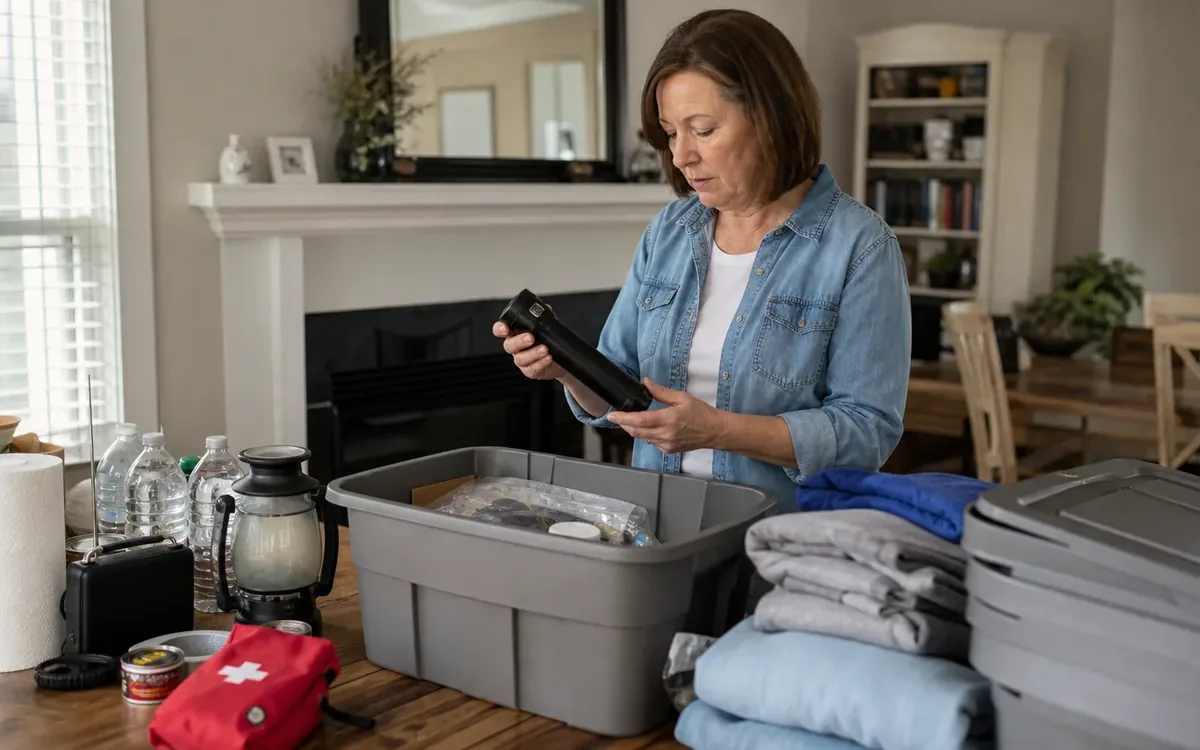
Keep the coastal storm supplies that fit your future household, destination, transportation, health needs, and new property. Separate expired consumables, damaged battery equipment, property-specific protection, and duplicates rather than moving every item automatically. The goal is not to eliminate preparedness. It is to build a smaller, usable emergency kit while routing items that no longer belong with you.
Quick answer: First protect a complete core kit for each household member. Then test equipment, check dates, match property-specific items to the home they protect, and decide where every retained item will fit after the move. Household members choose what to keep and how prepared they want to be. A practical cleanout or move team may discuss sorting, packing, labeling, and removal options. Emergency guidance, hazardous-waste rules, property requirements, inspections, and legal decisions belong to the relevant public authority or qualified professional.
Why storm supplies need their own downsizing plan
Storm supplies do not sort like ordinary garage or closet contents. A duplicate lamp may be unnecessary, while duplicate lighting methods could provide useful backup. An old shirt can be donated readily, but old fuel, leaking batteries, medicines, and damaged power equipment need separate handling.
Some items also belong to a particular property. Cut-to-size shutters, labeled hardware, window panels, generator connections, and fitted covers may be useful only at the current house. Moving them without checking their purpose can leave the old property incomplete and consume limited space at the new one.
Treating these supplies as a separate downsizing category helps prevent two costly mistakes:
- Discarding useful emergency equipment because it looks like garage clutter
- Packing obsolete, unsafe, or property-specific material that will not serve the next home
Households that want help organizing the broader transition can review downsizing and organizing services across South Carolina. Service discussions may cover practical sorting and move preparation, but preparedness standards and disposal requirements should be confirmed with the appropriate authorities.
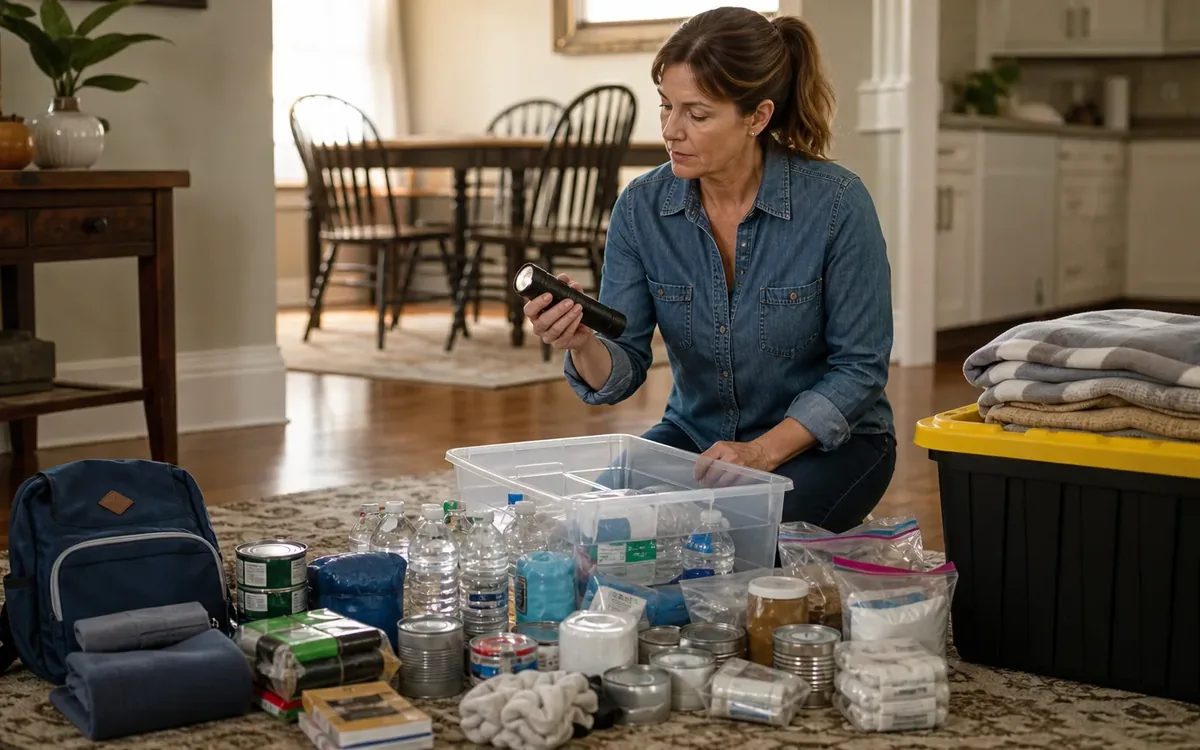
What should remain in a right-sized emergency kit?
Start by identifying what each person or pet would need if the household had to leave or manage a disruption. Do this before reviewing available bins, shelves, or equipment. Otherwise, existing possessions tend to dictate the kit.
Build the retained group around these functions:
- Identification and copies of essential records
- Necessary medicines and health-related supplies
- Water and food appropriate for household members
- Lighting and a reliable way to receive information
- Charging options compatible with retained devices
- Basic hygiene and weather protection
- Pet carriers, records, food, leashes, and medicines
- Child, disability, mobility, or caregiving necessities
- A small set of useful tools and first-aid materials
Follow current public emergency guidance when deciding quantities or required contents. A cleanout or move provider should not replace that guidance or make medical recommendations.
Once the core group is protected, compare every duplicate with a specific need. Keep equipment that is functional, understandable, compatible, and practical to transport. Release items that merely repeat the same function without improving resilience.
A battery radio and a separate flashlight may both deserve space because they perform different jobs. Six untested flashlights with corroded compartments are not a dependable lighting plan.
How do you sort evacuation bags without unpacking your safety plan?
Use a temporary review area and keep one complete bag intact until a replacement is ready. This avoids scattering essential items among donation, trash, and moving piles.
A useful process has five parts:
- Assign the bag. Label it for a person, pet, vehicle, or household function so its purpose is clear.
- Empty and inspect it. Look for expired food, outdated records, damaged packaging, missing medicines, and clothing that no longer fits.
- Group contents by function. Place health, documents, food, water, lighting, charging, hygiene, clothing, and pet items into visible groups.
- Replace gaps before removing useful backups. Confirm that the rebuilt bag works as a complete unit rather than judging each object in isolation.
- Record future review needs. Use a simple inventory with expiration dates, battery types, and the storage location of related equipment.
Avoid placing original irreplaceable documents in an unattended sorting area. The household should decide what records travel, what copies are appropriate, and how sensitive information is secured. An attorney, insurer, medical professional, or issuing agency should answer questions within its field.
For a broader look at how belongings are separated and routed during a major household transition, read how estate cleanouts work. Storm supplies still require their own safety and compatibility review.
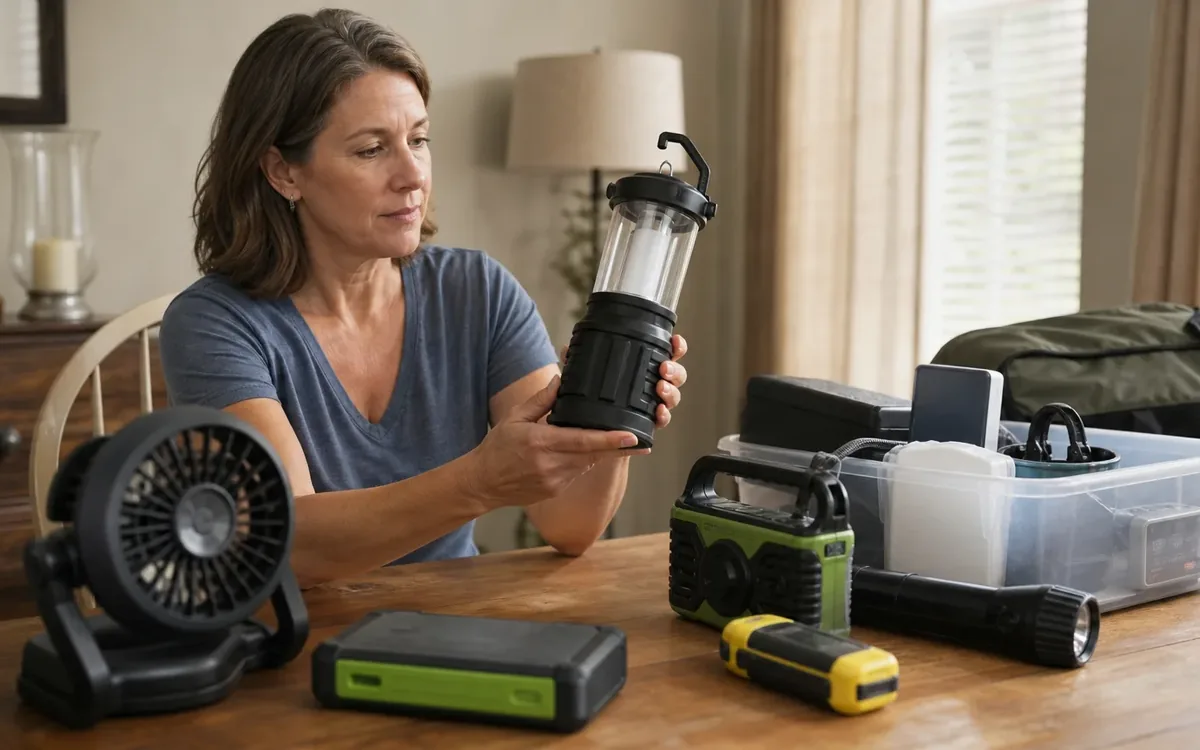
How should battery-powered equipment be evaluated?
Test devices before spending moving space on them. Do not assume an item works because it is stored in its original box or worked during a previous season.
For each flashlight, radio, fan, lantern, charger, or power station, check:
- Whether it turns on and operates consistently
- Whether the battery compartment is clean and closes securely
- Which battery or charging system it uses
- Whether the needed cable, adapter, or manual is present
- Whether household members can operate it without guesswork
- Whether it overlaps with another device that is easier to maintain
- Whether its condition suggests that a qualified repair or recycling provider should assess it
Remove loose batteries before long-term packing when appropriate for the device and manufacturer instructions. Keep battery types organized and protected from contact with metal objects. Do not combine damaged, swollen, leaking, or corroded batteries with general donation or trash.
Local disposal and recycling requirements vary. Ask the responsible waste or recycling authority how it accepts batteries and electronic equipment. A moving or cleanout team may help separate and label categories, but it should not decide that a questionable battery is safe or override acceptance rules.
Fuel-powered equipment needs an entirely separate decision. Manufacturers, movers, storage facilities, disposal providers, and public authorities may have rules concerning fuel, oil, cylinders, and transport. Confirm those requirements directly rather than placing fueled equipment into a moving load or storage unit.
What should happen to water containers and stored consumables?
Separate containers from their contents. A sound, food-grade container may remain useful even when stored water or food needs replacement under current safety guidance.
Inspect water containers for:
- Cracks, warping, leaks, or damaged caps
- Staining, odors, residue, or signs of contamination
- Labels identifying the material or intended use
- A shape and weight the household can manage when filled
- A practical storage position in the smaller home
Do not retain more empty containers than the future home can store accessibly. Containers wedged behind furniture or stacked where they cannot be inspected are not a functional supply.
Review packaged food, medicines, first-aid contents, sanitation products, and pet supplies individually. Check printed dates, package integrity, storage history, current household needs, and manufacturer guidance. Medicines and medical materials should be evaluated with a pharmacist, medical professional, or authorized disposal resource when needed.
Donation acceptance is the recipient organization’s decision. Do not assume that unopened food, medicine, water, chemicals, or hygiene products will be accepted. Contact the organization before transporting those items.
Should shutters and window panels move with you?
Usually, the first question is not whether shutters fit the moving truck. It is whether they are components of the current property.
Storm panels, shutters, fasteners, tracks, braces, and labeled hardware may correspond to specific windows or openings. Separating them from the house can make the system incomplete. Before packing any part, determine:
- Which opening or structure it protects
- Whether it was made or modified for that location
- Whether related tracks, bolts, clips, or instructions remain at the property
- Whether a sales contract, lease, association rule, insurer, or other obligation affects it
- Whether the future property could actually use it
The household can identify and label the material, photograph how pieces correspond, and decide what it prefers to include in a move. A real-estate professional or attorney should address whether an item conveys with a sale. A qualified contractor, inspector, manufacturer, or building authority should address installation, suitability, condition, and compliance.
Do not present a cleanout or move team as the decision-maker for fixture status or code compliance. The team may discuss keeping labeled components together, protecting hardware, and separating obvious household goods from items awaiting professional review.
Match retained supplies to the next home
A smaller home requires a storage plan, not just a lower item count. Sketch the likely storage zones before packing storm supplies. Possible household choices include an interior closet, accessible cabinet, evacuation-bag shelf, or another area appropriate for the items and conditions.
Evaluate the destination through four filters:
- Access: Can household members reach the item without moving heavy boxes?
- Environment: Is the location compatible with manufacturer guidance for heat, moisture, charging, or ventilation?
- Capacity: Does the equipment physically fit without blocking doors, walkways, panels, or required access?
- Relevance: Does the item suit the destination’s construction, household needs, and evacuation arrangements?
Storage providers set their own prohibited-item and condition rules. Ask before placing batteries, fuel-related equipment, food, water, medicines, or chemicals in storage. Do not use rented storage as a default destination for supplies that remain untested or unresolved.
Contractor work is also separate from sorting. Generator connections, shutter installation, electrical modifications, anchoring, ventilation, and structural work should be evaluated by an appropriate contractor and any responsible authority. Appraisers determine valuation questions. Inspectors assess matters within their inspection scope. Real-estate professionals and attorneys address transaction or ownership issues.
Create routes for supplies that will not move
Use distinct outgoing categories so uncertain materials do not drift back into packed boxes. Good routing labels include:
- Keep for the new home
- Keep accessible during the move
- Leave with the property pending professional confirmation
- Offer for donation after acceptance is confirmed
- Sell through a household-selected venue
- Send to an approved recycling or disposal provider
- Hold for contractor, inspector, pharmacist, or authority review
A practical cleanout or move team may discuss staging, labels, packing order, removal categories, and coordination questions. The household chooses which usable personal property to retain, sell, donate, or discard, subject to ownership and legal obligations.
Disposal providers and public authorities decide what materials they accept and how those materials must be prepared. A household should disclose batteries, fuel, cylinders, chemicals, medicines, damaged electronics, and other potentially restricted contents before arranging removal.
If value is uncertain, pause before disposal. An appraiser or appropriate specialist should evaluate potential monetary value. An estate-sale or auction provider decides what it accepts and how it handles a sale. Those decisions should not be treated as automatic parts of organizing or cleanout work.
Pack the final kit so it remains usable
The last step is to prevent carefully sorted supplies from disappearing into the move. Pack the core kit separately from long-term household boxes.
Use clear labels that state function rather than vague room names. Examples include “evacuation documents,” “pet storm kit,” “battery lighting,” and “empty water containers.” Mark equipment that still needs professional review so it is not mistaken for ready-to-use gear.
Keep a simple inventory containing:
- The name and storage location of each kit
- The people or pets it supports
- Equipment models and compatible battery types
- Items intentionally left with the former property
- Consumables or medicines that need periodic household review
- Questions assigned to a contractor, attorney, insurer, inspector, pharmacist, or authority
Protect sensitive records and medicines according to applicable professional guidance. The household should personally control items it may need during travel, closing, temporary lodging, or an unexpected disruption.
Short FAQ
Can usable storm supplies be donated?
Possibly, but the receiving organization determines what it accepts. Ask about batteries, electronics, food, water containers, medical goods, and property-specific materials before delivering anything. Do not leave unapproved items outside a donation site.
Should old batteries go in the household trash?
Do not assume they can. Battery type, condition, and local rules affect handling. Keep damaged or leaking batteries separate and contact the responsible waste or recycling authority for instructions.
Can custom shutters be used at the new home?
Only if a qualified professional determines they are suitable for the new openings and installation. First confirm whether they belong with the current property or are affected by a sale, lease, or other obligation.
Who decides whether emergency equipment is safe?
Follow manufacturer information and consult the appropriate repair professional, contractor, inspector, pharmacist, fire-safety resource, waste authority, or other responsible expert. A sorting team can flag questionable items, but it should not certify safety.
Can Clutter Cleaner of South Carolina help with the transition?
Clutter Cleaner of South Carolina, based in Mount Pleasant and serving households statewide, may discuss downsizing and organizing, move management, estate cleanouts, home sale preparation, auctions and estate sales, and code compliance support as relevant to the project. Scope and availability should be confirmed directly at (843) 972-7020. Legal, appraisal, real-estate, inspection, contractor, disposal-acceptance, and public compliance decisions remain with the responsible professional or authority.



