

The best way to set up a new home after a senior move is to make the essential rooms functional first, preserve familiar routines, and postpone decorative decisions until the resident has settled in. Start with safe movement, medications, sleep, bathroom access, meals, communication, and a few meaningful belongings. A practical move team can help plan placement and unpack household goods, but medical, legal, inspection, appraisal, and compliance decisions belong to the appropriate professionals.
Quick answer: Prepare the bedroom and bathroom first, create clear walking routes, connect essential devices, place daily-use items within easy reach, and unpack familiar possessions without crowding the home. Keep paperwork and valuables under household control. Record unresolved tasks for the family, property manager, contractor, health professional, or other responsible provider.
What should be set up first after a senior move?
A senior’s first evening should not depend on finding necessities in a wall of boxes. Before arranging books, artwork, or keepsakes, establish a workable core of daily life.
Prioritize these areas:
- A made bed with familiar bedding
- A clear route between the bed and bathroom
- Working lamps that can be reached from the bed and main chair
- Toiletries, towels, and toilet paper
- Clothing needed immediately
- Medications kept according to the resident’s existing instructions
- Eyeglasses, hearing devices, chargers, and mobility aids
- Water, simple food, and appropriate kitchen supplies
- A working telephone and an accessible contact list
- Keys, access devices, identification, and essential records
Medication placement should follow directions from the resident, caregiver, pharmacist, or health professional. Movers and organizers should not decide dosages, schedules, storage requirements, or whether a medication remains appropriate.
If the household needs help coordinating belongings and room setup, it can review the statewide move management service. The scope should be discussed before work begins, particularly when the move involves valuables, building access restrictions, storage, assembly, or items requiring specialist handling.

How do you make the layout safer without making it feel clinical?
Safety and familiarity do not have to conflict. The aim is a home that supports natural movement while still reflecting the resident’s preferences.
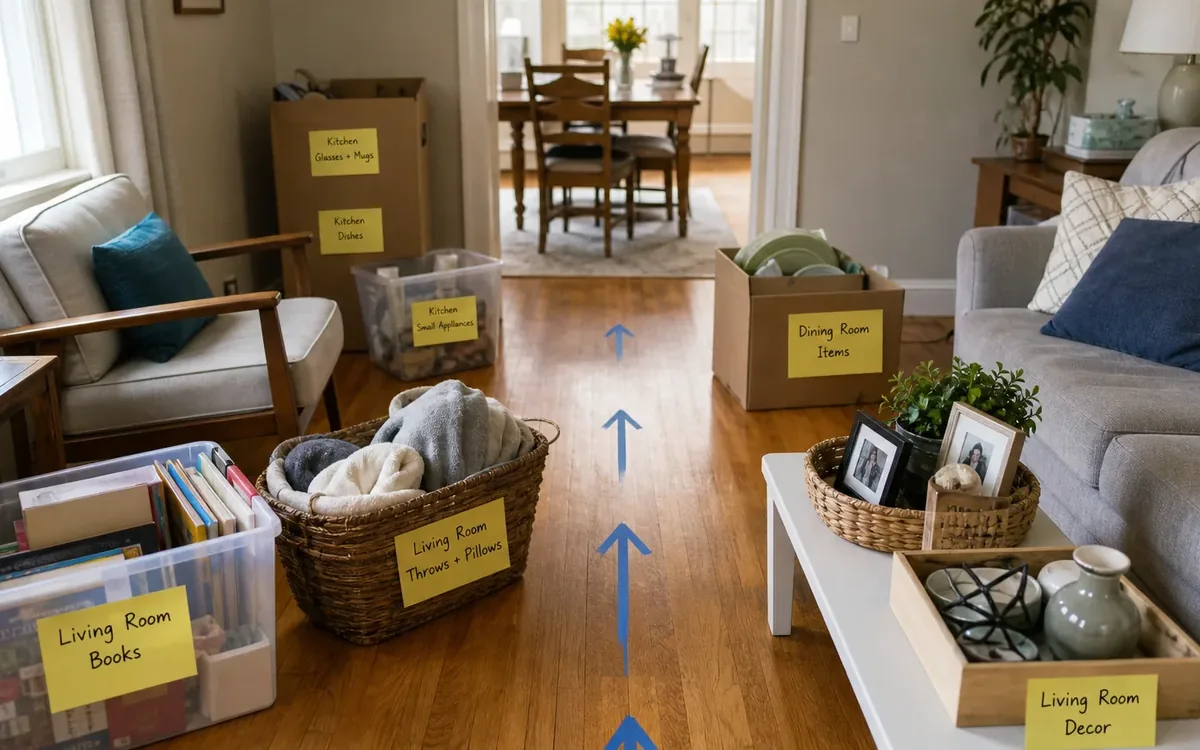
Begin with the paths the resident is most likely to use. Walk from the entrance to the main chair, bedroom, bathroom, kitchen, and exterior exit. Look for cords, unstable rugs, narrow furniture gaps, boxes, low tables, and doors that cannot open fully.
The household can decide which possessions feel important and where the resident prefers to sit, sleep, eat, and keep personal items. A move or cleanout team may discuss furniture placement, box removal, unpacking order, and practical use of space. It should not make medical judgments about fall risk or prescribe accessibility modifications.
Questions about grab bars, ramps, electrical work, plumbing, structural alterations, or accessibility construction should go to qualified contractors and, where appropriate, health professionals. Required approvals may also need to come from an owner, property manager, homeowners association, inspector, or government authority.
Useful setup choices include:
- Leaving broad, direct walking paths
- Placing frequently used objects between comfortable waist and shoulder height
- Keeping chairs stable and easy for the resident to use
- Positioning lamps so switches are accessible
- Securing or removing rugs based on the resident’s needs and professional advice
- Keeping cords away from travel routes
- Avoiding unstable stacks on shelves or floors
- Making exits and utility panels accessible
Do not discard a favored chair or other familiar item solely because a replacement appears more practical. Ask the resident first, then consider whether a repair, different placement, or professional assessment would resolve the concern.
Build the home around the senior’s routine
A home can be neatly unpacked and still be difficult to use. Setup works better when it follows the resident’s habits rather than a generic room plan.
Ask where the senior usually keeps:
- Morning and evening necessities
- Reading material and remote controls
- Mail and incoming papers
- A purse, wallet, keys, or cane
- Favorite cups and simple meal supplies
- Photographs and sentimental objects
- Laundry and cleaning products
- Emergency contacts
Try to reproduce recognizable patterns from the previous home. If the resident always kept glasses beside a particular chair, create the same association. If family photographs were visible from the bed, give those items early priority.
Avoid filling every surface on arrival. A smaller home may require observation before permanent decisions are made. Use temporary labels or a written location list when cabinets and drawers differ significantly from the old home.
For households still sorting possessions at the former residence, the guide to what to do first when unpacking explains how decisions, removal categories, and professional boundaries can be organized. That process should remain distinct from setting up the new home so needed belongings are not removed by mistake.
Use a room-by-room setup sequence
The following six-stage sequence keeps attention on function and reduces unnecessary rehandling.
-
Confirm access and utilities. Verify that the responsible party has keys, entry credentials, parking or loading instructions, and any building rules. Confirm that essential utilities and approved devices are working. Property managers, utility providers, or other responsible authorities must address service or building issues.
-
Establish the bedroom. Assemble approved furniture, make the bed, place a lamp and phone within reach, and unpack immediate clothing. Furniture assembly should follow manufacturer instructions and the agreed provider scope.
-
Prepare the bathroom. Put out towels, toiletries, and daily supplies while keeping the floor clear. A contractor or appropriate professional should evaluate installations, repairs, or modifications.
-
Create a basic kitchen. Unpack the items the resident actually uses, rather than every duplicate. Place heavier objects where they can be handled safely and leave unfamiliar appliances disconnected until instructions are available.
-
Arrange the primary living area. Position seating, a table, lighting, entertainment controls, and a limited number of meaningful objects. Test sightlines and walking space with the resident when possible.
-
Open remaining boxes by priority. Work through labels and the inventory instead of opening everything at once. Separate items needing a household decision from obvious packing material.
Mark unresolved boxes clearly. Helpful labels include “family review,” “financial records,” “possible appraisal,” “storage decision,” and “professional installation.” These labels prevent uncertain items from being treated as ordinary donations or waste.
What should happen to items that do not fit?
Do not force every possession into the new home. Crowded rooms can undermine the careful setup completed earlier. Create decision categories outside the resident’s daily living area whenever space allows.
The household can choose among keeping, gifting, selling, donating, recycling, disposing, or storing an item. A cleanout or move team may discuss sorting logistics, removal categories, and coordination options within an agreed scope. Ownership disputes and instructions in wills, trusts, court orders, contracts, or powers of attorney must be handled by the legally responsible person and qualified legal counsel when needed.
Treat the following as separate decisions:
- Storage: The household selects the facility, contract, insurance choices, access plan, and duration after reviewing provider terms.
- Appraisal: A qualified appraiser determines value when a formal opinion is needed. Sentimental importance and resale value are not the same.
- Sale: The household decides whether an auction, estate sale, consignment arrangement, or other sales method fits its goals and authority.
- Donation or disposal: Confirm that the person approving removal has authority and that the receiving or disposal provider accepts the material.
- Contractor work: Repairs, built-ins, mounting, electrical changes, and other trade work should be addressed by suitable contractors.
Photograph uncertain items and note where they are being held. Keep jewelry, cash, legal papers, financial records, identification, and irreplaceable keepsakes under the direct control of the resident or authorized representative.
Protect records, valuables, and private information
Paperwork often becomes vulnerable during unpacking because it resembles ordinary clutter. Set up a protected review area or closed container before opening boxes marked as office, records, desk, or personal.
Separate documents into practical groups:
- Current identification and access documents
- Medical and insurance information
- Legal and estate records
- Tax and financial records
- Property and vehicle documents
- Bills and account correspondence
- Personal letters and photographs
- Papers requiring secure destruction
A move team may place labeled files or containers according to household instructions. It should not interpret legal documents, decide retention requirements, provide tax advice, or determine who is authorized to access an account. Those questions belong to attorneys, accountants, financial institutions, government agencies, or other responsible professionals.
Digital privacy matters too. Keep passwords, computers, drives, and account information secure. If electronics are being transferred, recycled, or disposed of, the household should choose an appropriate data-security method or qualified technology provider.
Check the home from the resident’s point of view
Once essentials are in place, ask the resident to use the home naturally. A visual inspection from the doorway is not enough. Observe only with the resident’s permission and without turning preferences into a test.
Consider whether the resident can:
- Reach a lamp from the bed and preferred chair
- Find the bathroom without navigating boxes
- Identify where clothing and toiletries are stored
- Use the phone and charging equipment
- Access water and common kitchen items
- Find keys, mobility aids, and emergency contacts
- Open important doors and drawers
- Sit comfortably without moving obstacles
Record adjustments instead of making major changes without consultation. The resident may need time to decide whether a difficulty comes from unfamiliarity, placement, or a feature that requires professional evaluation.
If the home has maintenance defects, damaged fixtures, possible code concerns, or questionable installations, document the condition and notify the responsible owner, manager, contractor, inspector, or authority. A support team may help organize access or belongings around approved work, but it does not replace an official inspection or code determination.
Plan follow-up without reopening every decision
The first setup does not need to settle every possession permanently. Create one written follow-up list divided by responsibility.
Use categories such as:
- Household or authorized representative decisions
- Items to review directly with the resident
- Contractor or repair questions
- Medical or accessibility questions
- Appraisal or sale questions
- Property management matters
- Legal, financial, or records questions
- Donation, recycling, disposal, or storage choices
This division prevents a furniture-placement issue from becoming mixed with an ownership dispute or repair decision. It also makes communication more precise when several relatives or providers are involved.
Clutter Cleaner of South Carolina is based in Mount Pleasant, with Charleston as its primary market and a stated service territory covering South Carolina. Households can call (843) 972-7020 to discuss whether move management, downsizing and organizing, cleanout, home sale preparation, or another listed service fits the practical work. Availability, property conditions, provider roles, and exact scope should be confirmed directly.
Short FAQ
Should the senior be present during setup?
Include the senior as much as their wishes and circumstances allow. If being present during heavy activity would be uncomfortable, gather preferences in advance and reserve visible placement decisions for their input. An authorized representative should address decisions the resident has delegated.
Can movers decide what should be discarded?
They may sort or remove items according to approved instructions, but ownership and disposal decisions remain with the resident or authorized decision-maker. Uncertain valuables, records, and disputed property should be held for review.
Who decides whether home modifications are necessary?
The household may identify concerns, but medical recommendations belong to qualified health professionals. Design, installation, permitting, inspection, and compliance questions belong to the appropriate contractors, property representatives, inspectors, or authorities.
Should every box be unpacked immediately?
No. Unpack what supports daily living, then review the remaining boxes by priority. Keeping uncertain items labeled and contained is better than crowding the home or making rushed removal decisions.
What if furniture does not fit?
Protect walking routes first. Measure alternatives, ask the resident which pieces matter most, and separate extras for a later storage, gifting, sale, donation, or disposal decision. Seek professional advice before modifying the property or valuable furniture.



