
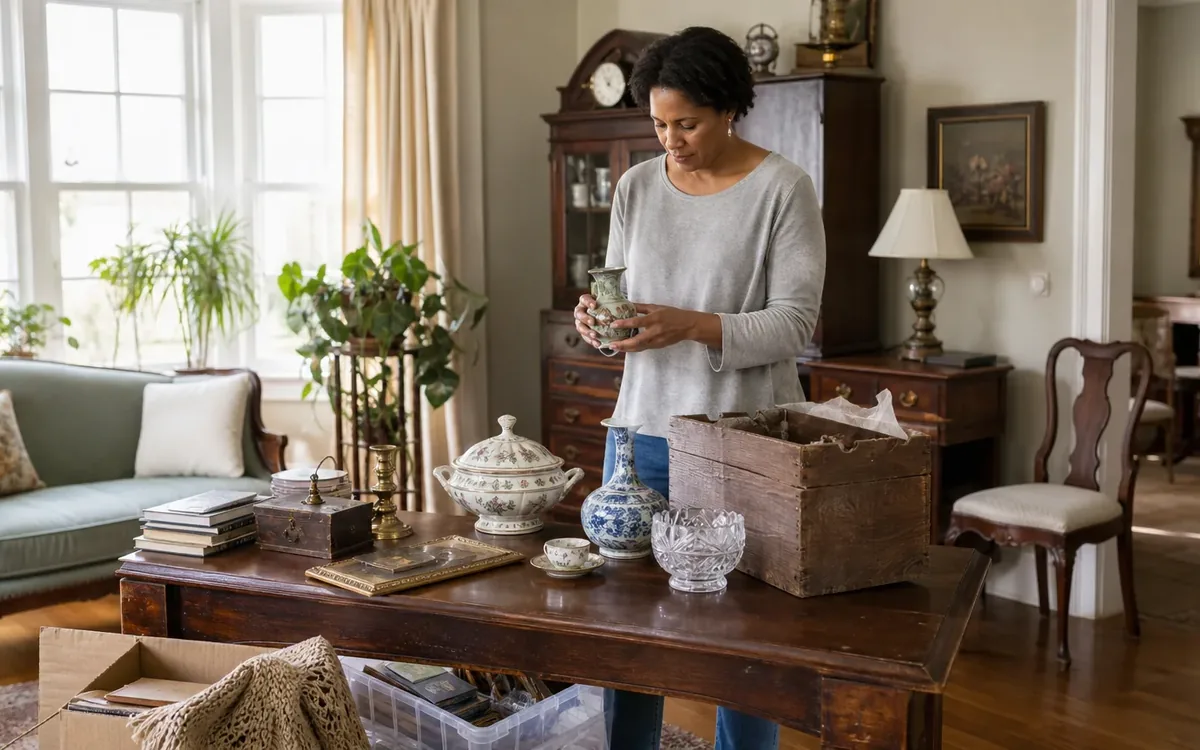
The safest way to separate items that may need professional appraisal is to pause disposal, create a protected holding area, and sort by appraisal potential rather than appearance. Set aside anything with maker’s marks, signatures, precious-metal stamps, documented history, unusual age, specialized craftsmanship, or uncertain identity. A household can decide what to retain and whom to consult, but only a qualified appraiser should determine value for a specific formal purpose.
Quick answer: Do not try to identify every item during the first pass. Make three groups: appraisal candidate, ordinary household item, and uncertain. Photograph candidates, keep related documents with them, and avoid cleaning or repairing them. Then ask the appropriate appraiser whether an inspection is warranted before arranging an auction, estate sale, donation, or cleanout.
This approach is useful across South Carolina, whether a family is settling an estate, downsizing, preparing a home for sale, or helping a relative move. It reduces the risk of losing potentially important items without treating every old possession as valuable.
Why separate appraisal candidates before the main cleanout?
A fast cleanout can blur several different decisions. One person may be thinking about sentimental importance, another about resale, and another about how quickly the property must be emptied. Separating possible appraisal items creates room for those decisions without stopping all progress.
This is especially important before:
- Donating large groups of belongings
- Scheduling an estate sale or auction
- Discarding damaged or unidentified objects
- Dividing property among heirs or beneficiaries
- Cleaning, refinishing, or repairing older items
- Moving contents to storage
- Preparing a house for listing or closing
The goal is not to predict value. It is to identify objects that deserve a closer look before an irreversible choice is made.
If the household expects an auction or sale, review the practical scope of auctions and estate sales support early. For the broader order of estate work, see what is the best way to clean out an estate. These steps help keep sorting, valuation, sale planning, and removal from being treated as one decision.
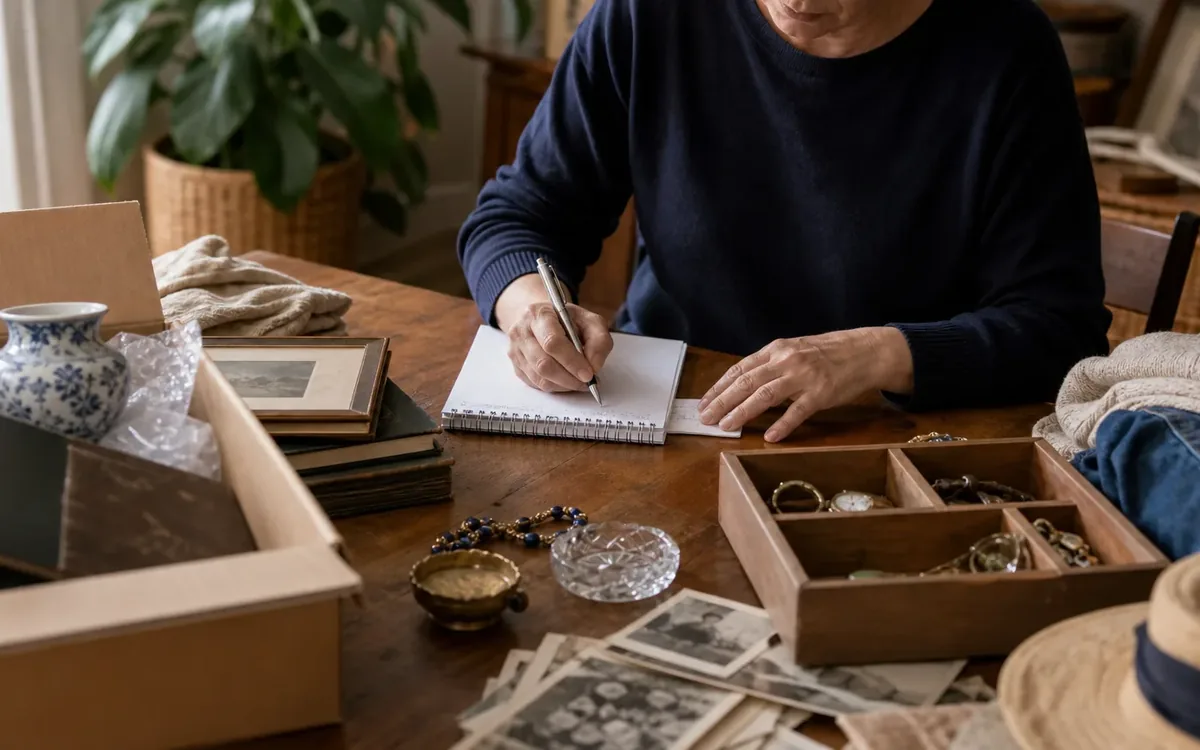
What signs suggest an item may need professional appraisal?
No single sign proves that an object is valuable. Instead, look for combinations of identifiable features, quality, rarity, condition, and documentation.
Marks, signatures, and labels
Set aside items bearing information that could help an expert identify them, including:
- Artist signatures or monograms
- Manufacturer names and model numbers
- Silver, gold, platinum, or other metal stamps
- Pottery or porcelain backstamps
- Furniture labels, brands, or handwritten shop marks
- Serial numbers on instruments, watches, equipment, or firearms
- Edition numbers on prints or sculpture
- Retailer labels associated with an original purchase
Photograph both the entire object and the mark. Do not scrub a faint mark in an attempt to make it readable.
Evidence of age or specialized construction
Hand-cut joinery, hand-painted decoration, unusual hardware, woven details, carved surfaces, or nonstandard materials may justify further review. Age alone does not create value, and reproductions can also look old. Treat construction details as clues rather than conclusions.
Documentation or provenance
Provenance means the documented ownership or history of an item. Helpful materials may include:
- Original receipts
- Certificates of authenticity
- Prior appraisals
- Exhibition or gallery paperwork
- Insurance schedules
- Correspondence mentioning the object
- Photographs showing it in the family or a previous setting
- Maintenance records for watches, vehicles, instruments, or machinery
Keep originals together in a labeled folder. A prior appraisal may be informative, but it may not reflect current value or satisfy the household’s present purpose.
Collections and grouped material
A single coin, stamp, book, or decorative object may appear ordinary outside its collection. Keep collections intact until someone with appropriate knowledge can review them. Preserve albums, cases, labels, handwritten notes, and original packaging.
How should the first sorting pass work?
Use a broad, reversible sort. The first pass should protect possibilities, not settle value.
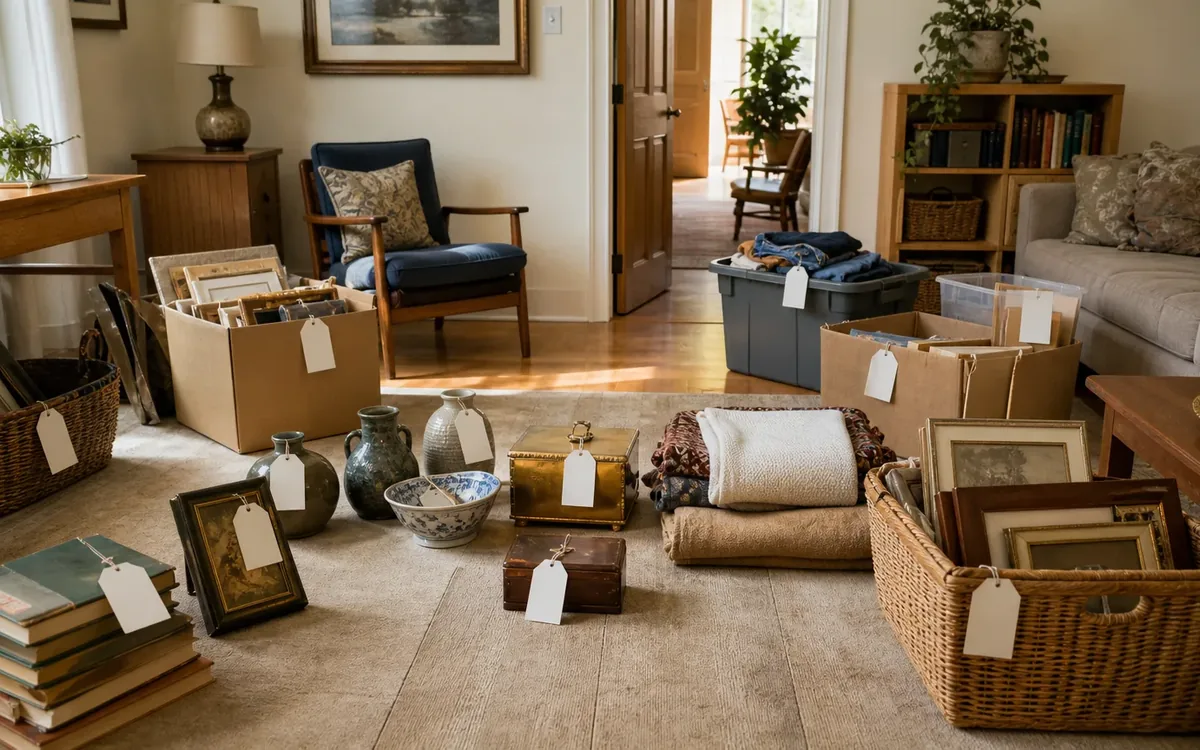
Create three clearly labeled zones:
- Appraisal candidate: An item has a mark, documentation, unusual quality, collection context, or another reason for specialist review.
- Ordinary household item: The household is reasonably comfortable handling it through the normal keep, sell, donate, recycle, or discard process.
- Uncertain: No one can identify the item, ownership is unclear, or family members disagree about its handling.
Place candidates and uncertain items away from outgoing donations, rubbish, packing materials, and sale inventory. A separate locked room is helpful when available, but labeled shelving or sealed bins can also reduce accidental mixing.
Use an inventory number rather than a price guess. A basic entry can include:
- Item number
- Short description
- Room where it was found
- Visible mark or signature
- Condition concerns
- Related paperwork
- Current storage location
- Required follow-up
For example: “A-014, framed landscape, signed lower right, found in upstairs bedroom, surface flaking, receipt in blue document box.” That is more useful than writing “valuable painting.”
Which categories deserve an extra pause?
Many everyday belongings can move through an ordinary household sort. Certain categories, however, are more difficult to identify accurately without specialized knowledge.
Consider pausing these items when age, authorship, authenticity, rarity, or condition is uncertain:
- Fine art, prints, sculpture, and studio pottery
- Antique or designer furniture
- Jewelry, watches, precious metals, and loose stones
- Coins, currency, medals, stamps, and tokens
- Rare books, manuscripts, maps, and signed documents
- Musical instruments and bows
- Historic textiles, quilts, rugs, and clothing
- Asian art and decorative objects
- Military items and historical memorabilia
- Collectible toys, advertising pieces, and sports memorabilia
- Vintage electronics, cameras, and specialized equipment
- Firearms and related accessories
- Vehicles, boats, and machinery
This is a screening list, not a statement that everything in these categories needs a formal appraisal. A brief conversation with the appropriate specialist may establish that some items do not justify further work.
Firearms, ammunition, regulated materials, prescription medications, financial records, and hazardous substances also require handling apart from ordinary sale or disposal. The responsible authority or qualified professional should address applicable transfer, safety, and compliance requirements.
What should you avoid doing before an appraiser reviews the item?
Well-intended changes can remove evidence, alter condition, or make authentication harder. Until the right specialist advises otherwise, avoid:
- Polishing metal or silver
- Washing old textiles
- Applying oil, wax, or furniture polish
- Gluing loose pieces
- Reframing artwork
- Removing labels or old backing paper
- Taking clocks, watches, or instruments apart
- Replacing worn hardware
- Separating objects from fitted cases or original boxes
- Throwing away damaged fragments
Use stable, dry storage where practical. Keep objects off damp floors and away from direct sunlight, active leaks, pests, and heavy traffic. Do not stack fragile artwork face-to-face or place heavy objects on textiles.
If an object is actively deteriorating, ask an appraiser, conservator, or other appropriate specialist how to stabilize it. An appraiser estimates value for a defined purpose. A conservator addresses preservation and treatment. Those roles are related but not interchangeable.
How do you choose the right kind of appraiser?
Start with the reason the valuation is needed. An estimate for deciding whether to include an item in an estate sale is not necessarily the same assignment as an appraisal for insurance, tax, charitable contribution, equitable distribution, probate, or litigation.
Ask a prospective appraiser:
- What property categories do you specialize in?
- Do you have relevant education and current appraisal training?
- What type of value will the report address?
- What is the effective date of valuation?
- Will you inspect the item in person, remotely, or from photographs?
- What documentation will you need?
- Will the result be verbal guidance, a market estimate, or a written appraisal?
- Do you buy, sell, or broker the type of property being reviewed?
- How do you disclose potential conflicts of interest?
- How are fees structured?
The household can select whom to contact and decide whether the expected benefit justifies the cost. The appraiser determines the appropriate methodology, relevant market, assumptions, and scope of the valuation assignment.
An auction professional, estate-sale organizer, dealer, jeweler, or cleanout team may offer useful observations within their experience. Those observations should not be represented as an independent formal appraisal unless the person is qualified and engaged to provide that appraisal for the stated purpose.
How should sale planning and appraisal stay separate?
Appraisal and selling answer different questions. An appraisal develops an opinion of value under defined conditions. A sale tests what buyers will pay through a particular venue, market, and time frame.
Before consigning or pricing a possible high-interest item, clarify:
- Who owns it and has authority to sell it
- Whether beneficiaries or co-owners must approve
- Whether a formal valuation is required
- Whether the item is better suited to auction, estate sale, specialist dealer, private sale, or retention
- What fees, reserves, commissions, transport needs, and sale terms apply
- Whether the potential seller or buyer has a financial interest in the valuation
An auction or estate-sale professional may discuss audience, sale format, likely buyer interest, presentation, scheduling, and consignment terms. A real-estate agent addresses the marketing and sale of the real property, not the authentication or formal valuation of personal property unless separately qualified.
Attorneys, personal representatives, trustees, tax professionals, courts, insurers, and government agencies determine what documentation or process applies to their respective matters. The household and cleanout team should not substitute their judgment for those responsible parties.
What can a practical cleanout or move team discuss?
A practical team can help the household maintain the separation system while other professionals perform their roles. Depending on the agreed scope, discussion may cover:
- Creating clearly marked holding areas
- Keeping documents and accessories with their associated objects
- Building a basic room-by-room inventory
- Photographing items for identification requests
- Preventing appraisal candidates from entering donation or disposal loads
- Coordinating the order of sorting, specialist review, packing, sale preparation, and removal
- Flagging unidentified objects for the household’s decision
- Preparing non-appraisal items for the next approved destination
Clutter Cleaner of South Carolina offers estate cleanouts, downsizing and organizing, auctions and estate sales, move management, home sale preparation, and code compliance support across South Carolina. The appropriate scope depends on the property, timeline, and household instructions.
A practical team should not decide legal ownership, resolve inheritance disputes, authenticate objects, issue formal value conclusions, give tax advice, perform a home inspection, or make legal compliance determinations. Those questions stay with the attorney, appraiser, real-estate professional, inspector, accountant, conservator, law-enforcement agency, court, municipality, or other responsible authority.
What happens after appraisal candidates are separated?
The next step is triage, not immediate appraisal of every object.
Send a concise inquiry to a suitable professional. Include clear photographs, dimensions, marks, known history, condition notes, location in South Carolina, and the reason for seeking value information. Do not lead with a family legend as if it were verified. Label it as family history when relevant.
Then assign each item one of these next actions:
- Obtain an in-person appraisal
- Request a written appraisal for a defined use
- Seek specialist identification first
- Ask an auction house or sale professional about market suitability
- Retain for sentimental or family reasons
- Offer through the household’s chosen sale channel
- Donate, recycle, or discard after approval
- Keep on hold pending ownership or legal guidance
Record who authorized the action and when. If several family members are involved, use one shared decision log. This limits repeated conversations and helps prevent an item from being moved before its status is settled.
Only after the appraisal hold is released should the object join the wider sale, donation, moving, or cleanout stream.
FAQ
Does every antique need a professional appraisal?
No. Age alone does not establish market value. Set aside items with stronger indicators such as recognized marks, documented history, notable craftsmanship, rarity, or uncertain identity. A specialist may help narrow the group before formal appraisal.
Can online photos provide an accurate value?
Photos can support preliminary screening, but they may not reveal materials, condition, repairs, authenticity, dimensions, or construction. The appraiser decides whether remote information is sufficient for the intended assignment.
Should damaged items still be separated?
Yes, when the item otherwise has appraisal indicators. Damage can reduce value, but rarity or importance may still justify review. Keep detached pieces with the object and avoid repairs.
Is an estate-sale price the same as appraised value?
Not necessarily. Sale prices reflect venue, audience, timing, terms, and demand. An appraisal addresses a defined type of value, date, market, and intended use.
Who decides whether a formal appraisal is legally required?
The responsible attorney, court, tax professional, insurer, agency, or other authority should determine applicable requirements. A cleanout, moving, or sale team can help organize items and records but should not give that legal or regulatory conclusion.
What is the most useful first step?
Stop outgoing removal long enough to create appraisal, ordinary, and uncertain zones. Protect the uncertain group, document visible clues, and contact the appropriate specialist before cleaning, repairing, selling, donating, or discarding anything in it.



