
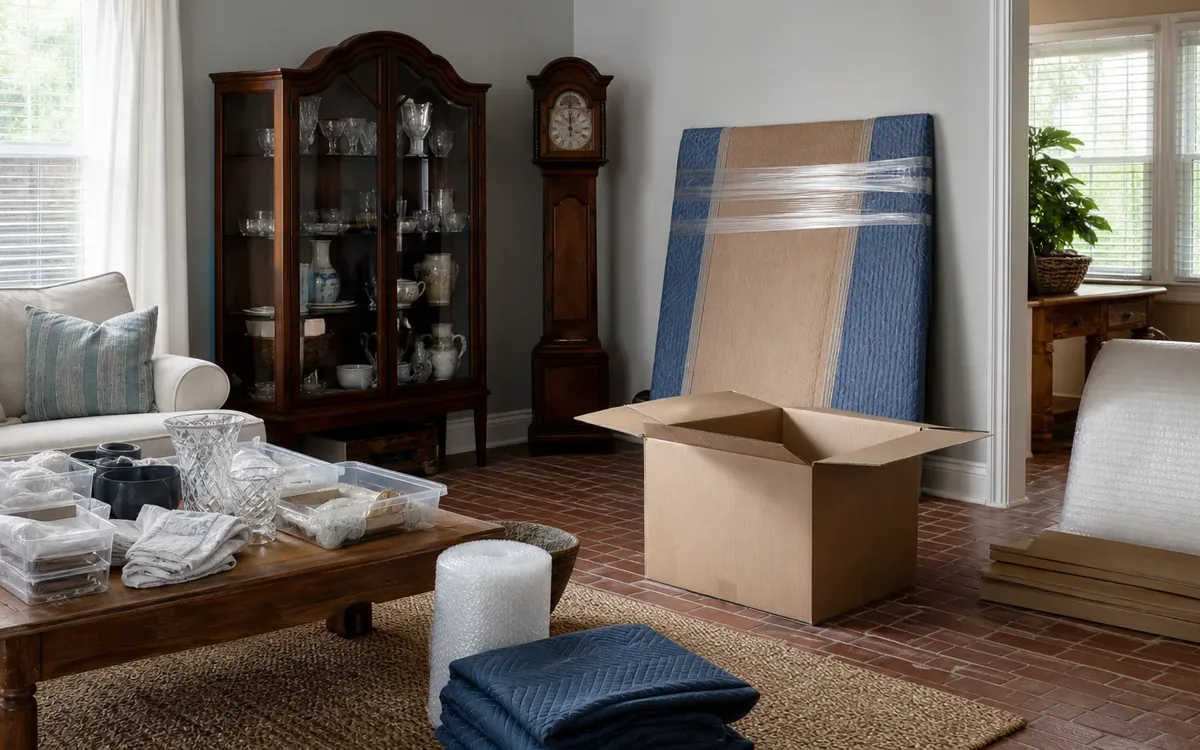
Prepare specialty items for a South Carolina move by keeping them in a stable indoor environment, documenting their condition, and choosing protective packaging that does not trap moisture. Musical instruments, artwork, and electronics need item-specific handling rather than extra layers of ordinary wrapping. Ask the appropriate specialist about sensitive materials, and plan the handoff between the old home, transportation, and the destination before packing begins.
Quick answer
- Keep sensitive items indoors until the loading plan is ready.
- Do not seal damp items or damp packaging inside plastic.
- Use fitted cases, original packaging, or specialist-recommended protection where appropriate.
- Photograph condition and record model numbers or identifying details.
- Confirm who will handle, transport, receive, and unpack each item.
- Follow manufacturer or specialist guidance before opening cases or powering electronics after a temperature change.
For Charleston-area households and moves elsewhere in South Carolina, the important issue is not humidity alone. Changes between air-conditioned rooms, outdoor air, vehicles, and storage can expose belongings to moisture and condensation. Preparation should reduce those changes without assuming every item needs the same treatment.
Why does humidity change how specialty items should be prepared?
Wood, paper, canvas, leather, and some adhesives respond to moisture. Electronic equipment has different vulnerabilities, including condensation around components and connections. A package that protects against scratches may not adequately address either problem.
Temperature changes matter because a cool object brought into warm, humid air can collect condensation. Conversely, moving an item through several environments can make it difficult to know whether moisture is present before it is sealed or switched on.
Focus on the transitions you can control:
- Where the item waits before loading.
- Whether packaging and protective materials are dry.
- Whether the loading route exposes the item to rain.
- What environment receives the item at the destination.
- Whether storage introduces another transfer and another change in conditions.
Avoid leaving sensitive pieces in a garage or on a porch simply because those areas make loading convenient. If staging outside is unavoidable, discuss an alternative loading sequence with the people responsible for transport.
A household can identify priorities and approve arrangements. A practical move team may discuss staging, labeling, access, and handling responsibilities. Neither substitutes for a conservator, instrument technician, or manufacturer when the item needs technical guidance.

Build an item-specific handoff plan before choosing packaging
Start with the belongings whose damage would be difficult to repair or whose handling requires special knowledge. This is a focused specialty-item inventory, not a list of everything in the house.
For each item, record its description, destination, existing condition, packaging needs, and responsible handler. Include photographs of fragile edges, existing cracks, connectors, and other details that could otherwise cause uncertainty later.
Useful entries might include:
- A cello traveling in its fitted case, with technician guidance requested.
- A framed watercolor needing advice about glazing and surface protection.
- A desktop computer with backed-up files and labeled cables.
- An inherited amplifier whose working condition is unknown.
Separate ownership decisions from transportation decisions. Deciding to keep an instrument does not establish that an ordinary vehicle or carton is suitable for it.
Clutter Cleaner of South Carolina’s move management service is a relevant starting point for discussing the coordination side of a transition. Ask which preparation tasks can be included and which require a separate specialist. Do not assume crating, technical servicing, or climate-controlled transportation is part of an arrangement unless it has been confirmed.
For specialty items inherited during an estate transition, the guide to how estate cleanouts work provides broader context. Keep the authority to distribute or sell estate property separate from the practical question of how to protect it during removal.
How should musical instruments be prepared for a humid-weather move?
Begin with the instrument’s existing case and the maker’s care instructions. Check that latches close securely, handles are sound, and interior supports still fit. A damaged case may allow movement even when the exterior appears protective.
Do not put a damp cloth, wet accessory, or recently cleaned item into the case. Separate loose accessories so they cannot strike the instrument. Photograph the instrument and case before closing them.
Different instruments require different decisions:
- String instruments: Ask a qualified technician about case support, humidity management, and any adjustment before transport. Do not automatically loosen strings.
- Woodwinds: Follow normal manufacturer-approved cleaning and drying procedures. Keep sections and accessories in their intended compartments.
- Brass instruments: Secure removable parts and avoid packing pressure on valves, slides, or bells.
- Keyboards and electronic instruments: Protect keys, controls, connectors, and power supplies with suitable fitted packaging.
- Pianos and organs: Discuss weight, access, handling equipment, and environmental conditions with a specialist mover or technician.
A humidity-control accessory suitable for one instrument may be inappropriate for another. Avoid improvising with loose desiccant or a household humidifier inside a case. Use only a method recommended for that instrument and enclosure.
At the destination, choose an indoor location away from direct sunlight, exterior doors, and supply vents. Let the technician or manufacturer guide any acclimation, tuning, or servicing. Do not promise that careful packing eliminates the need for adjustment.

Protect art without trapping moisture against the surface
Artwork preparation depends on the medium, condition, framing, and value. A glazed print, an unframed oil painting, and a mixed-media sculpture should not receive identical wrapping.
Photograph the front, back, frame corners, and visible condition concerns. Note loose glazing, flaking surfaces, distorted backing, or damaged hanging hardware. Avoid cleaning or repairing these issues just to make the piece ready for moving.
For a stable framed piece, discuss corner protection, a suitably sized container, and restraint that prevents shifting without pressing against the artwork. Keep adhesive tape off finished frame surfaces and artwork. Labels belong on the outer packaging.
For vulnerable pieces, get advice before wrapping:
- Unframed paintings with exposed surfaces.
- Pastels, charcoal, or other easily disturbed media.
- Flaking paint or loose decorative finishes.
- Photographs or works on paper showing moisture damage.
- Sculptures with projecting or poorly supported elements.
Plastic can serve a purpose in some transport arrangements, but sealing it around damp materials can trap moisture. Direct contact with a delicate surface may also cause damage. A conservator or experienced art handler should specify contact materials, barriers, and any crating needed.
Do not remove glass, detach a canvas, or disassemble a frame without appropriate guidance. Appraisal is a separate decision: an appraiser establishes an opinion of value, while a conservator assesses condition and treatment needs. Neither role should be implied by ordinary packing assistance.
What should you do before moving electronics into humid air?
Back up important files before disconnecting computers or storage devices. Confirm that you can access the backup, and keep account information separate from openly labeled moving cartons.
Photograph cable connections, then label cables and accessories by device. Remove discs and other removable media where the manufacturer recommends it. Follow device instructions for shutdown and battery handling rather than treating every electronic item alike.
Original packaging can be useful if its supports are intact and it is dry. Otherwise, choose packaging designed for the device’s size and fragility. Avoid pressure on screens, exposed ports, control knobs, and ventilation openings.
Practical preparations include:
- Keeping cords from rubbing against screens or polished surfaces.
- Using appropriate anti-static protection for exposed electronic components.
- Securing removable stands according to manufacturer instructions.
- Keeping accessories with their device without allowing them to move freely.
- Labeling orientation and handling needs on the outside.
Do not power on equipment that has visible condensation or may contain moisture. Follow manufacturer guidance for bringing it into its new environment before use. There is no single safe waiting period for every device and every temperature change.
If equipment has swollen batteries, corrosion, a burning smell, or existing water damage, stop and ask an appropriate repair or disposal provider about safe handling. Moving coordination does not determine whether damaged equipment is electrically safe.
Plan the vehicle-to-room transition, not just the box
A carefully packed item can still encounter problems if it waits outside while keys, access, or room assignments are sorted out. Decide where specialty items will go before loading starts.
Confirm that the receiving room is available and that the household can maintain suitable indoor conditions. Avoid setting boxes against a damp wall or on a floor with visible moisture. If the destination has unresolved leaks or moisture concerns, seek appropriate inspection or contractor advice before placing vulnerable belongings there.
Discuss these handoff details with the transport provider:
- How sensitive items will be identified without advertising their value.
- Whether the proposed vehicle and route suit their handling requirements.
- How loading and unloading will be protected from rain.
- Who receives the items and checks their condition.
- What happens if destination access is interrupted.
Temperature-controlled transport and storage are separate provider choices. Ask what conditions are actually maintained rather than relying on a general label. A household may choose another arrangement after reviewing the item’s needs, but that choice should be deliberate.
For irreplaceable pieces, also review transport terms and any applicable insurance coverage with the responsible provider or insurer. An inventory or photograph is useful documentation, not a guarantee of coverage.
Keep specialist decisions separate from move coordination
Clear role assignments prevent practical help from being mistaken for technical approval. The household can decide what to keep, where items belong, and what arrangements to authorize, subject to any ownership or estate restrictions.
A move or cleanout team may discuss inventory organization, accessible staging areas, destination labels, and coordination with separately selected providers. Confirm the actual scope before work starts.
Other decisions remain with the appropriate party:
- Instrument technicians: Adjustments, repairs, and instrument-specific care.
- Conservators and art handlers: Surface protection, treatment, and specialized handling methods.
- Appraisers: Valuation for the stated purpose.
- Repair technicians and manufacturers: Equipment safety and operating guidance.
- Attorneys or authorized estate representatives: Ownership, distribution authority, and legal questions.
- Inspectors, contractors, and relevant authorities: Building conditions, repairs, and compliance determinations.
Real-estate advice about a receiving property belongs with the responsible real-estate professional. Storage, contractor work, appraisal, and disposal arrangements should each be evaluated separately, not presumed to be included in move management.
Clutter Cleaner of South Carolina is based in Mount Pleasant, with Charleston as its primary market and a statewide service territory. Households can call (843) 972-7020 to discuss move-management coordination and clarify the scope appropriate to their transition.
Short FAQ
Should every specialty item be wrapped in plastic?
No. Plastic may trap moisture, and direct contact can harm some surfaces. Use item-specific guidance, especially for artwork and instruments.
Is climate-controlled storage enough protection?
Not by itself. Ask the storage provider about maintained conditions, access, and moisture management. Suitable packaging and careful transfers still matter.
Can I use desiccant in every case or carton?
No. Use it only when the manufacturer or relevant specialist recommends it for that item and enclosure.
What if a specialty item arrives damp?
Document the condition and avoid powering electronics or improvising repairs. Contact the responsible transport provider and an appropriate specialist for next steps.



