
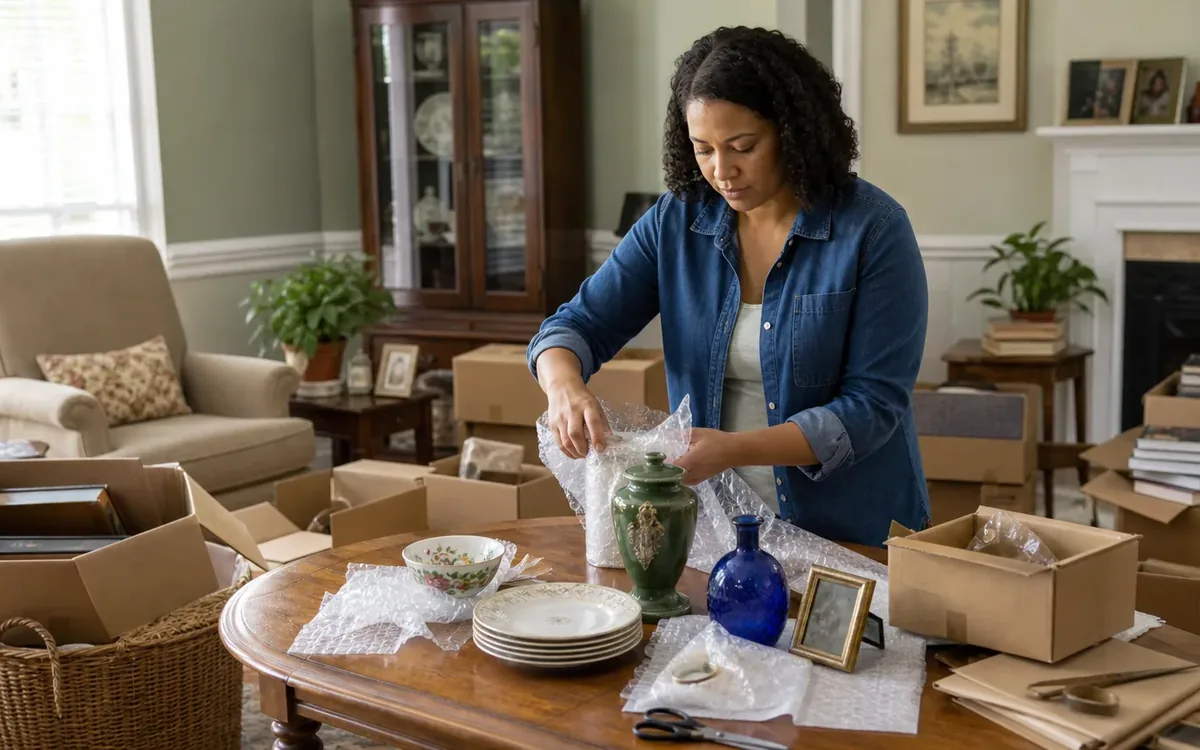
Preparing items for an online estate auction means deciding what may be sold, separating it from everything else, grouping related pieces, creating an orderly staging area, and planning how items will remain secure through photography and pickup. The household can control many of these physical and logistical choices, while ownership disputes, valuations, contracts, regulated goods, and legal decisions should go to the appropriate professional or authority.
Quick answer: First identify who has authority to make decisions. Remove personal papers, medications, family keepsakes, and anything not intended for sale. Then group auction items by category or logical set, assign each group a stable staging location, and preserve clear paths for photography and removal. Do not donate, discard, combine, or relocate uncertain property until the responsible person approves it.
What should happen before you move any auction items?
Begin with authority, not boxes. An online auction can involve an executor, personal representative, trustee, owner, family members, attorney, or auction company. Confirm who can approve the sale and who can answer questions when an item has unclear ownership.
The household can usually decide which personal belongings it wants to retain if the authorized decision-maker agrees. It can also establish working zones, schedule family review, and gather ordinary packing supplies.
Questions about estate administration, title, creditor rights, beneficiary rights, court requirements, or whether property may legally be sold belong with the responsible attorney, court, personal representative, or other authority. A cleanout or move team may help organize approved property, but it should not decide who owns disputed items.
Before physical sorting starts, establish these categories:
- Approved for possible auction
- Staying with the home or owner
- Reserved for family review
- Donation, recycling, or disposal, pending approval
- Personal and confidential material
- Uncertain ownership or legal status
- Items requiring specialist guidance
Use different rooms, shelving sections, or clearly labeled floor areas for each category. Avoid relying only on loose sticky notes, which can detach during handling.
If the home also requires broader clearing, review how estate cleanouts work before mixing cleanout decisions with auction preparation. Keeping those processes distinct reduces the chance that sale property is removed accidentally.
Build a sale boundary that everyone can recognize
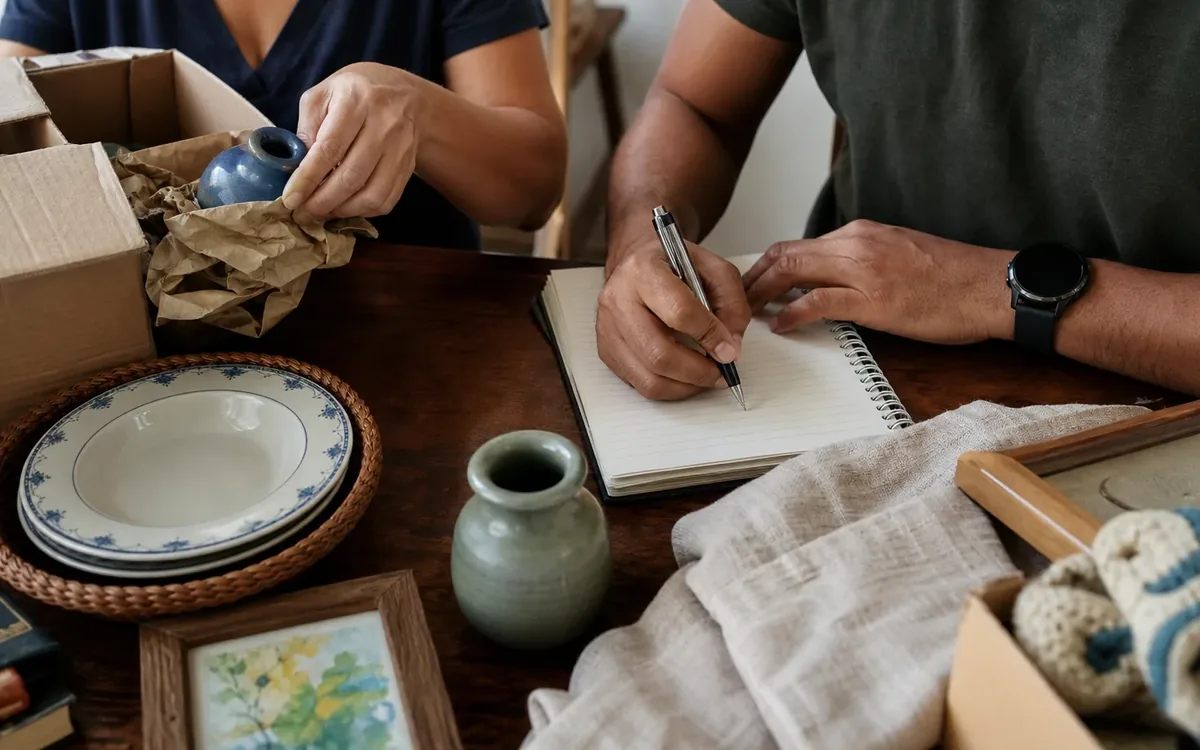
The most useful early step is creating a visible boundary around the auction inventory. In a full South Carolina household, possible sale items may be spread through closets, garages, attics, sheds, cabinets, and living areas. Consolidation makes the scope easier to understand and helps prevent repeated handling.
Choose one or more staging zones that are:
- Dry and protected from ordinary household traffic
- Large enough to separate groups without stacking everything together
- Accessible to the people coordinating the auction
- Away from donation and disposal piles
- Close enough to an exit for eventual removal
- Secure from children, pets, visitors, and unauthorized handling
A staging zone does not have to be one room. Large furniture may remain where it stands while small goods are consolidated elsewhere. What matters is a dependable location record and a rule that approved auction property does not migrate between zones without being logged.
Simple zone names work well, such as “Dining Room A,” “Garage Shelves B,” or “Upstairs Bedroom C.” Put the zone name at the entrance and use the same wording on your working inventory.
Clutter Cleaner of South Carolina offers auctions and estate sales support statewide. A practical team may discuss sorting flow, staging space, access, lifting concerns, removal order, and coordination between auction and cleanout activity. The auction provider should determine its own intake, lotting, photography, bidding, payment, and buyer-pickup procedures.
How should items be grouped for an online estate auction?
Group items according to how they naturally belong together, while leaving final lot decisions to the auction professional. The goal is not to create the catalog yourself. It is to prevent related pieces from becoming separated and to make the inventory easier to evaluate.
Useful physical groupings include:
- Complete place settings or matching tableware
- A tool with its case, attachments, or accessories
- Furniture with removable shelves, leaves, cushions, or hardware
- Framed pieces from the same collection or room
- Books organized by subject, series, or collection
- Seasonal decorations kept by holiday or theme
- Electronics with their dedicated remotes, cables, and manuals
- Matching lamps, chairs, side tables, or decorative pieces
- Hobby supplies associated with one activity
Place small accessories in a clear bag or small box labeled with the main object’s location. For example, hardware removed from a bed frame should remain attached to or directly beside that frame, not in a general hardware bin.
Do not bind, tape, or wrap pieces in a way that prevents the auction provider from seeing or photographing them. Avoid adhesive labels on delicate finishes, paper, fabric, artwork, or other surfaces that may be affected. Use freestanding cards, bags, boxes, or tags attached only where appropriate.
There is also value in leaving questionable combinations separate. Ten unrelated kitchen objects in one carton may be physically convenient, but that does not mean they should be treated as one auction group. Ask the auction professional before combining unrelated items or breaking up established sets.
This preparation is about physical relationships and location, not writing condition notes. Descriptions, representations, catalog terminology, and disclosure practices should follow the auction company’s process.
Protect documents, valuables, and sensitive property
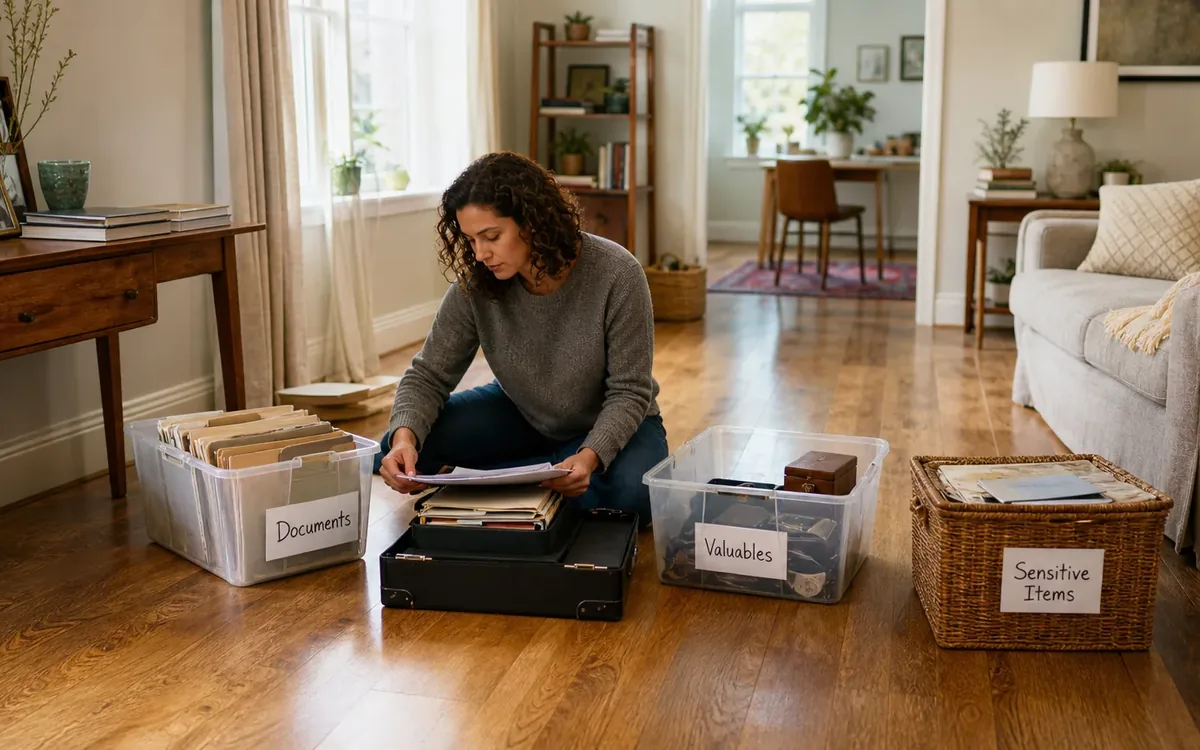
Online auction preparation often exposes material that was hidden in drawers, books, containers, or furniture. Every compartment should be checked by an authorized person before an item enters the sale staging area.
Set aside:
- Wills, trusts, deeds, titles, and tax records
- Bank, investment, insurance, and retirement documents
- Identification cards, passports, and medical records
- Photographs, letters, and family-history material
- Keys, combinations, passwords, and access devices
- Cash, gift cards, checks, coins, and small valuables
- Prescription medicines and medical supplies
- Digital devices containing personal information
- Firearms, ammunition, chemicals, or regulated materials
Finding these things does not mean the organizer should decide their legal significance. Financial papers can go to the authorized representative or relevant financial professional. Estate documents may need attorney review. Medication disposal should follow official guidance. Firearms and other regulated property require direction from qualified professionals or the proper authorities.
Digital devices deserve particular care. The household may decide to retain a phone or computer, but data access, erasure, account ownership, and transfer can involve privacy, contractual, or estate issues. Do not assume a factory reset resolves every concern. Seek appropriate technical and legal guidance when needed.
Valuable-looking objects should be secured while the authorized person decides what happens next. A cleanout or auction-support team may isolate the object and document its location. It should not authenticate art, identify precious materials, issue an appraisal, or promise a sale result unless the properly qualified professional is handling that work.
Create a location system without cataloging the sale
A short location list can prevent hours of searching. This is not the auction catalog and should not substitute for the auction provider’s records. It is simply a household logistics tool.
A practical list might include:
- Temporary household reference number
- General item or group name
- Room or zone
- Number of associated pieces
- Accessories stored separately
- Decision status
- Person who approved the status
- Special handling or access issue
For example, a dining table could be recorded as “Group 12, dining room, table plus two leaves, leaves in hall closet.” That note preserves the physical relationship without making claims about age, maker, condition, value, or authenticity.
Use the same reference on any accessory container. If an object is moved, update the location immediately. One designated person should maintain the working list so competing versions do not circulate.
Photographs can support location control. A simple overview image of each staging zone can show where groups were placed. Auction photography is different and should follow the provider’s standards. Household reference photos should not be assumed to be adequate listing images.
Keep sensitive records out of shared buyer-facing folders. Decide who can access the working list, especially if it contains addresses, security information, names, or notes about valuable property.
How do you prepare the home for photography and pickup?
Create enough working room for the auction provider to see, photograph, measure, and eventually release items. This does not require making the entire home showroom-ready. Focus on safe access and separation.
Before photography, aim to:
- Clear ordinary clutter from around staged groups
- Open a practical route between zones
- Make matching pieces easy to find
- Keep accessory bags with their primary items
- Provide access to outlets if the provider requests it
- Identify locked rooms or cabinets in advance
- Keep pets and unrelated visitors away from work areas
- Avoid packing approved items into opaque moving boxes
Before pickup, consider traffic flow from each zone to the exit. Measure tight doorways, stair turns, elevators, gates, or other constraints when large objects are involved. The household can share these measurements and decide which approved exit may be used.
A move or cleanout team may discuss furniture pathways, labor coordination, floor protection, disassembly logistics, and the sequence for clearing rooms. Structural questions, unsafe building conditions, repair decisions, and code interpretations belong with inspectors, contractors, engineers, code officials, or other responsible professionals.
Do not remove permanent fixtures merely because they resemble personal property. Built-in cabinets, attached lighting, mounted equipment, and some appliances may raise questions about what transfers with a home. If a property is being sold, the real-estate professional, closing attorney, contract parties, or other appropriate professional should clarify what is included. A cleanout team should act only after that decision is made.
Plan for buyer collection before bidding begins
Buyer pickup can affect how the entire staging system should be arranged. Ask the auction provider how it controls scheduling, proof of payment, buyer identification, missed pickups, loading help, and unclaimed purchases. Those policies belong to the provider, not the household organizer.
Physical planning can still begin early. Determine:
- Which entrance buyers or movers may use
- Where vehicles can be directed without blocking others
- Whether stairs or long carries are involved
- Which objects may need professional movers
- Whether sold items must pass through unsold areas
- How household members and personal property will remain separate
- Who will be present on collection day
- When access to the property ends
Do not promise buyers tools, labor, packing materials, dismantling, or extended access unless the responsible provider has expressly approved those arrangements. Likewise, do not allow early removal based on screenshots or informal messages if the auction company uses another verification process.
Sequence can reduce disruption. Items nearest the exit should not block access to pieces deeper in the home. Large furniture may need a planned route even if it remains in place for photography. Small purchases can be arranged in controlled release areas if the provider directs that approach.
In condominiums, managed communities, rental properties, or secured buildings, pickup may be subject to association, owner, management, parking, elevator, or access rules. The responsible property contact or authority should confirm those requirements. Do not invent or assume a statewide rule, because procedures differ by property and governing documents.
What should wait for a qualified professional?
Good preparation includes knowing when not to act. The household can sort authorized belongings, choose keepsakes, define access, organize physical groups, and approve ordinary logistics. A practical team can discuss workflow, staging, moving challenges, cleanout sequencing, and communication among the parties.
Other decisions should remain with the appropriate professional:
- Legal authority and ownership: Attorney, court, executor, personal representative, trustee, or other authorized party
- Value and authenticity: Qualified appraiser, specialist, or auction professional
- Auction terms and catalog decisions: Auction provider
- Real-estate inclusions and contract questions: Real-estate professional, closing attorney, and contract parties
- Building safety or defects: Qualified inspector, engineer, or contractor
- Code and compliance interpretation: Applicable authority or qualified professional
- Regulated or hazardous property: Proper authority or qualified specialist
- Tax consequences: Tax professional
Keep uncertain items in a clearly marked hold area. Waiting for a decision is usually safer than allowing a questionable object to enter the sale, donation stream, or waste container.
A focused preparation sequence
Use this order to keep the project centered on auction logistics:
- Confirm the authorized decision-maker.
- Mark areas that are not part of the project.
- Remove personal records and sensitive materials.
- Establish sale, hold, keep, and removal zones.
- Gather related objects and accessories.
- Record each group’s temporary location.
- Ask the auction provider about intake and lot preferences.
- Adjust groups only after receiving direction.
- Clear photography and removal paths.
- Confirm pickup access and property restrictions.
- Keep sold, unsold, donated, and retained property separate.
- Obtain approval before the remaining cleanout begins.
This sequence avoids turning the preparation period into an appraisal, cataloging exercise, or generic whole-house cleanout. Its purpose is to maintain control of the physical inventory until the responsible auction process takes over.
FAQ
Should everything be moved into one room?
No. Small objects may benefit from consolidation, but large furniture can often remain in place. Use clearly named zones and a location list so every approved group can be found.
Should family members choose keepsakes first?
Usually, family review should occur before final auction staging, subject to the authorized decision-maker’s instructions. Disputed or uncertain items should remain on hold rather than being sold or removed.
Can household boxes become auction lots?
Do not assume so. Keep related pieces together, but let the auction professional decide whether objects should be combined, separated, or excluded under its process.
Who determines what an item is worth?
A qualified appraiser, specialist, or auction professional should address valuation. A cleanout or move team can organize and protect an item but should not make unsupported value or authenticity claims.
When should the remaining estate be cleared?
Wait until auction property, retained belongings, and hold items are clearly separated and the authorized person approves the next phase. For broader planning, see the best way to clean out an estate.
Can Clutter Cleaner of South Carolina help with preparation?
Clutter Cleaner of South Carolina serves households across South Carolina with estate cleanouts, downsizing and organizing, auctions and estate sales, move management, home sale preparation, and code compliance support. Call (843) 972-7020 to discuss the project scope, physical staging needs, and coordination requirements.



