
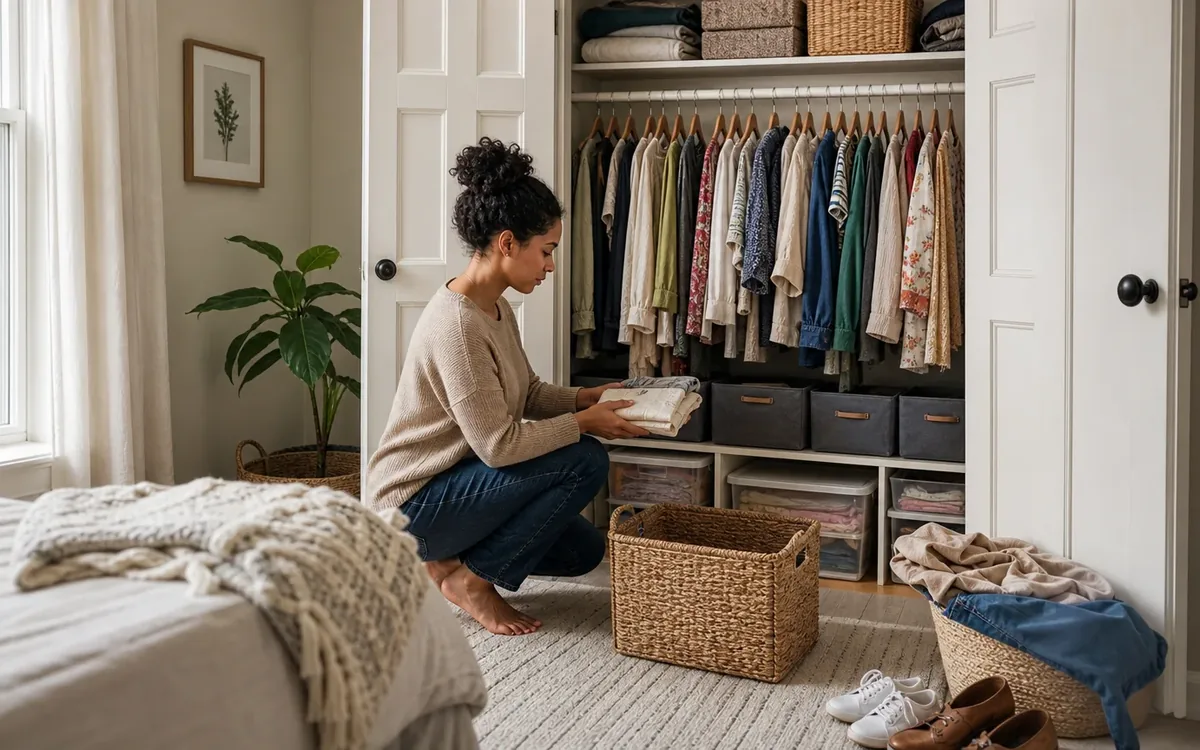
Closets should look spacious and orderly in listing photos, but you do not need to remove everything you use each day. The practical solution is to reduce visible volume, group the remaining contents, and place daily essentials in a small number of easy-to-reach containers. This creates cleaner sightlines without turning normal routines into a search through sealed boxes.
Quick answer: Keep frequently used items in one accessible zone, remove off-season and duplicate belongings, and give every visible category a clear boundary. Avoid stuffing another closet, garage, or cabinet just to clear the photographed space. The goal is a home that remains functional after the photographer leaves.
Why do closets matter in listing photos?
Closets help buyers understand storage capacity. A crowded closet can make the space appear smaller, while a completely empty closet may offer little visual scale. A lightly filled, organized closet usually communicates capacity more clearly.
The purpose is not to create an unrealistic display. It is to make shelves, hanging rods, floors, and corners easy to see. Buyers should be able to understand the closet’s layout without personal belongings dominating the image.
Closet preparation also affects showings. A photographer may frame an image carefully, but prospective buyers may later open doors and look inside. Moving clutter just beyond the camera’s view can create a poor follow-up impression and make daily life harder for the household.
If closet work is part of a wider sales plan, review the available home sale preparation service before deciding whether your household will complete the work independently or discuss practical support.

Start by choosing what must remain accessible
Before removing anything, identify the belongings the household still needs during the listing period. This prevents useful items from being packed into the wrong box or moved off-site unnecessarily.
Focus on actual routines rather than everything that might conceivably be needed. Daily and recurring essentials might include:
- Work or school clothing
- Frequently worn shoes
- Weather-appropriate outerwear
- Laundry supplies
- Towels and bed linens currently in rotation
- Toiletries and personal-care backups
- Mobility or accessibility items
- Children’s routine supplies
- Pet care items
- Important documents that require secure access
Each household can decide what qualifies as essential. A cleanout, organizing, or move team may discuss sorting zones, packing order, container choices, and access needs. It should not decide which personal documents, medications, financial records, or sentimental belongings a household must keep.
Create a firm limit for each essential category. For example, choose one shelf for active linens rather than allowing linens to spread across the entire closet. Use one shoe area for current footwear and one container for seasonal accessories.
This approach preserves access while making the closet’s structure visible.
What should you remove before the photographer arrives?
Remove items that add visual volume without supporting current routines. Start with belongings that are least likely to cause inconvenience if packed, donated, sold, recycled, or discarded.
Good early candidates include:
- Off-season clothing and footwear
- Duplicate linens and extra pillows
- Empty boxes and shopping bags
- Outgrown children’s clothing
- Rarely used luggage
- Old electronics and tangled cords
- Unused hangers
- Bulk purchases that overwhelm shelves
- Décor stored without a current purpose
- Items already designated for a move, sale, or donation
Do not make disposal decisions solely for the sake of a photograph. The household remains responsible for deciding what it owns, uses, values, or has authority to release. If belongings are part of an estate or shared ownership situation, confirm decision-making authority before selling, donating, or discarding them.
For a closet connected to a larger inherited-property project, the guide to how to get your house ready for listing photos explains how sorting, authority, and removal planning fit together.
Potentially valuable furniture, jewelry, collections, art, and antiques should be separated rather than casually added to a discard pile. A qualified appraiser or appropriate resale professional determines value. An auction or estate-sale provider may discuss whether certain property suits its process, but value and sale outcomes should not be assumed.
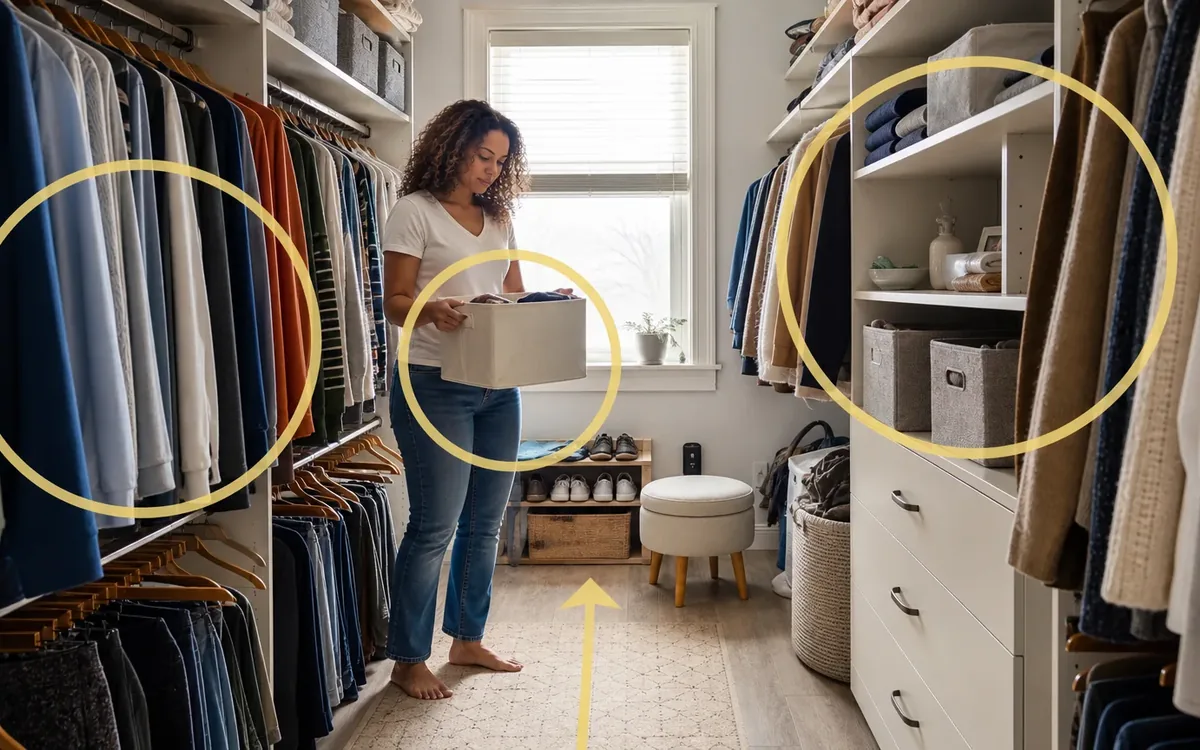
Use a three-zone closet plan
A simple three-zone arrangement keeps essentials available while reducing visual noise.
-
Active zone: Reserve the easiest-to-reach rod, shelf, or drawer for current essentials. Keep categories together and leave enough open space to remove an item without disturbing everything else.
-
Packed transition zone: Place belongings that will move with the household into labeled, closed containers. Keep this zone compact and away from the closet’s main sightline. If boxes must remain in the home, align them neatly rather than building unstable stacks.
-
Exit zone: Separate belongings intended for donation, sale, recycling, disposal, or return to another person. Do not let this become permanent storage. Confirm the destination and the household member authorized to make the decision.
The active zone makes daily life manageable. The packed zone advances the move. The exit zone prevents unwanted belongings from returning to shelves after sorting.
Use labels based on action and contents, such as “Pack: winter coats” or “Keep accessible: work clothes.” Labels like “miscellaneous” transfer confusion to the next stage.
Do not place names, medical details, financial information, or other sensitive data on labels that could appear in photographs or be visible during a showing.
How can you make a closet look larger without emptying it?
The most effective visual improvement is to expose the closet’s boundaries. Buyers should be able to see where the floor ends, how far shelves extend, and how clothing fits along the rod.
Use these presentation choices:
- Leave visible gaps along hanging rods.
- Remove items from the closet floor when possible.
- Face hangers in the same direction.
- Group similar garment lengths together.
- Fold visible linens into stable, even stacks.
- Place small loose items inside plain bins or baskets.
- Keep containers below shelf edges.
- Remove dry-cleaning bags and damaged hangers.
- Clear the back of the door unless its organizer is tidy and useful.
- Replace burned-out bulbs if the fixture and electrical setup are safe.
Matching containers can reduce visual distraction, but buying a new set is not required. Clean containers already in the home may work. Neutral boxes are helpful only if they fit the shelves and have a defined purpose.
Avoid compressing clothing so tightly that it cannot move along the rod. Also avoid transferring excess belongings to a bedroom corner that will appear in another photograph.
A closet can remain visibly used. A few coats, shoes, or linen stacks help show function. The aim is controlled occupancy, not a staged space that no longer supports the residents.
Protect privacy and security during photo preparation
Listing images can circulate beyond the household. Examine closet contents for information or belongings that should not be visible.
Remove or secure:
- Passports, tax records, and financial documents
- Prescription labels and medical paperwork
- Keys, access cards, and alarm information
- Jewelry and small valuables
- Firearms and related equipment
- Children’s school or identity information
- Mail showing names, account details, or addresses
- Calendars displaying travel or work schedules
- Family photographs the household prefers not to publish
The household should choose an appropriate secure location. A move or organizing team may discuss packing and access, but it does not replace legal, financial, insurance, or security advice.
If a safe is built in or difficult to relocate, ask the real-estate professional how it may affect photographs and property marketing. Questions about whether a fixture conveys with the property belong with the listing professional, closing professional, attorney, or other responsible party.
Do not conceal property defects behind bins, clothing, or temporary coverings. Inspectors and relevant professionals determine the significance of defects and necessary reporting or repairs. Cosmetic organization is not a substitute for inspection or disclosure guidance.
Keep daily routines working between photography and showings
Closet preparation often fails when residents cannot maintain the arrangement. Build a simple reset system instead of expecting the household to preserve a display perfectly.
An effective maintenance setup may include:
- One hamper for clothing awaiting laundry
- One basket for items that need to be returned to the closet
- One accessible container per person’s daily accessories
- A designated shoe limit near the entry or bedroom
- A temporary hook for tomorrow’s outfit
- A small supply of empty hangers
Keep the reset containers out of the primary photograph sightline, but do not bury them behind packed boxes. Everyone using the closet should know where active items belong.
Before a showing, return loose belongings to their assigned categories rather than pushing them into a random bag. If a container repeatedly overflows, reconsider what qualifies as essential or assign more realistic space to that category.
Households with children, caregiving responsibilities, mobility needs, or home-based work may require more visible essentials. Function and safety should take priority over achieving a sparse appearance.
Where should the removed belongings go?
Moving items out of a closet only helps if each item has a destination. Choose among packing, off-site storage, sale, donation, recycling, disposal, or transfer to the rightful owner.
These are separate decisions:
- Packing: The household decides what will move and what must remain accessible. A move-management provider may discuss sequencing, labeling, and coordination.
- Storage: The household selects a facility or other arrangement after considering access, security, contracts, insurance, climate needs, and cost. Storage is not automatically part of organizing or cleanout work.
- Sale or appraisal: A qualified appraiser determines formal value when needed. Auction and estate-sale providers have their own acceptance standards and processes.
- Donation: The receiving organization decides what it accepts. Confirm current rules directly before transporting belongings.
- Disposal or recycling: Facilities and local authorities set acceptance requirements. Hazardous, restricted, electronic, or regulated materials may need a specialized destination.
- Contractor work: Repairs, shelf replacement, electrical work, painting, mold response, or pest treatment should be discussed with the appropriate contractor or specialist.
A practical cleanout or move team may discuss sorting, physical removal, packing coordination, room sequencing, and how to keep pathways clear. The household controls personal-property choices unless another authorized person has that responsibility.
Questions about ownership, estate authority, contracts, disclosures, title, or disputes stay with the appropriate attorney, personal representative, court, real-estate professional, or other responsible authority. Code and compliance determinations stay with the relevant authority, even when a provider offers logistical support related to a compliance plan.
Coordinate closet prep with the listing plan
Ask the listing agent or photographer which closets are likely to be photographed. Do not assume every storage space requires the same level of preparation. A prominent walk-in closet may need more visual editing than a small utility cupboard outside the planned shot list.
The real-estate professional should guide marketing decisions, including desired presentation, photography priorities, and listing strategy. The photographer controls image composition and technical choices. The household decides what personal property remains in the home.
If shelving is loose, doors do not operate correctly, or signs of water, pests, or electrical concerns appear, pause cosmetic work and consult the appropriate professional. A home inspector evaluates relevant property conditions within the scope of an inspection. Contractors determine repair approaches within their fields. Local or state authorities make applicable compliance decisions.
For households considering outside help, define the requested scope clearly. A useful discussion may cover:
- Which closets are in scope
- What the household will sort in advance
- Which belongings must stay accessible
- Who can authorize removal
- Where packed items will go
- Which categories require a specialist
- How work will fit around photography and household routines
Clutter Cleaner of South Carolina is based in Mount Pleasant, serves Charleston as its primary market, and has an approved statewide service territory. Availability and project scope should be confirmed directly rather than assumed from location alone.
A final photo-readiness check
Stand at the closet entrance and view the space as the camera might. Check that the floor, shelves, and hanging areas can be understood at a glance.
Confirm these five points:
- Daily essentials are accessible and grouped.
- Packed belongings are labeled and stable.
- Donation, sale, recycling, and disposal items have defined destinations.
- Personal information and valuables are secured.
- No clutter is concealing a condition that needs professional attention.
Then close and reopen the door. Nothing should fall, block movement, or prevent normal use. If the closet looks orderly but no longer works for the household, adjust the active zone before photography.
Frequently asked questions
Should closets be completely empty for listing photos?
Usually, complete emptiness is unnecessary unless the real-estate professional recommends it for a specific marketing reason. A limited number of organized belongings can demonstrate how the closet functions while preserving visible space.
Can I put everything in the garage before photos?
You can choose to stage belongings temporarily in another area, but shifting unsorted clutter may create a new problem for garage photographs, inspections, showings, or the move. Pack by destination and keep access routes clear rather than creating an unplanned pile.
Should closet containers all match?
No. Consistent shapes and restrained colors can look calmer, but fit and function matter more. Containers should sit securely on shelves, hold defined categories, and allow access to daily essentials.
Who decides whether an item should be sold or discarded?
The owner or another properly authorized person makes that decision. Appraisers, auction providers, estate-sale professionals, donation organizations, and disposal facilities may provide information within their roles, but they do not replace the authorized decision-maker.
What if the closet needs repairs before photography?
Discuss presentation priorities with the real-estate professional and repair needs with an appropriate contractor or specialist. Inspectors and authorities address inspection or compliance questions. An organizing or cleanout plan should not be presented as a repair assessment.
How do I request practical help?
Clarify whether you need sorting, organizing, move coordination, cleanout support, or broader home sale preparation. Clutter Cleaner of South Carolina can be reached at (843) 972-7020 to discuss requested scope and availability. Keep appraisal, legal, real-estate, inspection, contractor, storage, and compliance decisions with the appropriate provider or authority.



