

Prepare an estate auction pickup area by separating sold lots, confirming each item’s identity, creating a clear exit route, protecting surfaces, and defining who may move, disassemble, or release property. The household can organize access and protect the home, but the auction company should control buyer instructions, payment confirmation, lot release, and pickup policies.
Quick answer: Set aside a controlled staging area near the safest practical exit. Label sold lots exactly as directed by the auction company, remove unrelated property, photograph the setup, and keep buyers out of private rooms. Before pickup begins, get written direction about check-in, release authorization, loading help, missed pickups, damage, and items requiring specialized movers.
Why does the pickup area need its own plan?
An online auction may conclude on a website, but the transfer of property happens at the home, storage location, or another approved site. That handoff can create confusion if sold goods remain mixed with family possessions or if several people arrive without a clear route.
A pickup-area plan has three purposes:
- It helps the auction representative match each buyer with the correct lot.
- It limits buyer access to rooms containing private or unsold property.
- It reduces avoidable contact with walls, floors, doors, and fixtures during removal.
The goal is not to make the residence look like a retail store. It is to create a controlled path from check-in to the sold item and then to the buyer’s vehicle.
Household members may decide which private spaces remain closed, where personal papers are secured, and which surfaces they want protected. The auction company should decide how buyers check in and how purchases are verified. A practical cleanout or move team may discuss staging, pathways, lifting constraints, and post-auction clearing, but it should not independently release auction lots.
Clutter Cleaner of South Carolina provides statewide support related to auctions and estate sales. Exact responsibilities should be confirmed before work begins because auction administration, moving assistance, cleanout work, and property preparation are different scopes.
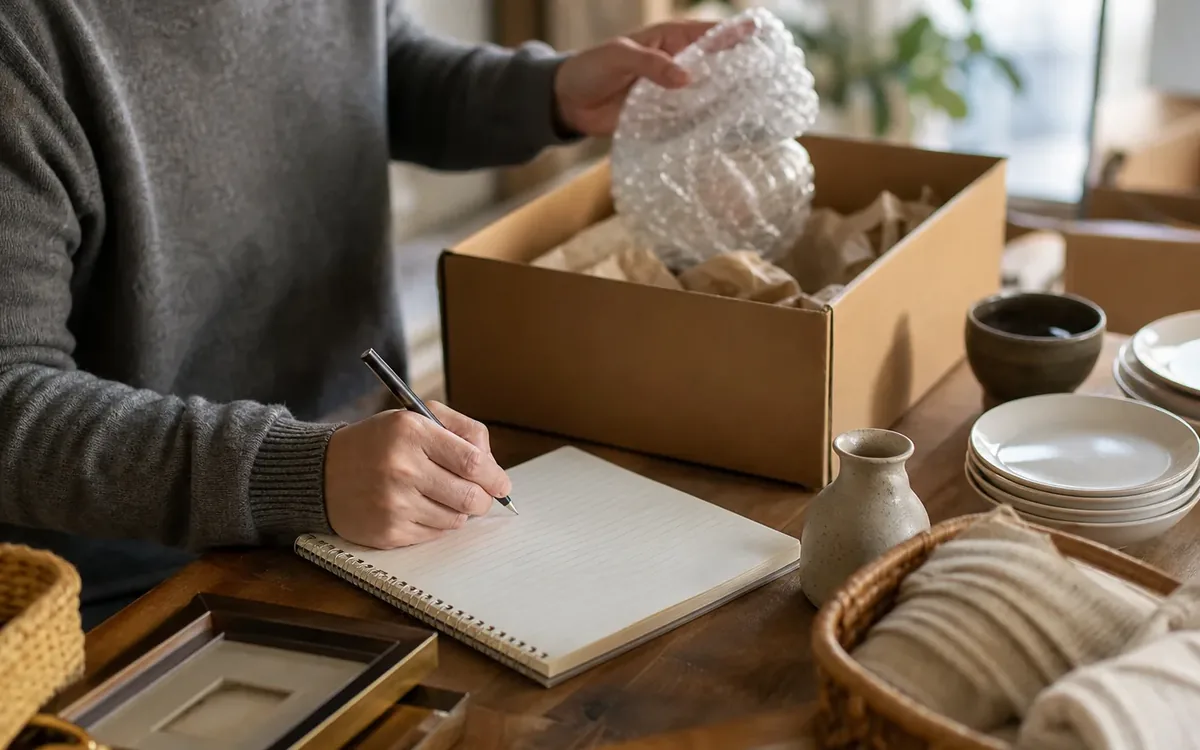
What should be settled with the auction company first?
Do not move every sold item toward the door until the auction company confirms its process. A change that seems efficient could separate a lot, disturb catalog numbering, or create uncertainty about what was included in the sale.
Ask the auction representative about these seven points:
- Pickup location: Confirm the exact address or collection point buyers received.
- Check-in procedure: Identify who verifies the buyer, invoice, or release authorization.
- Lot identification: Ask whether tags, printed invoices, stickers, or another system will be used.
- Staging permission: Determine which objects may be relocated before pickup and who will document the move.
- Loading responsibility: Clarify whether buyers must bring labor, tools, packing materials, dollies, and suitable vehicles.
- Special items: Flag safes, appliances, large furniture, fragile pieces, and anything attached to the property.
- Uncollected purchases: Obtain the auction company’s policy for missed pickups rather than making an informal disposal or storage decision.
Written instructions are useful when an estate has several heirs, a personal representative, real-estate professionals, and multiple vendors. They help everyone follow the same release process.
If the broader property still needs sorting, review how estate cleanouts work before combining that work with auction pickup. Auction lots should remain distinguishable from donations, retained property, trash, and items awaiting another decision.
How should sold lots be staged without creating mix-ups?
Use the auction catalog or authorized lot record as the source of truth. Avoid inventing a second numbering system unless the auction company approves it.
Start by dividing the space into clearly defined zones:
- Sold lots approved for staging
- Large sold items remaining in place
- Family-retained property
- Items excluded from the auction
- Packing materials or approved moving equipment
- Property awaiting professional review
Keep each multi-piece lot together. A dining set, collection, group of tools, or box lot can become disputed if one component is left in another room. Small accessories, keys, cords, shelves, remotes, and hardware should stay with the item when the catalog indicates that they are included.
Place labels where they are visible without damaging finishes. Do not apply aggressive tape directly to wood, paper, fabric, artwork, or delicate surfaces. Ask the auction company what labeling method it accepts.
Photograph the staged area after organization. Capture lot placement and the condition of nearby walls, floors, doors, and railings. These photographs are practical records, not appraisals or legal proof of ownership.
Do not place heavy objects on unstable tables or stack fragile lots for convenience. Keep liquids, chemicals, fuels, and sharp items separate until the auction company or an appropriate disposal or handling provider gives direction.
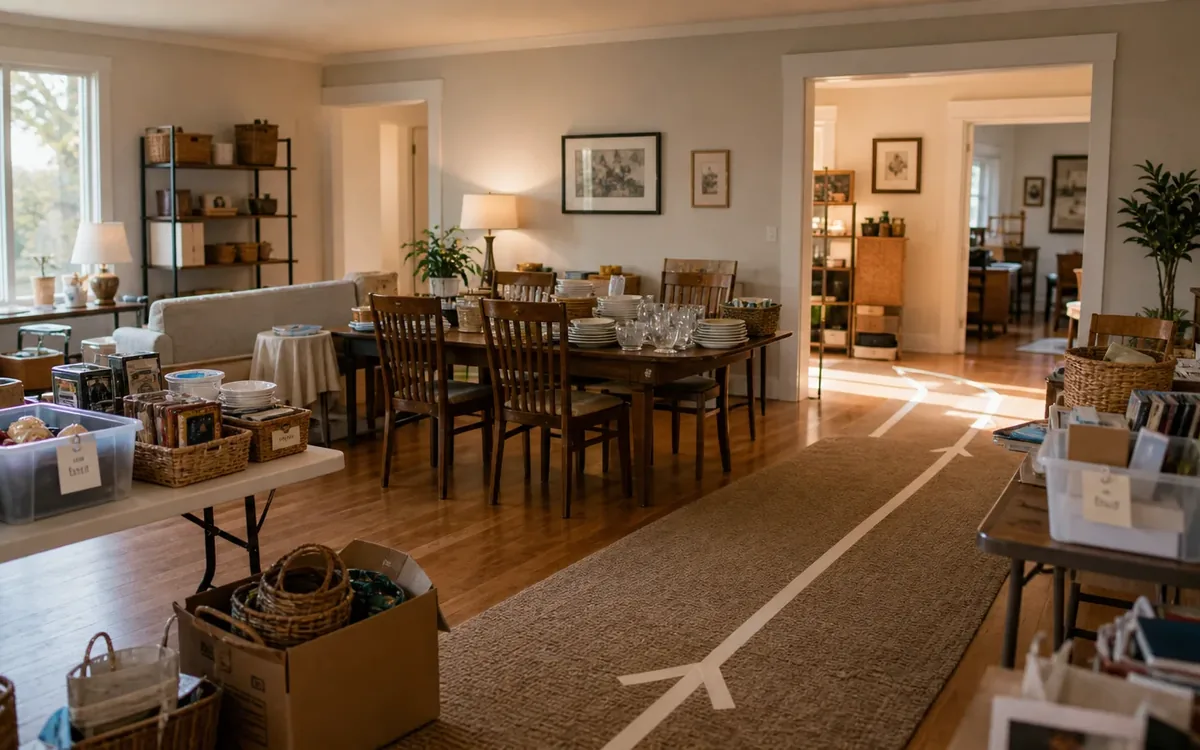
Build a clear buyer route through the property
Walk the intended route as though carrying the widest sold object. Look beyond basic foot traffic. Furniture may need room to rotate at corners, pass through doorways, or descend steps.
Check the route for:
- Loose rugs, cords, boxes, and low furniture
- Wet, uneven, soft, or slippery surfaces
- Low light at entries, halls, stairs, and exterior paths
- Narrow doors and tight turns
- Low ceilings, hanging fixtures, and wall-mounted décor
- Pets, children, or household activity
- Gates, parked vehicles, and landscaping that restrict access
- Doors that may close or lock during removal
Remove unrelated objects rather than simply pushing them to the edge of the route. A crowded margin can still interfere with a bulky item.
Surface protection is a household choice and should suit the property. Protective materials must lie flat, stay secure, and avoid creating a new trip hazard. Confirm that any floor covering is appropriate for the surface. If the residence has delicate flooring, unusual finishes, or existing damage, seek advice from the relevant flooring, restoration, or property professional.
Decide which entrance buyers may use and keep other doors secured as appropriate. If access crosses a shared drive, managed property, gated entrance, or restricted parking area, the responsible owner or representative should confirm applicable rules with the association, manager, owner, or local authority.
What should remain outside the pickup zone?
A pickup zone should contain only property needed for the scheduled handoff and approved supporting materials. Before buyers enter, remove or secure:
- Financial records and personal correspondence
- Prescription medication and medical information
- Identification documents, keys, and access codes
- Family photographs not included in a lot
- Jewelry, cash, firearms, and other controlled valuables
- Unsold items that could be mistaken for purchases
- Contractor tools or supplies belonging to another provider
- Documents connected with probate, title, tax, or real-estate matters
Private papers should not be placed into ordinary discard piles without review. The estate’s authorized decision-maker should determine retention and destruction with advice from the appropriate attorney, accountant, records professional, or agency when needed.
Some property should also remain in place until its status is resolved. Built-in appliances, mounted fixtures, architectural components, and items connected to plumbing, gas, or electricity may affect a real-estate transaction or require qualified removal. The auction company can explain what its lot description includes, but title, fixture, disclosure, and contract questions belong with the responsible attorney or real-estate professional.
Plan check-in, supervision, and lot release
Choose one controlled check-in point. Buyers should not have to search the residence for someone who can approve a release.
The auction company should establish:
- What proof of purchase is accepted
- Whether another person may collect for the buyer
- Who marks a lot as released
- How partial or disputed lots are handled
- Whether buyers sign any pickup documentation
- What happens when a buyer arrives outside the authorized arrangement
The household can identify restricted areas and appoint an authorized property contact. It should avoid overriding the auction company’s records or handing over an item based only on a buyer’s verbal description.
Supervision does not mean hovering over every movement. It means maintaining control of access, preventing entry into unrelated rooms, and knowing when a lot leaves. When several buyers are present, use the auction company’s queue or appointment process rather than improvising a new one.
Never assume a buyer can safely move a difficult object because that person purchased it. Loading responsibility, required equipment, and permitted assistance should be established in advance. Heavy, oversized, fragile, or regulated property may call for a separate specialty mover or qualified contractor chosen by the responsible party.
Separate moving decisions from property decisions
An efficient pickup still requires clear limits. Different decisions belong to different people.
The household or estate representative can decide:
- Which private areas remain closed
- Which authorized contacts may answer property questions
- Whether approved surface protection is used
- Where retained belongings are secured
- Which optional moving or cleanout help to engage
The auction company may address:
- Catalog descriptions and lot groupings
- Buyer instructions and pickup rules
- Payment or invoice verification
- Authorization to release sold property
- Its policy for missed or disputed pickups
A cleanout or move team may discuss:
- Practical staging space
- Clear carrying paths
- Labor and equipment considerations within its agreed scope
- Sorting remaining contents after authorized releases
- Preparing cleared areas for the household’s next step
Other professionals or authorities decide:
- Ownership, probate, contract, and liability questions
- Fair-market, tax, insurance, or charitable appraisals
- Building, electrical, gas, plumbing, and structural work
- Real-estate disclosures and transaction requirements
- Inspection findings and repair recommendations
- Disposal rules for hazardous, regulated, or restricted materials
- Local parking, access, fire, occupancy, or code requirements
A cleanout provider should not substitute its judgment for an attorney, appraiser, inspector, real-estate licensee, qualified contractor, disposal facility, or government authority.
Prepare difficult items before buyers arrive
Large and unusual lots create the most strain at pickup. Identify them early and record their removal constraints.
For furniture, measure the item and likely openings without promising that removal will be possible. Note detachable parts, but do not disassemble anything unless the owner and auction company authorize it and the person doing the work is qualified for the task.
For appliances, determine whether they are freestanding or connected. Disconnection from utilities belongs with an appropriately qualified provider when required. The household should also coordinate any effect on the home’s sale, inspection, or occupancy.
For safes, pianos, machinery, and exceptionally heavy objects, let the buyer and auction company know about stairs, slopes, narrow access, and surface limits. A specialty mover may need to evaluate the load and route.
For chemicals, fuels, compressed cylinders, batteries, paints, and similar materials, do not assume they can be sold, transported, or discarded with ordinary household goods. The responsible party should consult the auction company, product guidance, an appropriate disposal provider, or the relevant authority.
For wall-mounted or built-in items, confirm both sale status and removal responsibility. Any repair after removal is a separate household, contractor, and real-estate decision unless it is expressly included in a written scope.
Close out the area after the last authorized pickup
Do not begin broad disposal while buyers are still collecting lots. A seemingly empty box may contain a component, and an overlooked shelf or cord may belong to a purchased item.
After the auction company confirms that authorized pickups are complete, complete these five steps:
- Compare the remaining property with the auction company’s pickup record.
- Photograph uncollected lots and any visible property damage or debris.
- Ask the auction company how it will handle items that were sold but not collected.
- Separate retained belongings from items approved for donation, disposal, storage, or another sale method.
- Arrange cleanout, repair, inspection, appraisal, storage, or home-sale work as separate scopes where needed.
Storage should not be an automatic answer to indecision. The household should choose the provider, terms, access arrangement, insurance considerations, and duration based on its own needs and professional advice.
Likewise, post-pickup cleaning does not settle legal ownership or disposal authority. The estate’s authorized representative must approve what can leave the property. Clutter Cleaner of South Carolina can discuss estate cleanouts, move management, organizing, home sale preparation, and related practical support across South Carolina, but the exact work must be defined for the situation.
Short FAQ
Can buyers walk through the home to find their purchases?
Only if the auction company and authorized property representative permit it. A controlled pickup route is usually easier to supervise and helps protect private or unsold property.
Should every auction lot be moved near the exit?
No. Heavy, fragile, attached, or complex lots may be safer where they are. Get auction-company approval before relocating sold property.
Who decides whether an item can be disassembled?
The authorized owner or estate representative and the auction company should clarify permission and sale terms. A qualified mover or contractor should determine whether the physical work falls within its expertise and scope.
What happens to purchases that are not collected?
Follow the auction company’s written policy and any applicable legal direction. Do not donate, discard, resell, or place an item in storage merely because a buyer did not appear.
Can a cleanout team decide what is trash after pickup?
A team may help sort according to an approved plan, but the authorized household or estate representative must decide what may be removed. Regulated materials and legally sensitive property may require professional or government guidance.
Who handles damage found during or after pickup?
Document the condition and notify the responsible property representative and auction company. Questions involving liability, insurance, contracts, or claims should go to the relevant insurer, attorney, company, or other responsible professional.



