
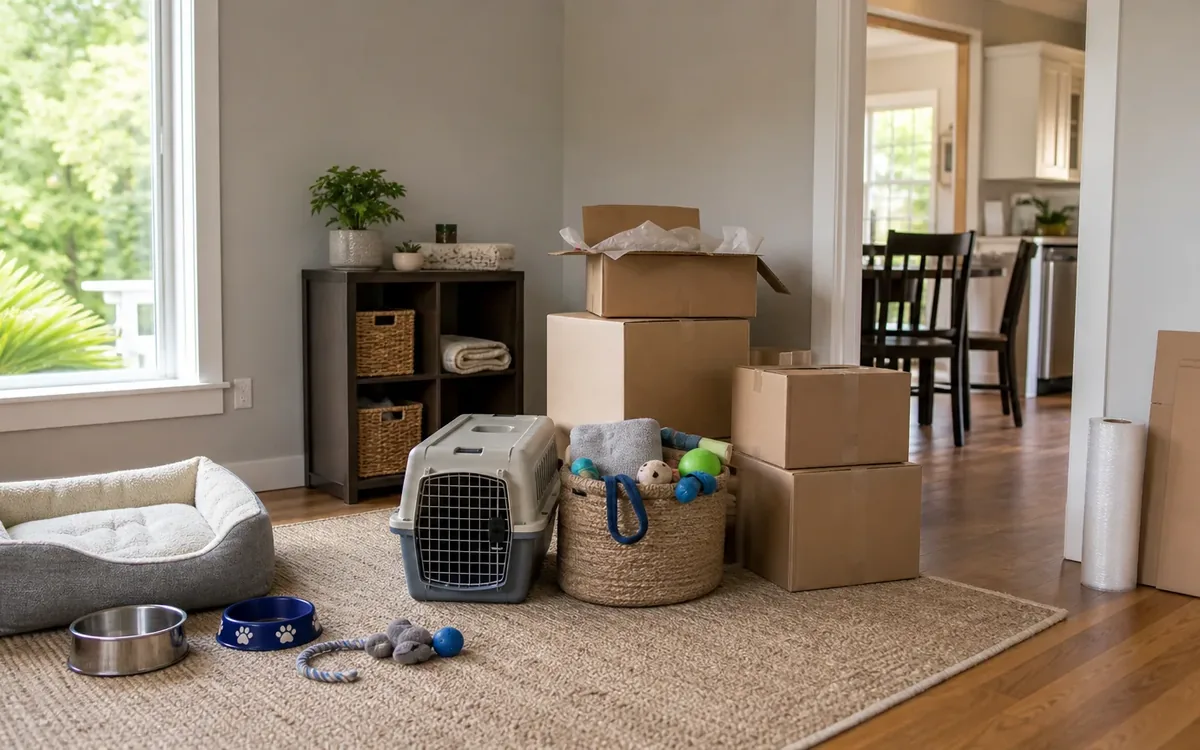
Prepare a pet for a household move in South Carolina by protecting its routine, arranging secure transport, and creating a quiet space away from open doors and moving activity. Keep food, medication, identification, and familiar bedding with you rather than in the moving load. Plan for heat and humidity, and ask your veterinarian about health concerns before travel.
Quick answer:
- Choose a responsible person to supervise each pet during loading and unloading.
- Introduce carriers, crates, or vehicle restraints before moving day.
- Prepare a pet essentials bag that stays within reach.
- Keep pets separated from movers, open doors, and unfamiliar animals.
- Confirm that the destination permits your pet and has a secure arrival space.
- Use your veterinarian for medical advice, medication decisions, and species-specific travel needs.
The goal is not to make your pet participate in the move. It is to give the animal a predictable, protected experience while the household changes around it.
What should you arrange for your pet before the move?
Start with your pet’s needs rather than the furniture schedule. A confident dog, an indoor cat, and a reptile with temperature-sensitive equipment require different arrangements.
Consider how your pet responds to noise, strangers, confinement, and car travel. Use those observations to choose between a closed room, supervision by a trusted person, or care through a separately arranged boarding or pet-care provider. Verify that any caregiver can handle the animal’s behavior and medical needs.
The household should decide who will:
- Feed, walk, and supervise the pet during the move.
- Carry the animal and its supplies to the vehicle.
- Administer prescribed medication according to veterinary instructions.
- Check the destination before releasing the pet.
- Respond if transport is interrupted or the animal becomes distressed.
A practical move team may discuss room access, loading order, and when a pet-safe room must remain closed. Those details fit naturally into move management planning for a South Carolina household. Pet handling, boarding, and veterinary care should remain separate household or provider arrangements unless expressly agreed otherwise.
Choose a backup caregiver, too. If the person responsible for the pet must leave unexpectedly, everyone should know who takes over. Avoid an arrangement in which several people assume someone else has the animal.
How can you reduce stress without disrupting your pet’s routine?
Keep meals, walks, litter access, and rest as familiar as circumstances allow. Moving changes smells, sounds, and access to favorite places. Preserving ordinary care gives your pet something recognizable within that disruption.
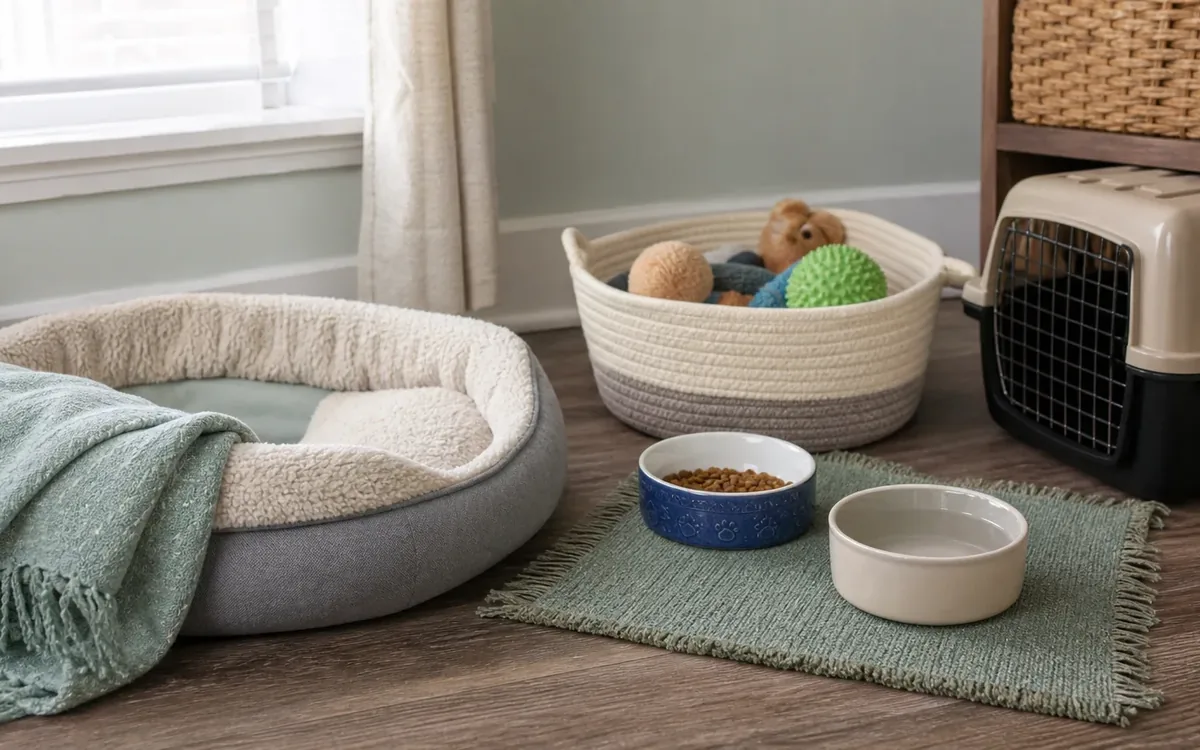
Set aside a quiet retreat before packing reaches the animal’s usual resting area. Include familiar bedding and appropriate water access. For cats, provide a litter box positioned away from food and water. For dogs, preserve a calm resting spot without giving unsupervised access to an active loading route.
Introduce travel equipment gradually. Leave an appropriate carrier accessible and encourage voluntary exploration with familiar bedding or rewards suited to the animal. Practice securing it in the vehicle without turning every interaction into a departure.
Watch for changes such as hiding, unusual vocalizing, pacing, reduced appetite, or toileting outside the normal area. These changes can reflect stress, but they can also signal illness. Contact your veterinarian rather than assuming the move explains everything.
If the move follows a death or major downsizing, familiar objects may be especially helpful while rooms are cleared. The household can reserve pet bedding, bowls, and carriers before sorting begins. The guide to how estate cleanouts work provides context for coordinating that wider process while keeping pet supplies out of the removal stream.
Plan for South Carolina heat, humidity, and weather
South Carolina heat and humidity deserve attention whenever pets will travel, wait near a loading area, or spend time outdoors. Do not treat the vehicle as a holding space while people finish carrying furniture.
Keep pets in a comfortable, supervised environment and never leave them alone in a parked vehicle. Air-conditioning plans should cover the actual passenger space where the animal rides, not just the front seats. Confirm that a carrier has suitable ventilation and is not covered in a way that blocks airflow.
Keep drinking water available as appropriate for the species. During necessary outdoor breaks, choose a secure area away from traffic and loading equipment. Consider shade and hot walking surfaces rather than assuming a short walk is harmless.
If your pet develops concerning symptoms, including unusual breathing, weakness, collapse, or marked distress, seek veterinary help promptly. Ask your veterinarian beforehand about risks specific to your animal, particularly for pets with breathing problems, existing illness, or limited heat tolerance.
Weather can also change access to the home. Have a secure indoor alternative if rain or storms make a planned outdoor holding area unsuitable. Reschedule pet handoffs as needed rather than leaving an animal exposed while the household solves another problem.
Build a pet essentials bag that travels with you
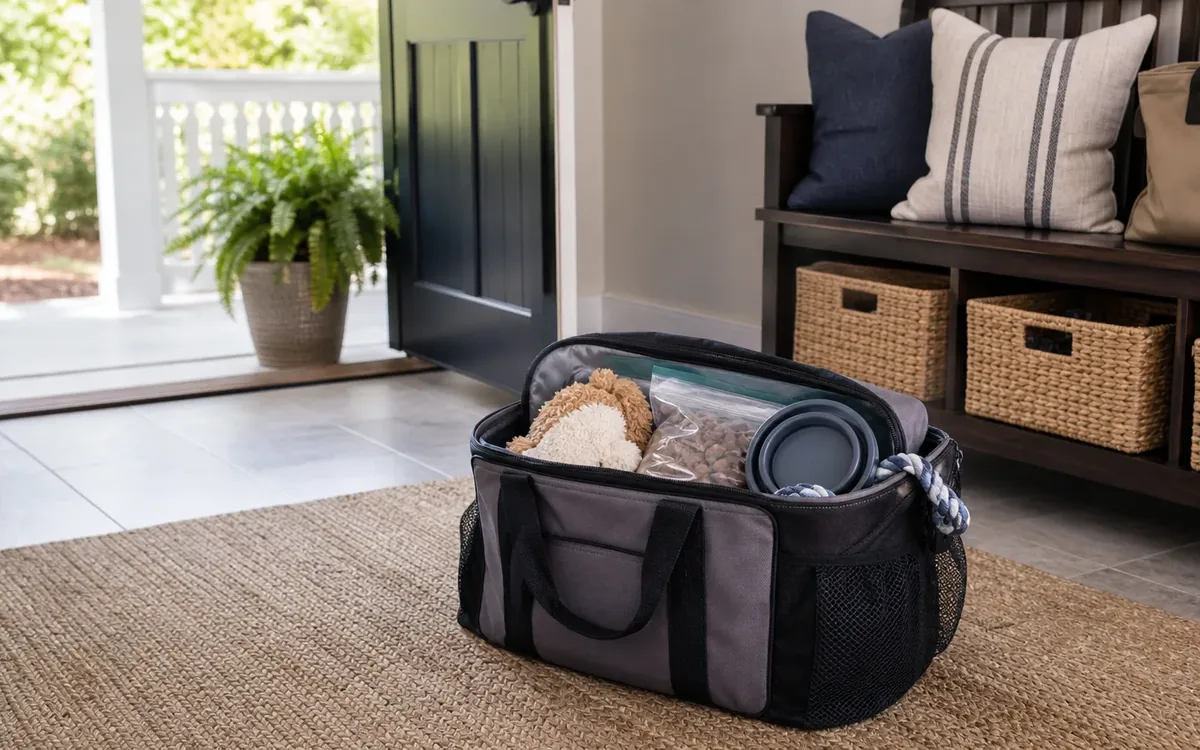
Pet supplies should stay with the person caring for the animal. A clearly marked container can still disappear into a moving load if no one understands that it must remain accessible.
Include:
- The pet’s regular food and feeding supplies.
- Drinking water and a suitable bowl.
- Prescribed medications in their labeled containers.
- A leash, properly fitted harness, or species-appropriate carrier.
- Familiar bedding and a safe comfort item.
- Waste bags, litter supplies, or enclosure-cleaning materials.
- Veterinary contact information and relevant health records.
- A recent photograph and current identification details.
- Cleaning supplies suitable for accidents around the animal.
Check contact information on identification tags and any microchip registration. Ask the registry how to update an address or temporary contact details. A microchip does not replace secure handling or visible identification where appropriate.
Keep medication instructions readable and separate from household packing notes. If different people will provide care, explain feeding amounts, medication directions, and behaviors that require a call to the veterinarian. Do not transfer medication into an unmarked container for convenience.
How do you keep pets safe during loading and travel?
During loading, physical separation is more reliable than expecting an animal to obey while doors remain open. Use a secure room or another agreed care location that people do not need to enter repeatedly.
Mark the room clearly and tell everyone involved that a pet is inside. Confirm that windows, screens, and secondary exits are secure. A sign helps, but it does not replace a designated person checking the arrangement.
Before transport:
- Check carrier doors, latches, and fasteners.
- Use a vehicle restraint or secured carrier appropriate to the animal.
- Keep the carrier away from loose objects that could fall or slide.
- Prevent access to the driver’s controls and footwell.
- Keep leads and other handling supplies accessible before opening a door.
Do not place pets in the cargo area of a moving truck. Do not open a carrier in an unsecured outdoor area simply because the animal seems upset. First establish a controlled setting where escape is unlikely.
For birds, reptiles, rabbits, fish, and other animals, ask a veterinarian experienced with the species about transport conditions. Enclosure stability, ventilation, temperature, and water requirements vary. Ordinary dog-and-cat advice should not be treated as a universal transport plan.
If using a separate pet transporter, confirm handling practices, emergency procedures, and any required documentation directly with that provider.
Check the destination before your pet enters
Arrange an arrival space before the pet reaches the new home. Ideally, this is a quiet room that can remain closed while belongings move through the rest of the property.
Walk through it from the animal’s perspective. Look for escape routes, accessible cords, cleaning chemicals, loose hardware, and gaps behind appliances or cabinetry. Keep medications, plants of uncertain safety, and small packing debris out of reach.
For a yard or outdoor enclosure, inspect gates, latches, fencing gaps, and unfamiliar hazards before allowing access. Supervise initial visits even if the enclosure looks secure. A dog that stayed close at the old property may behave differently in a new setting.
Check that heating, cooling, and any essential enclosure equipment work before relying on them. If repairs are needed, the household should arrange a qualified contractor or other appropriate provider. A move team may flag an observed concern, but it does not replace a property inspection or technical assessment.
Confirm lease provisions, community rules, and any animal-related requirements with the responsible landlord, association, or authority. Questions about legal rights or disputed restrictions belong with an appropriate legal professional, not the cleanout or moving crew.
Help your pet settle without forcing exploration
Start with the prepared space and familiar care supplies. Let the animal explore at a pace appropriate to its temperament instead of introducing every room, visitor, and outdoor area at once.
For cats, keep litter, water, food, and hiding options accessible in the initial room. Expand access when the environment is secure and the cat is managing comfortably. For dogs, use supervised introductions and familiar walking cues while learning the new surroundings.
Keep household activity around the pet calm. Avoid combining arrival with visitors, noisy repairs, or an introduction to unfamiliar animals when those events can be separated.
Maintain the pet’s regular food unless your veterinarian recommends a change. Moving is not an ideal reason to experiment with diet, supplements, or calming products. Ask a veterinarian before giving sedatives or other medication for travel or adjustment.
Observe eating, drinking, elimination, movement, and behavior. Seek veterinary advice for concerning changes rather than waiting for the animal to adapt. Avoid setting a fixed deadline for settling in; needs differ by animal and circumstance.
Separate pet care from other transition decisions
Clutter Cleaner of South Carolina provides move management and other household-transition services throughout South Carolina. Its physical business location is Mount Pleasant, and Charleston is its primary market. Pet arrangements should be discussed as part of access and logistics planning, not assumed to be included animal-care services.
The household can decide which pet belongings to retain, who supervises the animal, and where supplies travel. A practical cleanout or move team may discuss keeping those items separate and maintaining a closed pet-safe area.
Storage, disposal, boarding, and contractor work are separate household or provider choices. Ask each provider what it accepts or handles. Appraisal questions belong with an appropriate appraiser; property disclosures and sale advice belong with the responsible real-estate professional; inspections and compliance determinations belong with qualified professionals or authorities. Keeping those roles clear prevents pet safety from being lost among unrelated decisions.
Short FAQ
Should my pet stay at the house during loading?
Only if you can provide secure separation and reliable supervision. A trusted caregiver or separately arranged pet-care provider may be a better choice for an animal distressed by strangers or noise.
Can a move team transport my pet?
Do not assume so. Confirm the team’s actual scope, and arrange suitable transport with the household or a separate pet transport provider.
Should I give my pet calming medication?
Ask your veterinarian. Do not use another animal’s prescription or choose a product solely on someone else’s recommendation.
What matters most on arrival?
A secure, comfortable space with familiar supplies and a responsible caregiver. Unpacking the rest of the home should not take priority over safe containment and necessary care.



