
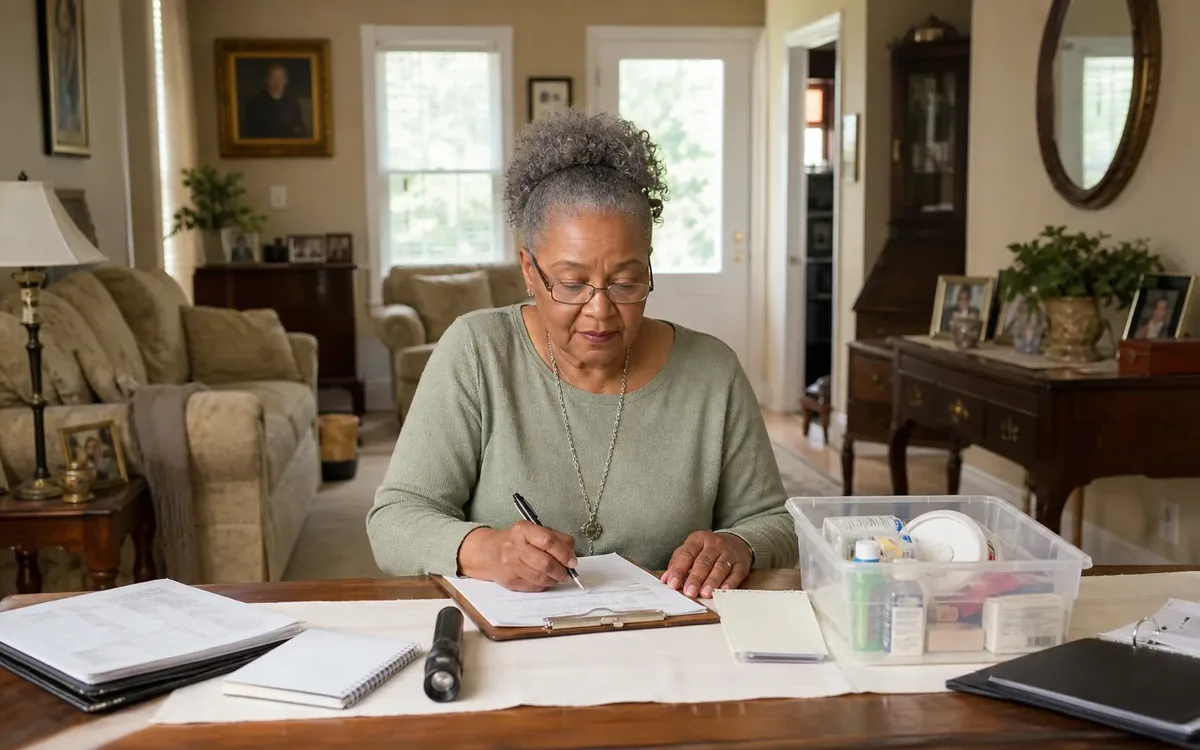
Security for an estate sale in an occupied home starts by separating the living area from the sale area, removing valuables and sensitive records, controlling entry, and assigning specific people to monitor doors, rooms, money, and closing checks. The household should approve every accessible space before the public enters. The estate-sale organizer can discuss sale operations, while attorneys, insurers, appraisers, real-estate professionals, inspectors, contractors, and public authorities handle decisions within their respective roles.
Quick answer: Create one controlled public entrance, close and clearly mark private areas, relocate essential medications and documents, limit the number of shoppers inside, and keep an accountable person at every active access point. Use a written opening and closing check so the occupied portion of the home remains separate from sale activity.
Why does an occupied home need a different security plan?
An empty property can be staged primarily around merchandise and buyer movement. An occupied home must also protect the resident’s daily life. Clothing, prescriptions, keys, mail, family records, electronics, and personal routines may remain inside even when sale rooms are open to strangers.
Security planning should therefore cover three overlapping concerns:
- People: residents, relatives, workers, shoppers, neighbors, and invited professionals
- Property: sale inventory, personal belongings, fixtures, vehicles, and the home itself
- Information: financial records, medical paperwork, passwords, schedules, and identifying documents
The goal is not to make the home feel fortified. It is to give visitors an obvious route and eliminate ambiguous areas. A door that appears usable, an unmarked staircase, or a hallway with both sale and private rooms creates avoidable confusion.
This planning is especially important when the resident will remain on the property. Decide whether that person will stay in a fully separated part of the home, leave during public access, or use another arrangement selected by the household. Consider mobility, medical needs, pets, emotional comfort, and access to bathrooms and exits.
For help understanding how sale preparation differs from removal work, review the auctions and estate sales service overview. If the property also contains substantial material that will not be sold, the guide to how estate cleanouts work explains the separate cleanout process.

What should the household decide before inviting shoppers inside?
The responsible household member, executor, personal representative, trustee, or other authorized decision-maker should identify who may approve access and disposition. Family consensus alone may not establish legal authority. Questions about ownership, estate powers, contested items, beneficiary rights, or required notices belong with a qualified South Carolina attorney or the appropriate court.
Once authority is clear, the household can make practical decisions about the living environment. Confirm these seven points:
- Which rooms are part of the sale? List each approved room rather than relying on a general statement such as “the first floor.”
- Which rooms remain private? Include closets, cabinets, bathrooms, porches, sheds, garages, attics, and outdoor areas.
- Who may unlock private spaces? Give this responsibility to a named person, not everyone working in the home.
- Where will the resident be? Select a location that does not require crossing shopper traffic for basic needs.
- What will happen to pets? Choose a secure arrangement away from open doors, unfamiliar visitors, and sale merchandise.
- Which exits must remain usable? Do not block routes with furniture, tables, boxes, signs, or waiting shoppers.
- Who makes decisions during the sale? Name the person who can resolve access questions, remove an item from sale, or pause entry.
The household may decide what it wants to sell if it has proper authority. An appraiser determines value opinions within the scope of an appraisal. An estate-sale professional may discuss merchandising, buyer flow, sale procedures, and handling of sale items. Those functions should not be treated as interchangeable.
Build physical separation before arranging merchandise
Start with boundaries, then stage the sale. This prevents attractive displays from drawing visitors toward private hallways or doors.
Use closed doors, temporary barriers, clear signs, and furniture placement to create an intuitive route. A sign alone may not be enough for a room containing medication, records, jewelry, firearms, or irreplaceable belongings. Locking or physically securing an approved private zone may be appropriate, provided residents still have safe access and required exits are not compromised.
Walk the route as if you have never entered the home. Look for:
- Interior doors that resemble the public entrance
- Stairs or hallways without a clear endpoint
- Closets that could be mistaken for sale areas
- Merchandise visible inside a private room
- Exterior gates leading to unmonitored spaces
- Windows or doors left open for airflow
- Keys hanging near locks or vehicle entrances
- Family calendars, labels, and notes that reveal private information
Do not create a barrier that conflicts with fire, building, accessibility, lease, association, or occupancy requirements. A qualified inspector, code official, fire authority, property manager, or other responsible authority should answer compliance questions. Contractors should evaluate or perform modifications such as changing locks, repairing rails, adding lighting, or altering doors.
If a room cannot be adequately separated, remove its sale inventory and keep the room closed. It is better to reduce the sale footprint than to depend on repeated verbal warnings.
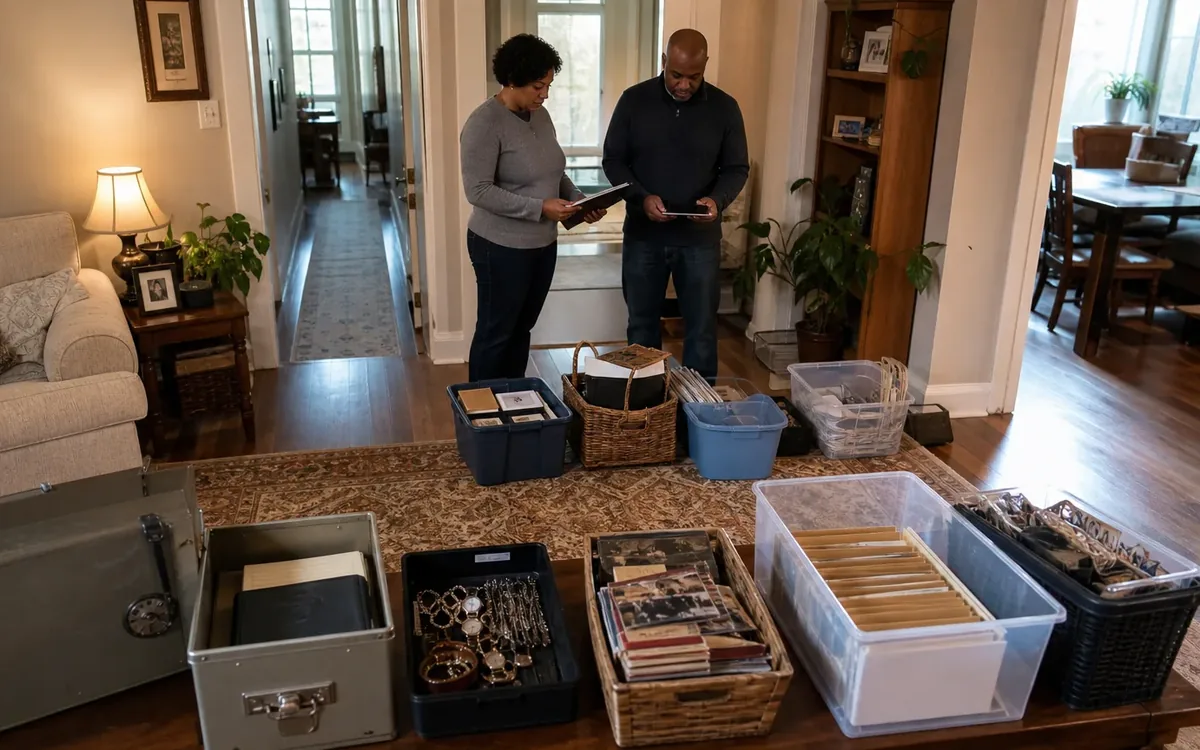
How should valuables and personal information be protected?
Do not use a private-room sign as the only safeguard for high-risk belongings. Before setup begins, conduct a deliberate sweep of both sale and nonsale areas.
Remove or secure items such as:
- Cash, jewelry, watches, precious metals, and collectible coins
- Checkbooks, tax records, bank statements, and benefit information
- Passports, Social Security cards, birth certificates, and legal papers
- Prescription medication and medical records
- House, vehicle, mailbox, safe, and storage keys
- Phones, tablets, laptops, drives, and written passwords
- Firearms, ammunition, and other regulated or hazardous items
- Family photographs, address books, and personal correspondence
- Spare garage controls and security-system information
The authorized household representative should decide where these belongings go. Options may include a locked private area, an appropriate financial institution, a trusted custodian, or off-site storage arranged by the household. Storage is a separate provider choice, and its terms, access rules, insurance, and suitability should be reviewed directly with that provider.
Potentially valuable property should not be discarded merely because its purpose is unclear. Set aside art, jewelry, coins, antiques, signed pieces, collections, and unusual documents for review. A qualified appraiser or relevant specialist, not a cleanout crew, should provide valuation advice. An attorney should address title, ownership, estate restrictions, or disputes.
Digital privacy matters too. Sign out of devices, remove saved payment information, disconnect printers containing documents, and take down visible Wi-Fi credentials. If security cameras or recording devices will be used, obtain advice from the appropriate professional about privacy, notice, placement, and applicable law.
Create a controlled entry and checkout plan
One clearly identified public entrance makes headcounts and shopper direction easier. Other exterior doors should remain controlled according to the household’s safety plan and any applicable requirements. Never compromise a required emergency exit.
Assign roles before opening. Depending on the sale’s scope and the organizer’s practices, useful positions may include:
- An entry person who manages the flow of shoppers
- A checkout person focused on transactions
- Room monitors in higher-risk areas
- A person responsible for private-zone boundaries
- A decision-maker available for disputes or uncertain items
- A designated person who performs opening and closing checks
Avoid combining every responsibility at one table. Someone handling payments may not notice a visitor moving down a private hallway. Likewise, a family member answering sentimental questions may become distracted from monitoring a room.
The estate-sale organizer can discuss capacity controls, holds, sold-item handling, payment procedures, receipts, and staff positioning. The household can ask how shoppers will be admitted, how purchased items leave, and how large items will be collected. The organizer should also explain its own policies for bags, restricted spaces, supervision, and incidents.
An occupied home may also need a private resident entrance. If one is available and safe, keep it out of the buyer route. Tell workers which door belongs to the resident and ensure shoppers do not use it for loading.
Reduce confusion during pickup and item removal
The point of greatest confusion is often not browsing but removal. Doors may be opened, vehicles may approach, and buyers may return for furniture. Without a release process, it can be difficult to distinguish a sold item from a private possession.
Use a consistent method to mark sold merchandise and verify pickup. The estate-sale organizer should define its transaction and release process. The household should identify fixtures or belongings that must remain with the property.
Before allowing a large item to leave, confirm:
- The specific item matches the sale record
- Its contents and drawers have been checked
- The removal route is authorized
- No wall-mounted, wired, plumbed, or built-in component is mistakenly included
- The buyer or mover understands which doorway to use
- A monitor can remain with the removal activity
Disconnecting appliances, dismantling installed features, moving unusually heavy pieces, or correcting damage may require an appropriate contractor or mover. Whether an item is legally part of the real property can affect a pending home sale, so direct fixture questions to the responsible real-estate professional or attorney.
If the home is listed or under contract, the real-estate professional should clarify agreed property inclusions, showing arrangements, lockbox control, and transaction obligations. An inspector evaluates conditions within an inspection scope. A sale or cleanout team should not make those professional determinations.
Protect the resident’s routine and dignity
Security is not limited to preventing theft. It also means reducing unwanted contact and preserving private routines.
Move the resident’s daily necessities into the private zone before sale setup. Include clothing, mobility equipment, chargers, food, water, medication, medical supplies, and personal documents. Make sure the resident can reach a suitable bathroom and exit without entering checkout or pickup traffic.
Do not use the resident as an informal room monitor. The person may feel pressure to explain belongings, negotiate prices, or answer personal questions. Instead, give the resident a direct contact who can address urgent needs without requiring interaction with shoppers.
Photos, names, mail, labels, and memorial materials can reveal more than expected. The household should decide which personal displays remain visible. Sale descriptions and signs should focus on merchandise and access instructions rather than family circumstances.
Neighbors may notice unusual traffic. The household and organizer can discuss practical parking and access communication, but any street restrictions, permits, association rules, signage requirements, or public-safety directions must be confirmed with the responsible authority or property manager. Do not assume that a practice allowed at one South Carolina property applies to another.
Use written opening and closing checks
A simple written record reduces reliance on memory. Adapt it to the home rather than using a generic template without review.
Before public access, check that:
- Private doors and cabinets are secured as planned
- Sensitive property has been removed
- Staff or responsible helpers understand their zones
- Checkout and item-release procedures are ready
- Public paths are clear
- Pets are in their designated secure arrangement
- Required exits remain available
- The resident has needed supplies and a contact person
After access ends, check all sale and private boundaries again. Account for keys, payment materials, held items, sold-item tags, doors, windows, gates, and resident access. Note anything unusual while details are still clear, and preserve relevant records according to advice from the responsible professional.
Report suspected theft, threats, trespass, injury, or other emergencies to the proper authority. Insurance questions, including whether an incident may be covered and what documentation is required, belong with the insurer or insurance professional.
Where can a cleanout or move team fit?
A practical cleanout or move team may discuss sorting flow, removal sequencing, room clearing, donation or disposal categories, packing, and preparing selected spaces for a move or home sale. Clutter Cleaner of South Carolina offers estate cleanouts, downsizing and organizing, auctions and estate sales, move management, home sale preparation, and code compliance support statewide from its physical business location in Mount Pleasant, with Charleston as its primary market.
The household still decides which authorized belongings are retained, sold, donated, recycled, stored, or discarded. Disposal acceptance depends on the selected facility and the nature of the material. Storage arrangements belong with the chosen storage provider. Contractor repairs remain contractor work.
A practical team may flag a blocked route, uncertain item, or area that needs professional attention. It does not replace an attorney, appraiser, real-estate professional, inspector, insurer, contractor, law-enforcement agency, code official, fire authority, or court.
Short FAQ
Should the resident stay home during the estate sale?
That is a household decision based on safety, comfort, mobility, health, and the home’s layout. If the resident stays, provide a genuinely separate area, basic necessities, a safe exit, and a named contact.
Is a “private” sign enough to secure a room?
Not for sensitive or valuable property. Use physical separation appropriate to the space, remove high-risk items, and assign someone to monitor nearby access without blocking required exits.
Who decides whether an item is valuable?
The household can choose to set an item aside. A qualified appraiser or relevant specialist should give valuation advice. Legal ownership or estate authority questions belong with an attorney or responsible court.
Who should approve security cameras?
The household should discuss installation and use with the property owner, insurer, security provider, and qualified legal professional as appropriate. Those parties can address coverage, privacy, notice, and legal requirements.
Can Clutter Cleaner help plan the transition around the sale?
The company can discuss relevant statewide services at (843) 972-7020, including estate cleanouts, organizing, sale support, move management, and home sale preparation. Scope should be confirmed directly. Legal, appraisal, inspection, real-estate, contractor, insurance, and regulatory decisions remain with the responsible professional or authority.



