

Your first-day essentials should cover one safe, functional night without depending on fully unpacked boxes. Keep medications, documents, basic toiletries, bedding, chargers, food, pet or child supplies, and a small set of household tools with you rather than loading them deep in a moving vehicle. Then label a few priority boxes by room and open them in the order the household will actually use them.
Quick answer: Pack first-day essentials in clearly marked bags or containers that travel with the household. Prepare for entry, medication needs, meals, hygiene, sleep, device charging, and any dependent family member or pet. Confirm utilities and access separately, then unpack only what supports those immediate needs.
What should you keep with you on moving day?
The most important distinction is between items that cannot be inaccessible and items that are merely convenient. If losing access to something for the first night would create a health, safety, identification, or security problem, it should remain with the household.
Keep these items in a personal bag, locked document case, or other container that will not enter the general flow of moving boxes:
- Prescription medications and necessary medical devices
- Identification, wallets, keys, and access instructions
- Lease, closing, insurance, or occupancy documents needed at arrival
- Phones, chargers, and a portable power bank
- Eyeglasses, hearing aids, and related supplies
- A change of clothing and weather-appropriate outerwear
- Essential child care or pet care items
- Valuables that the household has chosen to transport personally
- Emergency contact information
Do not write sensitive contents such as financial records, jewelry, or medications on an exterior label. Use a neutral identifier and maintain a private inventory instead.
For a move involving extensive sorting, downsizing, or coordination, review the move management service overview before deciding what help to request. A practical move team may discuss packing order, labeling, room plans, and unpacking priorities. The household still determines which records, valuables, medicines, and personal possessions remain under direct control.
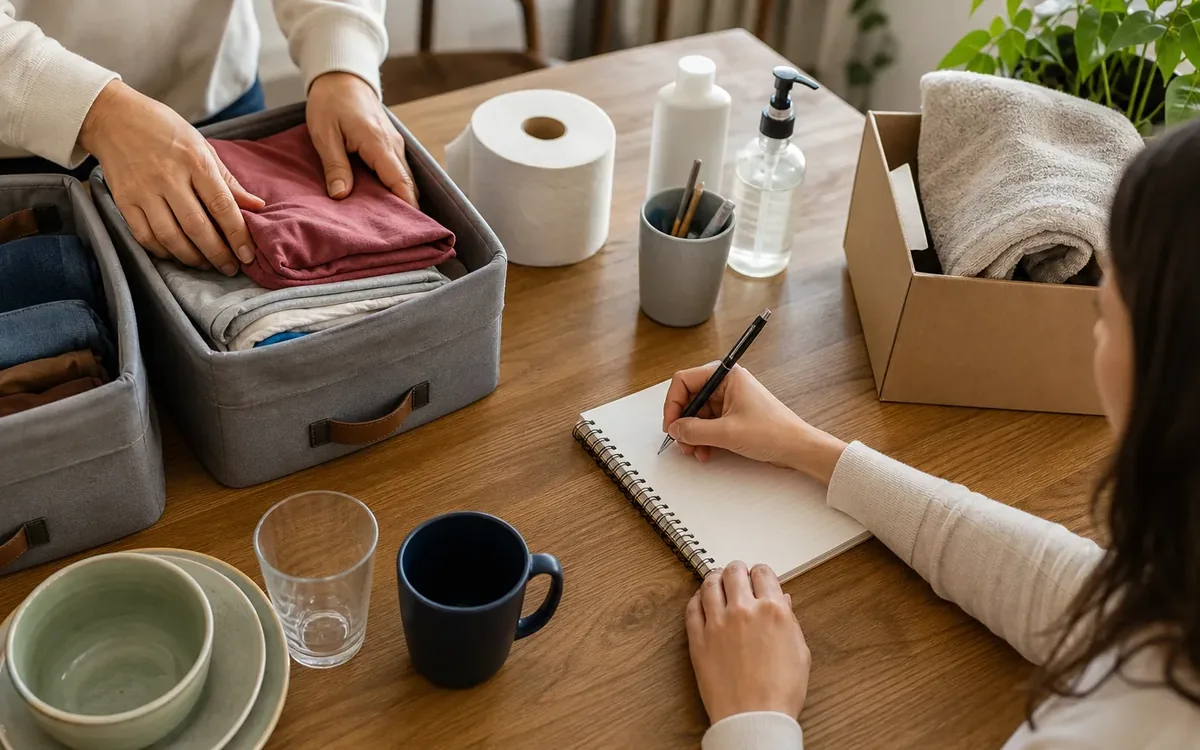
Build the essentials plan around household routines
A generic packing list can miss what actually matters. Plan the first night by walking through each person’s routine from arrival through the following morning.
Ask what each household member needs to:
- Enter and secure the residence
- Take scheduled medication
- Eat and drink safely
- Wash, dress, and sleep
- Care for a child, older adult, or pet
- Use mobility, respiratory, or sensory equipment
- Prepare for work, school, or an appointment
This approach catches easy-to-overlook items. A coffee maker may be optional for one household, while a specialized food preparation tool may be essential for another. A pet may need familiar bedding because of stress. A person using mobility equipment may need charging equipment, transfer aids, or clear pathways before decorative boxes enter the room.
Create one short list for the entire household and a separate personal list for anyone with specialized needs. The household should decide what is essential based on health instructions, personal routines, and the conditions at the destination. Medical decisions should remain with the appropriate health professional.
Use a three-part packing system
Separating essentials by access level prevents every important object from ending up in one overcrowded box. Use these three groups:
- Personal carry items: Medications, identification, keys, phones, sensitive documents, valuables, and immediate care supplies stay with the household.
- Open-first containers: Bedding, towels, toiletries, basic kitchen supplies, clothes, and cleaning materials go into highly visible containers intended for immediate opening.
- Priority room boxes: Items needed soon, but not immediately, are labeled for the correct room and placed ahead of ordinary boxes.
Choose labels that communicate both destination and priority. For example, “Primary Bedroom, Open First” is more useful than “Bedroom.” Number related containers, such as “Kitchen Priority 1 of 2,” so a missing container is noticeable.
Use contrasting tape or large labels, but keep the system simple. Too many colors, abbreviations, or priority categories can become difficult to interpret at the destination. Photograph each open-first container before closing it and keep a brief contents list on your phone.
If the move follows an estate transition, unresolved belongings may require a different sorting process. The guide to what to do first when unpacking explains how belongings can be categorized without treating every object as ordinary moving inventory.
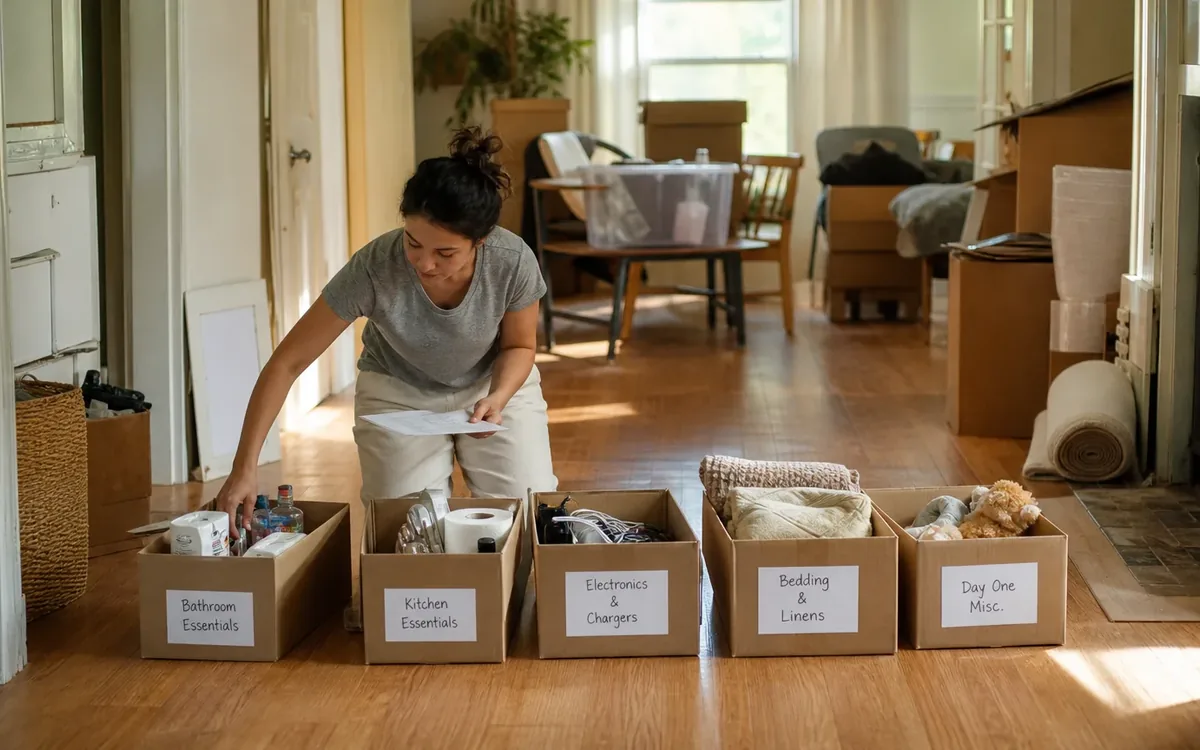
What belongs in each open-first box?
Plan boxes by activity rather than trying to recreate every room immediately. The goal is basic function, not complete setup.
Sleep box
Include clean sheets, pillows, blankets, sleepwear, and any nighttime care supplies. If beds require assembly, keep the correct hardware and instructions together in a clearly identified parts container. Do not tape hardware loosely to furniture where it can fall off.
Bathroom box
Pack toilet paper, soap, towels, toothbrushes, toothpaste, shower supplies, and a basic first-aid kit. Include a bath mat or non-slip item if someone needs secure footing. Check that water service and fixtures are usable before relying on the room.
Kitchen box
Include drinking water, simple food, necessary utensils, cups, plates, paper towels, dish soap, and trash bags. Add a manual can opener if packed food requires one. Consider dietary restrictions and food storage conditions before selecting meals.
Clothing box
Pack clothing for the next routine, plus shoes and layers suitable for expected South Carolina conditions. Keep work uniforms, school items, or appointment clothing separate from general wardrobe boxes.
Household setup box
Useful items may include scissors, tape, a flashlight, batteries, a measuring tape, basic hand tools, cleaning cloths, and surface cleaner appropriate for the home’s finishes. A household member should assess whether any tool use is safe. Repairs, electrical work, plumbing work, furniture installation, or other specialized tasks may require a qualified contractor.
Dependent-care box
Pack diapers, wipes, formula or feeding supplies, comfort items, pet food, bowls, leashes, carriers, litter supplies, and any required care equipment. Keep animals secured away from open doors and moving activity.
Confirm the home is ready before opening boxes
First-day planning depends on more than packing. Confirm that the household can lawfully enter the property and that essential systems are available. Access permission, closing, tenancy, occupancy, and possession questions should be handled by the responsible real-estate professional, attorney, property manager, lender, or other appropriate party.
Before arrival, the household can confirm:
- Who has the keys, codes, or entry devices
- Where vehicles may legally and safely load or unload
- Whether electricity and water are active
- Which entrance offers the safest path for occupants and furniture
- Whether elevators, gates, or shared access require arrangements
- Where pets and children can remain safely during unloading
- Which room will receive open-first items
Do not assume that a visual walk-through replaces a professional inspection. Questions about the roof, structure, wiring, plumbing, HVAC system, pests, environmental concerns, or code compliance belong with qualified inspectors, contractors, environmental professionals, utilities, or relevant authorities.
A move team may discuss practical access, furniture placement, box staging, and visible obstacles. It should not determine whether a property is legally occupiable, certify systems, or override inspection and compliance findings.
What order should you follow after arriving?
Use a focused arrival sequence so that essentials do not disappear beneath ordinary boxes. Follow these seven steps:
- Confirm authorized access. Make sure the correct household representative has possession and can enter before unloading begins.
- Check immediate safety. Look for visible hazards, blocked paths, active leaks, unusual odors, or other conditions that suggest unloading should pause. Contact the appropriate property representative, utility, emergency service, contractor, or authority when needed.
- Secure people and pets. Choose a supervised area away from open doors, vehicles, tools, and unstable stacks.
- Identify essential rooms. Start with one bathroom, the sleeping area, and a simple food preparation area.
- Bring in personal and open-first items. Keep them together and prevent ordinary cartons from being stacked in front of them.
- Set up sleep and hygiene needs. Assemble only what is needed for safe use, using appropriate professional help when work exceeds household ability.
- Stop unpacking strategically. Preserve clear walkways and leave nonessential decisions for a later, organized session.
This order reduces duplicate effort. It also gives the household a functional base if the rest of the move does not unfold exactly as expected.
Plan for South Carolina conditions without guessing
A statewide move can involve coastal, urban, suburban, and inland destinations with different property layouts and access arrangements. Plan for the actual forecast and site rather than relying on broad assumptions about South Carolina weather.
Protect essential papers and electronics in sealed containers if rain is possible. Keep drinking water accessible when conditions call for it. Avoid leaving medications, food, plants, electronics, or sensitive belongings in a parked vehicle when temperatures or manufacturer instructions make that unsafe.
Check property-specific factors directly. A Charleston-area building may have shared access rules, while a detached home elsewhere may present stairs, a long driveway, or limited unloading space. These are examples of conditions to verify, not claims about every local property.
If severe weather or an official warning affects the move, follow guidance from the relevant public authority. The household and transportation provider should decide whether travel and unloading can proceed safely within their respective responsibilities.
Separate move decisions from professional decisions
A good first-day plan becomes clearer when each decision has an owner.
The household can decide:
- Which possessions are personally essential
- Who carries documents, valuables, and medication
- What rooms should function first
- Which belongings move, remain stored, transfer to another person, or await a later decision
- What information may be shared with a move team
A practical cleanout or move team may discuss:
- Sorting categories and labeling systems
- Packing and staging priorities
- Furniture placement based on the household’s approved plan
- Clear pathways and orderly box placement
- Coordination points involving selected vendors or responsible parties
Other decisions stay with the relevant professional or authority:
- Attorneys or authorized fiduciaries address ownership, estate authority, and disputed-property questions.
- Appraisers determine valuation when a formal or qualified appraisal is needed.
- Real-estate professionals advise within their professional role on transactions and market preparation.
- Inspectors and qualified contractors evaluate property conditions and repair needs.
- Government authorities or designated professionals determine code and compliance requirements.
- Disposal facilities, municipalities, or specialized providers determine acceptance requirements for restricted materials.
Storage is also a separate household and provider choice. Confirm access rules, environmental controls, insurance questions, contract terms, and prohibited items with the chosen storage provider. Do not send undecided valuables or sensitive records into storage merely to clear the moving area.
Prevent common first-night problems
A few practical controls can keep the essentials plan intact:
- Do not load the personal essentials bag into a moving vehicle.
- Do not use vague labels such as “miscellaneous.”
- Keep furniture hardware with assembly instructions.
- Photograph cable connections before disconnecting electronics.
- Avoid stacking boxes in hallways, at exits, or around utility equipment.
- Check food and medication storage instructions.
- Reserve one surface for keys, documents, and phones.
- Flatten empty cartons only when doing so will not create a tripping hazard.
Before ending the day, locate all keys and personal documents, charge phones, prepare required medications according to professional instructions, and confirm that entrances are secure. Make a short next-session list instead of opening boxes without a plan.
Short FAQ
Should first-day supplies go in boxes or suitcases?
Either can work. Personal essentials are usually easier to control in luggage or bags that stay with the household. Bulky bedding, towels, and basic kitchen supplies can go in conspicuously labeled open-first boxes.
Who should carry important documents?
A responsible household member or legally authorized representative should retain them. Ask the appropriate attorney, real-estate professional, fiduciary, or other responsible professional which original documents may be needed for the transition.
Should valuable items be placed on the moving inventory?
The household should decide how valuables will be transported and documented after reviewing provider terms and any relevant insurance considerations. Formal valuation belongs with a qualified appraiser, not a general move or cleanout team.
What if the destination is not ready?
Pause unloading if access, safety, or occupancy is uncertain. Contact the responsible property representative or professional. Temporary lodging, storage, contractor work, and rescheduling are separate choices to arrange with the relevant providers.
Can Clutter Cleaner of South Carolina help with the transition?
Clutter Cleaner of South Carolina, physically located in Mount Pleasant and serving households statewide, lists move management among its services. Call (843) 972-7020 to discuss the practical scope. Confirm requested tasks, property access, and decision-making authority before work is scheduled.



