

Limited elevator access should shape a senior move from the beginning, not become a problem on moving day. First confirm the building’s written rules, then reduce what must travel, measure every difficult item and route, reserve access if possible, and divide responsibilities among the household, move team, building staff, and qualified professionals.
Quick answer: Contact management at both properties before scheduling the move. Ask about elevator reservations, loading areas, protective coverings, insurance documents, restricted hours, stair use, and furniture limits. Create a measured route for each large item, stage belongings by destination, and establish a written backup plan for anything that cannot enter the elevator.
Why does limited elevator access change a senior move?
An elevator constraint affects more than transportation. It determines which furniture can move, how boxes should be staged, where movers may park or unload, and whether residents can safely use shared spaces during the work.
The issue may involve a small elevator, limited reservation windows, shared access, interior stairs, narrow landings, or a long route between the loading area and residence. A building may also require protective pads, floor coverings, proof of insurance, or approval before a moving crew enters.
For an older adult, these restrictions can add avoidable stress. Essential belongings may become mixed with low-priority boxes, or a familiar chair may arrive late because nobody checked whether it would fit. A clear plan should protect continuity as well as property.
The household can decide what should move, what can leave, and which familiar items matter most. A practical move management service may discuss sorting, packing, sequencing, labeling, staging, and coordination. Building policies remain with property management or the relevant association. Structural, electrical, accessibility, fire-safety, or code questions belong to qualified contractors, inspectors, design professionals, or public authorities.

What should you confirm with building management?
Speak with an authorized representative for the origin and destination. Do not rely solely on a resident’s recollection or an informal conversation with front-desk personnel. Ask for current moving requirements in writing when available.
Confirm these points:
- Whether the elevator must be reserved
- Which elevator movers may use
- Permitted move dates or access hours
- Whether residents will share the elevator during the move
- Elevator door, cab, and weight limitations
- Required wall, floor, and elevator protection
- Approved loading entrances and parking areas
- Rules for dollies, carts, and stairwells
- Insurance or vendor documentation requirements
- Deposits, access credentials, or staff coordination handled by the building
- Restrictions on leaving boxes or furniture in corridors
- Procedures for oversized or rejected items
Provide any requested mover or vendor information through the channel specified by management. The building decides whether documents satisfy its policies. A move coordinator can help track requests, but should not interpret insurance coverage or promise approval.
Ask how the elevator is controlled during a reservation. Some systems require a key, staff member, access card, or special operating mode. Identify who will activate it and whom the crew should contact if access is unavailable.
Also clarify the route from the vehicle to the residence. Loading docks, garages, ramps, thresholds, doors, turns, and hallway rules may matter as much as elevator dimensions.
Build a measured route before deciding what moves
Measure the complete path at both homes. Include the furniture itself, not just the elevator. A piece may fit inside the cab but fail at the entrance, hallway turn, or apartment doorway.
Record:
- Elevator door width and height
- Cab width, depth, and height
- Building entrance and service-door openings
- Hallway widths and tight turns
- Ramp slopes, steps, and raised thresholds
- Unit doorway dimensions
- Ceiling fixtures or low overhangs
- Furniture dimensions at its widest, tallest, and deepest points
- Removable legs, shelves, doors, cushions, or tops
Photograph difficult turns and mark every measurement clearly. Do not assume an item can be safely tilted, dismantled, or carried on stairs. Ask the moving provider to assess handling requirements and decide what its crew will accept.
Disassembly may affect stability, finishes, warranties, electronics, or specialized mechanisms. Movers can explain their handling scope. Furniture repair technicians, appliance specialists, medical-equipment providers, or other qualified contractors should address work outside that scope.
If the move is part of a larger household transition, the guide on how far in advance should i plan a move explains how sorting and removal decisions can be separated from legal and appraisal questions.
What should move when elevator capacity is scarce?
Use limited access for belongings that support daily life, comfort, safety, and identity. Do not give every possession equal priority.
A useful order is:
- Immediate personal needs. Set aside medications, mobility aids, identification, keys, hearing or vision devices, chargers, clothing, toiletries, and important contacts. The older adult, caregiver, or legally authorized decision-maker controls these items.
- Essential room setup. Prioritize the bed, appropriate seating, lamps, linens, basic kitchen supplies, bathroom necessities, and approved medical equipment.
- Familiar belongings. Choose photographs, artwork, books, textiles, and small furniture that will make the new residence recognizable without blocking safe movement.
- Optional possessions. Move decorative, duplicate, seasonal, or rarely used items only after confirming that space and access permit them.
Pack immediate-need belongings separately and keep them under the control of the resident or responsible family member. They should not be buried in the general shipment.
Create a floor plan for the destination. Compare furniture dimensions with usable wall space, door swings, outlets, windows, and walking paths. Building management or the property owner determines applicable property rules. An occupational therapist, medical professional, or accessibility specialist should advise on individual health and mobility needs.
Limited elevator access also makes early reduction valuable. The household may choose among family distribution, sale, donation, recycling, disposal, or storage. Those are separate decisions with separate providers and conditions:
- An appraiser determines value when a formal or specialized valuation is needed.
- An auction or estate-sale provider decides what it can accept and under what terms.
- Donation organizations establish their own acceptance policies.
- Disposal facilities and local authorities control disposal requirements.
- A storage provider sets access, contract, insurance, and prohibited-item terms.
- Attorneys or court-appointed representatives address ownership, estate authority, or disputes.
A practical move team may help organize these pathways, but should not make legal, valuation, or compliance determinations reserved for others.
Plan the flow, not just the truck
An efficient move uses a deliberate chain from room to vehicle to destination. Elevator limits make random loading especially disruptive.
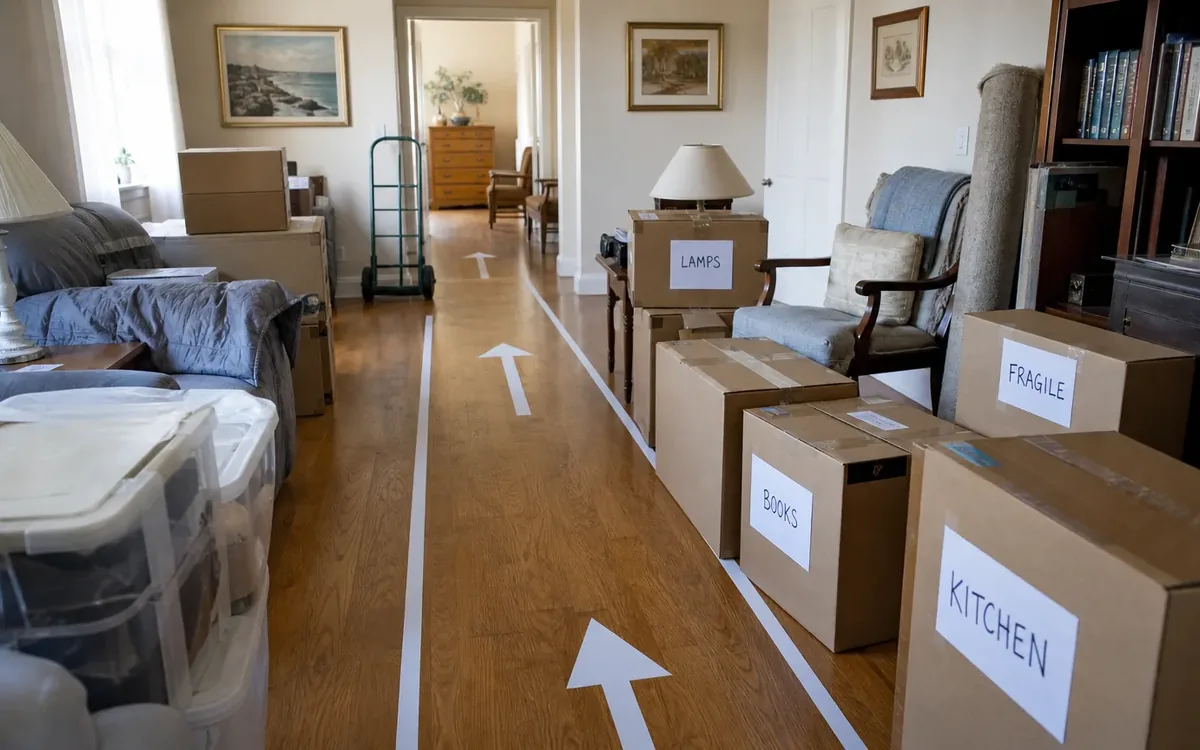
Label boxes by both destination room and priority. Simple categories such as “open first,” “same-day setup,” and “hold” help the receiving team work in the right order. Add a brief contents description rather than relying only on a room name.
Use color or large-print labels if that helps the resident and helpers read them. Keep the system consistent. A complicated label scheme can slow decisions at the elevator.
Establish separate zones before movers arrive:
- Definite move items
- Personal carry items
- Items awaiting a decision
- Items designated for another destination
- Items that must not move
- Items requiring specialist handling
Keep hallways, elevator lobbies, and exits clear. Building staff or authorities decide applicable egress and common-area requirements. The crew should follow approved routes and avoid staging items where they create obstructions.
Loading sequence matters. Items needed first at the new residence should be identified so the mover can determine an appropriate truck-loading order. Heavy furniture, fragile possessions, and equipment should be handled according to the mover’s methods, not rearranged informally by family members during active work.
How do you protect the senior during a constrained move?
The older adult should not have to supervise a busy elevator lobby or repeatedly answer the same questions. Assign one authorized household contact to communicate decisions to the crew and one person, if available, to remain focused on the resident.
Plan a calm location away from traffic, noise, open doors, and stacked boxes. That location might be within the home or elsewhere, depending on the person’s preferences, health needs, and building rules. Medical professionals or caregivers should guide health-related choices.
Preserve routine where possible. Keep meals, medication management, mobility support, and rest arrangements separate from the moving workflow. Do not place medication, legal papers, jewelry, cash, keys, or irreplaceable documents in ordinary moving boxes.
Prepare a clearly marked personal bag containing:
- Identification and essential records
- Medications managed according to professional instructions
- Phone, charger, and contact list
- Eyeglasses, hearing devices, or mobility essentials
- A change of clothing and basic toiletries
- Water and suitable food, if appropriate
- New-home keys or access credentials
- A few familiar comfort items
If the senior has cognitive, sensory, or mobility concerns, share only the relevant handling information with providers who need it. Avoid making the person explain private needs repeatedly.
Create a backup plan for elevator problems
Even confirmed access can change because of maintenance, emergencies, staffing issues, or competing building needs. Put alternatives in writing before belongings are loaded.
Address four scenarios:
- The elevator is unavailable. Decide who will contact building management, whether the mover will wait or reschedule, and where the shipment may legally and safely remain.
- An item does not fit. Choose who may authorize return, alternate delivery, disassembly assessment, storage, sale, donation, or disposal.
- The loading area is blocked. Identify the building-approved alternative rather than improvising in a restricted area.
- The move exceeds its approved access period. Establish who will speak with management and which belongings take priority if access is curtailed.
Do not assume stairs are an acceptable substitute. Stair carries can introduce weight, turning, railing, landing, and worker-safety concerns. The moving company decides what its crew can safely handle. Building management controls access rules, while fire-safety or code questions remain with the appropriate authority.
Storage should be a deliberate household choice, not an automatic destination for unresolved belongings. Before using it, compare what is being stored with the reason, access needs, contract terms, insurance considerations, and a plan for later review. The storage company controls facility policies and acceptance.
Divide responsibilities before move day
Confusion decreases when every decision has an owner. Use a written contact sheet rather than assuming family members know whom to call.
The household or authorized representative can decide:
- What belongs to the senior and what should move
- Which items have personal priority
- Who may approve changes
- Whether items go to family, sale, donation, storage, or disposal
- Who holds valuables, records, medications, and keys
A practical cleanout or move team may discuss:
- Sorting and labeling methods
- Packing and unpacking sequence
- Room-by-room staging
- Furniture placement based on an approved plan
- Coordination questions for buildings and other providers
- Separate pathways for items that will not move
Other professionals retain their own decisions:
- Building management approves access and enforces property rules.
- Movers determine crew methods and acceptable handling.
- Appraisers provide value opinions within their qualifications.
- Real-estate professionals advise on listing and transaction strategy.
- Inspectors evaluate property conditions within their scope.
- Contractors determine methods for repairs, alterations, or disassembly they accept.
- Attorneys advise on legal authority, contracts, title, estates, and disputes.
- Government authorities determine code, disposal, permitting, and compliance requirements.
Clutter Cleaner of South Carolina has a physical business location in Mount Pleasant and a statewide South Carolina service territory, with Charleston as its primary market. Availability and scope for a particular move should be confirmed directly at (843) 972-7020.
Final pre-move review
Before loading begins, verify that the plan still matches current conditions. Reconfirm building access, the approved route, contact names, item priorities, and the destination floor plan.
Check that large items have measurements and an alternate disposition. Make sure “do not move” belongings are physically separated, not merely labeled. Confirm that the personal essentials bag and valuables will travel with the responsible person.
Give the move team one decision-maker and one final inventory or room plan. If a new issue arises, pause the affected item rather than allowing an irreversible decision under pressure.
The central principle is simple: limited elevator access should narrow and organize the move. It should not force hurried decisions about possessions, unsafe handling, or responsibilities that belong to building staff and qualified professionals.
FAQ
Can furniture be taken apart to fit in an elevator?
Sometimes, but suitability depends on the item and provider. Ask the mover what it can handle. A furniture technician, appliance specialist, or other qualified contractor may be needed. The household should approve any alteration after understanding the risks.
Who reserves the elevator?
The building determines its reservation process. The household, authorized representative, or coordinator may submit the request, but management confirms access and applicable conditions.
Should everything be moved first and sorted later?
Usually, limited access makes advance sorting more practical. Moving unwanted items uses scarce elevator capacity and adds work at the destination. Preserve uncertain items separately until the authorized person chooses a lawful pathway.
What if valuable items are found while packing?
Pause and secure them. The owner or legally authorized representative should decide what happens next. Use a qualified appraiser for valuation and an attorney for ownership, estate, or authority questions.
Can a move team decide whether stair access is safe?
A moving provider decides what its crew will undertake. Building management controls property access, and qualified professionals or authorities address structural, code, fire-safety, and individual medical concerns.



