
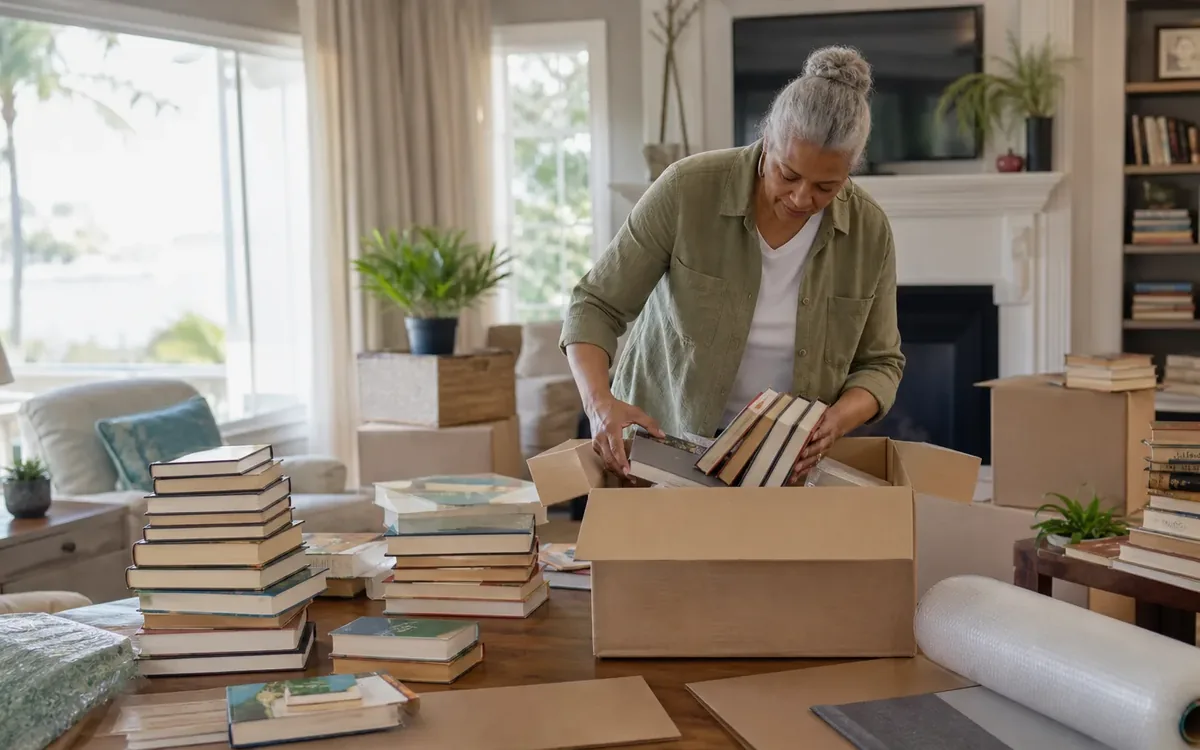
Pack books for long-term storage by keeping only the volumes worth preserving, cleaning and fully drying them, wrapping vulnerable copies in archival-safe materials, and placing them flat or upright in small, sturdy boxes. Store the boxes off the floor in a clean, dark, climate-controlled space. Avoid plastic wrap, newspaper, oversized boxes, and any location with unstable heat or humidity.
Quick answer: Sort before packing, isolate damaged books, use small double-walled boxes, and line each box with clean acid-free paper. Pack ordinary books upright as they would sit on a shelf, or lay large and fragile books flat. Fill empty spaces without compressing the books, label every box, and choose a storage environment appropriate to the books and confirmed with the storage provider rather than an attic, garage, shed, or damp basement.
Long-term book storage is not just a packing task. During downsizing, the more important decision is which books merit the space, handling, and environmental control required to preserve them. A deliberate sequence prevents a household from paying to store books that will eventually be donated or discarded.
What should you keep before packing books for storage?
Start by separating emotional, practical, and financial value. These categories can overlap, but they require different decisions.
Keep books that are:
- Regularly used or likely to be used in the next few years
- Personally meaningful, such as inscribed gifts or family Bibles
- Part of a clearly defined collection
- Difficult or expensive to replace
- Connected to family history or important records
- Confirmed by a qualified appraiser as having meaningful market value
Consider releasing books that are outdated, duplicated, damaged beyond reasonable repair, or easily replaceable. Old textbooks, obsolete reference volumes, book-club editions, and common hardcovers may have little resale demand, even when they look substantial.
Create four working groups: keep at home, place in storage, obtain expert advice, and release. Do not let an uncertain pile grow without a deadline. Set a date for researching or obtaining professional guidance about questionable items.
Household members can decide what has sentimental value and how much storage they are willing to support. A downsizing and organizing team may discuss sorting flow, room sequencing, packing logistics, and removal options. It cannot decide what a family must keep or determine an item’s legal ownership or value.
If an estate, trust, divorce, bankruptcy, guardianship, or ownership dispute is involved, the responsible attorney, personal representative, trustee, court, or other authorized party should determine who may approve distribution. An appraiser should evaluate possible monetary value. Do not donate, sell, or discard disputed books based only on an informal opinion.

How should books be prepared before long-term storage?
Inspect every book in a clean, dry, well-lit area. Look for dampness, mold-like growth, insect activity, brittle leather, loose bindings, stains, and strong odors. A problem book should not be packed beside clean books because moisture, pests, and biological growth may spread.
Use a soft, dry brush to remove loose dust, working away from the spine. Avoid household sprays, furniture polish, scented products, bleach, and wet cleaning. Do not pack any book that feels damp or cool from moisture.
Books with suspected mold, active insects, wet pages, or historically important damage need professional attention. A qualified book conservator, preservation specialist, or pest professional should recommend treatment. A practical move or cleanout team may identify visible concerns and keep affected items separate, but should not diagnose contamination or prescribe conservation treatment.
Before packing, remove materials that may stain or deform pages:
- Rubber bands and pressure-sensitive tape
- Paper clips, pins, and metal bookmarks
- Fresh flowers, leaves, and acidic newspaper clippings
- Bulky objects used as bookmarks
- Loose food wrappers or crumbs
- Adhesive notes that are lifting or deteriorating
Family notes, photographs, and documents found inside books may be important. Place them in labeled archival-safe folders rather than discarding them automatically. If they affect estate administration or ownership, give them to the responsible professional.
For a broader look at sequencing inherited household contents before removal, see what are the easiest packing methods for seniors. That process can help prevent important books and papers from being lost during a larger transition.
Which boxes and packing materials protect books best?
Use small, sturdy, clean corrugated boxes. Books become heavy quickly, so a smaller container is safer to lift and less likely to fail. Double-walled boxes can offer added strength for dense volumes, but every box must still be kept within a manageable weight.
Useful materials include:
- New or clean, odor-free small boxes
- Acid-free, lignin-free tissue or unbuffered archival paper
- Archival polyester or approved protective enclosures for suitable items
- Plain packing paper for filling empty space
- Strong packing tape applied only to the box
- Permanent markers or printed inventory labels
- Plastic shelving or stable pallets for raising boxes off the floor
Avoid newspaper because ink and acids can transfer. Avoid direct contact with bubble wrap for extended storage because it can trap moisture and leave impressions. Never apply tape, labels, or self-adhesive coverings directly to a book.
Plastic tubs can resist minor splashes, but they are not automatically safe for books. They may trap existing moisture and create a harmful microclimate. If tubs are used, books must be completely dry, the containers must be clean, and the storage environment must remain controlled. Do not rely on a sealed tub to make a garage, attic, shed, or damp room suitable.
Rare books, vellum, parchment, leather bindings, photographs, and mixed-media albums can have specialized enclosure requirements. Ask a conservator whether buffered or unbuffered materials are appropriate. Household members can select ordinary supplies for ordinary books, but preservation specifications for valuable or unusual materials belong with a qualified professional.
Should books be packed flat or upright?
Pack ordinary hardcovers and paperbacks upright with their spines vertical, as they would stand on a shelf. Keep books of similar height together so taller volumes do not lean over shorter ones. They should be snug enough to stay vertical but not squeezed.
Lay oversized, heavy, fragile, or unusually shaped books flat. Stack only a few at a time, with the largest book at the bottom. A deep stack creates damaging pressure and makes safe removal difficult.
Do not pack books:
- With the spine or fore edge facing downward
- At a sharp angle
- So tightly that removal pulls at the binding
- With heavy volumes resting on delicate ones
- Beside liquids, candles, food, or scented products
- In boxes that bow, tear, or cannot be lifted safely
Fill gaps with loosely crumpled clean paper so books do not shift. Do not force paper between covers or compress page blocks. Add a flat paper layer across the top before closing the box, but leave enough room to avoid crushing the contents.
Seal the bottom seam securely, including the side seams if needed. Reinforce the exterior rather than adding tape inside where adhesive could contact a book. Once packed, lift the box a few inches in a controlled setting to confirm that it remains stable and manageable.
How do you create labels that remain useful years later?
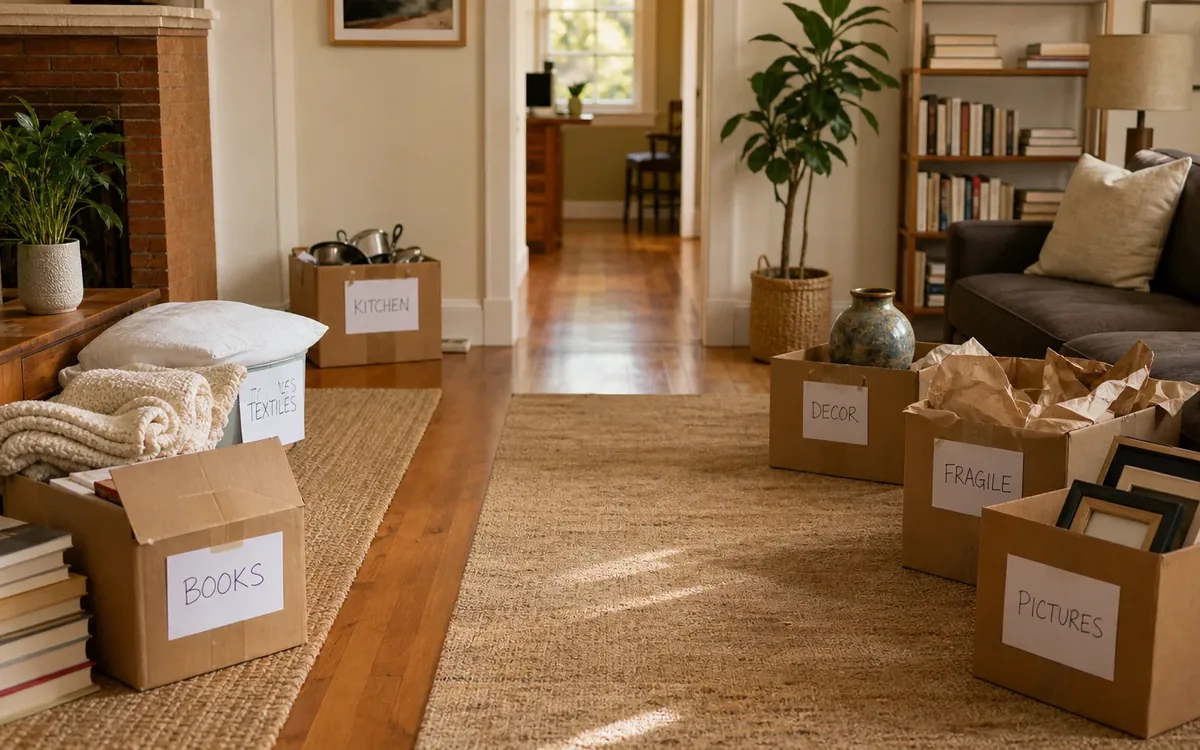
A vague label such as “Books” does little to help after a move. Give every box a unique number and connect that number to a written or digital inventory.
A useful exterior label includes:
- Box number
- General subject or collection
- Owner or intended recipient
- Destination room or storage zone
- Handling note, such as “Heavy” or “Fragile bindings”
- Date packed
For example: “B-014, family history and genealogy, owner: J. Smith, storage shelf C2, fragile, packed September 2026.” Avoid listing rare titles or estimated values prominently on the outside of a box. Keep sensitive details in a separate inventory.
The inventory can record titles individually for valuable or meaningful books and by category for common ones. Photographing the contents before closing each box can make retrieval easier. Back up digital inventories somewhere other than the storage unit.
If books are insured, ask the insurer what records, appraisals, photographs, and storage conditions are required. A moving or organizing team may help implement a household’s labeling system, but it does not set insurance requirements or certify value.
Where should book boxes be stored in South Carolina?
South Carolina households must plan for heat, moisture, storms, insects, and rapid environmental changes. The safest practical choice is a clean, secure, climate-controlled interior space with stable temperature and relative humidity. Stability matters because repeated expansion and contraction can damage paper, adhesives, leather, and bindings.
Avoid placing long-term book storage in:
- Attics or unfinished lofts
- Garages and outdoor sheds
- Damp basements or crawl spaces
- Rooms with known leaks
- Areas beside water heaters or plumbing lines
- Direct sunlight or against exterior walls
- Storage spaces with food, plants, or pest activity
Keep boxes on stable shelving or pallets, never directly on concrete or flooring. Leave space around stacks for air movement and inspection. Do not create tall, unstable columns. Place heavier boxes low, while keeping everything above potential minor water intrusion.
Ask a storage provider for written information about climate controls, pest management, access, storm procedures, insurance, and prohibited materials. A home inspector may assess conditions in a residence. Storage operators and insurers define their own facility and coverage terms. Building, fire, and code requirements remain with the relevant authorities and qualified professionals, not a cleanout or move team.
Build a retrieval plan, not a permanent stack
Long-term storage should have a purpose and review date. Otherwise, carefully packed books can become an expensive decision that no one revisits.
Create three time frames:
- First month: Confirm that all boxes arrived, labels are readable, and shelving is stable.
- Every six to twelve months: Check for odors, moisture, insects, box distortion, leaks, and changes in the storage environment.
- At a defined decision date: Reassess whether the books should return home, remain stored, pass to family, be appraised, be sold, or be donated.
When inspecting, do not open boxes in rain, high humidity, or an uncontrolled outdoor area. Move a box into a clean, conditioned space first. If you find wet materials, mold-like growth, insects, or a strong musty odor, isolate the affected container and seek appropriate professional guidance.
During a larger downsizing project, a practical team may discuss the order of work, help maintain categories, pack approved items, coordinate move logistics, and direct designated contents toward approved destinations. The household or authorized representative retains control over keep, gift, donate, and disposal choices.
Real-estate agents advise on market presentation and listing strategy. Home inspectors evaluate property conditions within their scope. Appraisers determine value within their specialty. Attorneys and fiduciaries handle legal authority and disputed ownership. Government authorities determine applicable code or compliance requirements.
A focused packing-day sequence
Keep the work narrow so books do not become mixed with unrelated household contents.
- Confirm who has authority to make decisions.
- Set up separate tables for storage, home, expert review, and release.
- Inspect and clean only dry, stable books.
- Isolate anything damp, infested, mold-like, disputed, or potentially valuable.
- Assemble and number small boxes before filling them.
- Pack ordinary books upright and vulnerable books flat.
- Fill gaps gently and keep box weight manageable.
- Photograph contents and update the inventory.
- Seal and label every box on more than one side.
- Place boxes in the designated controlled storage zone.
- Schedule the first inspection and a later keep-or-release review.
Clutter Cleaner of South Carolina can discuss downsizing and organizing, move management, estate cleanouts, auctions and estate sales, home sale preparation, and code compliance support across its statewide service territory. Availability and fit depend on the project. Call (843) 972-7020 to discuss practical next steps, decision roles, and the household’s approved plan.
FAQ
Can books be wrapped in plastic for storage?
Usually, individual plastic wrapping is not the best default. It can trap moisture and may interact poorly with some materials. Use appropriate acid-free paper or a conservator-recommended enclosure for vulnerable books. Seek specialist advice for rare or damaged volumes.
How heavy should a box of books be?
There is no universal number for every person or box. Keep each container within the safe lifting ability of the people handling it, and follow any mover or storage provider limits. Small boxes are generally better than large ones.
Can books stay in a climate-controlled unit indefinitely?
Climate control reduces risk but does not eliminate it. Boxes still need periodic checks for moisture, pests, odors, structural failure, and environmental changes. Storage should also have a review date.
Should old books be appraised before donation?
Seek a qualified appraiser’s opinion when a book appears rare, has significant provenance, bears a notable inscription, or belongs to a potentially valuable collection. A cleanout or organizing team can separate it for review but should not assign value.
What should happen to moldy books?
Separate them from clean materials without aggressive brushing or wet cleaning. A qualified conservator or remediation professional should determine appropriate treatment and whether the item can be safely retained.



