
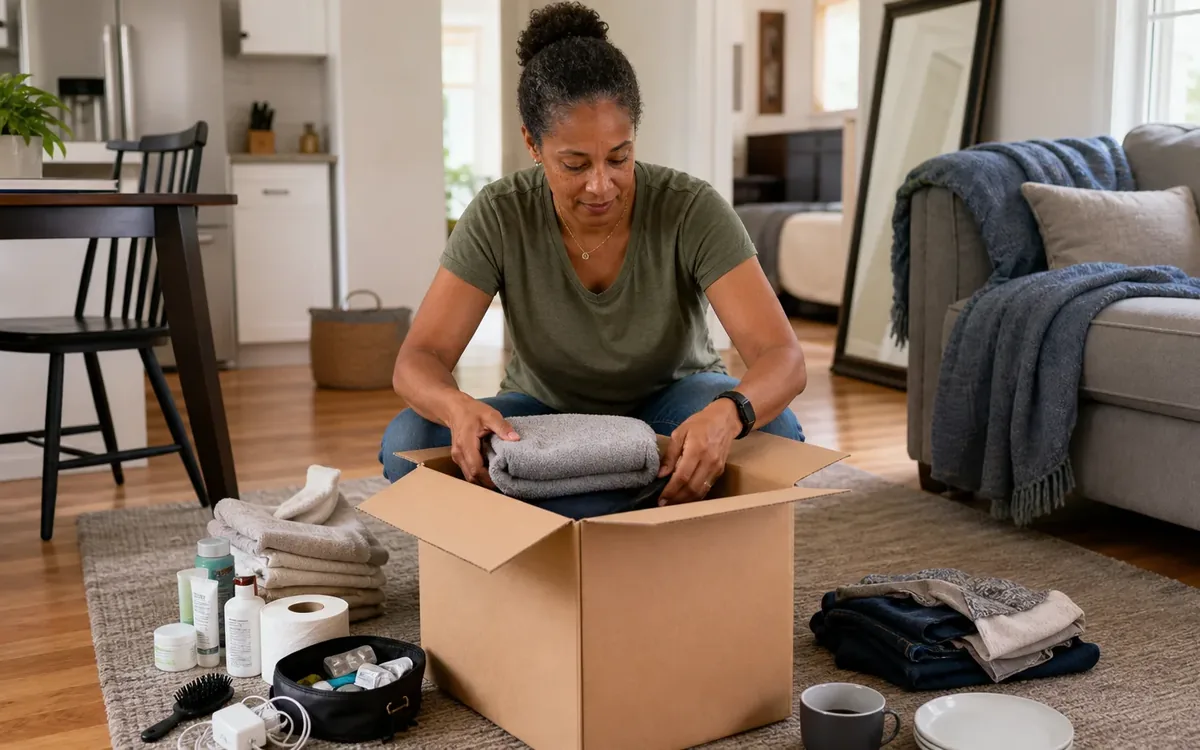
Pack your first-night essentials around what you will need before the rest of the move is unpacked: medication, documents, basic toiletries, sleep items, a change of clothes, simple food supplies, device chargers, pet needs, and a few cleaning tools. Keep these items with you or clearly separated from the general load. In a smaller home, the goal is not to recreate every room immediately. It is to make the first evening and next morning safe, comfortable, and manageable without filling limited space.
Quick answer: Use one clearly marked container for shared household basics, then give each person a small personal bag. Keep medications, identification, keys, valuables, and critical documents under the responsible person’s control rather than placing them in a moving truck. Pack only what supports arrival, sleep, hygiene, food, safety, and the next morning.
Why does an essentials box matter more in a smaller home?
A smaller home can become crowded quickly when boxes arrive without a clear landing plan. If the first things through the door are decorations, books, or rarely used kitchen equipment, necessary items may end up buried behind them.
An essentials box prevents that problem. It gives the household a controlled starting point while other belongings remain packed. It also reduces pressure to open several boxes just to locate soap, bedding, a phone charger, or a coffee mug.
Treat the box as an arrival kit, not as overflow luggage. It should solve immediate needs while taking up little floor or counter space.
This approach is especially useful when downsizing from a larger property. The move may involve several separate decisions about what goes to the new home, what remains with family, what enters storage, and what may be sold or donated. Clutter Cleaner of South Carolina’s move management service may help households discuss sorting, organizing, packing, and move coordination within an agreed scope. The household still decides what to keep and what personal items must remain under its control.
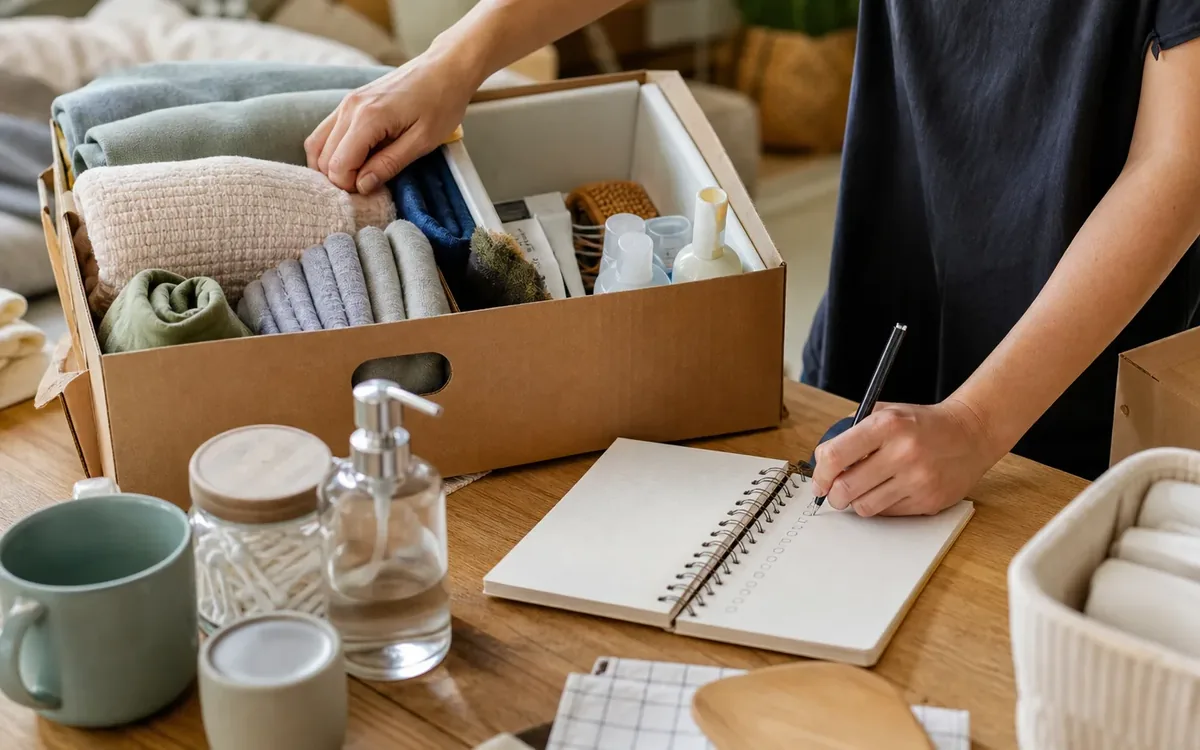
What should go in the first-night essentials box?
Build the container by activity rather than by room. This keeps it focused on what people will actually do after arriving.
Sleep and comfort
Pack what is required to prepare the bed and rest without searching through the main load:
- Clean sheets that fit the new bed
- Pillowcases and pillows, if they are not carried separately
- A blanket appropriate to the household’s preferences
- Sleepwear
- Earplugs, a sleep mask, or another regularly used comfort item
- A night-light or compact lamp if installed lighting is uncertain
If bedding is bulky, place it in its own transparent bag or clearly labeled soft container beside the essentials box. Avoid using valuable linens as packing material elsewhere, since they may become difficult to find.
Medication and personal care
Each person should carry critical medication and health-related items in a personal bag. These should not be packed where access depends on unloading the truck.
Include:
- Prescription medication in its original container
- Regular nonprescription items personally needed
- Glasses, contacts, and solution
- Toothbrush, toothpaste, soap, and deodorant
- Toilet paper and hand towels
- Mobility, hearing, or other daily support items
- Basic first-aid supplies for minor household needs
Questions about medication storage, refrigeration, dosing, or safe transport belong with a pharmacist or other qualified health professional. A move team can discuss where an item will travel, but it should not make medical decisions.
Clothing for arrival and the next morning
Choose a compact set based on planned activities. Pack:
- One change of clothes per person
- Undergarments and socks
- Comfortable indoor footwear
- Work gloves if household members will be opening boxes
- Weather-appropriate outerwear
- Clothing needed for the next scheduled appointment or workday
South Carolina conditions can vary by season and location, so check the forecast for the origin, travel route, and destination rather than assuming the weather will be the same throughout the move.
Simple food and drink supplies
The essentials container does not need to hold a complete kitchen. Focus on food that requires little equipment and does not complicate cleanup.
Useful choices may include:
- Drinking water
- Shelf-stable snacks
- Food needed for children or dietary requirements
- A small number of plates, cups, and utensils
- Paper towels or reusable cloths
- Dish soap and a sponge
- A manual can opener if relevant to the selected food
- Pet food, bowls, and any required feeding tools
Keep perishable food at safe temperatures. Questions about whether food remained safe during transport should be resolved using current food-safety guidance or advice from the appropriate authority, not guesswork by a moving or cleanout team.
How should you separate personal items from household supplies?
Use a two-layer packing system. The shared container supports the home, while personal bags support individual household members.
The shared box can hold toilet paper, soap, basic dishes, cleaning cloths, trash bags, simple tools, and bedding supplies. Personal bags should hold medication, identification, wallets, keys, phones, chargers, valuables, clothing, and individual care items.
Keep these categories outside the general moving load:
- Identification and travel documents
- House, vehicle, storage, and mailbox keys
- Wallets, payment cards, and checkbooks
- Jewelry and small valuables
- Medical instructions and medication
- Phones, laptops, and essential chargers
- Documents needed for closing, leasing, insurance, or access
- Irreplaceable photographs or small keepsakes
The person responsible for each item should decide how it will be secured and transported. A practical move team may ask who will retain the keys, which items should not enter the truck, and where the essentials container should be placed. It should not determine ownership, distribute inherited property, or decide who is legally entitled to records or valuables.
If the move follows an estate transition, ownership and authority may need to be settled before belongings are packed or removed. The guide to what to do first when unpacking explains the broader sequence while keeping cleanout work separate from legal decisions.
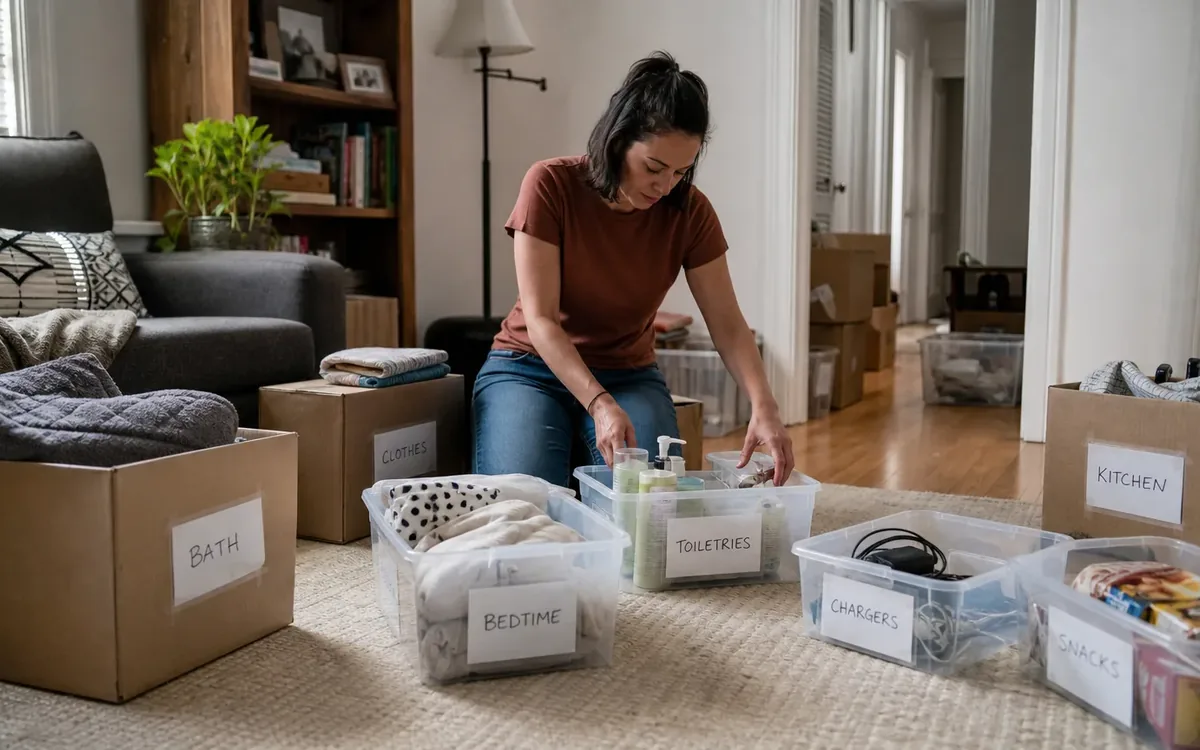
How do you keep the essentials box from becoming too large?
Set a strict purpose for every item: it must support arrival, sleep, hygiene, safety, a simple meal, or the next morning. If it does not meet one of those needs, place it in a room box or make a separate plan for it.
Use these three filters:
- Need before ordinary unpacking: Pack an item only if delaying access would create a meaningful problem.
- Smallest workable quantity: Bring enough for initial use, not the entire household supply.
- No easy substitute already packed: Avoid duplicates unless separate items are genuinely necessary for different people.
For example, one multipurpose cleaning cloth belongs in the essentials box. A full collection of specialty cleaning products does not. A basic utensil set may be useful, while a complete serving collection can wait in a kitchen box.
Do not use the essentials box as a place for uncertain possessions. Items awaiting a keep, sell, donate, store, or discard decision should remain in a separate decision zone. Mixing undecided belongings with arrival necessities makes both categories harder to manage.
Pack the container in a practical sequence
Pack in reverse order of use, with later-needed items at the bottom and immediate items at the top. The following six-step sequence keeps access simple:
- Choose the container. Use a sturdy box, lidded bin, suitcase, or bag that household members can identify and handle safely.
- Place bedding low in the container. Fold or bag it so clean linens stay protected.
- Add next-morning clothing. Keep each person’s set together in a labeled bag if several people share the box.
- Group kitchen and cleaning supplies. Seal anything that could leak and keep it away from food.
- Put immediate bathroom items near the top. Toilet paper, hand soap, and towels should be easy to reach.
- Label every visible side. Write “OPEN FIRST” and the destination room, then add the responsible person’s name or phone number if appropriate.
Do not pack chemicals, fuels, sharp tools, or other potentially restricted materials without confirming how they may be transported. The carrier or appropriate safety authority should decide what it accepts and under what conditions.
Create a clear landing zone in the smaller home
Decide where the essentials container will go before unloading begins. A clear spot near the primary sleeping area or another accessible room often works better than leaving it near the entrance, where it may be blocked by incoming furniture.
Mark a landing zone that does not obstruct:
- Entry and exit paths
- Stairs and hallways
- Doors and windows needed for access
- Electrical panels or utility controls
- Heating or cooling equipment
- Bathroom access
- Mobility routes
Keep a phone charger, flashlight, keys, and basic instructions together. If the home has building rules, loading restrictions, parking requirements, or access procedures, the property owner, manager, association, municipality, or other responsible authority should confirm them. A move team may coordinate around provided requirements, but it does not create or interpret those rules.
Before placing furniture, confirm that the planned layout works with the smaller footprint. Household members can decide their preferred arrangement. Questions about structural safety, electrical capacity, appliance connections, code compliance, or required modifications belong with the appropriate inspector, licensed trade professional, property manager, or government authority.
Coordinate the box with the wider downsizing plan
The essentials box is only one controlled part of the move. It works best when every other item has a destination category.
The household can decide:
- Which belongings will furnish the smaller home
- Which sentimental items family members will retain
- What personal records travel with the responsible person
- Whether optional belongings are worth the space they require
- Which daily routines need support immediately after arrival
A practical cleanout or move team may discuss:
- Sorting and labeling systems
- The loading order for approved items
- A designated placement area for the essentials box
- Packing priorities and room labels
- Coordination needs identified by the household
- The agreed handling route for items already assigned to a category
Other decisions remain separate. A qualified appraiser determines value when a formal appraisal is needed. A real-estate professional advises on listing and market strategy. Inspectors and licensed contractors evaluate repairs, systems, and workmanship. Attorneys, personal representatives, courts, or other authorized parties address ownership, probate, contracts, and legal authority. Government agencies or other responsible entities decide regulatory and compliance questions.
Storage is also a separate household and provider choice. Compare access rules, environmental conditions, insurance questions, security provisions, and contract terms directly with the storage provider. Do not send items to storage merely because the new home lacks an immediate place for them.
Similarly, contractor work should be planned independently from packing. Confirm scope, credentials where applicable, approvals, scheduling, and payment terms with the chosen contractor. A packed essentials box should not be used to work around an area that is unsafe or not ready for occupancy.
Common mistakes that make the first night harder
Avoid choices that create more unpacking or uncertainty:
- Packing essentials in an unmarked carton identical to every other box
- Loading the box before furniture or belongings that will block it
- Putting all family medication into a shared moving container
- Including too many “just in case” items
- Packing liquids without sealed bags or secondary containment
- Forgetting toilet paper, hand soap, bedding, or chargers
- Mixing valuables and legal documents into the general load
- Sending keys with someone who will arrive later
- Assuming utilities, appliances, or internet access are ready without confirmation
- Opening multiple room boxes instead of protecting clear walkways
A brief written inventory can prevent confusion. Tape one copy inside the lid and keep another on a phone. Do not describe valuables in large text on the outside of the container.
First-night setup after arrival
Keep setup narrow. The goal is a functional first night, not a finished home.
Begin by confirming safe access and locating the bathroom, sleeping area, lights, and household controls that occupants are authorized and able to use. Place the essentials box in its landing zone. Prepare beds, set out medication and personal-care items, and create a small charging point that does not overload outlets or create a trip hazard.
Then remove empty packaging and keep exits clear. Stop opening boxes when the necessary spaces work. Decorative decisions and detailed organizing can wait until the household can judge how the smaller rooms function in daily use.
If damage, moisture, exposed wiring, a suspected leak, pest activity, or another concern appears, avoid improvising a repair. The property owner or responsible party should contact the appropriate inspector, contractor, utility, property manager, insurer, or authority.
Short FAQ
Should each person have a separate essentials box?
A small personal bag for each person is usually easier to control than putting everything into one shared box. Use the shared container for household basics and personal bags for medication, documents, clothing, and individual care needs.
Should the essentials box travel in the moving truck?
Critical medication, keys, identification, documents, devices, and valuables should remain under the responsible person’s control. Whether the shared box travels in a truck or personal vehicle depends on the move plan and carrier rules, but it should remain identifiable and accessible.
What should be packed for a child or pet?
Pack familiar comfort items, food or feeding supplies, hygiene needs, medication, and safe sleeping necessities. Guardians and owners decide what is appropriate. Medical or veterinary questions should go to the relevant qualified professional.
Can cleaning products go in the box?
Only include products permitted by the carrier and safe for the planned method of transport. Seal approved liquids separately. Ask the carrier or relevant authority about restricted materials rather than assuming they can be moved.
What if the smaller home is not fully ready?
Do not treat an essentials box as a substitute for safe occupancy. The responsible property professional, inspector, contractor, utility, manager, or authority should address unresolved access, repair, system, or compliance concerns.
A focused next step
Before sealing the box, walk through the period from arrival to the next morning in order. Picture entering the home, using the bathroom, eating something simple, charging a phone, taking medication, making the bed, sleeping, dressing, and leaving or beginning the next day. Pack only what supports those actions.
For households coordinating a downsizing move anywhere in South Carolina, Clutter Cleaner of South Carolina can be contacted at (843) 972-7020 to discuss move management needs and the practical scope of sorting, organizing, packing, or coordination. The physical business location is in Mount Pleasant, and Charleston is the primary market. Legal, valuation, property, inspection, contractor, storage, disposal, and regulatory decisions should remain with the household and the appropriate responsible professionals or authorities.



