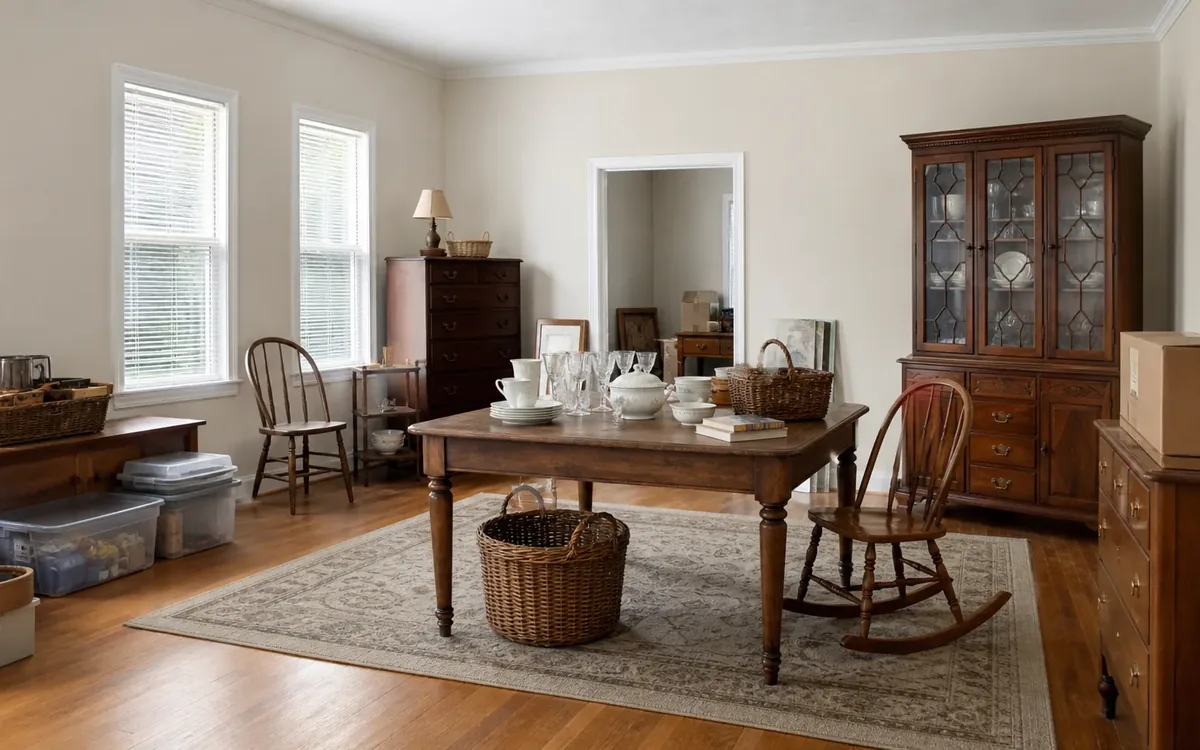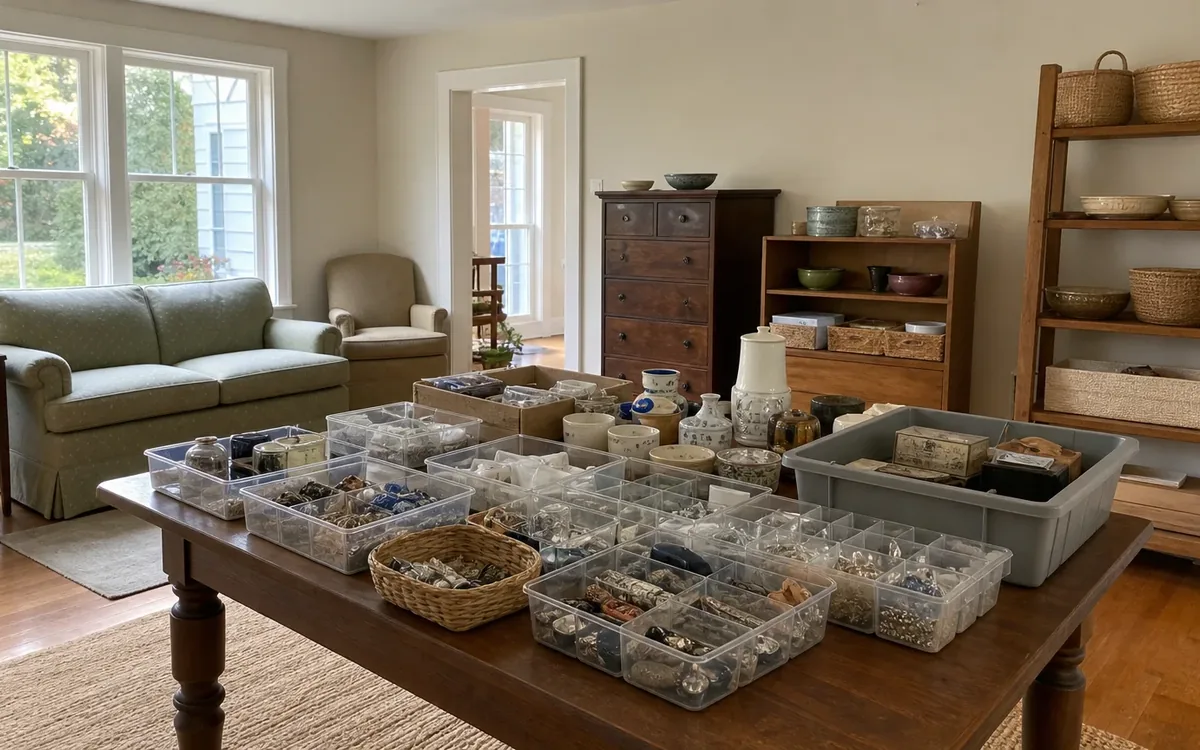
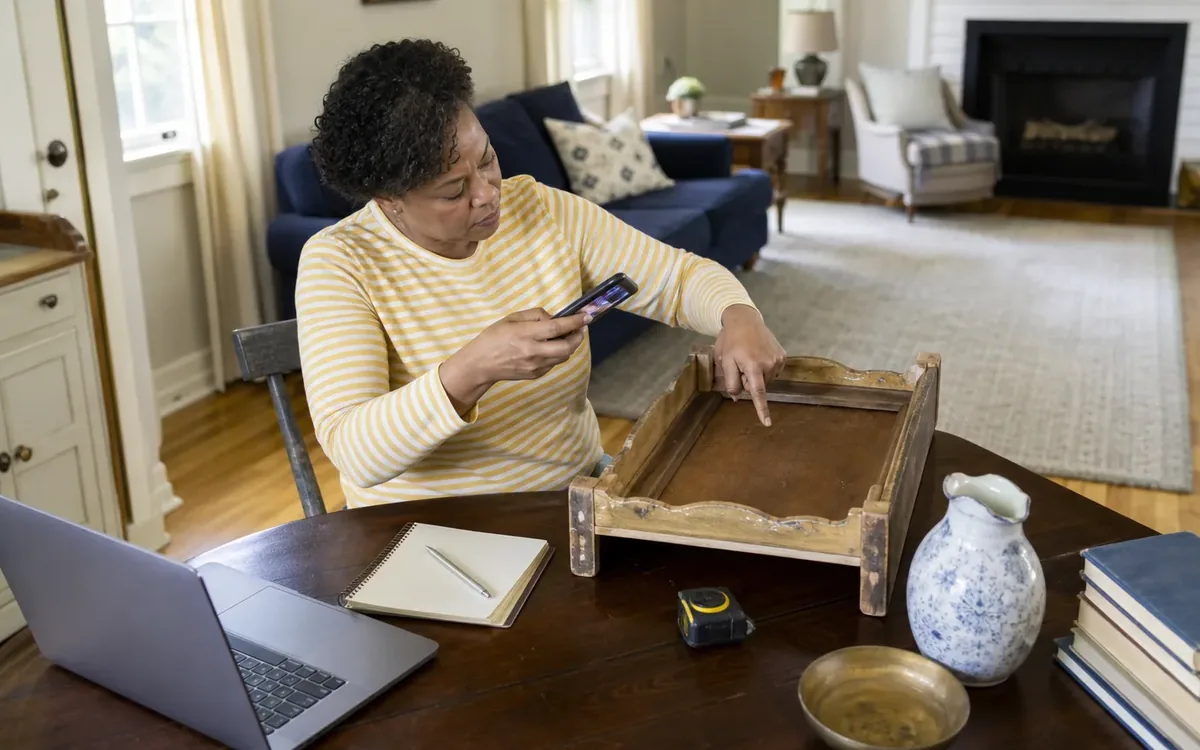
The best way to note scratches, wear, and missing parts in an online auction listing is to inspect each item methodically, photograph every visible defect, and describe what you can confirm without guessing. State where the issue appears, what it looks like, and whether a component is present. Clear condition notes help bidders evaluate an item remotely, while avoiding unsupported claims about age, value, authenticity, or function.
Quick answer: Use neutral, specific language. Write “three-inch scratch on the right side panel” rather than “minor cosmetic damage.” Photograph the entire item, the defect in context, and a close view. If a part is absent or cannot be verified, say so directly. Leave valuation, authentication, legal ownership, regulated disposal, and property-condition decisions to the appropriate professional or authority.
Why do precise condition notes matter in an online auction?
Online bidders cannot pick up an item, inspect its underside, open every drawer, or compare included parts against a manufacturer’s list. The listing must therefore distinguish visible facts from assumptions.
Useful condition notes serve three purposes:
- They direct attention to defects that may not be obvious in overview photographs.
- They help bidders decide whether to ask questions before bidding.
- They create a consistent record of the item’s condition when it was cataloged.
Precision matters more than reassuring language. Terms such as “good for its age,” “light wear,” or “easy fix” can mean different things to different people. A description of the location, size, appearance, and extent of a defect gives the reader more useful information.
This is especially important when a South Carolina household is handling many estate or downsizing items at once. A practical system prevents one family member from relying on memory while another takes photographs or drafts listings. Households considering professional sale support can review the auctions and estate sales service overview to understand how that work may fit into a broader transition.

What should you inspect before writing the listing?
Begin with the complete item rather than immediately focusing on its most visible scratch. Confirm what is physically present, inspect surfaces under clear lighting, and check areas bidders may not see in the first photograph.
Review these seven areas:
- Front, back, and sides: Look for scratches, dents, fading, stains, cracks, chips, peeling, and surface loss.
- Top and underside: Check for rings, gouges, labels, repairs, loose panels, rust, or unfinished areas.
- Edges and corners: Note crushed corners, veneer loss, fraying, separation, and impact marks.
- Moving components: Open doors and drawers carefully. Observe sticking, looseness, misalignment, or missing hardware without forcing anything.
- Attachments and accessories: Identify shelves, cords, remotes, keys, cushions, lids, cases, manuals, and mounting pieces that are visibly present.
- Interior surfaces: Look inside cabinets, cases, bags, and drawers for staining, odor evidence, tears, residue, or previous repairs.
- Labels and markings: Photograph signatures, model numbers, maker’s marks, care labels, and serial plates without treating them as proof of authenticity.
Do not clean, polish, plug in, dismantle, or test an item automatically. Cleaning can alter finishes or remove evidence relevant to a specialist. Electrical, mechanical, fuel-powered, or pressurized items may require an appropriate technician before testing. If an item has not been tested, the listing should say “not tested,” not “does not work.”
For estates where cataloging is only one part of the project, the guide on how estate cleanouts work explains how sorting and removal decisions can be separated from sale, donation, and retention choices.
How should scratches and surface damage be described?
A strong scratch description identifies the affected material, location, approximate visible extent, and surface effect. Use ordinary measurements when practical, but do not imply laboratory precision.
For example:
- “Linear scratch across the upper-left area of the tabletop, approximately four inches long.”
- “Several shallow scratches around the drawer pull.”
- “Finish loss along the front-right edge exposes lighter wood beneath.”
- “Two chips at the base, with the larger chip visible in the close-up photograph.”
- “Scuffing on both lower corners and a dark rub mark on the back panel.”
Avoid minimizing words such as “only,” “just,” or “barely.” A defect that seems insignificant to the seller may affect a bidder’s intended use or restoration plan.
Also distinguish different forms of damage. A scratch is not necessarily a crack. A surface mark is not necessarily structural damage. If you cannot tell whether a line is in the finish or the underlying material, describe what is visible: “Thin line on the finish near the rear edge; depth not determined.”
Photograph each issue in two ways. First, show its position on the full item. Second, provide a close image that reveals texture and extent. A close-up alone can make it difficult to understand scale or location.
Color can shift with lighting and screens. If discoloration appears visible in person but not accurately in the image, note its location without promising an exact color match.
How do you distinguish ordinary wear from significant damage?
“Wear” is useful only when it is followed by details. Instead of deciding whether wear is normal, explain what shows use and where it appears.
Examples include:
- Flattened fabric on the front edge of a seat
- Finish thinning around handles
- Fading on one side of a curtain or upholstered piece
- Sole wear and creasing on footwear
- Page-edge discoloration and cover rubbing on a book
- Tarnish, pitting, or utensil marks on metal
- Crazing, glaze loss, or utensil marks on ceramics
- Fraying around the corners of a rug
Do not use age to excuse or characterize a defect unless age has been reliably established. “Expected wear for age” combines two uncertain judgments. “Finish wear on the arms and front legs” states what a bidder can evaluate.
Separate cosmetic observations from functional ones. A dented metal cabinet may still open, but appearance does not prove function. Conversely, a clean exterior does not establish that an appliance or electronic item operates correctly.
If testing is appropriate and conducted by a qualified person, record exactly what was checked. A brief power-on observation does not establish full operation. “Display illuminated when connected to power; other functions not tested” is narrower and more accurate than “works.” Decisions about electrical safety or mechanical condition belong to the suitable technician or inspector.
How should missing parts be recorded?
Missing-part descriptions require care because the household may not know the manufacturer’s original contents. Start with what should be physically observable from the item’s design, available documentation, or confirmed comparison.
Use direct statements when absence is clear:
- “Left cabinet knob is missing.”
- “One shelf is present; additional shelf support holes are empty.”
- “Power cord is not included.”
- “Lid is absent.”
- “Remote, manual, and mounting hardware are not present with the item.”
- “One drawer pull is detached and included inside the top drawer.”
If completeness is uncertain, avoid claiming that the item is complete or incomplete. Better wording includes:
- “Includes the components shown in the photographs.”
- “Contents have not been compared with an original parts list.”
- “No key was located during cataloging.”
- “Accessory compartment is empty; original contents are unknown.”
Do not assume an unseen part never existed. Search the immediate area, drawers, cases, labeled containers, and grouped accessories before finalizing the listing. Keep uncertain loose pieces separate until a match is supported by shape, labels, documentation, or knowledgeable review.
An appraiser, specialty dealer, manufacturer, or qualified technician may be needed to determine whether a component is original, compatible, or essential to value. A cleanout or move team may discuss grouping and labeling pieces, but should not substitute for specialist authentication.
Build a condition record that someone else can follow
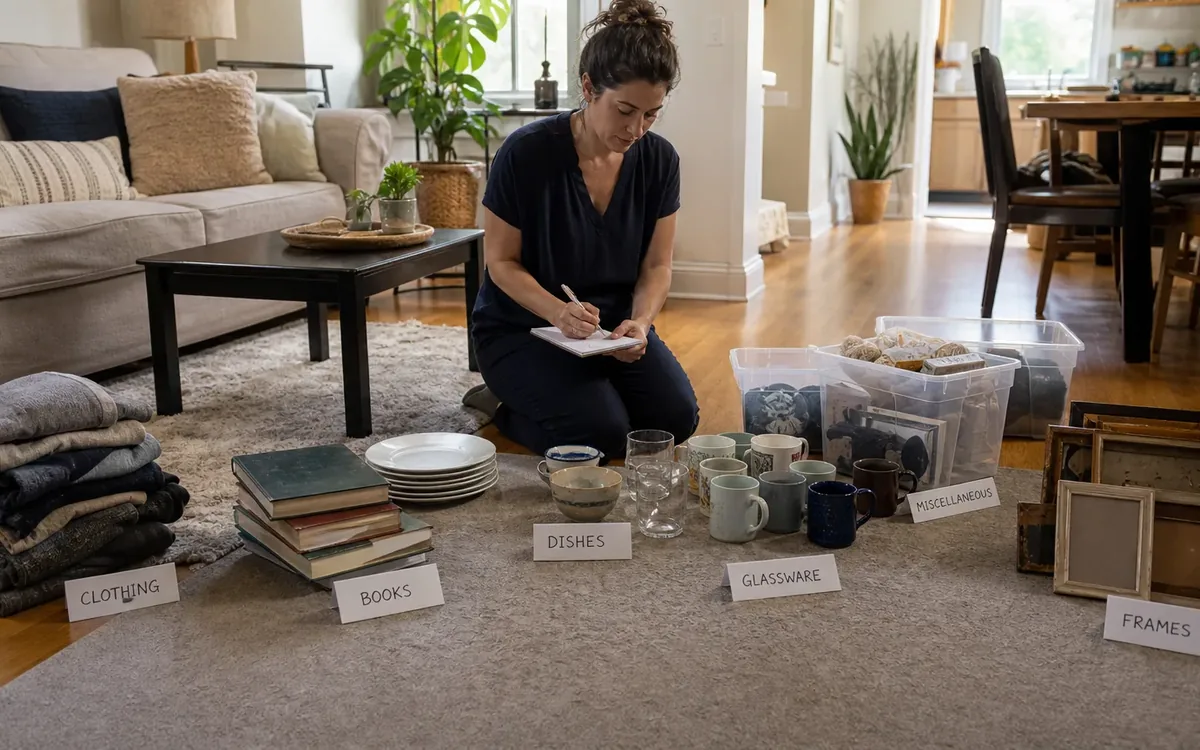
A repeatable record is valuable when several people are photographing, moving, or listing property. Assign each auction lot a unique identifier and place that identifier in the notes and image sequence.
For each item, record these six fields:
- Item identification: A plain description, visible maker’s mark, and model or serial information when present.
- Included components: Everything physically grouped with the lot.
- Surface condition: Scratches, chips, stains, fading, corrosion, tears, or finish loss.
- Structural observations: Visible cracks, wobble, separation, missing fasteners, or loose joints.
- Testing status: Untested, partially observed, or evaluated by an identified appropriate professional.
- Photo references: Image numbers showing each condition issue and included component.
Keep original photographs rather than relying only on edited copies. Crop for clarity if needed, but do not use filters that conceal wear or change colors. Photograph identifying numbers and defects before the item is wrapped, relocated, or grouped into a lot.
If an object changes condition during handling, update both the text and photographs. Do not assume the original listing remains accurate after a drawer pull detaches, glass cracks, or components are regrouped.
What language should an auction listing avoid?
Avoid statements that turn an observation into a guarantee. This is particularly important for items whose value depends on authorship, manufacture, history, restoration, or operating condition.
Replace these risky phrases with narrower descriptions:
- Instead of “mint,” list the absence or presence of visible flaws.
- Instead of “fully functional,” state what was tested and what was not.
- Instead of “original finish,” describe the visible finish and note apparent touch-ups or repairs.
- Instead of “authentic,” record signatures, marks, labels, or documentation for specialist review.
- Instead of “complete set,” list the included pieces.
- Instead of “easy repair,” describe the damaged area without predicting repair difficulty.
- Instead of “no damage,” state that no additional defects were observed during the documented inspection.
“Appears to be” does not solve every uncertainty. A phrase such as “appears to be antique” still suggests an age conclusion. Describe the construction, label, or style, then obtain an appraisal when age or attribution affects a sale decision.
Listings should also avoid conclusions about mold, hazardous materials, code compliance, or product safety unless the appropriate professional or authority has made that determination. Visible residue, odor, staining, or deterioration can be documented without diagnosing its cause.
Separate household choices from professional decisions
The household can decide which possessions to retain, offer for sale, donate, recycle, place in storage, or consider for disposal, subject to ownership rights and applicable rules. Family members can also approve listing language, choose whether uncertain items should be withheld, and decide whether a specialist opinion is worth pursuing.
A practical cleanout, move, or auction team may discuss:
- Creating a labeling and inventory system
- Grouping visibly related parts
- Separating sale candidates from household removals
- Identifying items that may need specialist review
- Coordinating physical handling with the larger home transition
- Flagging visible defects for the listing record
Other decisions stay with the responsible professional or authority. An appraiser determines value opinions within the scope of an appraisal. A real-estate professional advises on listing and property-marketing matters. A qualified inspector or contractor evaluates building systems, repairs, and safety concerns. Government agencies and other applicable authorities determine legal, environmental, disposal, and compliance requirements.
Storage is a separate household arrangement with a storage provider. Contractor work requires a suitable contractor. Disposal options depend on the item, receiving facility, local rules, and any regulated-material requirements. Questions involving title, estate authority, disputed ownership, liens, firearms, protected property, or fiduciary duties should go to the appropriate attorney, court, agency, or other responsible authority.
Final review before publishing
Read the condition description while viewing every photograph in order. Confirm that the text and images refer to the same item, finish, side, and included components.
A focused review should verify:
- Every clearly visible defect is mentioned or shown
- Missing and unverified components are distinguished
- Detached parts are identified as included or excluded
- Testing language matches what actually occurred
- Measurements are labeled as approximate when appropriate
- No appraisal, authentication, safety, or legal conclusion is implied
- The lot identifier matches the catalog record
- Changes caused by moving or handling have been updated
If new information arrives after publication, follow the auction platform’s process for corrections. Material condition information should not remain buried in private correspondence when it affects all potential bidders. The auction provider or platform controls its listing, notice, and bidding procedures.
Short FAQ
Should every tiny scratch receive a separate sentence?
Not necessarily. Similar light marks in one area can be grouped, such as “several shallow scratches across the top.” Photograph the group and describe any deeper or distinct damage separately.
Can a listing say an item is in good condition?
It is more useful to describe observable condition. If a general condition term is used, support it with specific defects, testing status, and photographs rather than leaving it unexplained.
What if a missing piece is found after the listing goes live?
Update the listing through the applicable auction process and add a photograph showing the piece. Confirm whether it is included with the lot rather than assuming bidders will infer that.
Who decides whether damage reduces value?
Bidders make their own purchasing decisions, while a qualified appraiser can provide a value opinion within an appraisal assignment. A cleanout or move team can document visible condition but should not replace an appraisal.
Should an item be repaired before it is listed?
That is a household choice informed by the item, likely sale method, and specialist advice. Repairs can affect originality or value, so valuable or unusual items may warrant review by an appraiser, conservator, or appropriate specialist before work begins.
Clear auction condition notes do not require dramatic language. They require disciplined observation: name the defect, identify its location, show it clearly, list what is present, and state what remains unknown.