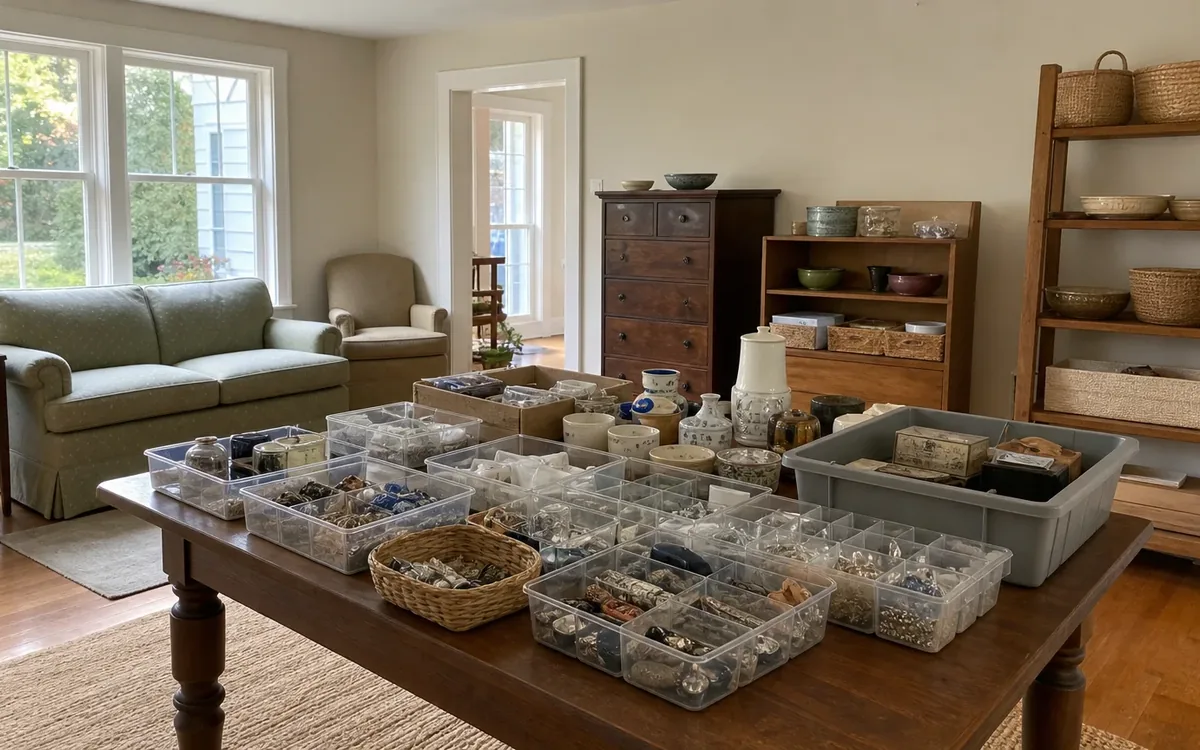
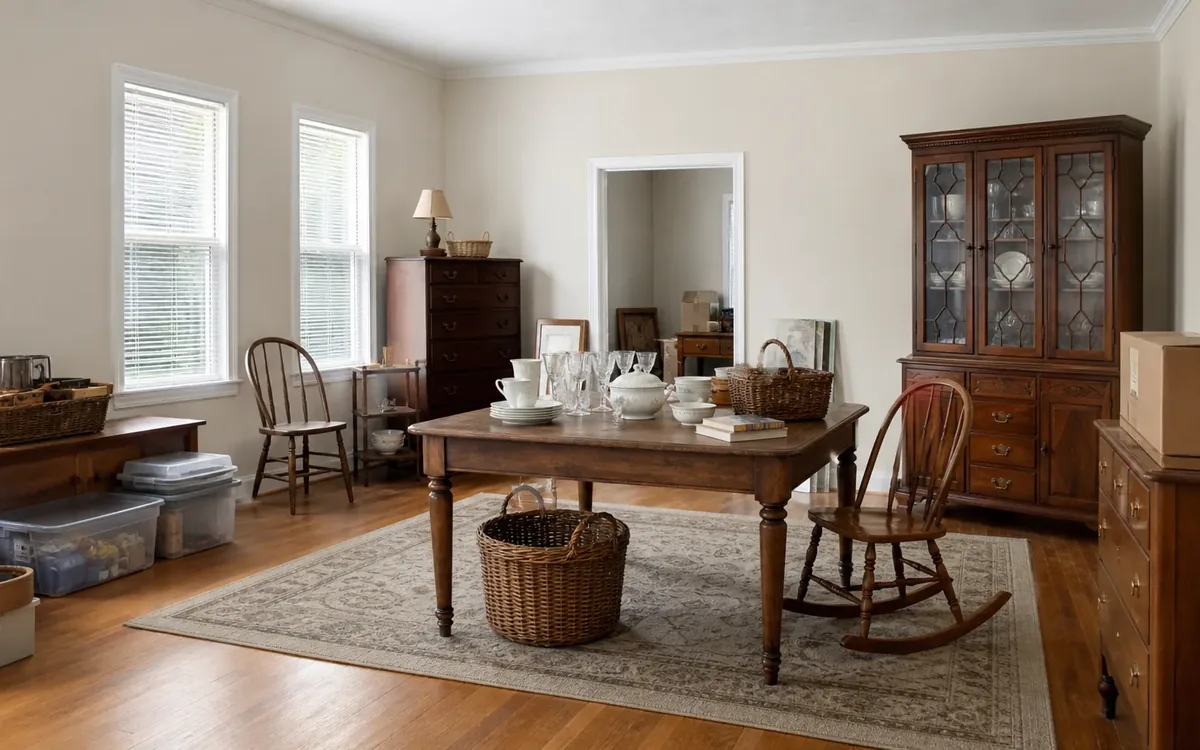
Describe an online estate auction item by recording what you can observe: wear, damage, missing pieces, repairs, and functions you actually checked. Separate those observations from anything you do not know. South Carolina households can prepare notes and photographs for their auction provider to review, rather than assigning unsupported labels such as “excellent,” “authentic,” or “fully working.”
Quick answer: Identify the item, inspect accessible surfaces without altering it, describe each visible issue and its location, list known missing parts, and explain exactly what was tested. Use “not tested” or “unknown” when appropriate. Let the auction provider decide how those notes appear in the listing and which additional review is needed.
What should an estate auction condition description include?
A useful condition description lets a bidder understand the item without relying on flattering adjectives. It should describe the particular object being offered, not what similar objects usually include or how they normally perform.
Build your notes around these details:
- Item identity: A plain description, visible brand, model marking, or distinguishing feature.
- Surface condition: Scratches, stains, fading, discoloration, chips, or other visible changes.
- Structural observations: Loose joints, cracks, detached pieces, or instability noticed during safe handling.
- Parts and accessories: What is present, what is known to be missing, and what remains uncertain.
- Testing: The specific action taken and the result, or a clear statement that no testing occurred.
- Inspection limits: Areas that could not be viewed or functions that were not checked.
For example, “wood dining chair with scratches along the front legs and a loose back joint” says more than “good condition for its age.” Age does not explain the location or extent of damage.
Before developing a household-wide note system, ask your provider how they prefer to receive information. Clutter Cleaner of South Carolina’s auctions and estate sales service page is a relevant starting point for discussing auction preparation and the household’s available records.
Create a repeatable record for each item or lot
Give each item a temporary identifier that also appears in its photo filenames or inventory notes. Use a removable tag nearby rather than adhesive on a delicate finish. The provider may later assign a different lot number.
Keep the record compact but specific:
- Household identifier: Dining room cabinet A.
- Item: Two-door wood cabinet with interior shelves.
- Visible wear: Scratches beside the right handle; discoloration on the top.
- Damage: Small chip at the lower left front corner.
- Parts: Two shelves present; key not located.
- Function: Doors opened and closed; lock not tested.
- Limits: Back and underside not inspected.
This format separates facts that otherwise get buried in a paragraph. It also makes corrections easier when another family member finds an accessory or remembers a repair.
Record the inspection date in your working notes. If an item is moved, dismantled, or damaged afterward, update the record before it reaches the listing stage. Do not assume an earlier photograph still represents its condition.
How do you describe wear without overstating condition?
Use everyday language tied to a location. A bidder should be able to find the issue in a photograph or understand why a close-up matters.
“Scratches on the top near the rear edge” is better than “normal wear.” “Brown stain on the left seat cushion” is better than “needs some love.” Neither phrase guesses at the cause, permanence, or cost of correcting the issue.
Useful distinctions include:
- Scratch: A visible mark across a surface; describe its location and extent.
- Chip: A portion missing from an edge or surface.
- Crack: A visible split or fracture; say where it appears and whether its full extent is visible.
- Discoloration: A change in color without assuming the cause.
- Loose component: A part that moves unexpectedly during safe handling.
- Repair evidence: Visible glue, filler, fasteners, stitching, or another alteration.
Avoid diagnosing materials or damage beyond your knowledge. A pale ring on a tabletop can be described as a pale ring; it does not need to become a confirmed water stain. Dark spotting should not be labeled as mold without an appropriate basis.
Do not clean aggressively just to improve a condition description. Polishing, scraping, washing, or applying chemicals can change finishes and erase useful evidence. Ask the provider before altering an item with uncertain materials or value.
For the larger household process, the guide What Is the Best Way to Clean Out an Estate? provides context for sorting decisions. Condition documentation should remain a separate task from deciding what to keep, offer for sale, donate, or discard.
How should missing parts and untested functions be described?
Distinguish between a part you know is missing and an accessory you simply have not found. “Remote control not located” does not claim that the household originally owned one. “Battery compartment cover is missing” describes an observable absence.
Compare the item with a reliable manual or parts reference when available, but do not assume every pictured accessory came with that particular version. Give the provider the reference and let them assess its relevance.
For function notes, describe the test rather than expanding its result:
- “Lamp illuminated when switched on; other electrical condition not assessed.”
- “Radio powered on; reception and other functions not tested.”
- “Drawer opened and closed; lock not tested because no key was located.”
- “Clock not wound or tested.”
- “Appliance not connected or tested.”
“Powers on” does not mean “works properly.” A display can illuminate while other functions fail. Likewise, a moving drawer does not establish that the cabinet is structurally sound.
Do not energize equipment with damaged cords, exposed wiring, leaking batteries, or other apparent hazards. Do not operate unfamiliar machinery merely to obtain a stronger listing statement. Tell the provider why testing was not attempted. Technical inspection and safety conclusions belong with an appropriate qualified professional.
Photograph the condition, not just the attractive view
Pair the overall item photograph with images that explain the written notes. A photograph should support the description, not serve as a substitute for mentioning a known issue.
Useful views include:
- The complete item from an ordinary viewing angle.
- Each side that has notable wear or damage.
- A close-up of the issue and a wider view showing its location.
- Visible labels, maker’s marks, model numbers, or signatures.
- Accessories and detached parts grouped with the correct item.
- An inaccessible area, if its inspection limit can be shown safely.
Use lighting that reveals surfaces without hiding flaws in glare or deep shadow. Avoid filters that change color or remove visible defects. Include a ruler near damage when useful, without placing it where it could scratch the item.
Do not tilt heavy furniture, climb onto unstable objects, or take apart unfamiliar equipment for a photograph. State the resulting limitation instead. If a practical cleanout or move team is involved, discuss safe access and handling needs before items are repositioned.
Keep sensitive papers and personal information out of the frame. For objects with identifying numbers, ask the provider what should be retained in the private record and what is appropriate for public display.
Use item-specific language for common estate contents
Different objects need different observations. A useful note reflects the item’s likely questions without pretending to be a professional inspection.
Furniture: Describe surface marks, loose joints, missing hardware, odors noticed during inspection, and areas not viewed. Avoid “solid wood” unless that construction is established. “Wood cabinet” is safer when material composition is uncertain.
Upholstered pieces: Note tears, stains, fading, cushion shape, and visible seam separation. Do not promise that a stain will clean out or that an odor will disappear. Cleaning options are a separate household or provider discussion.
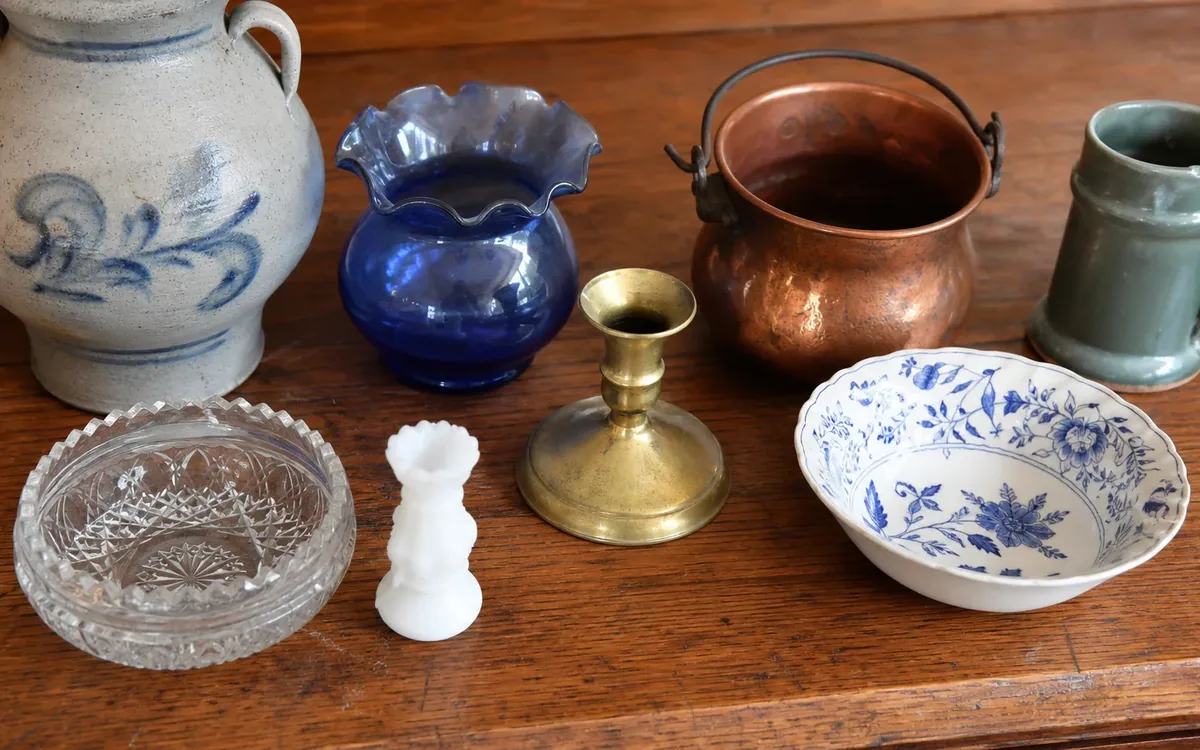
Glass and ceramics: Identify visible chips, cracks, and repair evidence. Do not run fingers along sharp edges. State if the underside or interior was not inspected rather than claiming there are no flaws.
Jewelry and decorative objects: Record visible markings accurately. A stamped number or maker’s name is an observation, not proof of metal content, authenticity, or value. Ask the provider whether specialist evaluation is appropriate.
Tools and electronics: List included components, cord condition as observed, visible corrosion, and the narrow scope of any safe test. Avoid treating absence of visible damage as confirmation of safety.
Grouped lots: Identify notable issues across the group and explain inspection limits. “Each piece individually inspected” should appear only if that actually happened. Do not let a clean example stand in for every object in a box.
Keep household notes separate from professional conclusions
The household can document observations, locate records, identify sentimental items, and propose which belongings to retain. Those choices still depend on the household’s authority to act. Ownership disputes, estate administration questions, and permission to sell should go to the responsible estate representative or legal adviser.
An auction provider can review submitted notes, request more photographs, and discuss listing language, grouping, or whether an item needs further evaluation. Do not assume that every observation will be published exactly as written.
A practical cleanout or move team may discuss access, sorting, keeping accessories together, packing considerations, and how to avoid losing the connection between an item and its record. That discussion is not an appraisal, electrical inspection, or legal determination.
Keep these decisions with the appropriate party:
- Authentication, attribution, and valuation: The relevant appraiser or specialist.
- Safety or technical condition: The appropriate inspector or qualified technician.
- Ownership and sale authority: The responsible representative and legal adviser when needed.
- Property-sale disclosures: The seller, real-estate professional, and applicable advisers.
- Compliance requirements: The responsible professional or authority.
Storage, contractor repairs, specialist testing, and disposal are separate choices. If any are being considered, clarify who will arrange them and whether changing the item could affect its auction description.
Review notes before the provider publishes a listing
Read the notes alongside the photographs. Replace conclusions with observations, resolve mismatched identifiers, and flag anything that changed during sorting or moving.
Check for language that quietly overpromises: “complete,” “original,” “restored,” “excellent,” and “working” all need a sound basis. Replace uncertainty with an honest limit, not a guess.
Clutter Cleaner of South Carolina is physically based in Mount Pleasant, serves all of South Carolina, and has Charleston as its primary market. South Carolina households can call (843) 972-7020 to discuss auctions and estate sales or related transition needs. Ask how condition notes should be submitted and which questions require a separate professional.
Short FAQ
Can I write “as is” instead of listing damage?
Do not use “as is” as a substitute for factual notes about known issues. Your provider should determine sale terms and listing wording. Supply the visible damage and testing limits regardless.
What if family members disagree about condition?
Record the observable facts and identify unresolved history separately. “Glue visible at the leg joint” is useful even when nobody agrees about who repaired it.
Should I repair an item before the auction?
Ask the provider before making changes. Repair decisions, costs, and contractor selection are separate choices. Preserve photographs and notes of the existing condition so any later change can be described accurately.