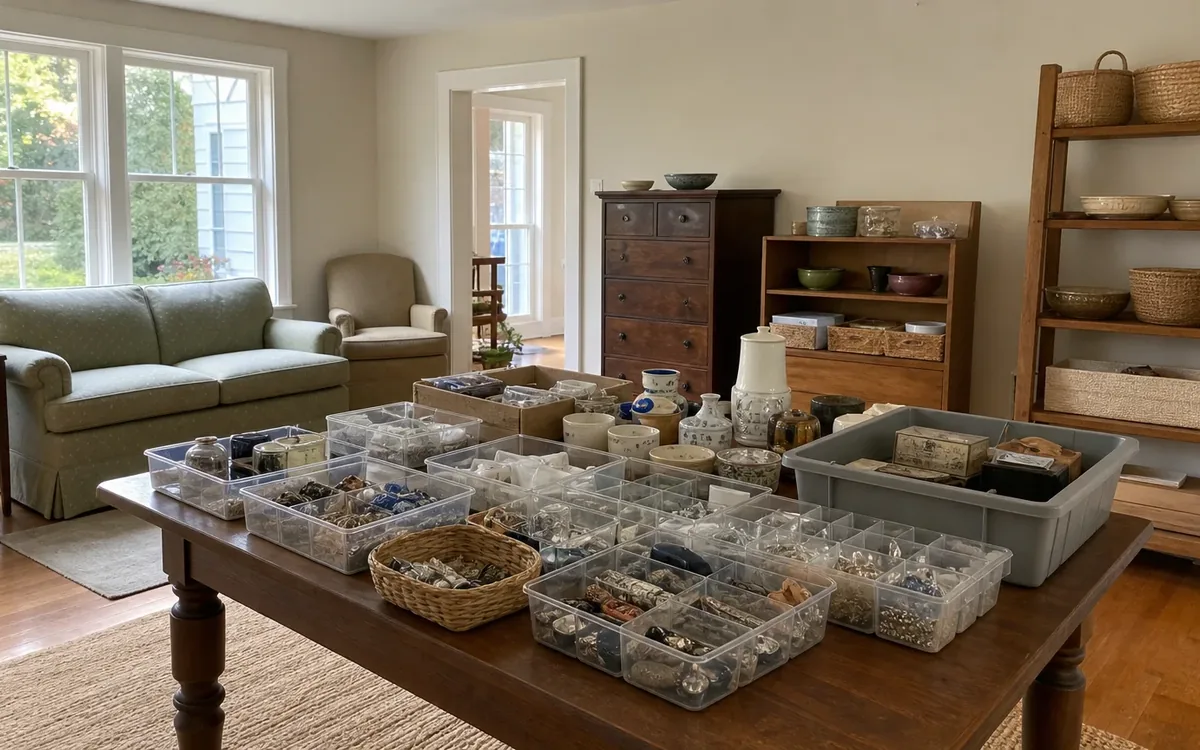

Estate sellers in South Carolina should describe known damage and repairs with specific, observable language, identify what has not been tested, and avoid guesses about safety, authenticity, or restoration quality. A useful listing tells buyers what the household knows, how it knows it, and what remains uncertain. Photographs should support those statements, not replace them.
For a Charleston household selling inherited belongings, the challenge is often incomplete knowledge rather than intentional omission. A relative may remember a repair without knowing who performed it. A lamp may look intact but have no documented electrical inspection. Clear condition language lets those limits remain visible.
Quick answer: Name the item, describe the defect and its location, state any documented repair, and explain testing limits. Use “repair history unknown” when that is true. Avoid unsupported labels such as “fully restored,” “safe,” or “works perfectly.” If new information changes the description, update the listing and notify the person managing the sale.
What should an estate sale condition description include?
A strong condition description separates identification, observation, history, and uncertainty. These details can fit into a short paragraph without becoming a technical report.
Include the following when relevant:
- Item identification: What the object is, without an unsupported attribution.
- Visible condition: Scratches, cracks, staining, missing parts, looseness, or other observable defects.
- Location and extent: Where the issue appears and how broadly it affects the item.
- Known repairs: What records or household knowledge support the statement.
- Testing limits: What was checked, what happened, and what was not evaluated.
- Supporting photographs: Overall views and close-ups tied to the description.
For example: “Wood dining chair with scratches on the seat and a split near the rear left leg joint. Glue residue is visible at that joint; repair history is unknown. Structural stability has not been evaluated.”
That wording is more useful than “antique chair, good condition.” It does not pretend that a visual review establishes age or safe use.
Households deciding how an item listing fits into the broader sale can review auctions and estate sales services. Condition descriptions should remain factual regardless of the sale format.
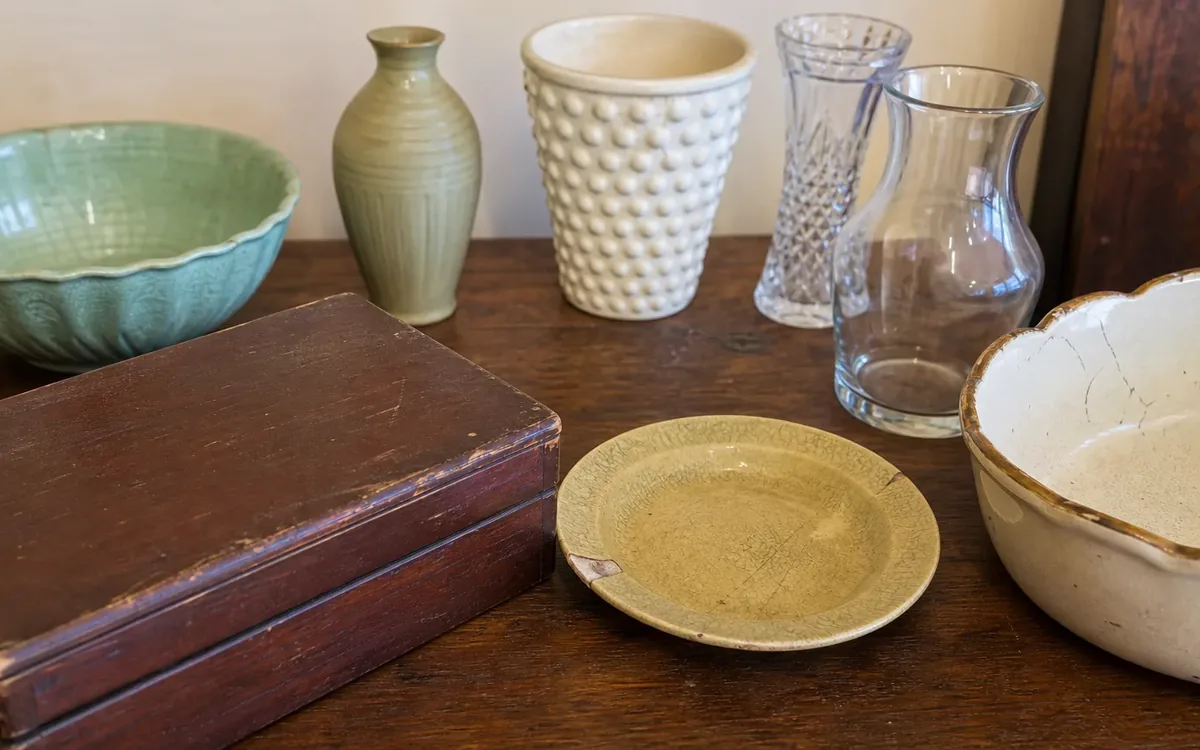
Separate what you see from what you have been told
Inherited objects often arrive with family stories. Those stories can be meaningful, but they are not interchangeable with receipts, inspection findings, or direct observations.
Use language that identifies the source of information:
- “A receipt identifies a replacement clasp installed by a jeweler.”
- “A family member recalls that the tabletop was refinished; no supporting record is available.”
- “A patch is visible on the underside; the repair method is unknown.”
- “No repair records were found among the documents reviewed.”
The last statement does not establish that an item was never repaired. It only describes the records available to the seller.
If household members disagree, do not select the most reassuring account. State the uncertainty or ask the person responsible for the estate to resolve what can be represented. Keep a brief internal note of the conflicting information so the sale organizer understands why the description is qualified.
For the larger task of sorting belongings and records, the guide What Is the Best Way to Clean Out an Estate? offers related context. Keep the condition record attached to the item throughout that process.
How do you describe damage without guessing at its cause?
Describe the evidence before naming a cause. A dark mark might be a stain, finish discoloration, or residue. A crack might reflect impact, movement, or an older repair. Unless reliable information establishes the cause, the listing should not assign one.
Useful substitutions include:
- Instead of “water damage,” write “dark staining along the lower edge; cause unknown.”
- Instead of “just a cosmetic crack,” write “crack visible across the corner; depth and structural effect not evaluated.”
- Instead of “easy fix,” write “drawer does not close fully; cause not determined.”
- Instead of “normal wear,” write “surface scratches on the arms and worn upholstery at the front edge.”
“Minor” and “major” are relative judgments. If you use them, anchor them to something observable rather than relying on the label alone.
Describe location using terms a buyer can match to the photographs: front right corner, underside of the seat, inside rim, or lower rear panel. If size matters, provide an actual measurement rather than an estimate presented as exact.
Do not minimize a defect because the item is old. Age may explain why wear is unsurprising, but it does not tell a buyer whether that wear affects intended use.
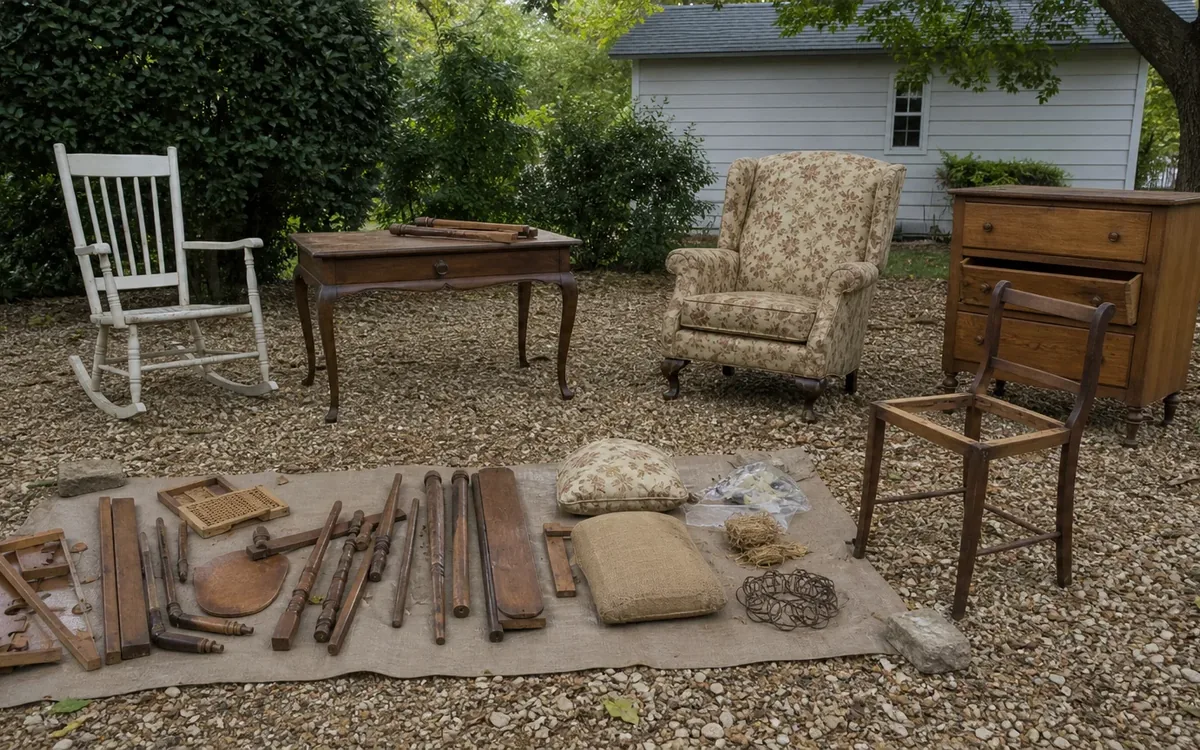
How should repairs and replacement parts be disclosed?
A repair disclosure should say what changed and what supports that account. It should not automatically imply that the item has been restored to its original condition or is suitable for use.
Compare these statements:
- Too broad: “Professionally restored cabinet.”
- More precise: “Receipt describes replacement of the lower hinge and refinishing of the doors. Other repair history is unknown.”
- Too reassuring: “Lamp rewired and completely safe.”
- More precise: “Available receipt describes cord replacement. Current electrical safety has not been evaluated.”
- Too vague: “Some repairs.”
- More precise: “Two patches are visible on the back of the canvas; no repair documentation is available.”
Replacement hardware, altered upholstery, shortened legs, replacement stones, and substituted components can matter to buyers. Disclose known changes without deciding how they affect market value or authenticity.
An appraiser or appropriate specialist handles opinions about value, attribution, originality, and the significance of restoration. A household can provide records and observations; it should not turn those observations into an expert conclusion.
Do not describe a repair as professional solely because it looks tidy. If the provider or scope is unknown, say so. If documentation exists, summarize it accurately and retain it for the sale organizer to review.
Testing is not the same as an inspection
“Working” is often too broad for an estate sale listing. A device can power on while important functions remain unchecked. A clock can run briefly without establishing accuracy. A chair can appear sturdy without a structural evaluation.
Describe the actual check and its limits:
- “Powered on and display illuminated; other functions were not tested.”
- “One drawer opened and closed during review; remaining drawers were not checked.”
- “Clock hands moved during observation; timekeeping accuracy was not evaluated.”
- “Not powered on because the cord covering is visibly damaged.”
Do not perform a test merely to improve the listing when there is a visible hazard or you lack the appropriate knowledge. Qualified professionals should handle electrical safety, structural concerns, or other technical evaluations where needed.
Distinguish “untested” from “tested and did not operate.” If an appliance did not start during an attempted check, saying only “untested” leaves out relevant information.
Similarly, “not inspected” does not mean “no defects.” It describes a limit on the available information. Buyers should be able to understand that limit without interpreting a reassuring headline against a contradictory note below it.
Match photographs to the written condition notes
Condition photographs work best when a buyer can locate the defect within the whole object. An isolated close-up may show a crack clearly while leaving its position ambiguous.
Create a small, purposeful image set:
- An overall view identifying the item.
- A wider view showing where the defect sits.
- A close-up showing the visible issue.
- A view of a known repair or replacement component.
- A readable image of relevant markings, when appropriate.
Use lighting that shows the surface honestly. Avoid editing that conceals stains, cracks, finish variation, or repair lines. Do not move a fragile item into an unsafe position to obtain a photograph.
Refer to photographs directly when helpful: “Chip on the rear rim, shown in the close-up.” Still name the chip in the text. Buyers may overlook an image or view it on a small screen.
If a photograph includes a receipt, remove private information from the shared copy. Preserve the original separately rather than altering the only record. The sale organizer can discuss how supporting documents will be made available.
Keep condition information consistent through the sale
The same item may appear in a catalog, on a tag, in an email, and in conversations with buyers. Inconsistent wording can create confusion even when each person is acting in good faith.
Use one master condition note linked to an item identifier. Keep that identifier on the photographs and the working inventory. Record who supplied repair information and whether a supporting document exists.
When new information appears:
- Verify that it concerns the same item.
- Revise the master note without erasing the reason for the change.
- Tell the sale organizer which public descriptions need updating.
- Ask how previously interested buyers should receive the correction.
If damage occurs after photography, the old description is no longer sufficient. Disclose the new condition rather than assuming the original images cover it.
A practical cleanout or move team may discuss how to keep an item and its paperwork together, flag fragile belongings, and coordinate handling information. That conversation does not replace an inspection or establish that the object is safe to move or use. Separate storage, specialist repair, and disposal decisions should be made with the household and the relevant providers.
Who decides what can be sold and what must be reviewed?
The household can gather observations, locate records, identify questions, and propose wording. The executor or other authorized representative should confirm who may approve sales and release estate property. Possession alone should not be treated as proof of authority.
Keep these responsibilities separate:
- Legal questions: An attorney or responsible authority addresses ownership disputes, estate authority, required disclosures, and the effect of sale terms.
- Appraisal questions: An appropriate appraiser or specialist assesses value, attribution, or restoration significance.
- Inspection questions: A qualified professional evaluates safety or technical condition within their scope.
- Real-estate questions: The responsible real-estate professional and legal adviser handle property-sale disclosures and treatment of attached fixtures.
- Compliance questions: The relevant authority or qualified professional determines applicable requirements for regulated items or disposal.
An estate sale listing for personal property is not a substitute for a home disclosure document. If an item may be attached to the property or included in a home-sale agreement, clarify its status before listing it separately.
Clutter Cleaner of South Carolina is based in Mount Pleasant, with Charleston as its primary market and a statewide service territory. A sale-planning discussion can address practical coordination, while legal conclusions and specialist evaluations remain with the responsible professionals.
Short FAQ
Is “as is” enough to describe condition?
It does not communicate a specific defect. Describe known issues plainly and ask the responsible legal adviser about sale terms and disclosure obligations. Do not assume a phrase resolves every legal question.
What if nobody knows whether an item was repaired?
Write “repair history unknown.” If a visible patch, seam, or replacement part suggests prior work, describe that observation separately without asserting how or when it happened.
Should a listing mention missing parts?
Yes, identify known missing parts. If completeness has not been checked, say that instead of calling the item complete. Avoid promising that replacement parts are readily available.
Can the description be brief?
Yes. Brevity works when it preserves the important facts: the defect, its location, known repair information, and testing limits. The goal is a clear account of condition, not a persuasive explanation for overlooking it.