
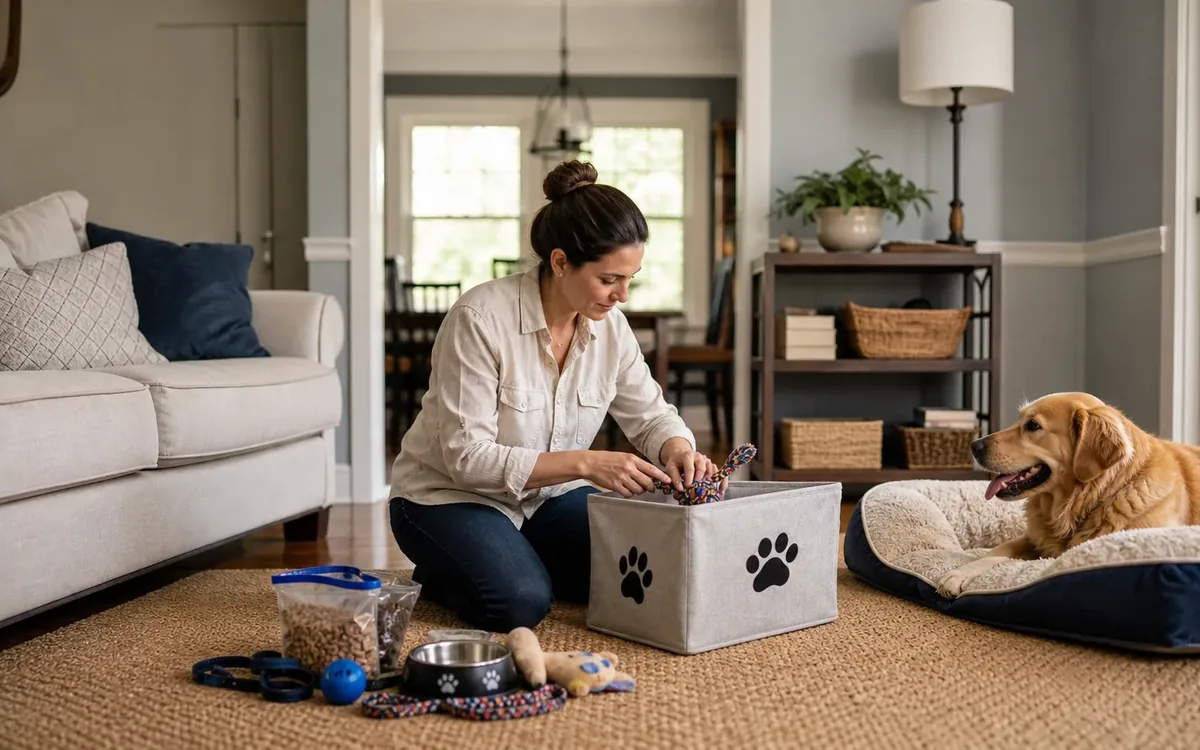
Pet supplies should be sorted into three groups before home showings: items that leave with the pet, a small reserve kept in closed storage, and excess supplies removed from the property temporarily. This approach keeps bowls, food bags, crates, toys, litter products, and grooming equipment from distracting buyers without disrupting the pet’s care.
Quick answer: Create one portable pet kit for each showing, place limited backup supplies in clean, closed containers, and move bulky or surplus items to an appropriate off-site location. Keep medicines, identification, food, water, and safety equipment accessible. Ask the real-estate professional how the home should be presented, while leaving veterinary, legal, inspection, and property-disclosure questions to the appropriate professionals.
The goal is not to hide the fact that an animal lives in the home. It is to make pet care orderly, limit odors and visual clutter, and prevent supplies from defining rooms that buyers need to evaluate.
Why do pet supplies need a separate showing plan?
Pet belongings behave differently from ordinary household clutter. Many must remain accessible until the household moves, yet leaving all of them visible can make closets, laundry rooms, patios, and storage areas look crowded.
Food and litter may also create odors if packaging is open or containers are not clean. Toys and leashes can become trip hazards. Large crates, climbing structures, aquariums, and feeding stations may affect how buyers perceive floor space.
A separate plan helps the household distinguish between:
- Supplies needed during the showing
- Supplies needed later that day
- Backup stock that can remain packed
- Bulky equipment that should be relocated
- Expired, damaged, or unwanted products that require an appropriate disposal decision
This narrow system fits within broader home sale preparation services, but pet health and comfort should remain household priorities. Presentation advice should come from the listing agent or other responsible real-estate professional.
Build a portable showing kit
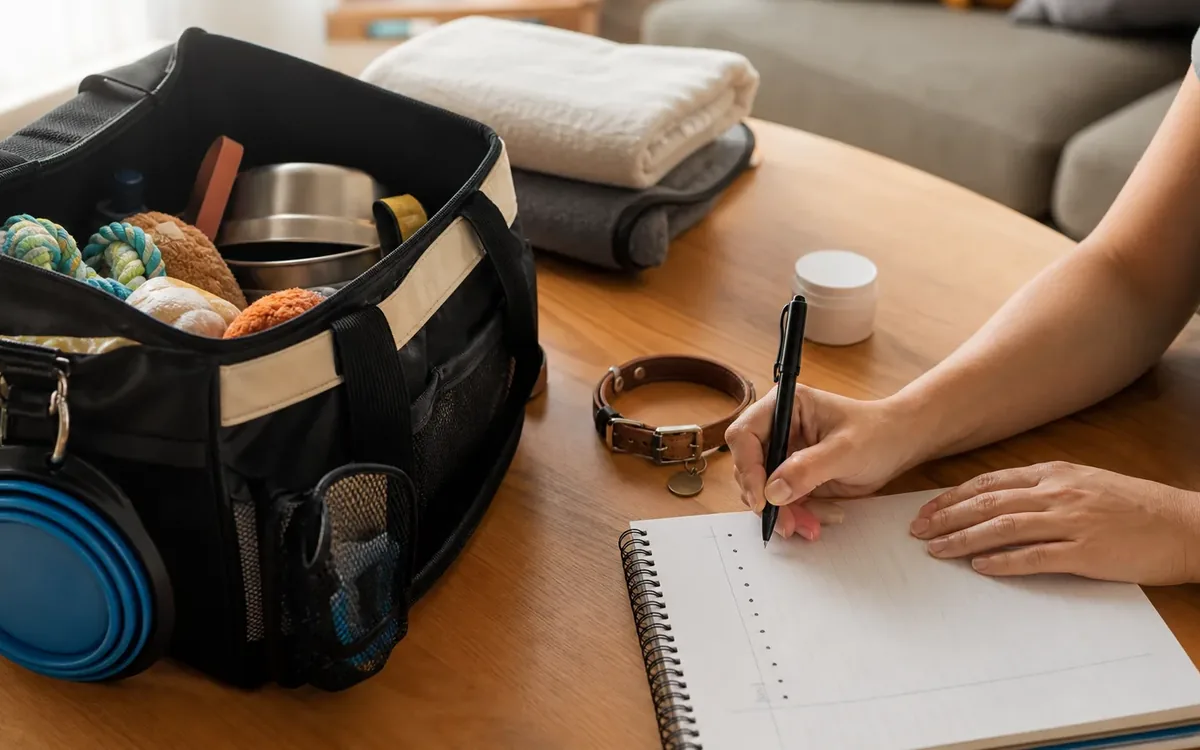
The showing kit contains only what the pet and caregiver may need while away from the property. Use a washable tote, lidded bin, carrier pocket, or another container that is easy to remove whenever a showing occurs.
Depending on the animal, the kit may include:
- Leash, harness, carrier, or travel restraint
- Waste bags and cleanup wipes
- A small food portion in a sealed container
- Water and a travel bowl
- Necessary medication and written instructions
- Identification and current contact information
- A familiar toy or comfort item
- A towel or absorbent pad
- Any weather-related item the animal genuinely needs
Do not pack medication into a container that could be left behind, placed in a hot vehicle, or mistaken for household donations. A veterinarian or pharmacist should answer questions about storage temperatures, dosing, transportation, or medication disposal.
Labeling the kit can prevent confusion during a rushed departure. If several pets have different diets or medicines, use separate labeled pouches inside the main container.
The kit should leave with the animal or responsible caregiver. It should not be hidden in a closet that buyers may open.
What should stay in the home during a showing?
Keep only supplies that cannot reasonably leave and that do not interfere with access, cleanliness, or presentation. The household can decide which daily items are essential, while the listing agent can discuss how visible items may affect photographs and showings.
Suitable items may include:
- A clean, discreet feeding station if it cannot be removed
- A securely covered aquarium or habitat that remains with the home during access
- A compact reserve of sealed food
- One closed bin of daily care products
- Necessary habitat controls or safety equipment
Use cabinets only when supplies fit without crowding them. Buyers commonly assess storage, so pushing loose bags and toys into a closet can simply move the distraction.
Food should remain in its original packaging when product identification, feeding instructions, or expiration information matters. That packaging can then be placed inside a clean, pest-resistant container where appropriate. Never transfer medicine or hazardous products into an unlabeled container.
If an animal remains on the property, the showing arrangement should be approved by the listing professional and managed by the household. A pet behavior specialist or veterinarian can advise on stress, confinement, or safe handling. A cleanout or move team should not make animal-care decisions.
Sort excess supplies without disrupting pet care
Temporary storage works best after obvious excess has been separated from current necessities. Avoid treating all pet belongings as one category. Food, medicine, textiles, equipment, and waste products have different handling needs.
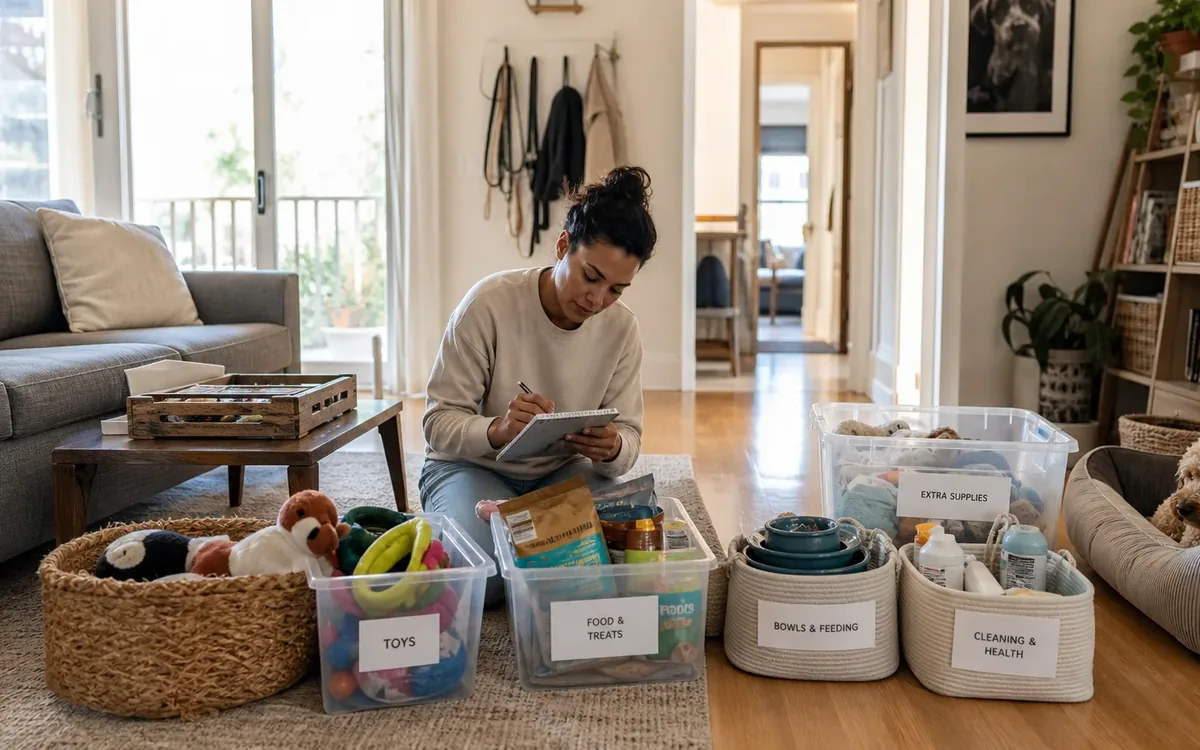
Use these four groups:
- Active care: Items currently used and needed through the move.
- Showing kit: Portable items that leave with the pet or caregiver.
- Temporary storage: Clean backup supplies and equipment not needed before the move.
- Disposition: Unwanted, damaged, expired, contaminated, or pet-specific items that need a separate decision.
Wash washable items before storing them. Empty crumbs and hair from carriers, bins, baskets, and fabric beds. Ensure everything is completely dry before closing a container, especially in South Carolina’s humid conditions.
Keep product labels visible. Mark each container with the pet’s name, category, and whether it must remain upright or climate-controlled. Avoid vague labels such as “miscellaneous,” which make essential supplies hard to retrieve.
Households combining sale preparation with an estate transition may also benefit from the guide on how clean should a house be for showings. Its decision structure can help separate belongings by destination, although pet supplies still require their own health and safety review.
Where can pet supplies go temporarily?
The best location depends on access needs, product requirements, available space, and the rules of the location. Temporary removal should not expose supplies to heat, moisture, pests, contamination, or unauthorized access.
Possible locations include:
- A climate-appropriate off-site storage space selected by the household
- A trusted friend or relative’s clean, secure storage area
- The household’s next residence, if access is permitted
- A closed cabinet or utility space that remains neat and functional
- A vehicle only for brief transport, not as routine storage for food, medicine, or heat-sensitive items
A garage, shed, porch box, or vehicle may be unsuitable for medicines, food, electronics, or products affected by South Carolina heat and humidity. Follow manufacturer instructions, and ask a veterinarian or pharmacist about medical products.
If the household hires a storage provider, that company should explain access, prohibited items, climate conditions, insurance options, and contract terms. Those decisions are separate from hiring a cleanout, organizing, or move team.
Large habitats and aquariums require special thought. Moving them may involve animal welfare, water, electrical equipment, structural weight, and safe transport. Consult the appropriate animal-care, specialty moving, electrical, or structural professional instead of improvising a relocation for presentation purposes.
How should bulky pet equipment be handled?
Start by asking whether each bulky item must remain operational before the move. Large crates, pet gates, ramps, scratching towers, exercise pens, food bins, and grooming tables can consume visible floor area, but moving them prematurely can create daily inconvenience or safety problems.
For each item, choose one of three paths:
- Keep it in place but clean and position it deliberately.
- Remove it temporarily and store it in a suitable location.
- Release it through donation, sale, recycling, or disposal if it is no longer needed.
Measure bulky equipment and its proposed storage location before moving it. Check hallways, stairs, doorways, and surfaces for safe clearance. Disassemble only according to manufacturer guidance, and retain fasteners and instructions in a labeled bag.
A practical cleanout or move team may discuss sorting, packing, room access, removal pathways, and the destinations selected by the household. The team may also flag items that need specialty handling. It should not decide whether an animal can safely stop using equipment or whether a structure can bear a particular load.
Contractor work, wall repair, electrical changes, flooring repair, or built-in habitat removal should be evaluated and completed by suitable contractors. The listing agent can discuss whether such changes support the sale strategy. Inspectors and relevant authorities determine inspection or compliance findings within their roles.
Control odor without creating a new distraction
Odor control begins with removing the source, not covering it with fragrance. Strong sprays, plug-ins, and scented powders may distract visitors or raise questions about what is being masked.
Before access to the home:
- Remove pet waste using an appropriate method.
- Wash bowls, mats, scoops, and washable bedding.
- Vacuum hair from floors, upholstery, and baseboards.
- Seal food and litter products correctly.
- Replace or clean filters according to equipment instructions.
- Address stains with products suitable for the surface and safe for the household’s animals.
Do not combine cleaning chemicals. Keep products in labeled containers and follow their instructions. If urine, moisture, pests, mold, or surface damage may have affected building materials, seek guidance from an appropriate remediation, pest, inspection, or repair professional.
A cleanout team may remove household-designated contents and help organize accessible spaces within the agreed scope. It does not determine whether a property condition requires disclosure, remediation, or code action.
Coordinate the showing routine with the sale team
A predictable routine makes temporary pet storage easier to maintain. The household can choose caregivers, pet destinations, supply priorities, and items to retain. It can also prepare written notes so everyone knows what must leave the property.
A practical pre-showing sequence is:
- Place medicines and essential supplies in the portable kit.
- Remove the pet according to the household’s approved care plan.
- Collect bowls, toys, bedding, litter tools, and visible food packages as planned.
- Check floors, furniture, yards, patios, and entry areas for hair or waste.
- Return stored items only after access to the property has ended.
The listing agent or responsible real-estate professional should address showing instructions, buyer access, photographs, open-house presentation, lockbox procedures, and whether pet-related fixtures are included in the sale.
An appraiser determines how relevant property features are treated in an appraisal. A home inspector evaluates conditions within the inspection scope. An attorney or other qualified authority should address contracts, ownership disputes, disclosure duties, and legal questions. Local or state authorities determine applicable compliance requirements.
Clutter Cleaner of South Carolina, based in Mount Pleasant and serving households across South Carolina, can discuss home sale preparation, downsizing and organizing, move management, and related approved services. Call (843) 972-7020 to discuss the household’s needs and confirm scope. Storage rental, veterinary care, appraisals, inspections, legal advice, contractor work, and real-estate representation remain separate choices.
What should happen to supplies that will not move?
Do not assume that every shelter, rescue, clinic, or charity accepts opened food, medicine, used bedding, crates, litter, or medical equipment. Acceptance rules can change, so the household should contact a recipient directly before delivering anything.
Separate unwanted supplies into clear categories:
- Unopened, unexpired food or treats
- Clean equipment in usable condition
- Textiles that are clean and dry
- Medications or medical supplies
- Damaged, contaminated, or expired products
- Batteries, electronics, bulbs, or chemical products
Potential recipients determine what they accept. Pharmacies, veterinarians, manufacturers, waste providers, or public authorities can provide instructions for regulated, medical, chemical, electronic, or otherwise restricted products.
Never donate recalled products, prescription medicines without authorization, badly damaged restraints, contaminated textiles, or supplies with unclear contents. Do not pour medicines, chemicals, aquarium products, or pest treatments into a drain unless an appropriate authority specifically directs that method.
A practical cleanout team may discuss removal categories and destinations chosen by the household. Final donation acceptance belongs to the receiving organization, and disposal requirements belong to the applicable provider or authority.
Short FAQ
Should all signs of a pet be removed?
Not necessarily. The better goal is a clean, safe, uncluttered property. Ask the listing agent what should remain visible for the sale strategy, and keep animal welfare needs intact.
Can pet supplies be stored in a garage?
Some clean, durable equipment may be suitable, but food, medicine, electronics, and moisture-sensitive supplies may not be. Follow label requirements and consider heat, humidity, pests, and access.
Should litter boxes leave for every showing?
That depends on the animal’s needs and showing plan. If a box remains, keep it clean and positioned discreetly without blocking access. A veterinarian can advise if removal or schedule changes may affect the animal.
Who decides whether pet damage must be disclosed?
The homeowner should direct disclosure questions to the responsible real-estate professional or qualified attorney. Inspectors, contractors, and authorities address conditions within their respective roles.
Can a cleanout team decide what to donate?
The household decides what it owns, keeps, or releases unless another authorized party has that responsibility. A team may help sort and discuss practical destinations, but receiving organizations decide what they accept.
What is the simplest system to maintain?
Use one portable showing kit, one closed container for necessary backup supplies, and one clearly labeled off-site group. That keeps the plan focused on temporary presentation rather than turning daily pet care into a full household cleanout.



