After a storm in South Carolina, handle yard waste by checking for hazards, separating natural debris from trash and building materials, and confirming local collection or disposal rules before moving piles to the curb. Keep entrances, drainage paths, and pedestrian routes clear. If you receive a code notice, use its specific requirements rather than assuming ordinary yard-waste pickup will resolve it.
Quick answer: Photograph the debris from a safe location, identify who is responsible for the property, and sort leaves, branches, and other materials only where conditions are safe. Ask your local collection provider or public works office what it accepts, how debris must be prepared, and where it belongs. Leave unstable trees, electrical hazards, structural questions, and code interpretations to the appropriate professional or authority.
Storm debris can make a property difficult to use even when the house itself is unaffected. The practical goal is not simply a tidier yard. It is a safe, organized route from scattered debris to an authorized collection or disposal destination.
What should you check before moving storm debris?
Begin with observation, not lifting. A branch pile may conceal sharp metal, broken glass, damaged fencing, or a utility line. A leaning tree or suspended limb may shift without warning.
Stay away from downed or sagging wires and anything touching them. Contact the utility or emergency services as appropriate. Do not assume a line is harmless because the surrounding area has power.
Look for conditions that change the cleanup plan:
- Broken limbs hanging above the work area.
- Trees resting on roofs, fences, vehicles, or other trees.
- Standing water that hides the ground or debris.
- Damaged steps, retaining walls, or uneven surfaces.
- Containers with unknown contents or visible leakage.
- Blocked exits or access needed by emergency responders.
An unstable tree belongs in a conversation with a qualified tree professional. A damaged structure may require a contractor or inspector. A practical cleanout team can discuss accessible work areas, but that discussion does not establish that a tree, roof, or wall is safe.
Once hazards have been addressed, identify a staging area on the property. Choose a place that does not require carrying debris through unsafe ground or blocking normal access.

Who sets the yard-waste rules for your property?
Collection instructions depend on the property’s jurisdiction and collection arrangement. A Charleston-area address alone does not establish which municipality, county, private hauler, or property association controls collection.
Start with the provider that normally handles your waste. Ask whether current storm instructions differ from ordinary yard-waste rules. Special collection arrangements, when announced, may have different material categories or placement requirements.
Useful questions include:
- Are leaves, branches, logs, and stumps accepted together or separately?
- Must loose material be bagged, bundled, or placed in a container?
- Are there preparation or load limits?
- Where may material be staged for collection?
- Is building debris excluded from the yard-waste stream?
- What should happen to material that collection crews do not accept?
Do not interpret a neighbor’s pile as permission to copy it. Their collection arrangement or instructions may differ, and the pile may itself be improperly placed.
If a written notice is involved, Clutter Cleaner of South Carolina’s code compliance support service provides a starting point for discussing practical property cleanup needs. The issuing authority remains responsible for explaining the notice, determining compliance, and confirming whether the required correction is complete.
Keep the notice and collection instructions available while planning. They help the household and any separate providers work toward the same requirement without guessing.
Sort yard waste by its actual material
Sorting at the start helps prevent a natural-debris pile from becoming a mixed load that a collector or receiving facility will not accept. Use distinct areas where space permits, without creating new access problems.
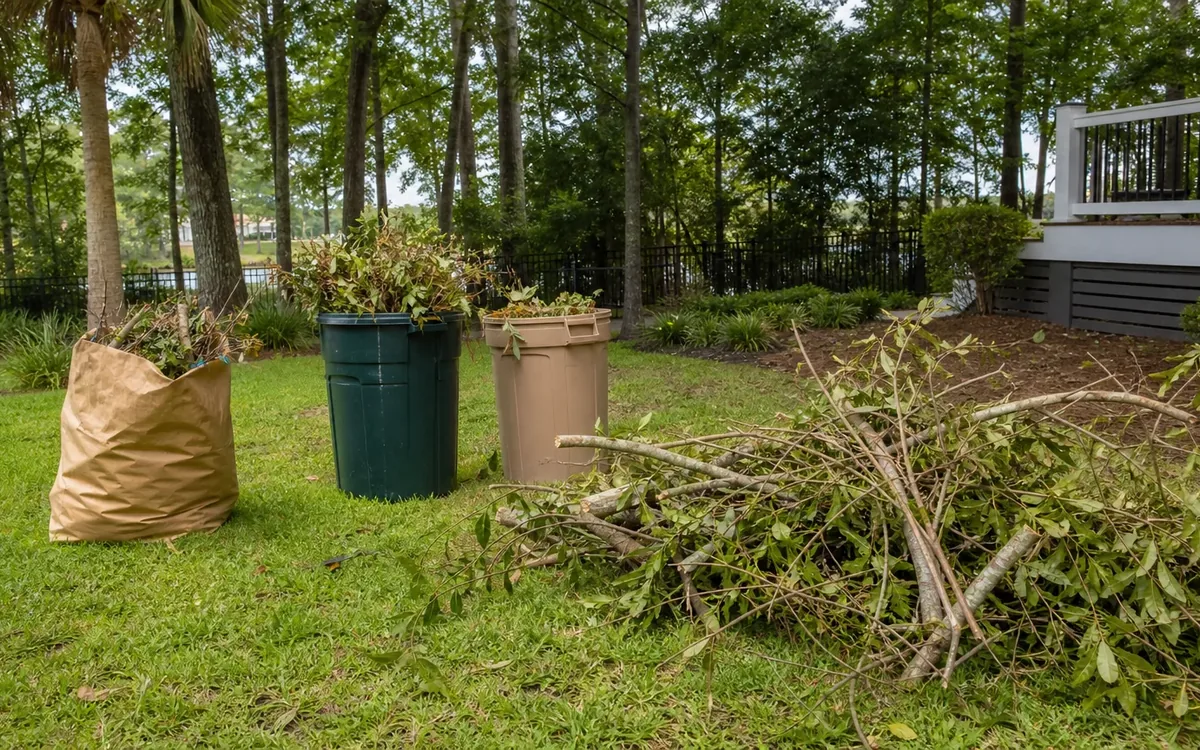
Natural yard debris may include leaves, twigs, branches, and fallen vegetation. Keep it separate from packaging, household trash, and pieces of structures. Confirm how your provider treats large limbs, trunks, root balls, and stumps rather than assuming all plant material follows one rule.
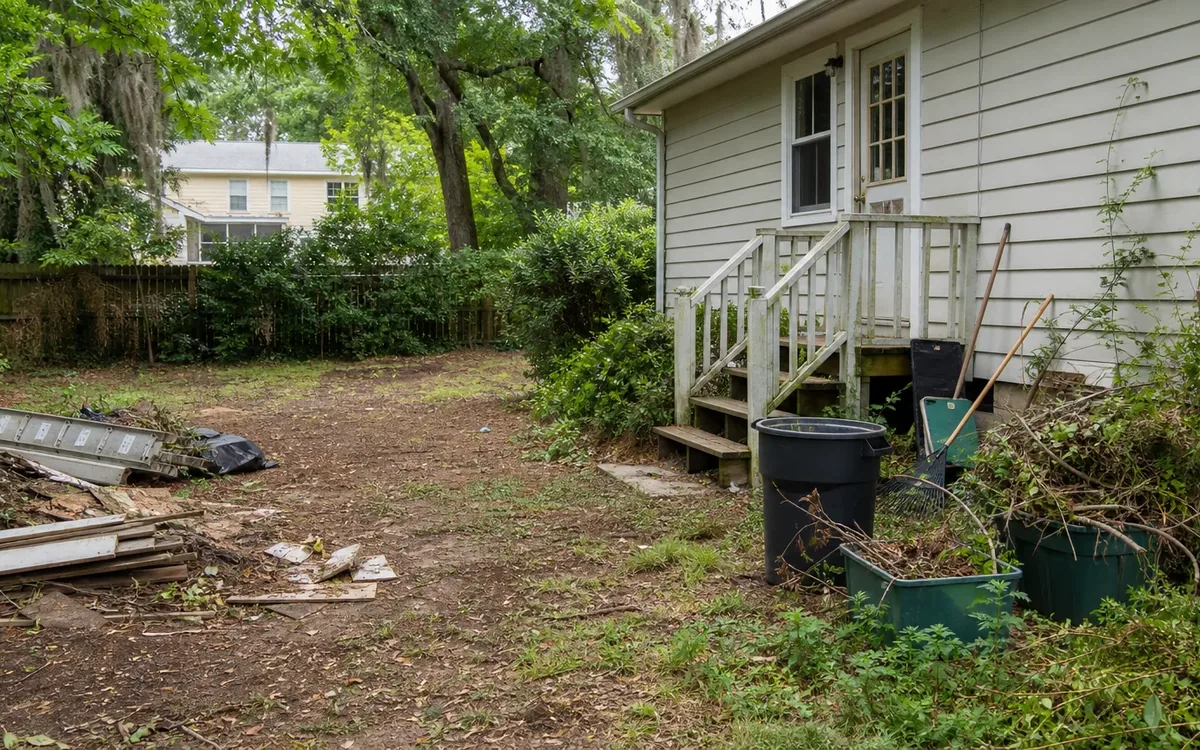
Building and property debris may include fence boards, roofing pieces, siding, broken lawn furniture, and damaged landscape fixtures. These are not automatically yard waste, even when a storm left them in the yard. Painted or treated wood should not be treated as ordinary mulch material.
Materials needing special guidance include leaking containers, fuel, chemicals, batteries, and unknown substances. Do not pour liquids onto the ground or add these items to vegetation piles. Ask the appropriate local waste program about handling and acceptance.
Use simple labels or a shared written plan if several people are helping:
- Leaves and small vegetation.
- Branches and woody debris.
- Nonvegetative storm debris.
- Items awaiting identification or professional handling.
Do not retrieve an item from a hazardous area just to sort it correctly. Safety takes priority over a perfect pile.
When the yard cleanup is part of settling an inherited property, the guide to how estate cleanouts work can help clarify the broader household decision process. Yard debris still needs its own collection plan, separate from belongings inside the home.
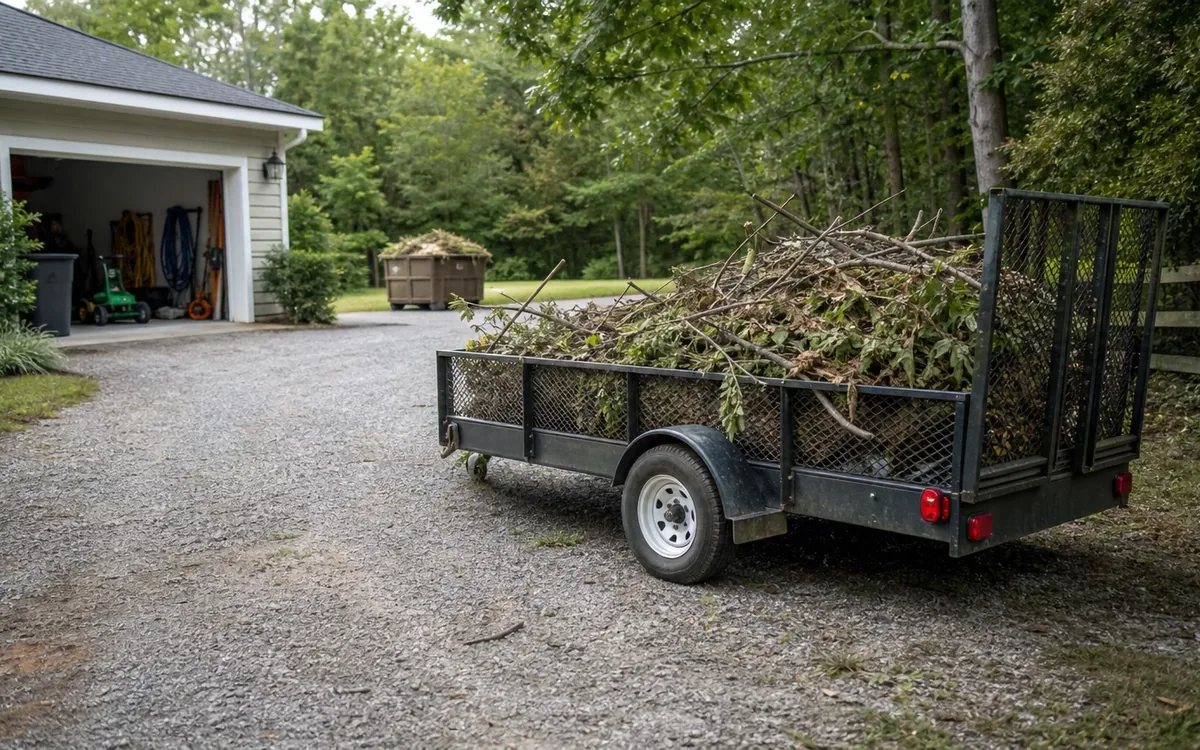
Choose a disposal route before loading anything
A pile is not ready for removal until you know where it can legally and practically go. Curbside collection, a receiving facility, on-property reuse, and a separate hauling provider are different choices, each with its own conditions.
For curbside collection, confirm preparation and placement instructions before carrying material out. Ask what happens if the pile contains an excluded item. Do not assume ordinary trash collection will take a storm-debris pile.
For self-hauling, contact the intended receiving facility before loading. Verify material acceptance, eligibility, unloading requirements, and any applicable charges directly with the facility. A mixed load may require a different destination from a load containing only vegetation.
If considering a separate hauling provider, discuss:
- Which material categories the provider will take.
- Who is responsible for sorting and loading.
- The intended receiving destination.
- How rejected or unidentified material will be handled.
- Whether disposal documentation is available.
Do not burn debris merely because it is natural material. Burning restrictions, permits, weather conditions, and neighborhood rules may apply. Confirm requirements with the responsible authority before considering that option.
Likewise, do not dump debris on vacant land, beside roads, in waterways, or on someone else’s property. Moving a pile away from the house does not make its destination acceptable.
Can you keep some storm debris on the property?
The household can decide whether usable vegetation has a place in the landscape, provided that choice respects applicable rules and does not leave a hazard. Keeping some material can reduce what needs removal, but it should be an intentional use rather than indefinite storage.
Leaves may be suitable for an existing composting arrangement. Clean, untreated woody material may be considered for mulch or firewood after appropriate preparation. Material affected by disease, contamination, or pests may need different handling, so seek relevant professional guidance when its condition is uncertain.
Consider the practical consequences before keeping it:
- Is there a suitable place that preserves access and drainage?
- Can the household maintain the material without creating another problem?
- Does the material require cutting or equipment beyond household capability?
- Will retaining it conflict with a notice or property rule?
Chipping, tree cutting, and stump work are separate contractor choices, not automatic parts of a cleanout. Ask the provider doing that work where chips or cut sections will be left and who is responsible for their eventual removal.
Do not pack storm debris into drainage features or place heavy material against a fence simply to hide it. If drainage damage or soil instability is suspected, a qualified professional should assess it rather than having the household reshape the site by guesswork.
Stage debris without creating a second compliance problem
Good staging protects access while making the next step easier. Poor staging can turn a manageable cleanup into an obstruction, especially when several people move debris to different places.
Before using the curb area, obtain the applicable placement instructions. Keep material away from utility equipment and do not obstruct sidewalks, roadway visibility, or drainage openings. Confirm how collection equipment can reach the pile without assuming every roadside location is suitable.
On the property, leave clear routes to doors, gates, vehicles, and essential equipment. Avoid piling debris against the house or beneath damaged limbs. Do not climb onto a pile to compress it.
A practical staging plan should identify:
- The approved or proposed collection location.
- Separate areas for accepted and excluded materials.
- An access route for workers or a hauling vehicle.
- Items that must remain untouched pending professional review.
Photograph the staged materials and note anything still awaiting instructions. This record helps explain the remaining work, but photographs do not establish compliance on their own.
If debris appears to come from a neighboring property, avoid making assumptions about ownership or responsibility. Discuss access and proposed work with the relevant owner. Unresolved legal responsibility belongs with the appropriate adviser or authority.
Turn a code notice into a workable cleanup scope
Read a code notice for the specific condition it identifies. It may concern accumulated material, obstructed access, or another property condition. Removing visible branches may not resolve every issue described.
Ask the issuing office to clarify unclear terms and explain its review process. If you cannot complete the stated work as required, communicate with that office rather than assuming a collection delay changes the notice.
Translate the requirement into a practical scope: which areas need attention, which materials can be handled safely, which providers are needed, and what remains outside the cleanup team’s role.
Clutter Cleaner of South Carolina is physically located in Mount Pleasant and serves households statewide, with Charleston as its primary market. For code compliance support, call (843) 972-7020 to discuss the property condition and coordination needs. Do not assume tree work, hauling, disposal, or inspections are included; confirm the scope directly.
The household can approve ordinary sorting choices and authorize access within its rights. A practical team may discuss staging, accessible debris, and coordination. Legal responsibility, property valuation, real-estate disclosures, structural assessments, and official compliance determinations stay with the responsible professionals or authorities.
Short FAQ
Can branches and damaged fence boards go in one pile?
Keep them separate unless the collector or receiving facility explicitly accepts a mixed load. Fence boards, especially painted or treated wood, are not automatically accepted as natural yard waste.
Should I move debris to the curb immediately?
Only after checking hazards and placement instructions. Premature staging can block access or drainage and may require moving the same material again.
Does removing the debris close a code case?
Not necessarily. Follow the issuing authority’s review process and ask how completion is confirmed. A household or cleanup provider cannot make that determination for the authority.
What if ordinary collection will not accept the pile?
Ask about authorized alternatives, then compare self-hauling with a separate provider. Confirm acceptance at the destination before loading or arranging removal.