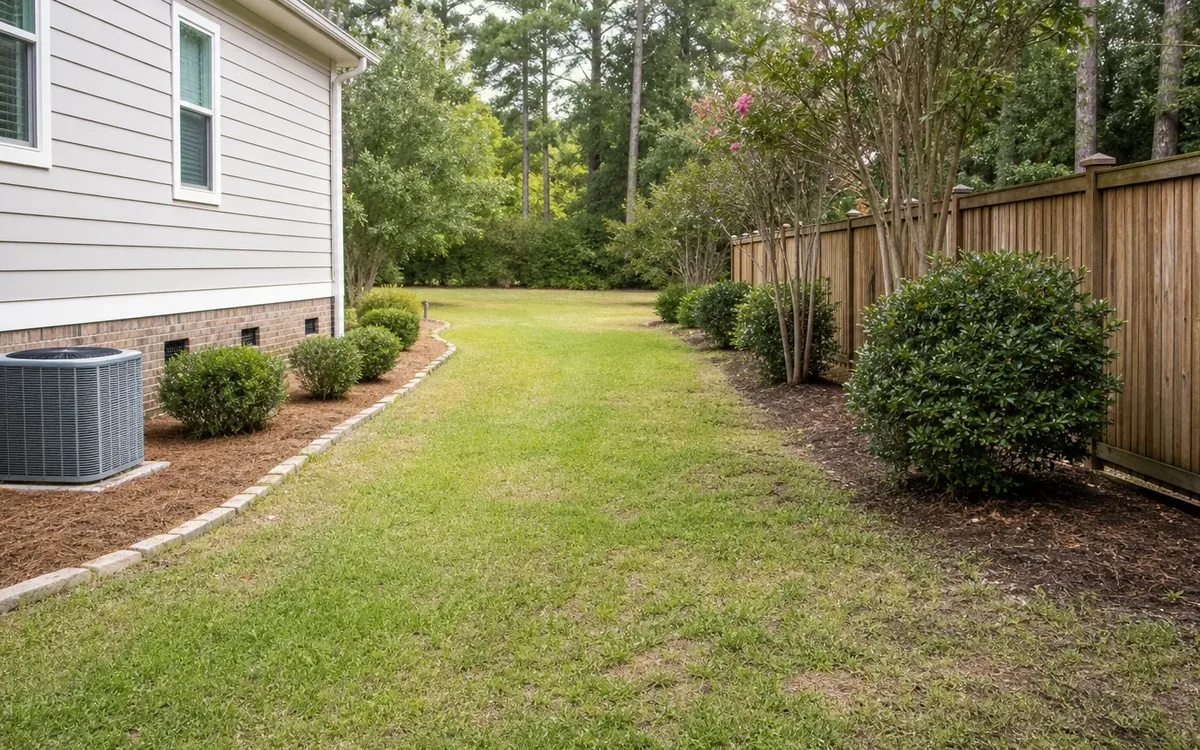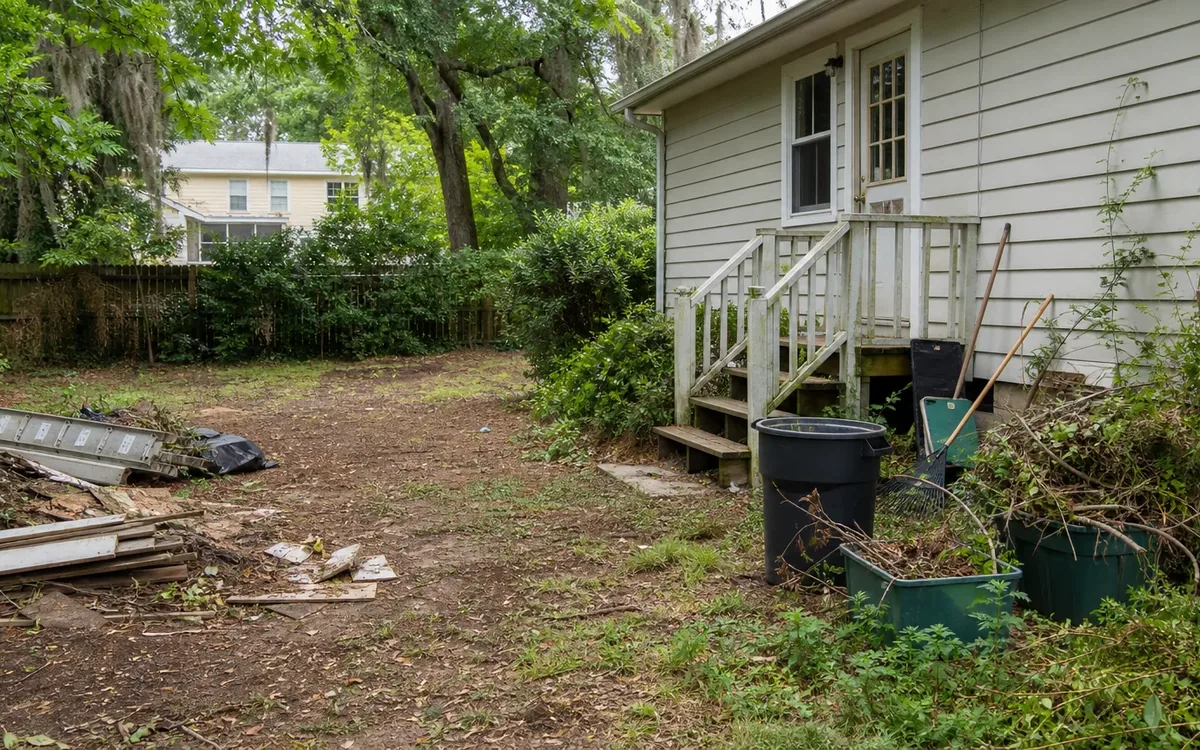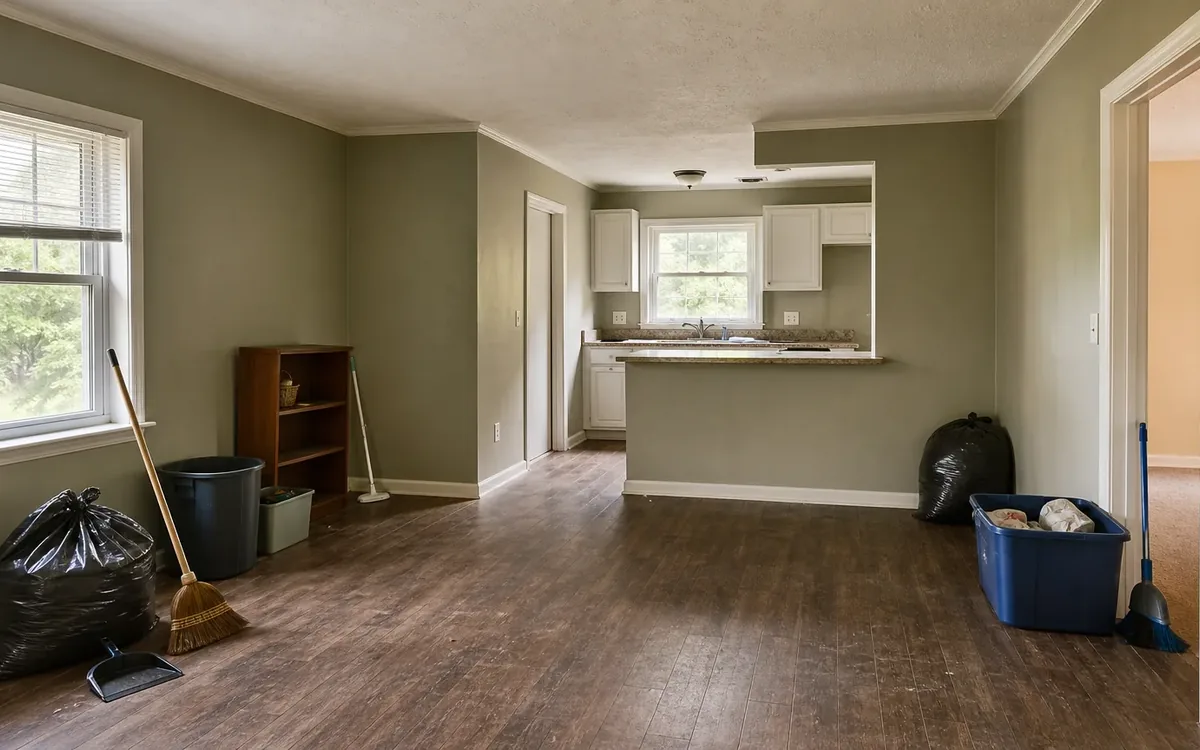
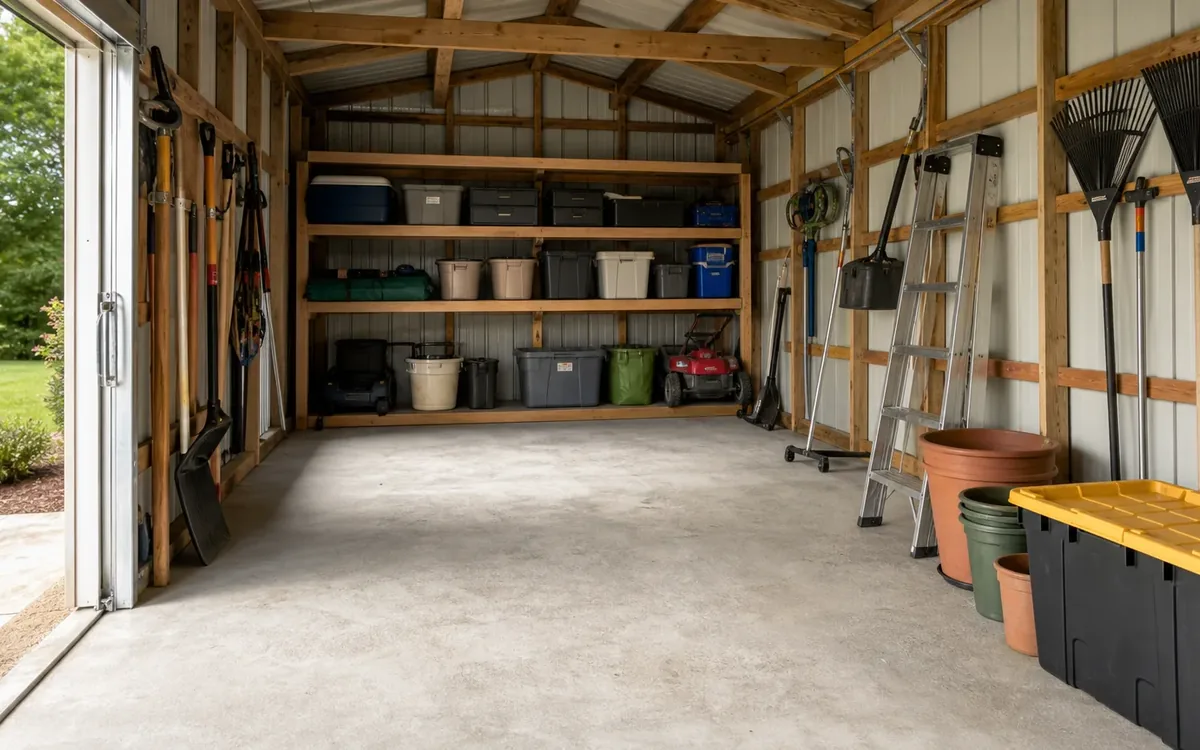
Keeping outdoor storage from rebuilding after a cleanup starts with a clear rule: every retained item needs an appropriate destination, an owner, and a reason to stay. South Carolina households can use the concerns identified by their local office to shape that routine, while leaving code interpretation and compliance determinations to the responsible authority. The goal is not simply a tidy yard. It is preventing the same storage habits from producing another pile.
Quick answer: Establish defined storage areas, stop incoming items without a destination, and assign responsibility for anything left outdoors. Use the local office’s specific concerns to identify what must remain clear or be addressed. A practical cleanout or organizing team may help discuss placement and handling, but the household controls retention choices and the responsible authority determines compliance.
Start with the concerns already identified
After a cleanup, a household may feel that the problem is finished because the largest pile is gone. Yet the conditions that created it can remain: unfinished projects, uncertain ownership, inadequate storage, or belongings accepted from relatives without a plan.
Use the concerns identified by your local office as the starting point for prevention. Keep the notice, correspondence, and any written clarification together. Separate requirements communicated by the authority from preferences your household chooses for convenience or appearance.
A useful working note has two columns:
- Concern identified: The location, material, access issue, or other condition described by the office.
- Household prevention rule: The specific habit that will keep that condition from recurring.
For example, if an identified concern involves items accumulating along a particular area, the household can make that area a no-storage zone. That decision supports the routine, but it does not establish that every other outdoor location is permitted.
Ask the responsible office about unclear terms, property-specific restrictions, or required follow-up. Do not assume that moving belongings behind a fence, under a cover, or into another corner resolves the concern.
Clutter Cleaner of South Carolina offers code compliance support throughout South Carolina. Its physical business location is Mount Pleasant, and Charleston is its primary market. Practical support does not replace the authority’s interpretation of applicable requirements.

Why do outdoor piles come back after a cleanup?
Outdoor accumulation often returns through small exceptions rather than one large decision. A broken chair is set aside for repair. A relative drops off boxes. Materials from a completed project stay beside the shed because someone might need them later.
Each item seems manageable on its own. Together, they create an informal holding area with no clear limit or exit route.
Common drivers include:
- Accepting items before deciding where they belong.
- Keeping repair projects without assigning responsibility.
- Using outdoor space when indoor storage is already full.
- Saving leftover materials without checking their condition or usefulness.
- Treating sale or donation plans as completed decisions before a recipient exists.
- Allowing several household members to use the same space under different rules.
Identify which driver applies before buying containers or rearranging the yard. More storage does not resolve an intake problem, and a cover does not resolve an ownership dispute.
If belongings are arriving from an inherited property, the guide to how estate cleanouts work can help frame the larger sorting process. For this prevention routine, the important boundary is narrower: do not transfer unresolved estate belongings into your yard merely to clear another property. Ownership questions and estate decisions remain with the appropriate decision-maker or legal professional.
Define storage boundaries before anything returns
A storage boundary should be easy to recognize and easy to maintain. Avoid vague instructions such as keeping things “out of the way.” Different people will interpret that phrase differently.
Instead, identify the actual locations the household intends to use, subject to applicable requirements. Then describe what belongs there and what does not. A household sketch can help, but it is an organizing tool, not a compliance plan approved by an authority.
Useful household boundaries include:
- Areas that will remain free of stored belongings.
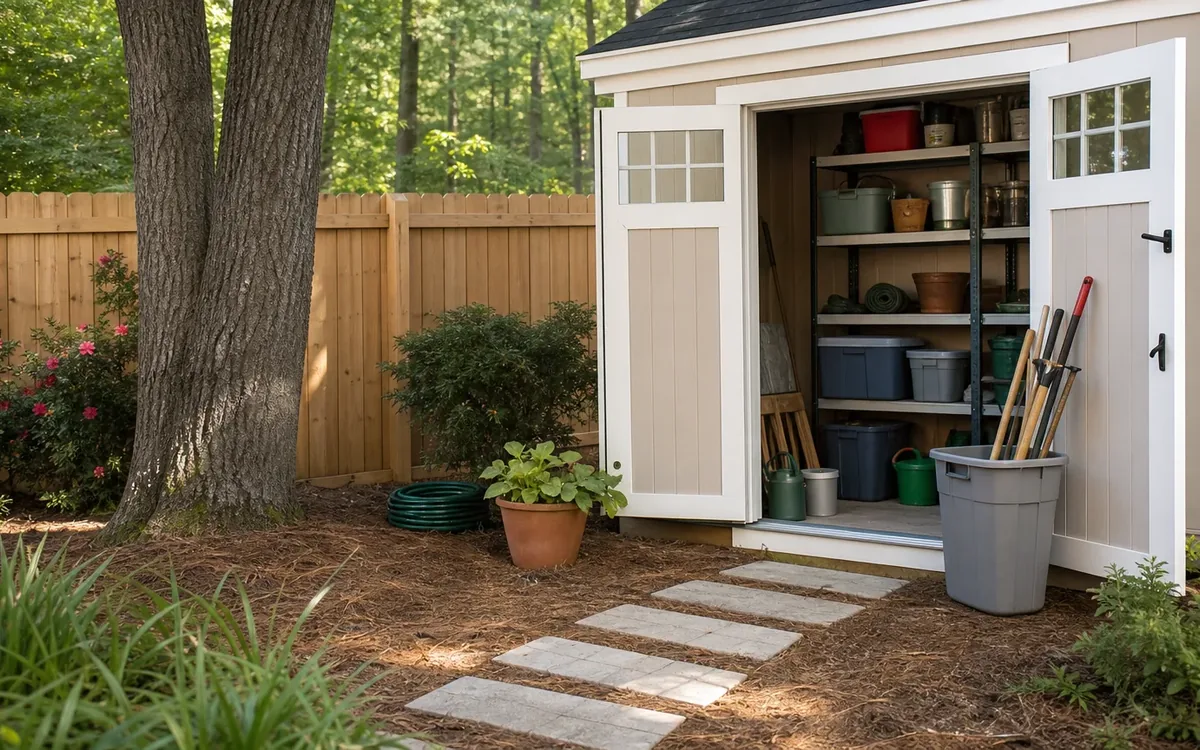
- A designated place for routinely used outdoor equipment.
- Separate locations for usable supplies and items awaiting a decision.
- A limit based on available space rather than the ability to stack higher.
- A rule that an item cannot displace necessary access or hide something requiring attention.
Consider how people actually retrieve things. If reaching the lawn equipment requires moving several unrelated objects, the arrangement encourages items to be left outside the storage area afterward.
Storage purchases are household choices. Before adding a shed, enclosure, rack, or other structure, ask the appropriate professional or local authority about any relevant property, installation, or approval questions. Do not assume a purchased storage solution is automatically suitable or permitted.
What should happen before another item comes home?
Use an intake decision at the point where an item is offered, purchased, or brought back from another property. This is usually easier than deciding what to do after it has become part of a pile.
Ask:
- Do we own this item, or have clear permission to decide its destination?
- What specific use does it have in this household?
- Where will it go without exceeding the storage boundary?
- Is it usable now, or does someone need to evaluate or repair it?
- What existing item will leave if the space is already occupied?
An item without satisfactory answers should not automatically enter outdoor storage. The household may decline it, return it where appropriate, or arrange another destination through a suitable provider.
Be especially careful with free materials. “Free” does not mean the household has space, a project, or a practical way to handle them. An appealing offer can create a removal problem later.
For shared households, agree on who can accept bulky items. This is not about requiring permission for every small purchase. It is about preventing one person’s storage decision from creating an obligation for everyone else.
Give pending items an exit route, not just a label
A label reading “sell,” “donate,” or “repair” describes an intention. It does not establish a destination. Pending items need an accountable person and a defined next action.
Keep a simple decision log with the item, its owner, the proposed destination, and the action still needed. Record an agreed review point based on the household’s circumstances rather than allowing the item to remain indefinitely.
Different destinations require different checks:
- Donation: Confirm that a recipient will accept the item in its current condition.
- Sale: Decide who will assess marketability, manage inquiries, and arrange transfer.
- Repair: Identify who will evaluate the work and whether the household wants to proceed.
- Off-site storage: Choose a separate storage provider and consider access, suitability, and ongoing responsibility.
- Disposal: Confirm handling and acceptance requirements with the relevant provider or authority.
Do not place potentially hazardous, leaking, unidentified, or unstable materials into an ordinary pending area. Seek appropriate guidance before moving or disposing of them. A general organizing decision is not a substitute for material-specific handling advice.
If value is uncertain, an appropriate appraiser may be needed. If ownership is disputed, pause the disposition decision and consult the responsible person or legal professional. Neither uncertainty should become an excuse for silently expanding the yard’s holding area.
Build checks around the moments that create clutter
A maintenance routine works better when attached to real household activity. Inspecting the yard without addressing incoming materials can turn into repeated tidying rather than prevention.
Useful triggers include finishing yard work, completing a home project, receiving belongings from family, and returning equipment to storage. At those moments, check whether everything has returned to its assigned location and whether leftovers need a separate decision.
During a household walk-through, look for:
- Items appearing outside the agreed storage area.
- Containers that no longer close or remain usable.
- Materials whose condition has changed outdoors.
- Equipment blocked by unrelated belongings.
- Pending items with no owner or next action.
- A new item replacing clear space without a household decision.
Use photographs as a private organizing reference if helpful. A photo of the intended arrangement can make a boundary easier to remember. It does not prove compliance or replace an inspection.
When something drifts, correct the cause as well as the placement. If tools repeatedly remain outside, their assigned location may be difficult to access. If project materials keep accumulating, the household may need a firmer rule for leftovers. The routine should reveal why the exception occurred.
What can a practical team help discuss, and who decides?
A cleanout, organizing, or move-management conversation can focus on the logistics that make recurrence less likely. The household can explain what must remain accessible, which belongings are retained, and where past arrangements broke down.
Topics a practical team may discuss include sorting categories, handling needs, access constraints, and the sequence for moving retained items into designated locations. Clarify the actual scope before assuming that any particular task, destination, or material is included.
Responsibilities remain distinct:
- The household: Retention choices, everyday storage rules, intake boundaries, and consent to the agreed work.
- The responsible authority: Code interpretation, required corrections, inspections, and compliance determinations.
- Legal professionals or authorized decision-makers: Ownership disputes, estate authority, and related legal decisions.
- Appraisers: Appropriate valuation questions.
- Real-estate professionals: Property-marketing advice and transaction-related considerations.
- Qualified contractors or inspectors: Structural concerns, repairs, installations, and condition assessments within their scope.
- Separate storage or disposal providers: Their acceptance rules, handling requirements, and service arrangements.
Clutter Cleaner of South Carolina’s support should not be treated as a guarantee that an arrangement satisfies local requirements. Keep professional recommendations and household organizing choices connected, but do not substitute one for the other.
Keep a recurrence plan that survives household changes
A useful prevention plan should still make sense when a family member moves in, someone takes over yard work, or the household begins another project. Keep the rules brief enough to explain without a lengthy discussion.
Record the storage locations, no-storage areas, intake decision, and responsibility for pending items. Store the local office’s correspondence separately but where the responsible household member can find it.
When circumstances change, revisit capacity before accepting more belongings. A new hobby, inherited equipment, or renovation may require a new household decision, a separate provider, or professional guidance. It should not automatically expand outdoor storage.
The strongest sign of progress is not an empty yard on cleanup day. It is a household that notices an exception, assigns responsibility, and resolves it before an informal pile becomes the default storage system again.
Short FAQ
Does moving items behind a fence resolve the concern?
Not necessarily. Visibility and permitted storage are different questions. Ask the responsible local office whether the proposed arrangement addresses the specific concern.
Should we buy more outdoor storage right away?
First identify why items accumulated and what space is appropriate. Additional storage is a separate household choice, and installation or approval questions may require professional or authority guidance.
What if a relative keeps bringing things over?
Agree on an intake boundary before the next delivery. Explain what the household can accept and require a destination before belongings arrive.
Can a cleanout team declare the property compliant?
Compliance determinations belong to the responsible authority. A practical team may discuss sorting and handling within its agreed scope, but those discussions do not replace official review.