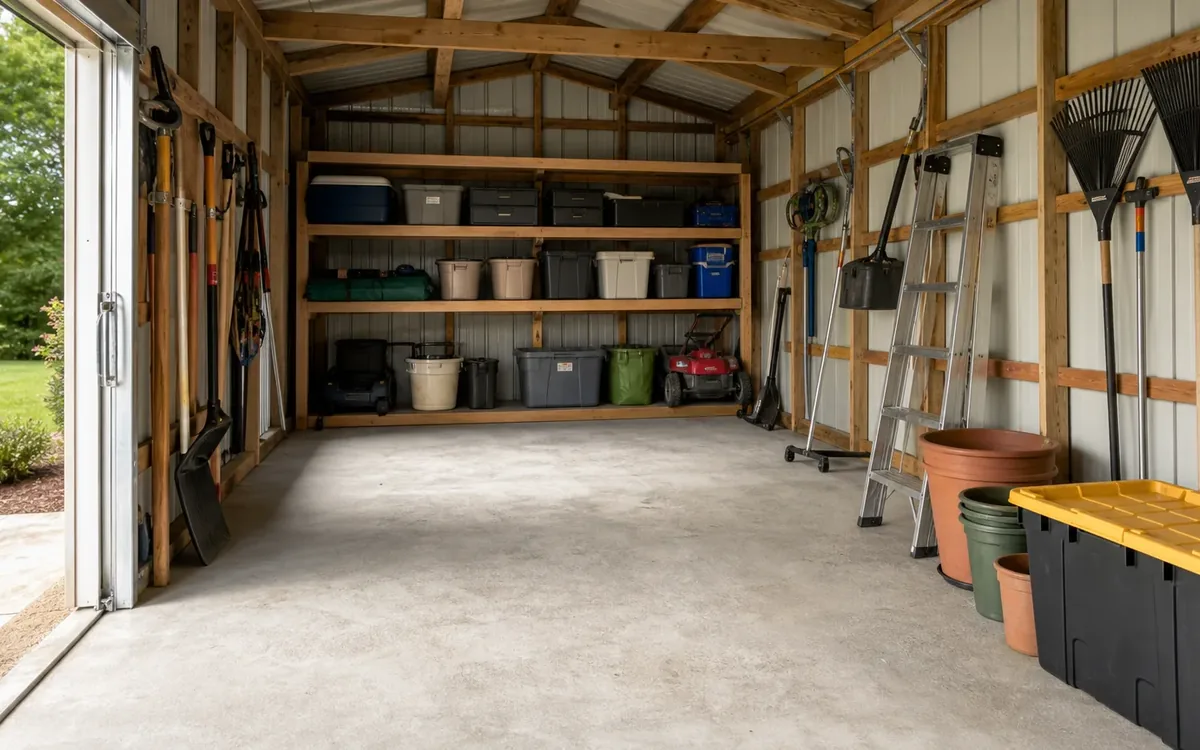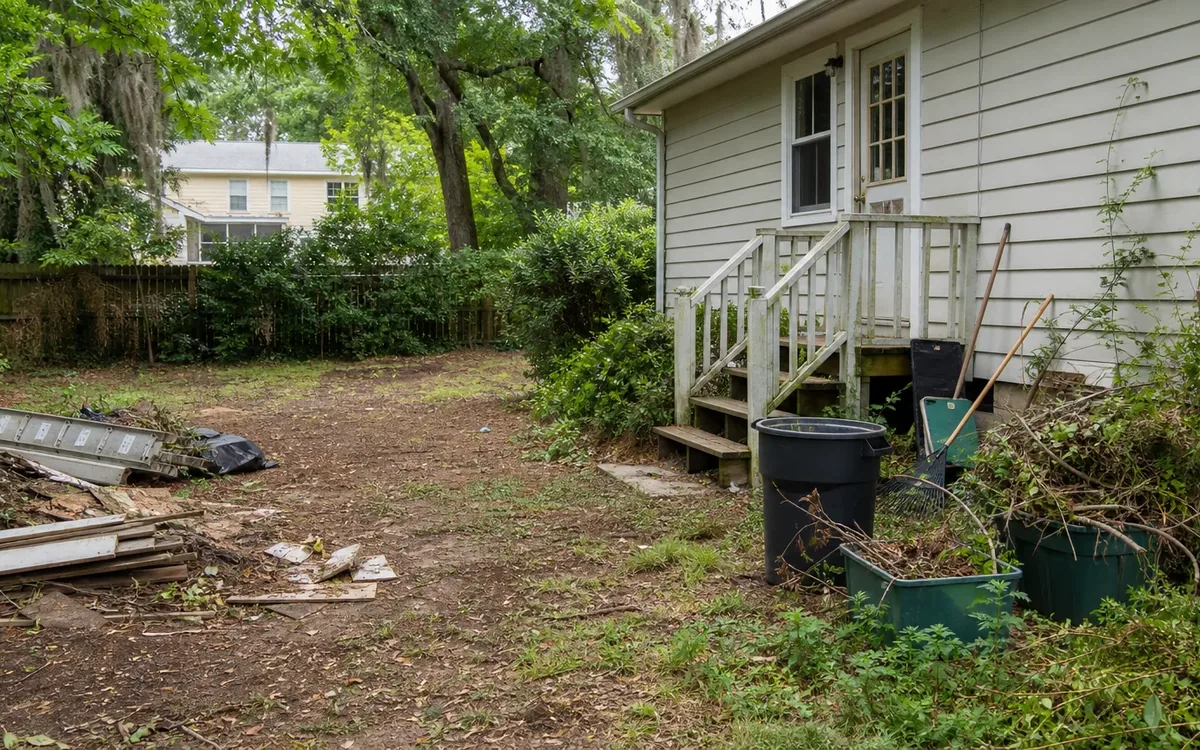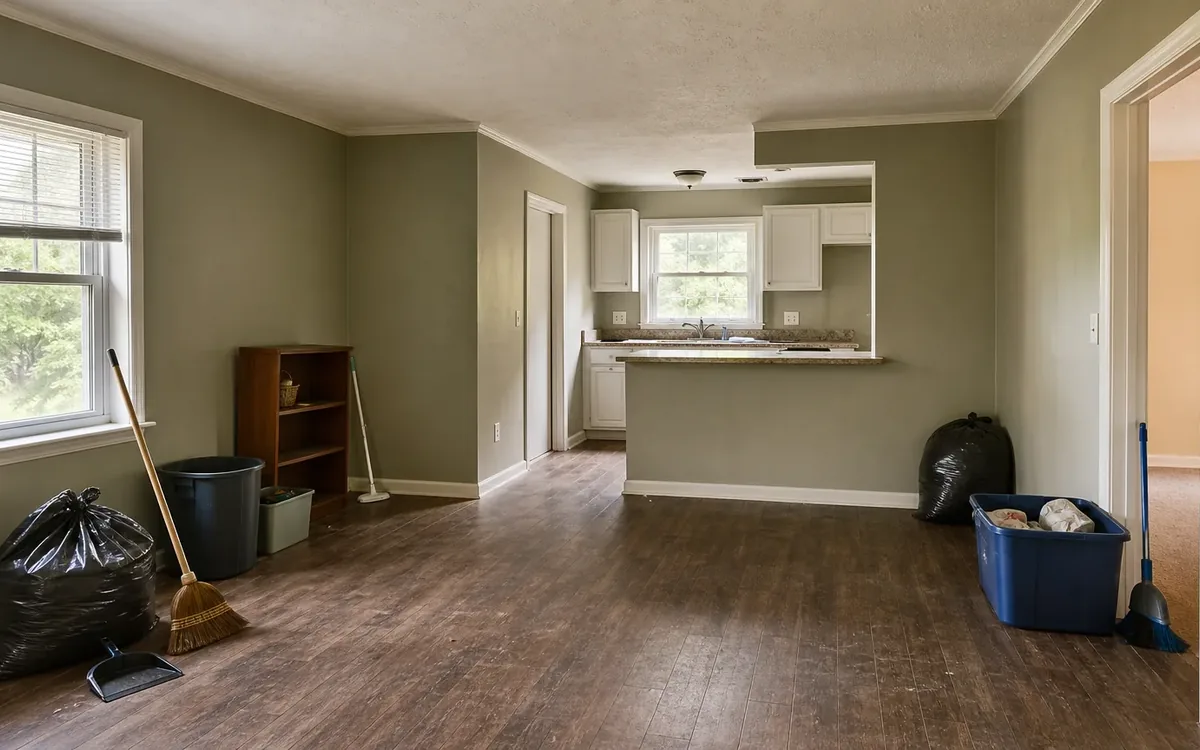

To clear access for contractors addressing a property notice, first confirm which areas they need to reach, then relocate approved belongings without disturbing building systems or suspected hazards. Keep access-clearing work separate from repairs: the household decides what happens to its possessions, qualified contractors define their work zones, and the responsible authority determines whether the notice has been resolved.
For South Carolina owners, the useful goal is not simply an emptier house. It is a property where the right professional can reach the right location without searching through boxes, moving fragile belongings, or encountering a blocked exit.
Quick answer: Read the notice, ask the responsible contractor to identify access requirements, and mark a route from the entry to each work area. Decide which belongings can move and where they will go. Have a practical cleanout or move team discuss those handling tasks, while leaving repairs, hazard assessment, inspections, and compliance determinations to the appropriate professionals.
What does the property notice actually require?
Start with the notice itself rather than an assumption that everything needs to leave. A notice may concern conditions that require professional assessment, repair, or verification. Removing possessions can support that work, but it does not automatically correct the cited condition.
Identify the property address, issuing office, described concerns, required responses, and any stated deadlines. Preserve the original document and share relevant information with the professionals responsible for addressing it.
Questions for the issuing office or responsible professional include:
- Which specific locations must be accessible?
- Is access needed for assessment, repair, inspection, or several separate visits?
- Are there instructions about occupancy, entry, or restricted areas?
- What documentation or follow-up does the notice require?
- Who should receive questions about unclear wording?
Do not interpret a cleared room as proof of compliance. Legal questions belong with legal counsel, technical repair questions belong with qualified contractors, and acceptance of corrective work belongs with the responsible authority.
Clutter Cleaner of South Carolina offers statewide code compliance support for belongings-related preparation. That support should be discussed as access preparation, not as a substitute for technical repairs or an official compliance determination.

Which access paths should be cleared first?
Ask the contractor to describe the route and workspace needed for the actual task. A path wide enough for someone to walk through may not accommodate equipment, materials, or safe working positions.
The route generally needs to connect an agreed entry point with the affected area. Depending on the work, the contractor may also identify access needs around equipment, panels, plumbing fixtures, windows, doors, or other building features. Let that professional define the required clearance rather than guessing.
Create a simple access map using room names and recognizable landmarks. It can be a written description rather than a formal drawing:
- Arrival point: The entrance the contractor is authorized to use.
- Travel route: The hallway, room, or stair route leading to the work.
- Work zone: The area that must remain available for the contractor.
- Belongings zone: A separate location for approved relocated items.
- Restricted zone: Any area that should not be entered or disturbed.
Check the route from the contractor’s perspective. A clear doorway is not enough if boxes still block the turn into the room. Likewise, shifting belongings into a hall can solve one access problem while creating another.
Keep exits and necessary household circulation available throughout the preparation.
Separate belongings decisions from building decisions
The household can usually decide how to sort its own possessions, subject to ownership rights and any applicable instructions. That includes choosing what to keep nearby, relocate within the property, review later, or consider for removal.
A practical cleanout or move team may discuss handling logistics: item size, fragility, labeling, destination rooms, carry routes, and whether the planned staging area can accommodate the belongings. Those discussions do not authorize changes to the building.
Keep the responsibility boundaries explicit:
- Household or authorized representative: Approves belongings decisions and identifies items that must remain available.
- Cleanout or move team: Discusses the agreed scope of sorting, moving, and belongings removal.
- Qualified contractor: Defines repair access and performs work within their professional scope.
- Inspector or responsible authority: Determines inspection requirements and whether cited conditions are resolved.
- Legal, appraisal, or real-estate professional: Handles questions within their respective fields.
Do not ask a belongings team to disconnect equipment, remove building components, diagnose damage, or decide whether a structure is safe to enter.
If an estate is involved, authority over belongings may need clarification before anything moves. The guide How Do Estate Cleanouts Work? provides useful background for organizing estate-related decisions separately from contractor access preparation.

Reserve work zones instead of filling every empty corner
The most convenient place for a box may be the very space a contractor needs next. Before moving anything, choose staging locations that do not interfere with the proposed work.
Ask the contractor which surfaces, walls, fixtures, or adjacent areas need to remain unobstructed. Also ask whether the work zone needs room for tools, protective coverings, or removed materials. These are task-specific questions, not details a household should invent.
Label the work zone and staging area plainly. A handwritten room note or a shared floor sketch can help everyone understand the plan. Avoid attaching labels to delicate finishes or using markings that could damage surfaces.
Useful staging rules include:
- Keep belongings out of the contractor’s agreed working space.
- Do not conceal access points behind stacked items.
- Avoid placing possessions where dust, moisture, or repair activity could affect them.
- Keep daily-use items separate from long-term decision piles.
- Leave a route for retrieving staged belongings without entering the work zone.
If there is no suitable space inside the property, discuss alternatives before moving items. Off-site storage is a separate household and provider choice, with its own access, handling, and cost considerations. It should not be assumed to be part of a cleanout arrangement.
What should stay untouched until a professional reviews it?
Access preparation should stop short of disturbing uncertain conditions. A blocked area can hide damaged materials, unstable stacks, leaks, exposed wiring, or other concerns that change the handling plan.
If something looks unsafe, stop work in that location and contact the appropriate professional. Do not open equipment, test systems, pull away attached materials, or move items that appear to be supporting something unstable.
Set aside professional-review questions involving:
- Building components attached to walls, floors, or ceilings.
- Electrical, plumbing, heating, or other mechanical equipment.
- Suspected hazardous substances or contaminated materials.
- Structural movement, unstable flooring, or damaged stairs.
- Containers with unknown contents or unclear handling requirements.
The household can report what it observes without diagnosing the cause. For example, describe a wet area and its location rather than declaring the source of a leak.
Disposal also needs its own decision process. Ordinary belongings, chemicals, building debris, and potentially hazardous materials should not be treated as one interchangeable removal category. Confirm appropriate handling with the relevant provider or authority before authorizing removal.
Protect essential belongings while opening the route
Contractor access often cuts through spaces people still use. Before clearing a route, identify the possessions that support daily life so they do not disappear into a general staging pile.
Keep medication, identification, important records, keys, mobility aids, and necessary household supplies in a designated accessible location. If a resident uses a particular route or room for daily needs, include that requirement in the access discussion.
For remaining belongings, sort by destination rather than trying to settle every long-term question immediately:
- Keep accessible: Items needed during preparation and repair work.
- Relocate within the property: Belongings with an approved temporary location.
- Hold for review: Items with uncertain ownership, value, or disposition.
- Approved for removal: Items the authorized decision-maker has specifically released.
A hold-for-review category prevents rushed decisions about sentimental objects, estate property, or potentially valuable possessions. Appraisal questions belong with an appropriate appraisal professional, not with the person carrying the boxes.
Photographs and labels can help track temporary locations. Avoid recording sensitive documents unnecessarily, and keep any shared photographs focused on access conditions rather than private household information.
Coordinate the handoff between preparation and repair
The handoff should answer a practical question: can the contractor reach and use the agreed area as planned?
Before preparation begins, identify who can approve belongings decisions and who can answer technical access questions. These may be different people. If the owner cannot be present, clarify the representative’s authority and how unresolved questions will be handled.
Share a concise scope note with the people involved. Include the entry route, work-zone boundaries, staging locations, restricted areas, and any possessions that must not move. Record changes when the contractor identifies additional access needs.
At the handoff, review:
- Whether the agreed route is unobstructed.
- Whether the work zone remains free of staged belongings.
- Where relocated possessions are now located.
- Which items or areas were left untouched and why.
- Who controls entry arrangements and answers follow-up questions.
Do not assume contractors will move belongings that remain in their way. Confirm responsibilities beforehand. Similarly, do not assume an access-preparation team will return after repairs unless that work has been separately discussed and agreed.
If the contractor needs more room, revise the belongings plan instead of making unapproved repair decisions.
Keep compliance records separate from the belongings log
A belongings log tracks what moved and where it went. A compliance file tracks the notice, professional findings, repair documentation, communications, and any required inspection outcomes. Keeping them separate makes both easier to use.
The household can retain copies of correspondence and record questions that still need answers. Contractors and other responsible professionals should supply documentation relevant to their own work when required or agreed.
Avoid labeling preparation photographs as proof that a violation has been corrected. They may show accessible conditions, but they do not establish technical adequacy or official acceptance.
If a sale is also planned, ask the real-estate professional about disclosure and transaction questions. Access clearing does not settle those obligations. Likewise, uncertainty about notice requirements or ownership rights should be directed to the appropriate authority or legal professional.
Short FAQ
Does the whole property need to be emptied?
Not necessarily. Ask the responsible contractor and issuing authority what access is required. A targeted route and reserved work zone may support the task without relocating unrelated belongings.
Can belongings remain in the same room?
Possibly, if the contractor confirms that their placement will not interfere with the work. Do not assume the far side of a room is safe staging space, especially when repair activity could affect it.
Who decides whether the notice is resolved?
The responsible authority determines acceptance under its process. A cleanout team does not issue that determination, and a clear access path alone does not establish compliance.
How can Clutter Cleaner of South Carolina fit into the plan?
Discuss the belongings-related preparation scope and the contractor’s stated access needs. The business is physically located in Mount Pleasant, serves all of South Carolina, and has Charleston as its primary market. Call (843) 972-7020 to discuss your situation without assuming that repairs, storage, inspections, or specialized disposal are included.