
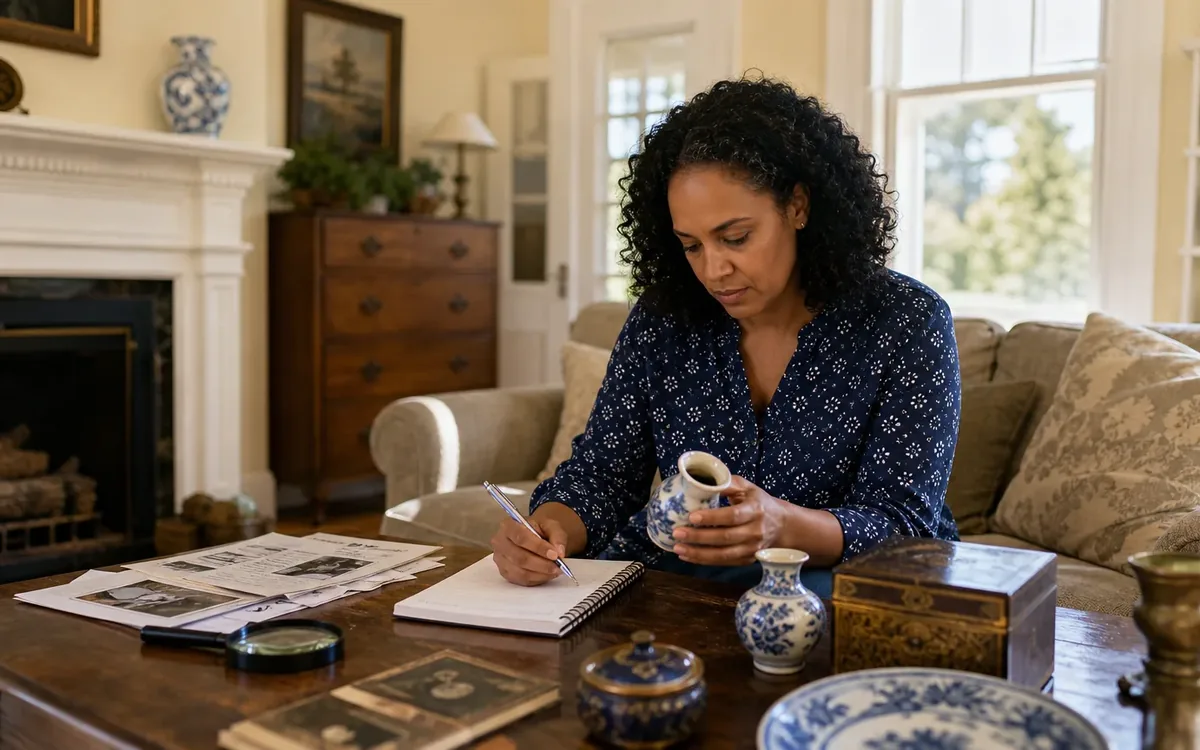
A collection probably needs an appraisal before sale when its value is uncertain, individual pieces may be unusually valuable, ownership or estate decisions depend on a defensible value, or the proposed selling method requires specialist knowledge. If the items are common, well documented, and intended for a straightforward household sale, a seller consultation or market estimate may be enough. The key is to pause before sorting, donating, cleaning, or grouping anything that could lose value through mishandling.
Quick answer: Seek an appraisal when you need an independent opinion of value for tax, insurance, probate, equitable distribution, charitable donation, or another formal purpose. Start with an auction specialist or experienced seller when the immediate question is how and where to sell. These roles can overlap in subject knowledge, but an auction estimate is not automatically a formal appraisal.
What question are you actually trying to answer?
Before choosing a professional, define the decision the valuation must support. “What is this worth?” can mean several different things:
- What might it sell for at auction?
- What price should be placed on it at an estate sale?
- Is it valuable enough to sell separately?
- What is its fair market value for an estate or tax matter?
- What value should be used for insurance coverage or a claim?
- How should property be divided among heirs or household members?
- Is the collection worth the cost and effort of specialist review?
A household can decide its goals, preferred sale method, tolerance for uncertainty, and whether sentimental items should be withheld. An auction company, estate-sale provider, dealer, or marketplace specialist may discuss likely buyer interest and the most suitable sales channel.
A qualified appraiser determines whether they can provide the required type of valuation and report. Attorneys, accountants, insurance representatives, probate professionals, and tax authorities decide what documentation is legally or administratively acceptable for their respective purposes.
Clutter Cleaner of South Carolina can help households think through the physical transition surrounding a collection, including estate cleanouts, organizing, move management, and sale preparation. For sale-related support, review the auctions and estate sales service. Valuation conclusions and legal requirements remain with the appropriate professionals.
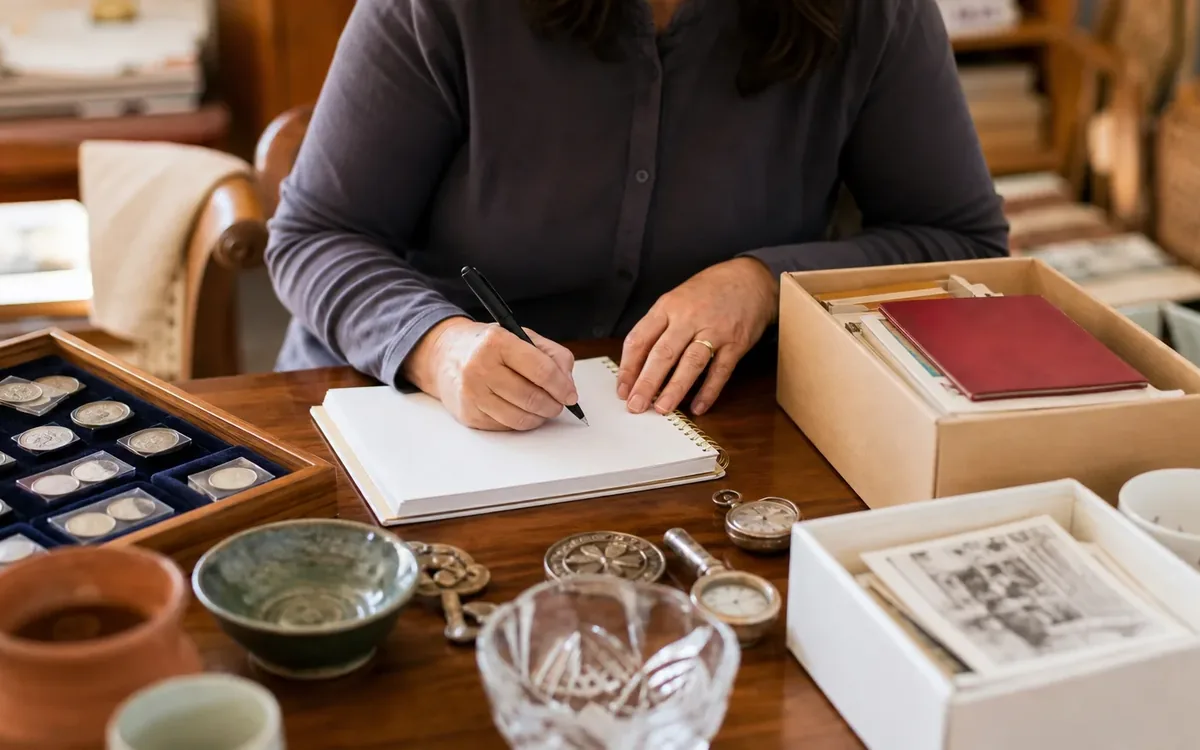
When does a collection clearly deserve appraisal consideration?
No single age, brand, or family story proves that a collection is valuable. Several indicators together, however, make specialist review sensible.
Consider an appraisal or specialist screening when the collection includes:
- Signed, numbered, hallmarked, or maker-marked objects
- Original artwork, sculpture, prints, or studio pottery
- Coins, currency, stamps, medals, or historical documents
- Fine jewelry, watches, precious metals, or loose gemstones
- Rare books, manuscripts, maps, or early photographs
- Firearms, edged weapons, militaria, or regulated objects
- Designer furniture, named decorative arts, or period pieces
- Musical instruments with identifiable makers or serial numbers
- Significant sports, entertainment, political, or regional memorabilia
- Collections with receipts, certificates, exhibition labels, or prior appraisals
Appraisal consideration is also appropriate when items appear ordinary but the owner knows little about them. Specialized markets can turn on subtle details such as edition, condition, date, material, manufacturing variation, provenance, or completeness.
Formal valuation may be especially important when the number will affect probate, taxes, insurance, charitable giving, divorce, creditor matters, or distribution among beneficiaries. The responsible attorney, accountant, insurer, court, or agency should explain the applicable standard. A cleanout or sale team should not make that legal determination.
For the broader physical work of protecting, sorting, and clearing estate contents, see what is the best way to clean out an estate. That process should be coordinated with valuation work so potentially important items are not removed prematurely.
Could a seller’s estimate be enough instead?
Sometimes. If the sole goal is to sell personal property and no formal value is required, an auction estimate, dealer offer, or estate-sale consultation may provide enough information to choose a sales route.
These figures serve different purposes:
- Auction estimate: A projected selling range for a particular auction setting, subject to buyer demand, terms, timing, and competition.
- Dealer offer: An amount a buyer is willing to pay, usually reflecting resale costs, risk, and profit margin.
- Estate-sale price: A practical asking price intended for a household sale and its expected customers.
- Online-market estimate: A conclusion based on relevant sold listings, platform conditions, fees, shipping, and item condition.
- Formal appraisal: A written, supportable opinion prepared for a stated purpose, effective date, intended user, and value definition.
A high asking price found online is not proof of market value. Unsold listings show what sellers hope to receive, not what buyers paid. Even sold results may be misleading if the item differs by maker, edition, size, condition, provenance, or included accessories.
Ask any seller or appraiser to identify the type of figure being provided. Also ask whether the person has a financial interest in purchasing the item or receiving a commission from its sale. A financial interest does not automatically make advice unusable, but it should be understood before a decision is made.
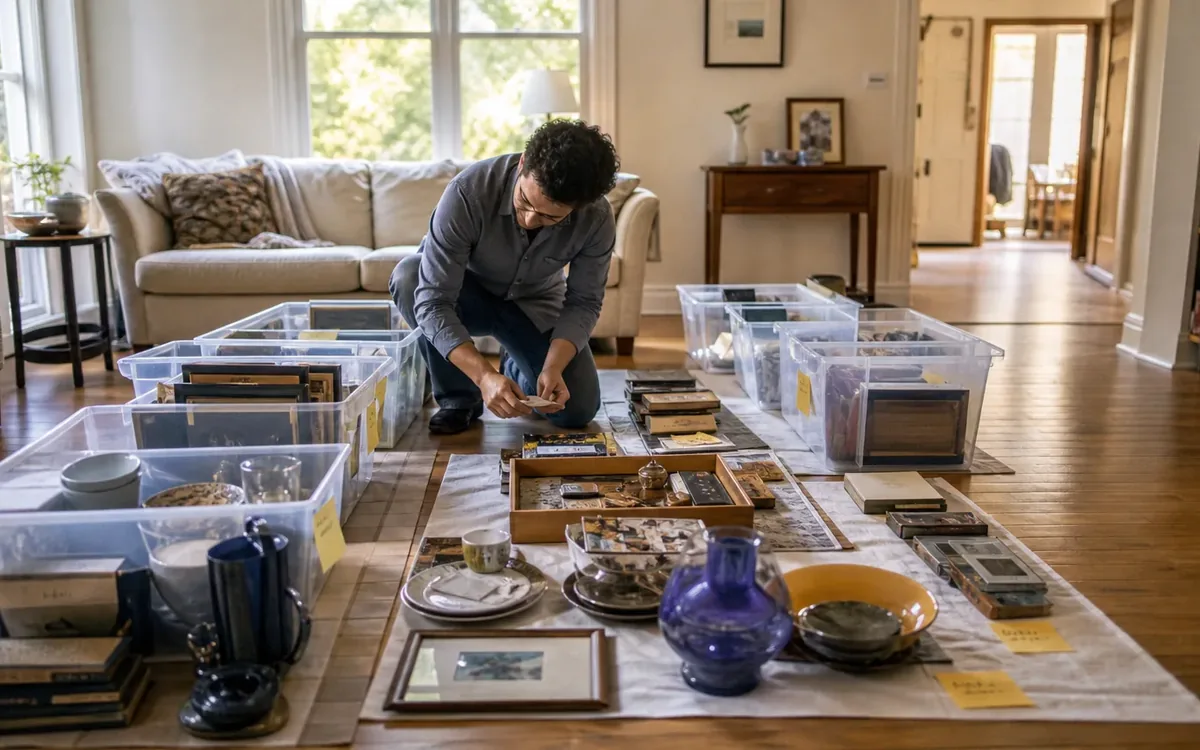
How should you screen a collection without damaging it?
The first review should gather information, not transform the collection. Avoid aggressive cleaning, repairs, polishing, reframing, rebinding, or disposal until a knowledgeable person has assessed uncertain pieces.
Use this five-step screening sequence:
- Stabilize the area. Keep items dry, secure, and away from foot traffic, pets, food, and active packing.
- Photograph groups and details. Capture the full object, signatures, labels, marks, serial numbers, damage, packaging, and related paperwork.
- Create a simple inventory. Record a short description, location, visible maker, quantity, condition concerns, and any known history.
- Separate by expertise, not assumed value. Group coins with coins and books with books, but do not label boxes “valuable” or “worthless” based only on appearance.
- Request an initial professional review. Share representative photographs and the inventory so the professional can say whether an on-site inspection, category specialist, or formal report is appropriate.
Keep original boxes, frames, cases, certificates, receipts, correspondence, catalogs, and handwritten notes with their associated objects. Provenance is the documented ownership and history of an item. It can be relevant, but family recollection alone may not establish it.
Do not apply tape, adhesive labels, markers, or cleaning chemicals directly to objects. If identification is needed, place an inventory number on a separate tag or on the exterior of a protective container.
Storage is a household decision arranged with a suitable storage provider when needed. Climate, security, insurance, and handling requirements should be discussed with the relevant specialists. A practical cleanout or move team may help organize access and packing plans, but should not guarantee preservation outcomes or select conservation treatment.
Which warning signs make a pause especially important?
Some situations call for an immediate stop before sale or disposal. Pause when:
- Family members disagree about ownership, sale authority, or distribution
- A will, trust, court order, divorce matter, lien, or creditor issue may affect the property
- The collection includes culturally sensitive, archaeological, protected, or potentially regulated material
- Firearms, ammunition, ivory, wildlife products, alcohol, or other restricted goods are present
- Items may contain hazardous substances or unsafe components
- A prior inventory or appraisal exists but cannot be matched to the objects
- Someone has offered to buy the entire collection before independent review
- The collection was removed from its original arrangement and identifying records are becoming separated
The household or legally authorized representative controls access and decides whether to proceed, subject to applicable obligations. An attorney should address title, authority, beneficiary disputes, estate administration, and contract questions. The appropriate agency or compliance professional should address restricted or regulated property.
Appraisers assess value within their competence. Conservators advise on preservation or treatment. Inspectors evaluate relevant property conditions. Contractors scope and perform repair work. Real-estate professionals advise on listing strategy and how contents affect showing or closing plans. These are separate roles, even when they must be coordinated.
How do you choose the right appraiser?
Match the appraiser to both the property category and the intended use. A professional who understands antique furniture may not be qualified to appraise rare coins, contemporary art, jewelry, or archival material.
Ask these questions before engaging anyone:
- What categories do you regularly appraise?
- Is the assignment within your area of competence?
- What type and definition of value would the report use?
- Is the report appropriate for its intended purpose?
- What is the effective valuation date?
- Will you inspect every item or use sampling and grouped lots?
- What market data and research methods will you consider?
- What assumptions or limiting conditions may apply?
- Do you buy, broker, consign, or receive commissions involving similar property?
- What documents and photographs will the final report contain?
If a court, insurer, attorney, accountant, or government authority requires the valuation, ask that party what qualifications and report format it accepts before hiring the appraiser. Do not assume that a verbal estimate, old insurance schedule, or auction proposal will satisfy a formal requirement.
An earlier appraisal can be useful background, but it may not answer the current question. Markets, condition, intended use, valuation dates, and definitions of value may differ. The current appraiser should decide how much weight to give prior work.
What happens after the valuation decision?
The next step depends on the conclusion. A collection does not have to follow one sales channel. Valuable individual objects may go to a specialist auction, while ordinary household goods are handled through an estate sale, donation, family distribution, or another appropriate route.
A practical plan can sort items into these categories:
- Hold for formal appraisal
- Send for specialist auction review
- Consider for estate sale
- Offer to an appropriate dealer
- Retain for family selection
- Donate, if authorized and suitable
- Recycle or dispose of, after clearance
- Set aside because ownership or compliance remains unresolved
The household decides which authorized options fit its priorities. Auctioneers and sale providers discuss marketability, contracts, reserves, commissions, and sale format. Appraisers provide the agreed valuation work. Legal and tax professionals address consequences and documentation. Real-estate professionals determine how the contents plan fits a property transaction.
A cleanout or move team may discuss room sequencing, access, sorting areas, packing, donation routing, and final clearing. It should receive a clear written list of protected items and unresolved categories. Contractor repairs, storage, shipping, hazardous-material handling, and specialty disposal should be arranged separately with suitable providers when required.
Clutter Cleaner of South Carolina has a physical business location in Mount Pleasant and serves households across South Carolina, with Charleston as its primary market. Contact the company at (843) 972-7020 to discuss how organizing, estate cleanout, move management, or home sale preparation may fit around the appraisal and sale process. A conversation about logistics is not a substitute for appraisal, legal, tax, inspection, or compliance advice.
A focused decision rule before anything leaves the home
Use a simple threshold: if getting the value wrong could materially affect a family distribution, formal filing, insurance matter, selling result, or ownership dispute, pause and obtain guidance from the appropriate professional.
If the stakes are limited and the collection consists of readily identifiable, commonly traded items, start with a credible sale specialist. Request an explanation of the proposed market and selling method rather than relying on a single unsupported number.
In either case, preserve context. Keep documents with objects, photograph condition, record who authorized decisions, and maintain a hold area for anything uncertain. This protects the collection while the household decides what level of expertise is justified.
Short FAQ
Does every estate collection need a formal appraisal?
No. A formal appraisal is generally tied to a defined need, such as a legal, tax, insurance, donation, or equitable-distribution purpose. A sale estimate may be sufficient when the only goal is choosing a sales channel, but the responsible professional should confirm documentation requirements.
Can an auction company appraise and sell the same collection?
A company may offer estimates or appraisal-related services, but roles, financial interests, and report purposes should be disclosed. Ask whether the valuation is independent, whether it is a formal appraisal, and how compensation works.
Should items be cleaned before an appraiser sees them?
Usually, leave uncertain pieces as found apart from gentle protective handling. Cleaning, polishing, repairing, reframing, or removing labels can affect condition or erase useful evidence. Ask a category specialist or conservator before treatment.
Who decides whether an item can legally be sold?
The authorized owner or estate representative makes sale decisions, subject to applicable law and governing documents. Attorneys and relevant authorities address ownership, probate, restrictions, and compliance. A cleanout, auction, or move team should not provide a legal ruling.
Can one appraiser evaluate every type of collectible?
Not necessarily. Mixed collections may require several specialists. The initial appraiser should identify limits in competence and recommend additional expertise when appropriate.
What should be ready for an initial conversation?
Prepare representative photographs, a basic inventory, known ownership history, prior appraisals, receipts, certificates, and the reason a value is needed. Also note any deadlines or property-sale coordination needs, while allowing the responsible professional to determine what can realistically be completed.



