

Decide what to sell during an estate cleanout by first confirming ownership and family instructions, then separating potentially valuable items from ordinary household contents. Use professional appraisals for items that may have significant value, and match each approved item to a realistic sales channel. In the Charleston area and throughout South Carolina, the best sale decisions balance expected proceeds against deadlines, labor, storage, commissions, and the condition of the home.
Quick answer: Do not begin by asking, “Could someone buy this?” Ask, “Are we authorized to sell it, is its likely net return worth the effort, and which sales channel fits it?” Set aside jewelry, coins, art, signed pieces, antiques, collections, firearms, vehicles, important documents, and unfamiliar objects for qualified review. Sell only after the estate’s responsible person has approved the inventory and any necessary professional has assessed value or legal restrictions.
Start With Authority, Not Price
A cleanout often involves several people with different memories and expectations. Before discussing prices, identify who has authority to make decisions for the estate or property. That may be a personal representative, trustee, surviving owner, or another person acting under valid documents.
Household members can help identify possessions, explain family history, and state which objects they hope to retain. They should not independently sell property simply because they have access to the home.
Before anything leaves the property, confirm:
- Who owns the item or controls it on behalf of the estate
- Whether a will, trust, court instruction, or family agreement addresses it
- Whether a beneficiary has a right to receive that specific item
- Whether there are liens, loans, leases, or shared-ownership concerns
- Who must approve the sales channel and final price
- How proceeds and sales records will be handled
A practical cleanout or move team may discuss sorting, staging, removal order, packing, access, and sales-channel logistics. It does not interpret wills, establish ownership, resolve beneficiary disputes, or provide legal advice. Questions about authority, probate, title, taxes, restricted property, or fiduciary duties belong with the responsible attorney, court, tax professional, agency, or other appropriate authority.
Clutter Cleaner of South Carolina’s estate cleanout service can be considered when planning the physical transition, but the authorized decision-maker remains responsible for approving what may be sold.

Build a Protected Review Zone
Do not make sale decisions while items are moving toward a truck or exit. Create a clearly marked review zone where uncertain, valuable, or sensitive property can remain protected until it receives approval.
Use separate labels such as:
- Keep for beneficiary
- Potential sale
- Professional review
- Ownership unresolved
- Documents and records
- Not ready for removal
Limit access to this area. Photograph its contents and maintain a basic inventory with item descriptions, room locations, approval status, and any identifying numbers. A simple spreadsheet can be more reliable than sticky notes alone, especially when several relatives or vendors are involved.
During the first pass, protect items that are easy to overlook:
- Cash, checks, gift cards, and savings bonds
- Jewelry, watches, and precious metals
- Coins, stamps, and compact collections
- Artwork, signed prints, and framed documents
- Small objects stored inside drawers or containers
- Vehicle titles, deeds, insurance papers, and tax records
- Digital devices and storage media
- Keys, combinations, and safe-deposit information
- Certificates, receipts, and provenance records
Do not treat a cluttered room as evidence that its contents have little value. Important objects are frequently mixed with routine household goods. Review pockets, envelopes, books, boxes, luggage, desk drawers, and containers before approving removal.
For broader planning ideas during a home transition, the company’s South Carolina cleanout and organizing resources can help households frame the work without replacing professional legal or valuation advice.
Use a Three-Factor Sale Test
Once authority is clear, evaluate each potential sale item using three factors: likely demand, likely net return, and execution burden.
1. Likely demand
An item is not valuable merely because it is old, heavy, attractive, or emotionally important. Demand depends on what current buyers want, the item’s condition, regional and online markets, maker, rarity, size, and documented history.
Useful questions include:
- Is the maker, artist, brand, or model identifiable?
- Is the object complete and functional?
- Are original parts, packaging, manuals, or receipts present?
- Is there credible documentation of age or ownership history?
- Can comparable completed sales be found?
- Is the item practical to transport or ship?
Completed sales are usually more informative than unsold asking prices. An online listing can show what a seller hopes to receive, not what a buyer has paid.
2. Likely net return
Focus on net proceeds rather than a headline sale price. Depending on the channel, deductions may include commissions, listing fees, payment processing, packing, shipping, transportation, storage, cleaning, repair, photography, advertising, or unsold-item handling.
A useful planning formula is:
Expected sale price minus selling costs minus preparation and handling costs equals estimated net return.
This is a planning estimate, not an appraisal. If the estimate is uncertain or the item may be significant, obtain advice from a qualified appraiser or relevant specialist.
3. Execution burden
An item may have a buyer yet still be a poor fit for the estate’s deadline. A large cabinet could require weeks of marketing and specialized moving. A collection might bring more if cataloged individually, but the labor could outweigh the additional return.
Consider:
- The home’s sale or turnover date
- Space available for secure staging
- Number of people needed to move the item
- Pickup and supervision requirements
- Risk of damage to the item or property
- Time required to research and photograph it
- Whether shipping is safe and practical
- What happens if it does not sell
The authorized person can choose whether speed, simplicity, preservation, or maximum potential return is the priority. A cleanout or move team can explain physical constraints and scheduling implications. It should not promise a sale result or assign formal value unless appropriately qualified to do so.
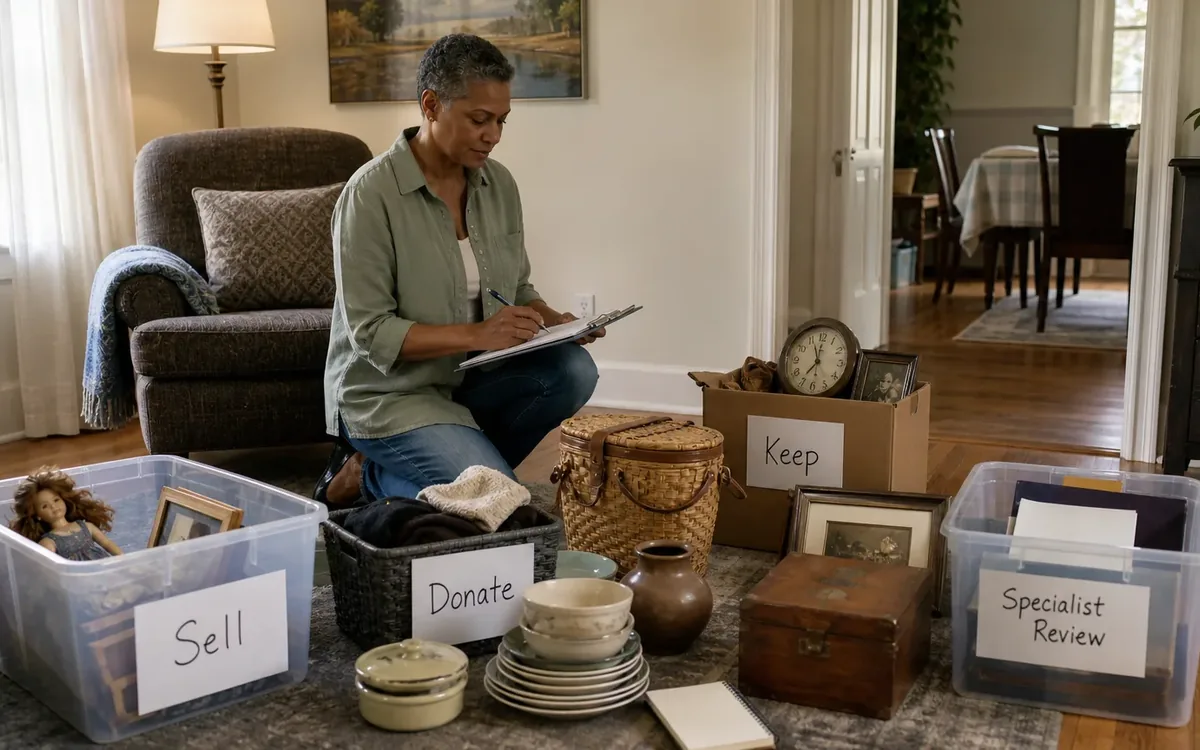
Identify Items That Need Specialist Review
Some categories deserve a pause before sale because value, authenticity, ownership, or regulation may be difficult to determine. Set them aside rather than guessing.
Common examples include:
- Fine art and signed works
- Jewelry, gemstones, watches, and precious metals
- Rare coins, currency, stamps, and medals
- Antique furniture with maker’s marks
- Historical documents and manuscripts
- Books with signatures, first-edition indicators, or notable bindings
- Musical instruments
- Military objects
- Firearms, ammunition, and related accessories
- Vehicles, boats, and titled equipment
- Designer goods and high-value collectibles
- Large or specialized collections
A qualified appraiser provides an independent opinion of value for an appropriate intended use. An auctioneer or estate-sale operator may offer market guidance and explain what fits that sales channel. Those roles are not automatically interchangeable. Ask about qualifications, specialty, fees, conflicts, and whether the opinion is written or verbal.
Authentication may be separate from appraisal. For example, identifying an artist, confirming a signature, grading a coin, or evaluating a gemstone can require a category-specific expert.
Firearms, controlled materials, vehicles, and other regulated or titled assets require particular care. The household should not rely on general cleanout advice to determine transfer legality. Ownership, transfer, transport, title, registration, and compliance questions must go to the appropriate attorney, agency, licensed dealer, or other responsible authority.
Match Each Item to the Right Sales Channel
Not every approved item belongs in the same sale. The channel should fit the item’s likely audience, value, size, deadline, and documentation.
Estate sale
An estate sale can suit a home with enough marketable contents to attract buyers and support setup. Ask the operator about minimum requirements, commissions, advertising, staffing, security, payment handling, taxes, cleanup, and unsold goods.
It may be less suitable when the property has only a few valuable objects, cannot safely accommodate visitors, or must be cleared very quickly.
Auction
Auction may work for collections, distinctive property, quality furnishings, or items with competitive buyer interest. Options can include local, specialty, online, or combined formats.
Discuss reserves, estimates, seller’s fees, buyer’s premiums, cataloging, insurance, transport, payment timing, and unsold lots. An estimate is not a guaranteed result.
Consignment
Consignment can fit selected furniture, art, jewelry, or designer goods that align with a shop’s customers. It often requires patience and acceptance of the consignee’s terms.
Confirm the commission, contract period, markdown schedule, insurance terms, payout timing, pickup responsibilities, and procedure for unsold items.
Direct local sale
A local marketplace or private buyer may be useful for ordinary furniture, tools, appliances, and practical household goods. It offers control but requires messaging, pricing, appointments, payment precautions, and pickup supervision.
Avoid exposing sensitive estate details in listings. Meet and transact using sensible safety practices, and do not allow unsupervised access to the home.
Specialty dealer or buyer
A category-specific dealer may offer a straightforward sale for coins, jewelry, books, instruments, art, or collections. Convenience can come with a lower offer than a longer retail process. Obtain more than one opinion when the item may be substantial and time permits.
Separate Sentimental Value From Market Value
Emotional importance is real, but it is not the same as market value. A family may treasure a dining set because it hosted decades of gatherings while current buyers see a large piece that is difficult to transport. Conversely, an unfamiliar object may have meaningful demand despite having little family history.
Before approving a sentimental object for sale, ask:
- Has every relevant beneficiary had an opportunity to identify it?
- Was it specifically assigned in estate documents?
- Would a photograph or written family history preserve its story?
- Is the family choosing sale because it serves the estate’s goals?
- Has one person’s urgency overridden another person’s valid interest?
Do not force an immediate price decision during a disagreement. Move the object to the protected review zone and document the unresolved issue. The authorized fiduciary and, when necessary, legal counsel should determine the proper next step.
A practical team can help create a pause category, pack approved family keepsakes, and keep sale inventory physically separate. It cannot decide whose emotional claim prevails or alter governing documents.
Prepare Approved Items Without Destroying Value
Once an item is approved for sale and assigned to a channel, prepare it carefully. Aggressive cleaning, refinishing, repair, or part replacement can reduce value or erase evidence specialists need.
Safer preparation steps include:
- Photograph the item before moving or cleaning it
- Record maker’s marks, labels, signatures, and serial numbers
- Keep sets, accessories, manuals, cases, and keys together
- Preserve receipts, certificates, and ownership records
- Use gentle dust removal only when appropriate
- Ask a specialist before polishing metals or restoring finishes
- Measure furniture and note access limitations
- Remove personal papers from desks, cabinets, and containers
- Erase personal data from electronics only after preserving needed records
Home inspection and real-estate decisions remain separate from contents sales. A real-estate professional may advise how occupied rooms, sale staging, or clearance timing affects marketing. A home inspector evaluates property conditions within the scope of the inspection. Contractors assess repair work. Local or state authorities determine code and compliance requirements.
A cleanout or move team may discuss pathways, floor protection, loading sequence, and when rooms can be made accessible. It should not decide whether a house is legally ready to list, certify code compliance, or replace an inspection.
Create a Written Handoff Plan
A good handoff states exactly what is being sold, by whom, through which channel, and under what approval. This reduces the chance that an item disappears into the wrong batch or remains in the home after a deadline.
For each group or significant item, record:
- Inventory number and description
- Current location
- Photographs
- Owner or estate designation
- Approval date and approving person
- Chosen sales channel
- Appraisal or specialist notes, if any
- Minimum or reserve instructions, if authorized
- Pickup, transport, or shipping responsibility
- Contract and payment records
- Deadline for sale
- Plan if the item remains unsold
Keep contracts, settlement statements, receipts, and correspondence. The estate’s fiduciary, attorney, accountant, or tax professional can explain which records must be retained and how proceeds should be reported. A cleanout company should not make those legal or tax determinations.
Before collection, compare the physical items against the approved list. After collection, note the date, recipient, and any exceptions. Do not let a buyer or sales operator take extra objects based only on an informal conversation.
Work Backward From the Property Deadline
A Charleston-area home transition may involve probate administration, family travel, a lease deadline, maintenance needs, or preparation for a real-estate listing. The same planning principles apply throughout South Carolina, although legal and compliance questions should always be verified for the particular estate and property.
Work backward from the date the home must be accessible or empty:
- Reserve time for authority and beneficiary review.
- Schedule specialist review for uncertain items.
- Select channels and review their contracts.
- Allow time for cataloging, setup, marketing, and collection.
- Set a cutoff date for unsold property decisions.
- Schedule final removal only after sale items are released.
- Confirm that documents, valuables, and retained property are secure.
Do not assume the highest-grossing option is best. A channel that takes months may conflict with carrying costs or a home-sale schedule. On the other hand, rushing a potentially important collection into a general sale may sacrifice value. The responsible decision-maker must balance these concerns with guidance from the relevant professionals.
Make the Final Sell List Deliberately
The final sell list should contain only property with confirmed authority, a suitable sales route, and a realistic reason to expect useful net proceeds. Everything uncertain stays out of the sale until resolved.
Before authorizing handoff, confirm:
- The item is not specifically reserved for a beneficiary
- Ownership and authority are documented
- Sensitive contents and personal data have been removed
- Significant value questions received appropriate review
- The selected channel accepts that type of property
- Fees, timing, transport, and unsold-item terms are understood
- Sale records and proceeds have a designated recipient
- The property deadline allows the plan to work
Households can set priorities, identify family possessions, approve ordinary sale inventory when authorized, and choose among feasible channels. A practical estate cleanout, move-management, auction, or estate-sale team may discuss sorting, staging, market fit, transport, and scheduling according to its role and agreement.
Legal authority, beneficiary rights, probate obligations, taxes, formal appraisal, authenticity, real-estate strategy, inspection findings, and regulatory compliance remain with the qualified professional or responsible authority. Keeping those roles clear protects both the estate and the people carrying out the transition.
For planning an estate cleanout anywhere in South Carolina, households can contact Clutter Cleaner of South Carolina at (843) 972-7020 to discuss practical sorting and transition needs. Sale, appraisal, legal, and compliance decisions should still be assigned to the appropriate authorized parties. For a related planning question, see our guide to what sells at an estate sale.



