Sort Estate Flatware by where each piece was found. Then sort by clear shape and household use. Keep uncertain pieces together and record what you can see. Separate family choices from questions about maker, material, age, or value. This lets you clear drawers without losing the context a specialist may need.
The EPA’s home reuse and recycling tips explain ways to reduce household waste. Keep useful items that are in good shape. Before discarding them, check where they can be reused.
Record each item’s choices in your household accessory matching plan. Send loose pieces where their kept item goes.
Where should you start sorting estate flatware?
Start with one drawer, tray, or utensil chest. Keep its contents together until you make basic notes. During estate cleanout planning, this preserves useful context. The home may be getting smaller, with fewer needs. Downsizing and organizing support can link groups to household needs.
Choose a clear work surface for the utensils. Keep dishes, keys, and other small things apart. Place a source note beside the first group. For example, write: kitchen drawer beside the stove. A plain location name is more useful than a guessed pattern name.
Do not empty every drawer into one pile. The everyday kitchen tray may have one family history. The dining room chest may have a different history. Loose pieces in the chest may have been added later.
Use this order for the first pass:
- Give the drawer or container a simple group label before removing its contents.
- Set aside any piece that someone identifies as borrowed or personally owned.
- Divide the remaining utensils by visible shape while keeping the source label with them.
- Count each small group and note pieces whose purpose or ownership remains unclear.
These are sorting steps, not proof of ownership. There may be a dispute over who can decide. If so, leave the affected group on hold. Ask the responsible estate representative or legal adviser. Have them resolve that question before anything leaves.
How do you group loose utensils without guessing?
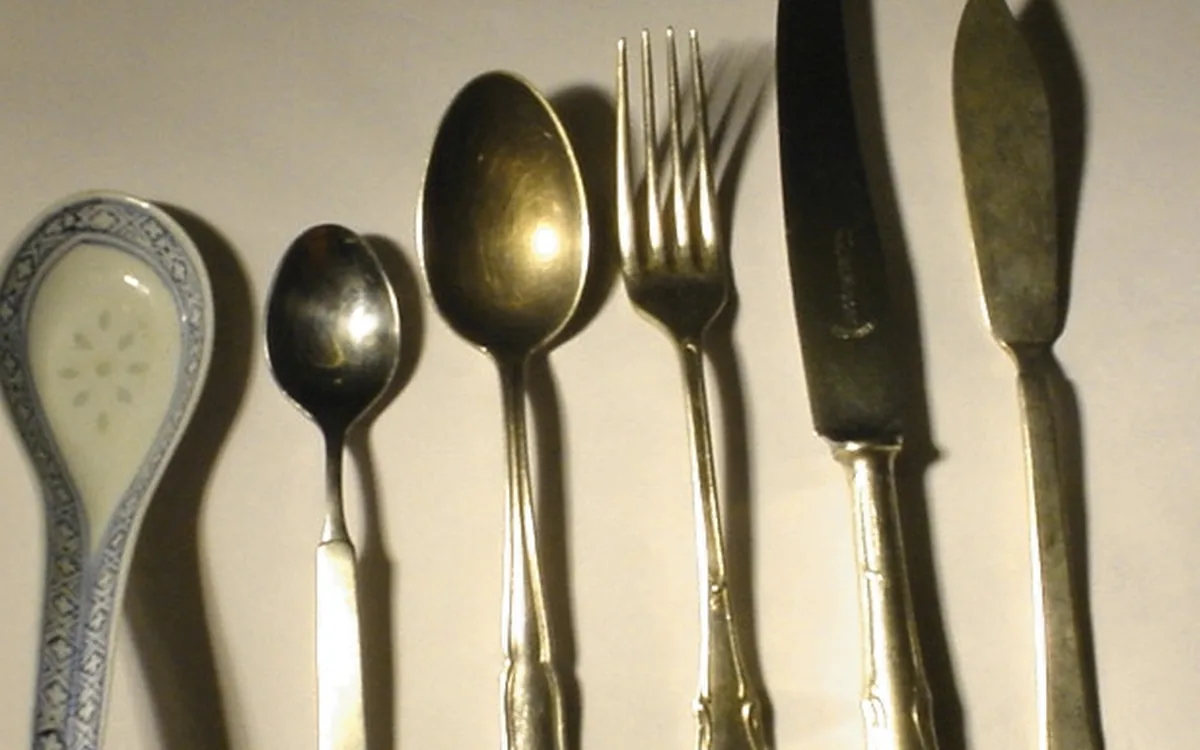
Group loose utensils by visible features, and treat those groups as tentative. Similar handles can guide your first sorting pass. But they do not prove the pieces match. A guide to how estate cleanouts work gives broader context. Organizing for a smaller home helps frame practical keep choices.
Start with familiar shapes: forks, spoons, knives, and larger serving utensils. Within those groups, compare handle outlines, decoration, and size. Keep noticeably different pieces apart, even when they came from the same tray. Record the differences in plain words.
For example, one group might have six plain-handled forks. It might also have three with a floral border. Label those as separate visual groups. Do not call either group a complete set. The count shows what is present, not what was first sold together.
Allow an uncertain group. A short fork may have a purpose you don’t recognize. So may a small spoon or unusual serving tool. Describe its shape rather than assigning a formal name. This keeps a household sorting guess from becoming a statement of fact.
Keep loose pieces linked to their source when you compare across drawers. If two groups look alike, note the possible connection before combining them. You can keep them physically separate until a specialist checks that connection.
Mixed flatware can still be useful at home. The pieces do not need to match perfectly. Someone may prefer a varied group for daily meals. That preference is a choice for the home. It says nothing about the maker, metal, or market value.
What should you record for each utensil group?
Record a group label, source location, and counts. Note clear differences and the next open question. Keep the record brief enough to use at the table. The estate cleanout service gives a wider planning context. Use this guide to clearing an estate for next choices. It helps link sorting with those next choices.
Write counts by shape, more than a grand total. Twelve mixed utensils could make a useful selection. They could also be a pile with no forks. Write down four forks, five spoons, and three knives. This gives the next person clear counts to review.
Use plain descriptions for visible wear. Note a bent tine or a loose handle. Also note dark patches or words you can read. Avoid labels like excellent condition, antique, or valuable. Use them only with support from a qualified person. Do not attempt repairs during this pass.
A useful group note contains these details:
- The source names the drawer, chest, or container where the group was found.
- The count separates forks, spoons, knives, and unfamiliar serving pieces.
- The description records visible features and repeats any readable wording exactly.
- The status names the person reviewing the group and the question still open.
If a mark is partly unreadable, say so. Do not fill missing letters from an online image. Do not use a family guess to fill them.
Keep the record with the correct group. If a family member later keeps two spoons, update that group’s count. You need not record each plain spoon on its own. But totals should show what remains and what was removed.

Which serving pieces need a separate household choice?
Serving pieces may differ in use or family meaning. Their place in the next home may differ too. When they differ from everyday utensils, keep them apart. Consider them within downsizing choices rather than keeping everything by default. Some chosen pieces may go to new homes. Move management planning can link those choices to clear plans.
A large serving spoon may still be used at shared meals. A carving pair may matter because relatives recall it at family gatherings. A small decorative utensil may have no known use. Each of the three needs a different question. This holds even when they share the same chest.
Ask whether someone wants to keep the actual piece. They may want only the memory tied to it. A relative may want just one serving spoon. They may not need to take the whole drawer. Another person may value the chest but have no use for its contents.
Keep related items together while that choice is pending. A fitted case may hold a fork and knife. Record both pieces as well as the case. Do not assume the case proves that they were made together.
Distinguish a household use choice from a food safety assessment. A handle may be loose, or a surface damaged. You may not know what the material is. In these cases, looks alone cannot show meal suitability. Ask an appropriate specialist before choosing to use it.
When nobody wants a serving piece, mark the family choice as complete. Its next step may still depend on professional review. Lack of family interest does not prove low value. Strong feelings about pieces do not set sale prices.
When should a specialist identify or value the pieces?
Doubt may change plans to divide or sell groups. It may also change plans to donate or discard. Seek professional identification or valuation when doubt affects choices. Keep the pieces together while that review is pending. Learn about the estate cleanout process before the final handoff. Planning an estate cleanout also helps place specialist review first.
Sorting at home shows where pieces were found. It can also show what the pieces look like. It cannot confirm a metal, maker, pattern, age, authenticity, or value. Take those questions to a qualified appraiser or specialist. Their experience should fit the utensils under review.
Explain the choice you need help with. Are you trying to learn whether two visual groups belong together? Do you need a value opinion before a family division? Is an unfamiliar serving piece being considered for sale? Clear questions help define the review.
Ask what the specialist needs before making changes. Do not first split groups or change their surfaces. Do not polish, scratch, or file to identify pieces. Do not apply chemicals or carry out metal tests. Do not rely on shine, weight, or a similar online picture as proof.
A family story can add context. Record it as a story with the person’s name. Do not treat the story as confirmed history. A stamped word also needs a specialist’s review.
If review is delayed, hold the affected pieces. You can keep working on other, unrelated groups. Do not choose an outcome merely to keep the drawer clearing moving. The hold should name the question that must be answered before release.
How do you choose what stays and what leaves?
First, clarify family wishes and any needed specialist review. Then choose a route for each sorted group. Help with downsizing and organizing can support household choices. Use a practical estate cleanout guide for the broader transition. It helps fit those choices into that transition. Avoid assigning a route based on appearance alone.
For pieces kept at home, name the person and the intended use. Everyday meals, occasional serving, and family remembrance are different reasons to keep utensils.
Some groups may be possible items for sale. Ask the auction or estate sale professional about them. Does the group fit the agreed sale scope? Auctions and estate sales are options to discuss. But not every loose utensil needs either route. Suitability needs a specific review rather than an assumed outcome.
| Choice | Best fit | What must be clear first |
|---|---|---|
| Keep for use | Someone wants utensils for their household. | The recipient and intended use are known. |
| Keep as a memory | A specific piece has family meaning. | The family agrees who receives it. |
| Consider sale | The group is being reviewed for a sale. | Professional review and sale scope are clear. |
| Consider donation | The family has released the group. | The recipient confirms acceptance. |
| Hold for review | Ownership, identity, or value remains uncertain. | The open question has an assigned reviewer. |
Do not treat donation as an automatic fallback. Confirm that the proposed recipient accepts the items before arranging a handoff.
A smaller retained group can still feel complete to its owner. Useful forks and a meaningful serving spoon may fit better. Consider them for the next home before moving everything. Moving a whole chest without plans may fit less well.
How do you keep sorted groups intact during a move?
Keep each approved group with its label and count. They should stay together when the group changes location. Mark groups awaiting decisions so they cannot be mistaken for released items. Move management support can keep each group’s next place clear. In an estate cleanout, those labels help prevent accidental mixing. Keep the same labels with groups during removal.
Use containers that keep one group separate from another. Do not drop every small bundle into an unmarked box. A container may hold more than one group. Add a contents note naming each group and destination.
Make the status easy to understand. Family keep, awaiting identification, and approved for sale review describe different stages. A vague label like good silver judges value. It gives no useful action to take next. Use a neutral description instead.
Before a group leaves, compare its count with the current note. If selected pieces were removed, the record should show that change. Confirm the group with its recipient at the handoff.
For a Charleston, SC, home transition, plan around the household’s actual handoff arrangements. Note when a relative takes a few serving pieces. Use a different destination note for groups staying home. Those groups may stay for a sale review. Avoid putting both under one person’s name.
Our business is based in Mount Pleasant, SC. Charleston, SC, is the main market we serve. We also provide service throughout all of South Carolina. Ask about estate cleanouts for the household work. You can also ask about downsizing and organizing. Move management is another option to ask about. Arrange identification and appraisal questions with the responsible specialists.
What else should families know about loose estate utensils?
Loose utensils often raise small questions that can stall a larger household choice. Answer each question clearly before changing a group’s route. Organizing support for a home transition helps with household choices. Read the estate cleanout overview to understand the wider work. It explains how those choices fit that work.
Can I combine utensils that look alike?
You can mark the pieces as possible matches. Keep their source details until someone reviews the connection. Similar handles can serve as a useful sorting clue. They do not prove a shared maker or pattern. Combining them might affect family division or sale choices. If so, ask a qualified specialist before combining them. For household use, let the recipient judge the group. They can decide whether mixed pieces suit their needs.
Should I count a fitted chest as a complete set?
Count the pieces actually present and record the chest separately. Empty slots do not show which items are missing. Filled slots do not prove that every utensil belongs. Describe the contents by shape and visible group. Let a specialist assess the utensils and their context. Leave claims about original completeness or pattern to them. They should also assess claims about matching pieces.
Does an engraved name settle who receives a piece?
An engraved name gives you details to record. It does not settle a dispute over ownership. Copy the wording and note any family account separately. Keep the piece on hold if people disagree about its destination. The responsible estate representative or legal adviser should decide. They should address who has authority and ownership first. Only then may anyone remove, sell, or give it away.
What if I cannot identify an unusual serving tool?
Describe the shape and keep it with its source group. Note a broad blade, long handle, or pierced bowl. Do not guess the tool’s formal purpose from these. Ask a specialist if identification could change the keep or sale choice. Unfamiliar looks do not mean something is rare or valuable. They also do not prove safety for food use. Avoid those labels based only on unfamiliar looks.
Can I finish sorting before the value review happens?
Yes, you can finish counts and source labels. You can also finish notes on family preferences. Questions about value can stay open during this work. Mark the affected groups as awaiting specialist review. Keep those groups available for the specialist to assess. Finish choices for unrelated utensils where appropriate. Sorting is complete when groups and open questions are clear. Some pieces may still need choices before they leave.
Photo credits
- Reflective Flatware on a Black Background: Scott Bauer. Original photograph, Public domain. Cropped and resized.
- Assorted flatware beside a ceramic spoon rest: The weaver. Original photograph, CC BY-SA 3.0. Cropped and resized.
- Polished metal utensils on beige fabric: Pittigrilli. Original photograph, CC BY-SA 4.0. Cropped and resized.