Knowing what sells best at an estate sale helps your South Carolina family set real expectations before the doors open. Some categories draw buyers every single time. Others depend more on the specific piece, the price, and a little luck with who walks in that weekend. Knowing the difference helps you plan a realistic timeline and a realistic result for your home.
Quick answer: Tools, kitchenware, good furniture, jewelry, glassware, artwork, and holiday decor tend to sell best at estate sales. They’re useful, easy to check out, and priced within reach of most buyers. Well-known collectibles and vintage pieces in good shape also sell well when priced against recent sales.
What sells best at an estate sale?
Tools, kitchenware, good furniture, jewelry, glassware, artwork, and holiday decor sell best. They’re useful, easy for buyers to check quickly, and priced within reach of most shoppers. Well-known collectibles in good shape also sell well. For the related service scope and planning steps, review our estate sale and auction support and estate sale comparison guide.
Tools draw their own steady crowd. Buyers often show up early and move through a garage or workshop with a plan. Hand tools, power tools that still work, and good yard equipment tend to sell fast. Buyers can often test them on the spot and know right away if it’s a good deal.
Solid wood furniture in good condition, especially dressers, dining tables, and bookcases without particleboard, tends to sell steadily too. Buyers notice the difference between real wood and pressed board right away, and they’re usually willing to pay more for the real thing.
Kitchenware follows a similar pattern. Everyday pots, pans, and small appliances that still work appeal to almost every household, and the price is usually low enough that buyers don’t think twice. Name-brand cookware, especially cast iron and good knife sets, often sells fast once word gets around, sometimes before the first hour ends.
Jewelry, fine or costume, draws steady attention because it’s small, easy to display, and fits a wide range of budgets. A locked case with a staff member nearby usually works better than an open table. That’s true for security, and because buyers often want to ask questions before deciding.
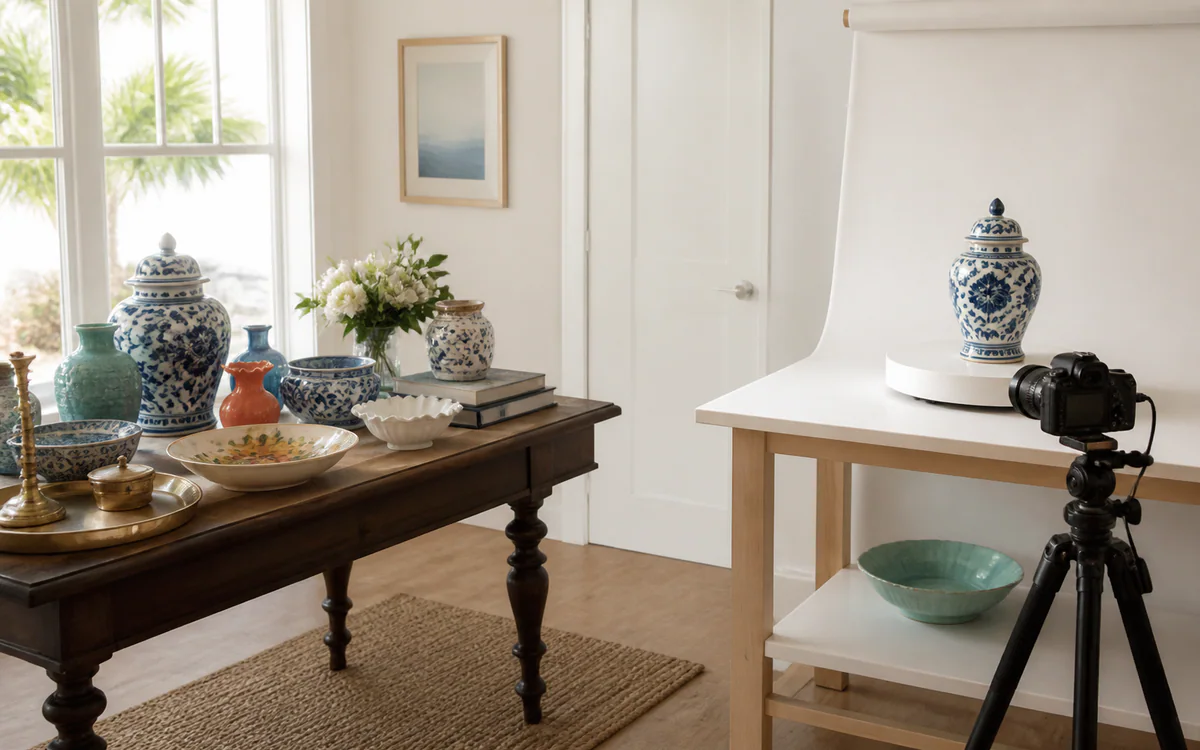
Glassware, silverware, and fine china, especially standout single pieces rather than full sets, tend to attract collectors who know exactly what they want. A single piece of depression glass or a set of sterling flatware can sell fast to the right buyer, even while a full dining set sits untouched on the same table.
Seasonal and holiday decor does surprisingly well when a sale happens to land near the right time of year. Buyers stocking up for the season often buy in bulk, especially for well-kept ornaments, wreaths, and decorations that would cost a lot more new.
Vintage clothing, good handbags, and known collectible lines, from certain toy brands to specific ceramic makers, draw a loyal group of buyers who search for these categories on purpose. A seller who can spot a maker’s mark or a known pattern usually prices these pieces better than one working from a generic guide.
Artwork, whether original paintings, signed prints, or well-made reproductions in good frames, can sell well when priced to reflect today’s market, not what the family believes it’s worth. Buyers respond to pieces that are ready to hang, in good shape, and priced fairly for right now, not for an old appraisal from decades ago.
If you’re trying to figure out which categories in your home are likely to do well, Clutter Cleaner of South Carolina’s Auctions and Estate Sales service can help you look through your inventory and connect with the right resources for pricing and prep.
How long should an estate sale be?
Most estate sales run two to three days, usually over a weekend. That length catches both early, serious buyers and casual weekend browsers. A shorter or longer run can make sense depending on the home’s size and how much needs to sell. Related South Carolina planning tools include our estate sale and auction support and estate sale comparison guide.
The first hours of day one usually bring the most serious buyers and dealers, since they want first pick before things sell out. Pricing has to be right from that first hour. Items priced too low disappear fast, and items priced too high can sit through the whole run no matter how nice they are.
Day two and three often bring planned price cuts to keep things moving and clear out what’s left. This staged approach rewards patient buyers willing to wait for a lower price, while still giving early buyers first pick at full price. It balances both groups fairly well.
A company that tracks how a similar home’s sale performed in the past can set a more realistic schedule for yours. Two days might be enough for a smaller home, while a larger house with more rooms and more inventory often benefits from the full three.
South Carolina’s weather is worth planning around. Summer heat and humidity can make an all-day sale hard on both staff and buyers. A sudden afternoon storm, common in the Lowcountry from late spring through early fall, can thin out a crowd with little warning. Ask how a company handles weather problems before you pick a date.
Staffing matters for a smooth multi-day sale. A bigger home with more rooms open to buyers needs more staff watching more spaces at once. A thin crew during a busy opening hour can mean slow checkout lines and less attention on valuable pieces spread through the house.
Setup and teardown add real time on both ends. Most companies need a day or more beforehand to sort, price, and set up a full home. They need more time after, too, to take down signs, clear tables, and deal with whatever’s left once the last buyer leaves.
How to display items for an estate sale?
Group similar items together, use clear prices, clean pieces beforehand, and give buyers room to move between tables. Good lighting and a clear path through the house help buyers see more and decide faster. To turn this answer into a practical plan, compare estate sale and auction support with the estate sale comparison guide.
Grouping by category, not by room, tends to work better for buyer flow. A table of glassware together lets a buyer compare pieces fast and decide. The same items scattered through three rooms in their original spots often get missed by someone walking through the house.
Clear, easy-to-read prices cut down on friction all day. Buyers move faster and buy more when they don’t have to track down staff to ask about every single item. Grouping similarly priced pieces together speeds up browsing for everyone, especially during a busy opening hour.
Staging matters most for higher-value pieces that sell best when buyers can see them clearly and get close enough to look. Furniture set up the way it would sit in a real room, rather than pushed against a wall or stacked up, tends to sell faster because buyers can picture it in their own home.
Photos posted online a day or two before the sale help serious buyers plan their visit. That often builds the line that forms before the doors open, especially for a home with a genuinely strong collection worth the drive.
Higher-value pieces usually do best displayed where staff can keep an eye on them, whether near a checkout table or in a supervised room instead of scattered through busy hallways. That’s a normal precaution, not a judgment on any buyer, and experienced companies plan for it as a matter of course.
Simple, clear signage outside the home matters too. Buyers driving by decide fast whether to stop, and clean signs pointing to parking and the entrance make that decision easier. A cluttered or hard-to-read sign can cost you visitors before they even see what’s inside.
For sales that spill into a garage, carport, or driveway, common in South Carolina given how much outdoor storage many homes have, weather-ready tarps and shade become part of the setup too. They protect both items and buyers from sun or a passing shower.
Our preparation checklist for auctions and estate sales walks through practical staging and pricing steps worth thinking about before the sale team arrives. That can be the difference between a piece that sells in the first hour and one that sits untouched all weekend.
What doesn’t sell well at an estate sale?
Worn furniture, old electronics, oversupplied items like plain glassware, and anything that needs special know-how to appreciate usually underperform. Condition, current style, and how much similar stuff already exists nearby all affect these results. For additional planning context, see estate sale and auction support and the estate sale comparison guide.
Condition problems are the most common issue. A piece with visible damage or heavy wear sells for a fraction of what a similar piece in better shape would bring, no matter the item’s history or how much it means to the family selling it.
A little repair work before the sale can shift an item from the “doesn’t sell well” pile into the “sells fine” pile. Tightening a loose chair leg or replacing a missing drawer pull is often a small job with a real payoff on sale day.
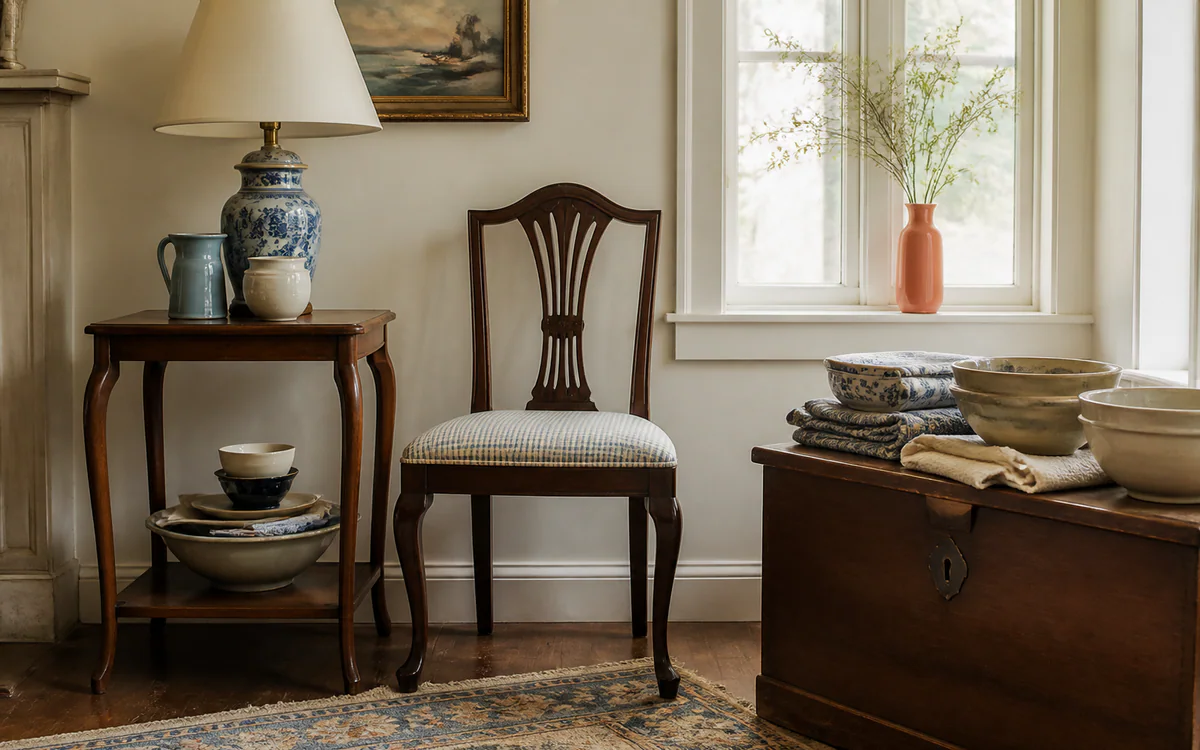
Style trends move in cycles, and furniture from certain eras falls in and out of favor with buyers. Heavy, dark wood pieces from past decades have struggled lately as tastes shift toward lighter finishes. A genuinely well-made vintage piece can still find the right buyer, though, when priced with that shift in mind.
Oversupply is a quiet but real factor. Everyday glassware, standard paperbacks, and common decorations show up at nearly every estate sale. Buyers have their pick across several sales on the same weekend. Bundling similar low-value items into one lot, instead of pricing each piece alone, often moves them faster than holding out for a per-item price.
What items don’t sell at an estate sale?
Particleboard furniture, encyclopedia sets, entertainment centers built for old TVs, worn mattresses, and personal items like used cosmetics rarely find buyers. These categories are better planned for donation or the trash from the start, not priced for sale. The next steps connect to our estate sale and auction support and estate sale comparison guide.
Bulk and outdated design explain most of this list. Furniture built for an old TV format nobody uses anymore, media that needs equipment most homes no longer own, and reference books that lost their use once information moved online all face the same problem. Even a very low price doesn’t create demand where none exists.
Old computer towers, printers, and bulky monitors rarely draw interest either. Technology moves fast, and a five-year-old desktop usually costs more to move or store than anyone will pay for it.
Safety concerns rule out a smaller but important group. Old cribs, car seats, and helmets often fall outside today’s safety standards. A responsible seller shouldn’t put outdated safety gear back into use, no matter how good it looks.
Old media formats face a similar problem. VHS tapes, cassette collections, and a big CD library beyond a small personal stack all need equipment most homes no longer own. Even sentimental collections struggle to sell when nobody has a way to actually use them.
Exercise equipment often disappoints families who remember what it cost new. A treadmill or elliptical usually sells for a small fraction of its original price, if it sells at all. Heavy equipment is a hassle for casual buyers, and the used fitness market is already well stocked almost everywhere.
For lower-value leftovers that make sense to donate, the IRS guidance on determining the value of donated property explains how fair market value works for tax purposes. The AARP guide to getting rid of anything offers a practical, category-by-category rundown for everything else that doesn’t sell.
Every home’s mix of tools, furniture, jewelry, and everyday goods is different, and a plan built around your specific inventory gives a more realistic result than assuming every category performs the same way it did somewhere else. Knowing which categories in your South Carolina home are likely to sell well, and which are better handled another way, makes the whole process less stressful and more predictable. Call (843) 972-7020 or use the estimate form on this site, and we’ll talk through what a realistic outcome looks like for your home.