
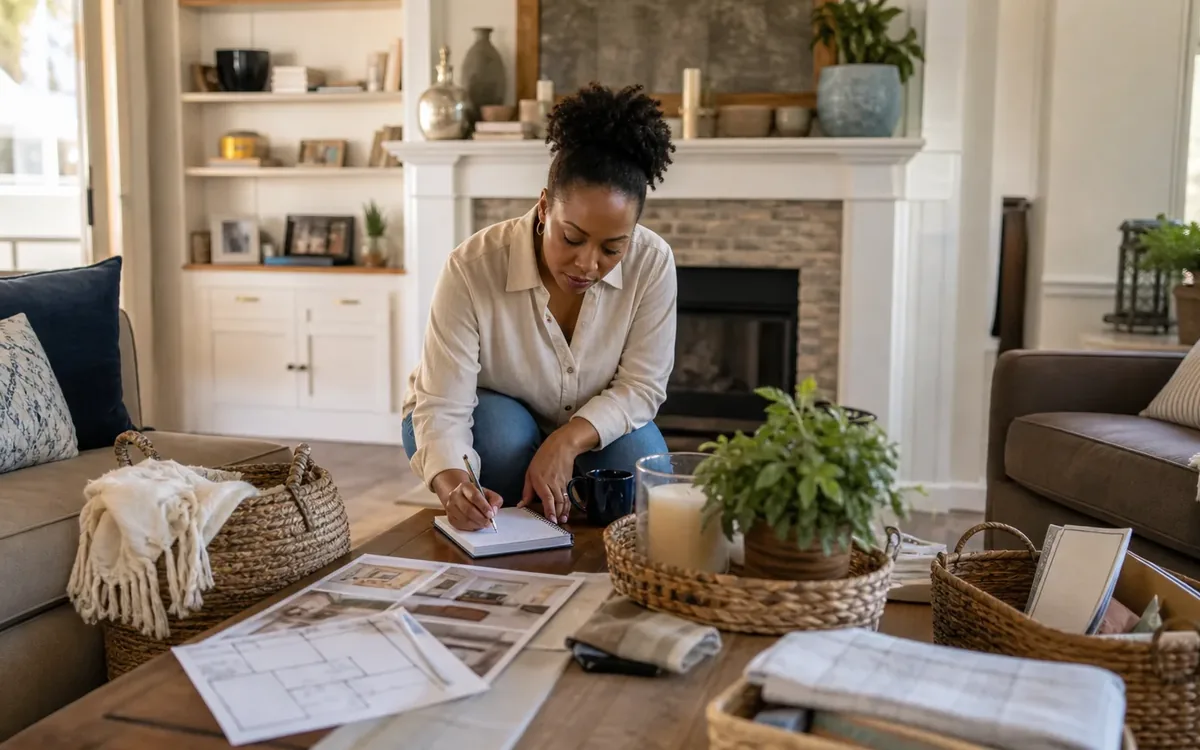
A listing-photo room reset plan should define how each room will look for photography and how the household will restore daily essentials afterward. Instead of broadly decluttering the entire property, identify what the camera will see, assign temporary homes for necessary items, document the photo-ready arrangement, and create a simple daily reset routine.
Quick answer: Give every room two workable states: photo-ready and daily-use. For each space, identify the intended visual purpose, remove items that compete with it, keep essential belongings together in a labeled container, and take a reference photo. Before photography, use the reference images to reset the rooms without making the home impractical to live in.
This approach is useful for occupied properties in the Charleston area and throughout South Carolina. It keeps the project focused on presentation while separating household decisions from the work that belongs to real-estate agents, photographers, inspectors, appraisers, contractors, or local authorities.
What is a listing-photo room reset plan?
A room reset plan is a written and visual guide for moving a lived-in room between everyday use and its photo-ready arrangement. It is narrower than a full cleanout, move, or home staging project.
The plan records:
- The room’s purpose in the listing
- What should remain visible
- What should be temporarily removed or repositioned
- Where daily necessities will go
- Who will reset the room
- A reference photo of the preferred arrangement
For example, a dining table may normally hold mail, school materials, and chargers. Its photo-ready state might show only a simple centerpiece. The plan should not merely say “clear the table.” It should designate a tray, drawer, or labeled container for the items the household will need again after photography.
A room reset is not a substitute for cleaning, repairs, staging advice, photography, or an agent’s marketing strategy. It provides a repeatable way to prepare the physical space once those needs are understood.
Households considering broader sale preparation can review home sale preparation services to understand how sorting, organization, cleanout planning, and move-related tasks may fit around the photo reset.

Why plan for both photography and daily use?
An occupied home cannot remain frozen in a listing-photo arrangement. People still need clothing, medication, cookware, work supplies, pet items, toiletries, and charging cables. If the plan ignores those needs, cleared surfaces often fill again because essential items have nowhere practical to go.
A two-state plan prevents that rebound. The photo-ready state supports clean sightlines and a clear room identity. The daily-use state keeps necessary belongings accessible without scattering them throughout the space.
This distinction also prevents unnecessary disposal. An item does not need to leave the property simply because it should not appear in a photograph. It may only need a temporary, identified location.
Use four labels while planning:
- Remain: Items that support the room’s purpose and can stay visible
- Daily access: Items used regularly that need a convenient temporary home
- Elsewhere in the home: Items that belong in another room
- Separate decision: Items requiring a later choice about storage, sale, donation, recycling, or disposal
The final category should not stall the room reset. Move those objects to a clearly defined decision area rather than debating every possession while preparing the camera view.
For properties involving inherited contents or estate responsibilities, the how to get your house ready for listing photos explains the broader process. A listing-photo reset should remain a distinct task and should not override directions from an executor, personal representative, attorney, or other authorized decision-maker.
How do you decide what the camera should see?
Start with the listing purpose of the room, not with individual possessions. A viewer should be able to recognize the space quickly and understand its usable features.
Ask the listing agent or photographer whether they have priorities for camera angles, window treatments, lighting, furniture placement, or visible features. They control their professional recommendations. The household controls access, privacy choices, and which belongings may be moved, subject to any ownership or estate restrictions.
Use this four-step review for each room:
- Name the room’s primary function. Decide whether it needs to read as a bedroom, dining area, office, or another defined space.
- Identify likely sightlines. Look from the doorway, corners, and windows, but let the photographer choose the actual compositions.
- Find visual competition. Note crowded surfaces, excess furniture, tangled cords, personal documents, and objects blocking architectural features.
- Select supporting items. Retain furnishings and restrained accents that make the room’s scale and function understandable.
Avoid making technical claims about what photography will conceal. Wide-angle lenses, exposure choices, and camera height can reveal areas a casual observer overlooks. The photographer should decide how the room will be captured.
Privacy deserves a separate pass. Remove or secure family photographs, calendars, school information, prescription labels, financial paperwork, alarm details, spare keys, and devices displaying notifications. The household decides what is sensitive. A real-estate professional can discuss marketing considerations but should not make personal privacy choices for the occupants.
Build a room-by-room reset sheet
A reset sheet should be brief enough to use while moving through the home. Create one paper page or digital note per room and keep the wording specific.
Include these fields:
- Room name: Use an unambiguous label such as “upstairs front bedroom.”
- Listing function: State what the room should communicate.
- Keep visible: List the furniture and accessories that remain.
- Move for photos: Identify exact objects rather than writing “miscellaneous clutter.”
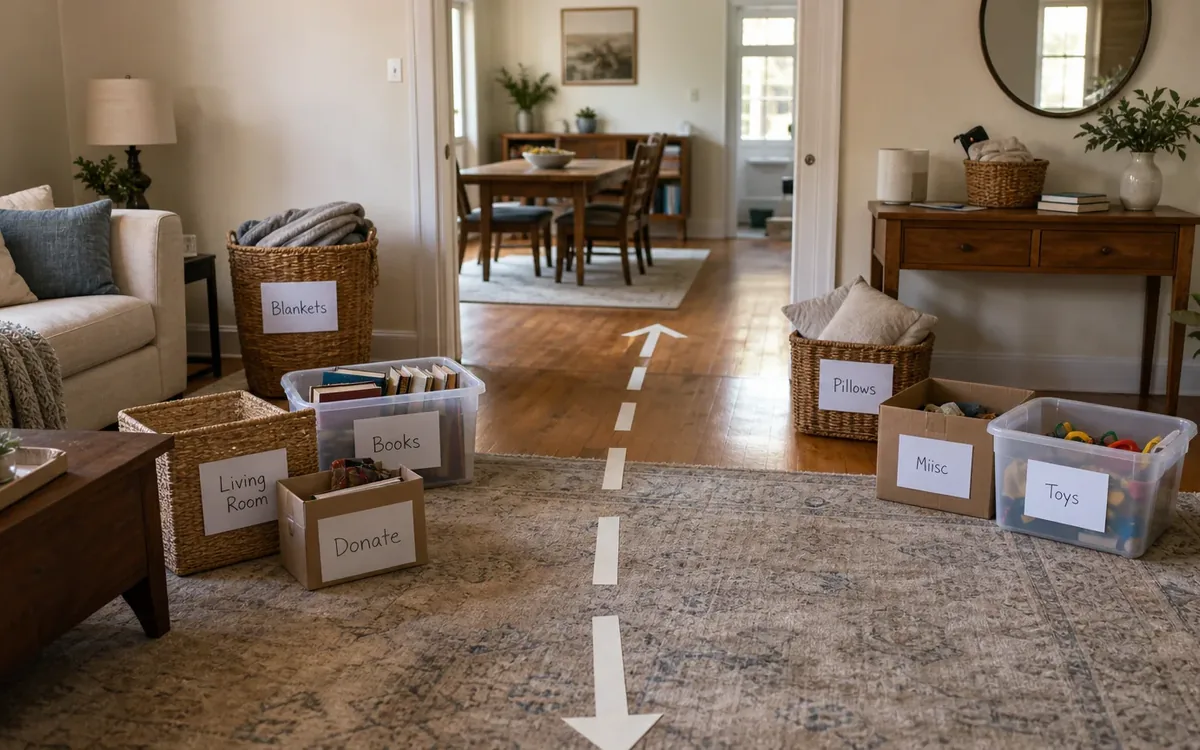
- Temporary location: Record the container, cabinet, closet zone, or off-site location chosen by the household.
- Daily-use kit: Group essentials that must return after photography.
- Final checks: Note cords, bins, pet supplies, fans, countertop appliances, or other easily missed objects.
- Reference image: Photograph the approved arrangement from the doorway or another useful viewpoint.
Use room-specific language. “Place toothbrushes and skincare in the blue bathroom caddy” is more useful than “clear counters.” “Put laptop, charger, and notebook in the office tote” is easier to reverse than distributing them among several drawers.
Assign one reset container to each active room when practical. Containers should not be packed so heavily that they are difficult to move. Avoid putting them where they block exits, stairs, electrical panels, HVAC equipment, or access needed by occupants and professionals.
Storage is a household or separate provider decision. A household may use existing cabinets, rent storage, or ask a storage company about its terms and restrictions. A practical cleanout or move team may discuss sorting zones, container labels, and how belongings will be moved. Storage availability, security, insurance, contracts, and prohibited contents remain matters for the storage provider and customer.
How should each type of room be reset?
Apply the same two-state method throughout the property, but adapt it to how each room functions.
Entry and living areas
Preserve clear walking paths and make the seating arrangement understandable. Remove accumulated mail, loose remotes, pet equipment not needed during the appointment, and extra small furnishings that interrupt sightlines.
Keep a daily-use basket for chargers, remote controls, reading materials, and current paperwork. Do not hide documents or valuables in unsecured furniture that may be opened during normal household activity.
Kitchen
Choose which frequently used appliances can remain without making the counters appear crowded. Gather dish soap, sponges, vitamins, pet bowls, and charging cables into designated daily-use locations.
Food-safety decisions remain with the household. Do not put food, medication, chemicals, or temperature-sensitive items into unsuitable temporary containers merely to clear a surface.
Bedrooms
Define each bedroom’s function and protect personal information. Consolidate bedside items, laundry, visible cords, excess pillows, and clothing that has no assigned location.
A daily-use kit might include sleepwear, medication, a charger, and the next day’s clothing. Medication should remain secured and accessible according to the household’s needs, not packed casually with decorative items.
Bathrooms
Create a caddy for toiletries used every day. Check counters, shower edges, tub surrounds, wastebaskets, laundry, scales, bathmats, and personal products.
Cleaning products should remain properly stored according to their labels. A visual reset should never take priority over safe storage or accessibility needs.
Work and flex spaces
Give the room one clear identity where possible. Secure client information, passwords, financial records, school records, and screens containing private material.
If the room must resume work immediately after photography, keep the computer setup grouped and photograph cable connections before moving equipment. The household or qualified technology provider should handle equipment that requires technical disconnection.
Closets and utility areas
Ask the real-estate agent and photographer whether these spaces are expected to appear in listing media. Do not assume they will remain unseen.
Keep access clear around electrical equipment, shutoffs, appliances, and building systems. Inspectors, contractors, utility providers, or code officials determine the access they require for their work.
What should happen before and after photo day?
The final reset should follow a fixed sequence so tasks are not undone by later activity.
Before the appointment, complete these five passes:
- Function pass: Confirm that each room communicates its intended use.
- Surface pass: Reset counters, tables, desks, shelves, and bathroom surfaces.
- Floor pass: Remove loose objects and restore safe walking routes.
- Privacy pass: Secure documents, photographs, keys, medication, valuables, and visible digital information.
- Reference pass: Compare each room with its reset sheet and photograph any updated arrangement.
Coordinate pets, occupants, and vehicles according to instructions from the listing agent or photographer. They should explain access and photography requirements. The household should decide what arrangements are safe and workable for children, pets, older adults, or anyone with accessibility needs.
After the photographer finishes, do not restore everything automatically. Return essential room kits first. Keep optional accessories and nonessential items in their temporary locations if doing so makes daily resets easier, provided storage remains safe and authorized.
Update the reset sheets whenever furniture or containers move. These records can also help before showings, but agents should advise on showing preparation and scheduling. A photo arrangement does not necessarily satisfy inspection, appraisal, repair, or compliance needs.
Separate the reset from professional decisions
A room reset can reveal damaged materials, possible hazards, overloaded storage, or maintenance concerns. It does not determine their condition or required remedy.
Keep the roles distinct:
- Household or authorized representative: Approves access, identifies belongings, chooses what may be moved, protects sensitive items, and makes storage or disposal decisions.
- Cleanout, organizing, or move team: May discuss sorting, room sequencing, labeling, furniture movement, and practical preparation within an agreed scope.
- Real-estate agent: Advises on listing strategy, buyer presentation, disclosures within the agent’s role, and showing expectations.
- Photographer: Chooses camera positions, lighting methods, image composition, and technical photography requirements.
- Appraiser: Independently develops an opinion of value under the applicable assignment standards. A reset team does not determine value.
- Home inspector: Evaluates property conditions within the inspection agreement and applicable standards.
- Contractor or qualified trade: Evaluates and performs repairs or alterations within that provider’s qualifications and contract.
- Attorney or estate professional: Advises on ownership, authority, contracts, probate, disputes, and other legal matters.
- Government or compliance authority: Interprets and enforces applicable requirements. Support with clearing access or organizing records does not constitute a compliance determination.
Do not cover damage solely to improve a photograph. Ask the appropriate real-estate or legal professional about disclosure questions, and ask a qualified contractor or inspector to evaluate physical conditions. Decisions about repair scope, permits, and code acceptance stay with the relevant professionals and authorities.
Keep the plan usable until the property is no longer occupied
The strongest reset plan minimizes daily friction. Place room kits near where items are used, but outside the intended camera view. Label containers by room and purpose rather than by vague categories.
A simple evening routine can include:
- Returning loose items to each room’s daily-use kit
- Clearing food and dishes according to household needs
- Securing private papers and medication
- Restoring safe walkways
- Checking the next day’s access requirements
Revisit rooms that repeatedly become cluttered. The problem is often not effort but an unrealistic temporary location. If the kitchen caddy is stored far from the kitchen, or work equipment is split among several containers, the system will be difficult to maintain.
When belongings are no longer needed in the occupied home, the household can separately choose storage, sale, donation, recycling, or disposal. Auctioneers, estate-sale providers, appraisers, donation recipients, waste facilities, and specialty disposal companies establish their own acceptance rules and terms. A room reset plan should record those pending choices without treating them as completed services.
Clutter Cleaner of South Carolina is based in Mount Pleasant, with Charleston as its primary market and a statewide South Carolina service territory. Any discussion of home sale preparation, downsizing, organizing, move management, estate cleanouts, auctions and estate sales, or code compliance support should begin with the property circumstances and an agreed scope. Availability and the involvement of separate professionals must be confirmed rather than assumed.
Short FAQ
Should every room look completely empty?
No. A room generally needs a clear function and readable scale, not total emptiness. Ask the listing agent and photographer which furnishings support their presentation plan.
Where should daily necessities go during photography?
Use labeled room kits, secure cabinets, or another household-approved location. Keep medication, valuables, private records, and hazardous products protected according to their specific requirements.
Can a cleanout team decide what should be discarded?
The household or legally authorized representative should approve disposal decisions. A practical team may help create categories, identify logistics, and carry out agreed work, but it should not make ownership or legal decisions.
Does a photo reset replace staging or repairs?
No. Staging recommendations belong to the chosen real-estate or staging professional. Repair evaluation and work belong to qualified contractors or trades, while permit and compliance decisions remain with the responsible authority.
Should closets and garages be included?
Include them if they may be photographed or accessed, or if clearing them supports safe use. Confirm media priorities with the agent or photographer and keep required equipment and system access unobstructed.



