
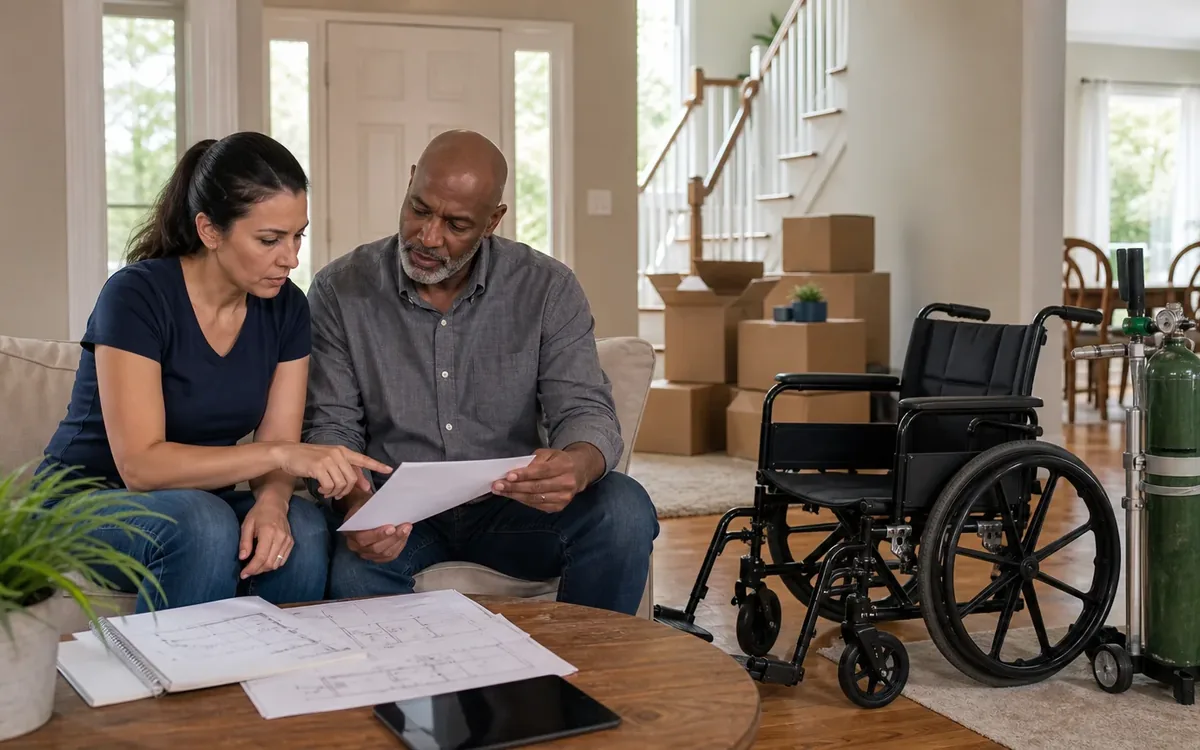
A move involving medical equipment should be organized around the person’s uninterrupted care, not around the furniture schedule. First identify essential equipment, confirm who is authorized to disconnect and reinstall it, prepare the destination, and keep critical supplies accessible. The household can manage records, priorities, access, and packing decisions, while clinicians, equipment suppliers, electricians, inspectors, and other qualified professionals handle decisions within their expertise.
Quick answer: Build the move in two tracks. One track covers care-critical equipment, medication, power, access, and professional setup. The other covers furniture, household contents, donations, disposal, and room arrangement. Do not let the general household move interfere with the care-critical track.
What should you confirm before choosing the moving sequence?
Begin with a written equipment inventory. Do not rely on memory or assume that every device belongs to the household. Some equipment may be rented, supplied through an insurer or medical provider, or subject to special transport and return instructions.
For each item, record:
- Its name, model, and serial number, if visible
- Whether it is owned, rented, borrowed, or supplier-provided
- The supplier or responsible provider’s contact information
- Whether the person needs it continuously or only at certain times
- Its normal power source and any approved backup source
- Accessories, tubing, filters, chargers, batteries, and manuals
- Who may disconnect, move, test, or reinstall it
- The room and exact placement planned at the destination
Examples may include mobility aids, adjustable beds, lifts, oxygen-related equipment, respiratory devices, monitoring equipment, refrigeration for medication, shower supports, and communication aids. Each category can have different handling requirements.
Ask the prescribing clinician or equipment supplier what must remain available during transit. They should also address clinical questions such as whether an interruption is acceptable, whether backup equipment is needed, and how temperature-sensitive or sterile items must be handled.
A household coordinator can collect and organize these answers. A practical move management service may discuss sequencing, room plans, sorting, packing coordination, and household setup. It should not replace clinical instructions or represent itself as qualified to alter medical equipment.
Separate care-critical items from household contents
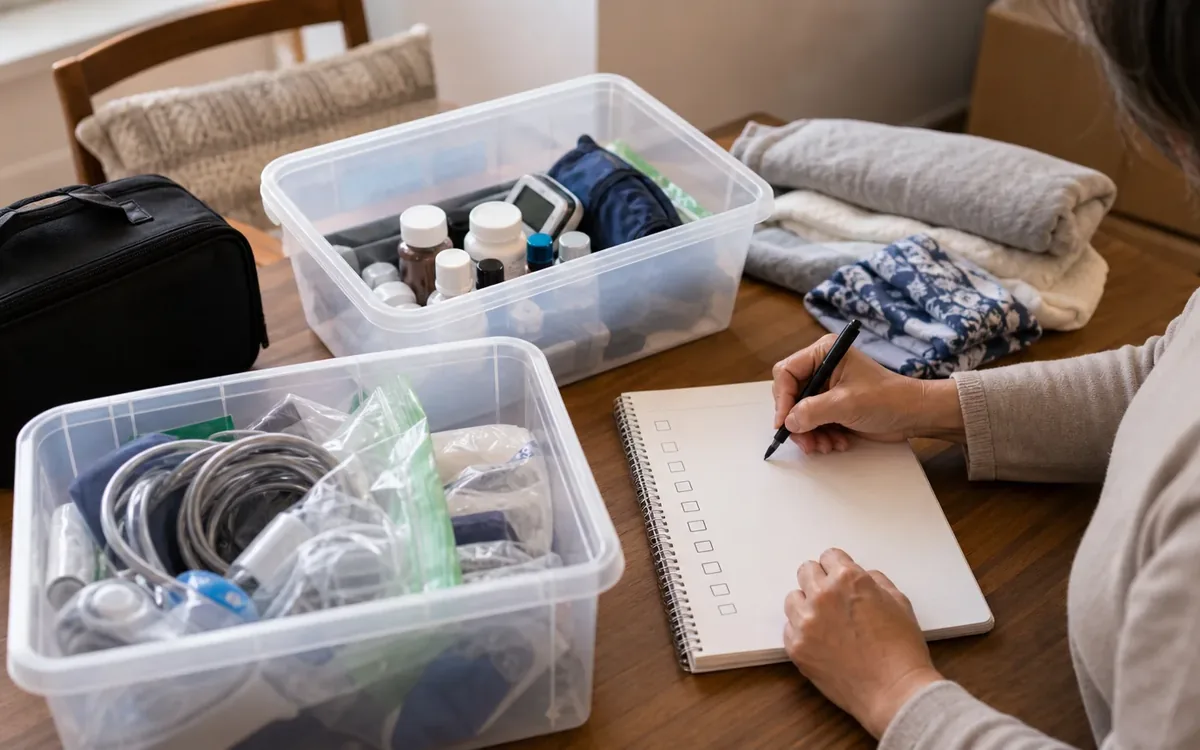
Create three clearly labeled groups before broad packing begins.
- Must remain with the person: Medication, mobility aids, communication devices, current paperwork, chargers, approved backup supplies, and anything required during travel or immediately upon arrival.
- Requires specialist handling: Equipment that a supplier, technician, clinician, electrician, or other qualified professional must disconnect, transport, install, calibrate, or approve.
- Can follow the household move: Noncritical accessories, unopened supplies, spare linens, ordinary furniture, and items that are not needed for immediate care.
This separation prevents an essential cord, attachment, or control unit from disappearing into a box labeled simply “bedroom.” Use labels that state the contents and destination without disclosing more medical information than necessary.
Keep a master inventory outside the packed boxes. A paper copy can travel with the responsible person, while a digital copy can be shared only with family members and professionals who need it. Photographing equipment and connected accessories before disassembly may help an authorized installer identify components, but photographs are not a substitute for professional instructions.
If downsizing is part of the transition, treat medical equipment as its own decision category. Do not donate, discard, sell, or return a device until ownership is verified. The responsible supplier, insurer, clinician, or legal decision-maker may need to provide direction.
Who is responsible for disconnecting and reinstalling equipment?
Responsibility depends on the equipment and its source. The household should ask rather than infer. A general mover may be able to carry certain approved items, but that does not mean the mover is authorized to disconnect medical systems, modify wiring, handle regulated materials, or certify that equipment is operating correctly.
Use a role sheet with one named contact for each task:
- Household decision-maker: Approves belongings, room placement, access, and communication preferences.
- Patient or resident: Participates in choices to the extent they wish and are able.
- Clinician: Answers care, interruption, positioning, medication, and medical-safety questions.
- Equipment supplier or technician: Gives equipment-specific transport, disconnection, installation, testing, maintenance, and return instructions.
- Moving company: Confirms what it will carry, how it protects items, and what its exclusions are.
- Move or cleanout team: May coordinate household sorting, labeling, furniture placement, pathways, and agreed disposal or donation decisions.
- Electrician or contractor: Evaluates electrical capacity, outlets, mounting, structural work, ramps, or other property changes when needed.
- Inspector, code official, landlord, association, or facility representative: Determines applicable approval or compliance requirements.
Ask every provider to put its scope in writing. If there is a gap between providers, resolve it before the move. For example, one company might disconnect a device but not transport it, while another might transport it but not install or test it.
Prepare the destination around the equipment
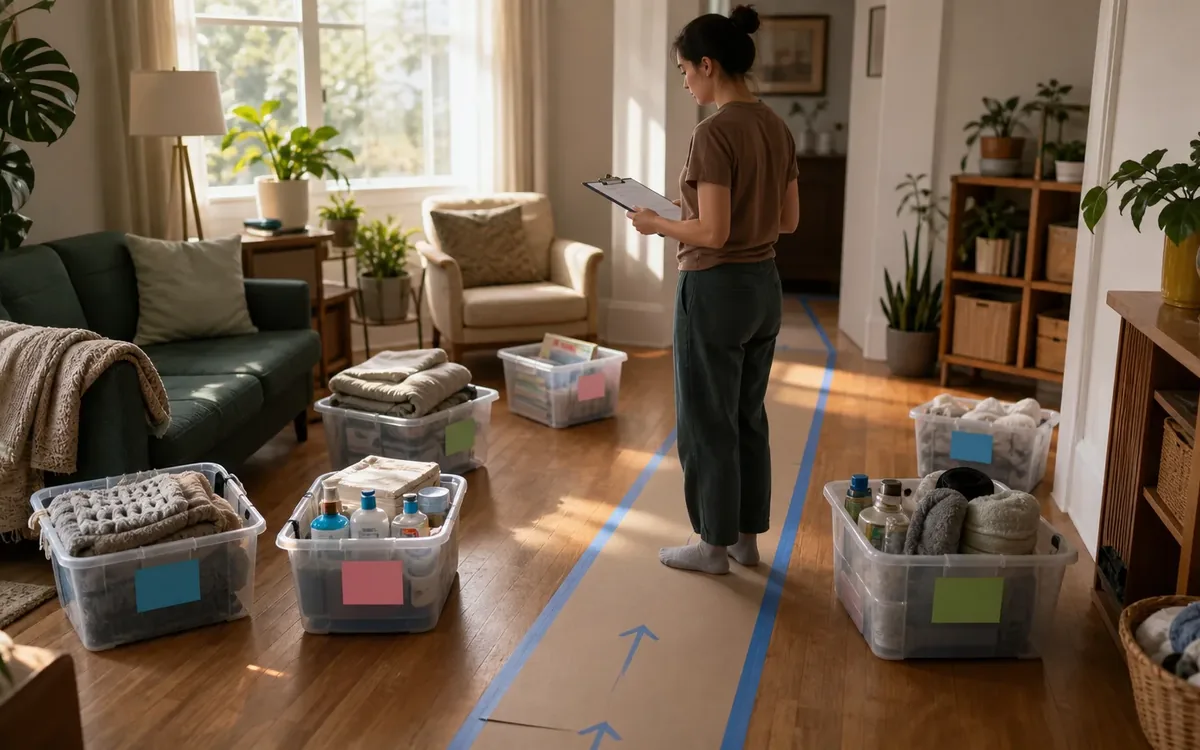
A floor plan should account for equipment dimensions, use space, power access, ventilation, caregiver movement, and emergency pathways. Measure doors, halls, turns, elevators, and the intended room. Include protruding controls, bases, rails, and attachments in the measurements.
Walk through the destination with these questions:
- Can the equipment reach the room without unsafe tilting or forced disassembly?
- Is there enough space to use the device as intended?
- Are cords protected from pinching and trip hazards?
- Can mobility aids turn and pass through essential routes?
- Are exits, windows, panels, vents, and fire-safety devices unobstructed?
- Is lighting adequate for nighttime movement and equipment controls?
- Are bathroom and bedroom routes clear?
- Is there a suitable location for supplies and waste?
Do not assume that an available outlet is appropriate. The equipment supplier or qualified electrician should decide whether a circuit, outlet, extension arrangement, surge protection device, generator, or backup-power plan is acceptable. The household can identify needs and arrange appointments, but electrical suitability belongs with the appropriate professional.
Likewise, ramps, grab bars, lifts, widened openings, wall-mounted components, or structural alterations may require a contractor, property owner, facility, association, permit office, or inspector. A cleanout or move team can clear access and position ordinary contents as agreed. It should not make structural, code, or inspection determinations.
Build a move-day continuity plan
The plan should work even if the household truck and the medical equipment do not arrive together. Keep care-critical items in a dedicated vehicle or with the responsible caregiver when supplier instructions permit. Never bury them behind furniture or send them without the person who knows where they are needed.
Prepare one clearly identified arrival kit containing only approved items, such as:
- Current medication and administration records
- Clinician, pharmacy, supplier, and emergency contact details
- Chargers and approved batteries
- Essential mobility or communication aids
- Equipment manuals and installation references
- Basic personal-care supplies
- Clothing and bedding needed at arrival
- Keys, access codes, and destination contacts
Medication handling requires special care. Follow instructions from the pharmacist or clinician regarding temperature, security, timing, transport, and replacement after any storage problem. A mover or organizer should not decide whether medication remains usable.
Set a communication order for the day. The household coordinator should know whom to call about equipment, building access, utilities, ordinary contents, and care questions. Share only the information each participant needs.
Avoid having unrelated packing, cleanout, contractor, and installation work compete for the same room. Clear the equipment route first. Keep children, pets, loose boxes, and discarded items away from that path.
How should you handle oxygen, batteries, and powered devices?
These items deserve individual instructions. Oxygen-related systems, compressed cylinders, lithium batteries, refrigerated medication, and powered mobility equipment may be subject to carrier rules, supplier requirements, building policies, or safety restrictions.
Contact the equipment supplier and transportation provider before packing. Ask:
- Whether the item can travel in the planned vehicle
- Whether batteries must be removed, isolated, charged, or packaged in a particular way
- Whether cylinders must be secured or handled by the supplier
- Whether the device has temperature or orientation limits
- Whether accessories must remain attached or be packed separately
- What approved backup is required during the transition
- Who will test the equipment after arrival
Do not place oxygen equipment near flames, smoking, heat sources, or unapproved electrical devices. Follow the supplier’s safety instructions and any building requirements. Do not improvise battery connections, adapters, extension cords, or repairs.
Power outages also require planning. The clinician and supplier can clarify the care implications of lost power and identify approved alternatives. An electrician can evaluate property power arrangements. Local authorities, utilities, facility staff, or emergency management resources may provide relevant public guidance, but the household remains responsible for obtaining advice suited to the person and equipment.
Coordinate downsizing without losing vital supplies
Medical moves often occur alongside a major reduction in household contents. That creates a risk that equipment parts, records, and supplies will be mixed with donations or disposal loads.
Use separate zones for:
- Medical equipment and matched accessories
- Medication and health records
- Items moving to the new home
- Items awaiting family decisions
- Potential sale or appraisal items
- Approved donations
- Approved disposal
- Supplier returns
Only the household or legally authorized decision-maker should approve what happens to belongings. If ownership, capacity, estate authority, guardianship, or power of attorney is unclear, consult the appropriate attorney or responsible authority. A cleanout team can follow documented decisions but cannot determine legal ownership or decision-making authority.
Items believed to have financial value should be evaluated separately. An appraiser, auction professional, estate-sale provider, or other qualified specialist decides valuation and the appropriate sale method. Storage is also a separate household choice arranged with a storage provider. Neither storage conditions nor future value should be assumed.
For a transition involving an estate, the guide on how far in advance should i plan a move explains how authority, sorting, records, and removal decisions can be separated. Medical supplies still require their own ownership and disposal review.
Verify the room before the person arrives
The destination should be functional, not merely unpacked. Complete a joint review with the people responsible for care and equipment.
Check that:
- Authorized professionals have installed and tested applicable equipment
- Controls, remotes, chargers, and accessories are together
- The bed and seating allow necessary transfers and caregiver access
- Mobility routes are open and stable
- Frequently used supplies are reachable
- Cords and tubing are routed according to professional instructions
- Medication storage follows pharmacy or clinician guidance
- Emergency contacts and equipment numbers are accessible
- Waste and sharps arrangements follow applicable provider and local requirements
- Ordinary boxes and furniture do not obstruct care
If equipment does not operate correctly, contact the supplier or qualified technician. Do not let an unqualified person attempt repairs or configuration changes. If the person’s health or immediate safety is at risk, follow the clinician’s emergency plan and contact appropriate emergency help.
Home-sale preparation should remain separate from care setup. A real-estate professional can advise on listing and market decisions. An inspector evaluates property conditions within the inspection scope. Contractors handle authorized repairs or modifications. Code officials and other authorities determine compliance. The household decides which recommendations to pursue, subject to legal or property obligations.
Keep records after the move
Retain the inventory, supplier instructions, photographs, service records, and receipts in one accessible place. Update the equipment list if an item was replaced, returned, damaged, or moved to another room.
Note unresolved matters, including:
- Supplier pickups or returns
- Contractor or electrical work
- Inspection or property approvals
- Missing accessories
- Equipment testing questions
- Donations or disposal awaiting authorization
- Items placed in separately arranged storage
- Appraisals or sales still under consideration
A final contents review can confirm that no medical records, medication, equipment parts, or personally identifying documents remain in the former home. Document disposal decisions for items that require special handling. The appropriate pharmacy, supplier, waste provider, or public authority should advise on regulated or hazardous materials.
FAQ
Can regular movers transport medical equipment?
Possibly, depending on the item and the mover’s written policies. Confirm with both the mover and equipment supplier. Transport permission does not necessarily include disconnection, installation, calibration, or testing.
Should medical equipment go into storage?
Only after ownership, care needs, supplier requirements, battery conditions, temperature limits, and storage terms are reviewed. The household chooses a storage provider, while clinicians or suppliers address whether storage is appropriate for specific equipment.
Who decides whether equipment can be discarded or donated?
The owner or legally authorized decision-maker does, after checking supplier, insurer, prescription, privacy, sanitation, and disposal requirements. Some items may need to be returned or handled through a specialized channel.
What can Clutter Cleaner of South Carolina discuss?
Within its statewide South Carolina scope, Clutter Cleaner of South Carolina can discuss move management, downsizing and organizing, estate cleanouts, auctions and estate sales, home sale preparation, and code compliance support. The physical business location is Mount Pleasant, and Charleston is the primary market. Call (843) 972-7020 to discuss the household transition and clarify scope. Clinical, legal, valuation, inspection, real-estate, contractor, and official compliance decisions remain with the responsible professionals or authorities.



