

The final walkthrough of a home you are leaving should happen after belongings and planned removal work are complete but before you surrender access. Check every room, closet, attic or storage area, exterior space, key, remote, fixture, and meter that applies to the property. Photograph conditions, record unresolved concerns, and confirm the handoff requirements with the landlord, buyer’s representative, closing professional, or property manager responsible for the transaction.
Quick answer: Divide the home into zones, inspect each zone from top to bottom, open every permitted storage space, and photograph the final condition. Set aside keys, remotes, access devices, documents, and agreed items before anyone makes the handoff. Do not decide on your own whether an item must stay, a repair satisfies a contract, or a condition affects a deposit or closing. Refer those questions to the appropriate professional.
Why is the final walkthrough easy to get wrong?
A nearly empty house looks simple to inspect. In practice, empty rooms can create false confidence. Small possessions remain behind cabinet doors, cleaning supplies sit under sinks, and outdoor equipment blends into sheds or garages. Keys and remotes may also travel accidentally in a purse, moving box, or vehicle.
The final walkthrough is not the same as the buyer’s contractual walkthrough, a rental inspection, or a professional home inspection. It is the departing household’s last controlled review of the property and handoff materials.
Its practical goals are to:
- Find belongings that should leave with the household.
- Confirm agreed property items have not been removed accidentally.
- Identify debris or supplies that still need a household decision.
- Document visible condition at departure.
- Gather all keys, remotes, codes, and access devices.
- Prepare a clear list of unresolved issues for the proper contact.
Households coordinating removal, packing, donations, and the final property check can review Clutter Cleaner of South Carolina’s move management service. Service scope should be discussed for the specific project. Contract interpretation, inspections, repairs, and legal decisions remain separate matters.
What should be settled before the walkthrough begins?
Do not begin with everyone wandering through the house independently. First establish what should be empty, what should remain, and who can answer questions.
Review the lease, sales agreement, property manager instructions, or written handoff plan. These documents may distinguish personal property from fixtures or identify cleaning and removal obligations. If the language is unclear, ask the responsible landlord, real-estate professional, closing professional, or attorney. A cleanout or move team should not interpret a contract or decide ownership.
Create three clearly separated groups:
- Leaving with the household: packed possessions, personal records, medications, valuables, and selected supplies.
- Remaining by agreement: fixtures, specified appliances, manuals, remotes, warranty records, or other documented inclusions.
- Awaiting a decision: unidentified property, disputed items, hazardous materials, or anything whose ownership or disposal route is unclear.
Resolve the third group before surrendering access whenever possible. Photograph it and seek written direction rather than guessing.
If the move follows an estate transition, ownership questions can be especially sensitive. The guide to the best way to clean out an estate explains how to separate decision-making from physical removal. The authorized personal representative, attorney, court, or other responsible party should determine who may control or distribute estate property.
Also identify one walkthrough lead. Other helpers can inspect assigned zones, but one person should maintain the master list and decide when a zone is complete.
How do you inspect every interior space without missing items?
Use a fixed pattern rather than relying on memory. Start at the entry, move in one direction through the home, and finish each room before entering the next. Within each room, inspect high areas, eye-level surfaces, low areas, and enclosed storage.
Bedrooms and living spaces
Check:
- Closet rods, shelves, floors, and door hooks
- Window sills and areas behind curtains or blinds
- Built-in cabinets, bookcases, and window seats
- Wall hooks and picture-hanging hardware
- Behind doors, radiators, and movable shelving
- Ceiling-fan remotes and fireplace controls
- Floors where furniture previously stood
Look upward as well as down. Items often remain on top closet shelves or built-ins because they are outside the normal line of sight.
Kitchen and pantry
Open every cabinet and drawer, including narrow drawers and cabinets above the refrigerator. Inspect the pantry, under-sink space, appliance storage, and any freestanding cart that will remain.
Separate personal food and supplies from items that are supposed to stay. Do not leave chemicals or food on the assumption that the next occupant will want them. The lease, sale agreement, property manager, or receiving party should guide that choice.
Verify that manuals, appliance accessories, and agreed remotes are placed together for handoff. Whether a particular appliance or attachment is included is a contract question, not a cleanout decision.
Bathrooms and laundry areas
Inspect medicine cabinets, vanities, linen storage, shower niches, the space behind doors, and shelves above washers or dryers. Remove medications and personal-care products through appropriate channels rather than placing them with ordinary donations.
Check washer and dryer drums, utility sinks, and laundry cabinets. Confirm whether hoses, pedestals, or appliance accessories stay only after reviewing the applicable agreement.
Utility and mechanical spaces
Look around the water heater, electrical panel, HVAC equipment, and utility shelving without opening equipment or disturbing systems. Retrieve personal tools and stored goods, but preserve required access and labels.
Potential defects, leaks, unsafe wiring, or equipment concerns should go to a qualified inspector, contractor, utility provider, landlord, or property professional. A final household walkthrough is not a technical inspection.
How should closets, the attic, and overlooked storage be checked?
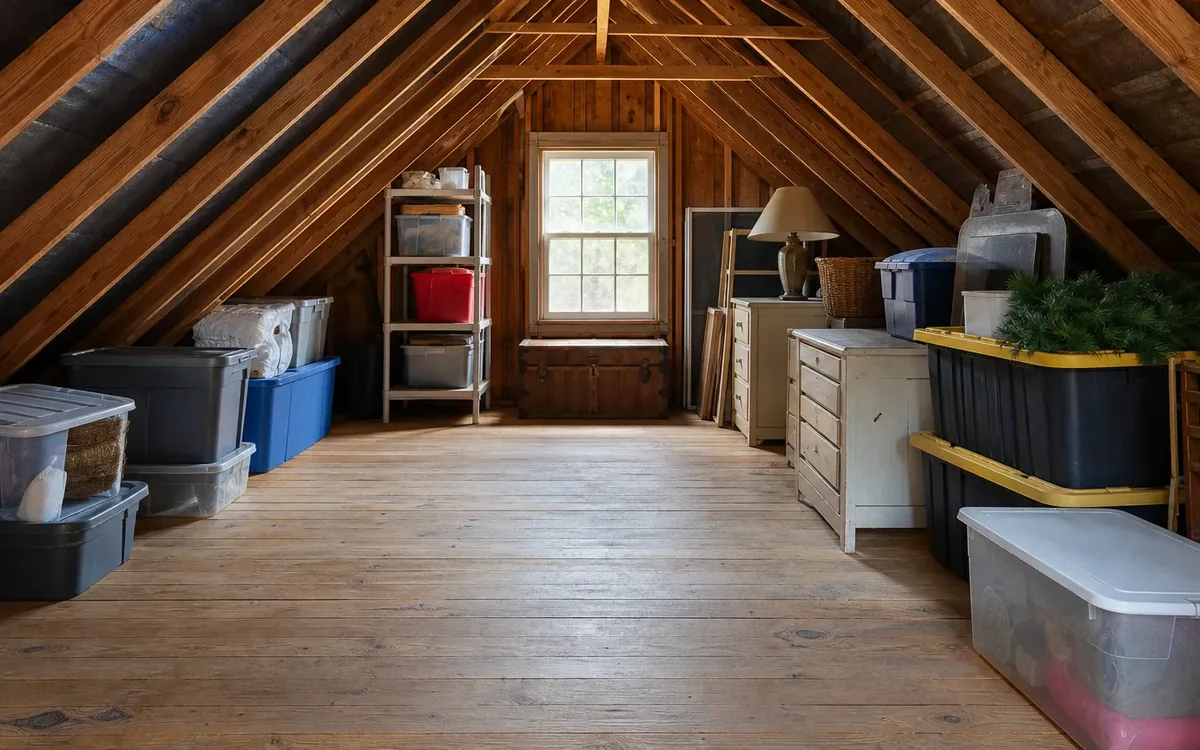
Hidden storage deserves a separate pass because it is where forgotten property is most likely to remain. Assign one person to inspect every accessible storage location and mark it complete on the master list.
Check these areas deliberately:
- Coat, linen, utility, and under-stair closets
- Attic access areas and permitted attic storage
- Basement, crawl-adjacent, or mechanical storage areas
- Garage cabinets, rafters, workbenches, and wall hooks
- Shed shelves, bins, lofts, and tool racks
- Built-in benches and furniture with hidden compartments
- Locked cabinets, safes, and document boxes
- Vehicles, trailers, and moving equipment still on-site
Use safe access practices. Do not enter an attic, crawl space, roof area, damaged structure, or any location that is unsafe or outside your authorization. A qualified inspector or contractor should evaluate structural concerns, pests, exposed wiring, moisture, or damaged access points.
When property is found, pause before disposal. Family papers, jewelry, collectibles, and tools may be valuable or significant even when they look ordinary. The household or authorized decision-maker can choose what to retain, donate, sell, store, or discard. A qualified appraiser should determine value when a formal or specialized valuation is needed.
Storage is also a separate household choice. Confirm the storage provider, access rules, insurance questions, inventory expectations, and fees directly with that provider. A move or cleanout team may discuss handling and destination plans, but storage availability and terms are not automatic parts of a walkthrough.
What belongs on the outdoor and outbuilding pass?
Walk the property’s boundary and inspect every area the household has used. Start at one exterior door and travel in a consistent direction so the review does not skip a side yard or detached structure.
Include:
- Porch, patio, deck, and balcony areas
- Garage, carport, shed, and detached storage
- Outdoor cabinets and grilling areas
- Garden beds, planters, and hose-storage locations
- Fence lines and gates
- Mailbox and parcel-storage areas
- Trash, recycling, and yard-waste locations
- Driveway edges and parking spaces
- Under stairs, decks, or accessible raised structures
Identify hoses, planters, lawn tools, fuel containers, propane cylinders, chemicals, and construction materials. Do not assume these can go into ordinary household trash or remain for the next occupant. Disposal requirements can vary by material and local program, so the household should confirm instructions with the relevant waste facility, municipality, county, retailer, or environmental authority.
Never mix unknown liquids or transport leaking containers without proper guidance. Contractors should address active construction debris or repair materials according to their agreement. If work is unfinished, the homeowner, landlord, property manager, or real-estate professional should determine what must happen before handoff.
Photograph exterior conditions that matter to the transition, including gates, emptied storage spaces, waste areas, and any agreed property left outdoors. Avoid photographing neighbors or unrelated private activity unnecessarily.
How should condition and meter photos be handled?
Photographs create an organized departure record, but they do not prove contractual compliance by themselves. Take clear, well-lit images and preserve the original files with their date and time information when available.
A useful photo sequence includes:
- One wide image of each empty room.
- Images inside cleared closets, cabinets, and major storage areas.
- Close images of preexisting or newly noticed visible damage.
- Exterior images of outdoor spaces and outbuildings.
- Meter readings when access is safe and the responsible utility or property contact requests them.
- A final image showing keys and access devices prepared for handoff, without exposing readable codes.
Do not open utility equipment, break seals, enter restricted areas, or touch unfamiliar electrical components to obtain a photograph. Ask the utility provider or responsible property contact how to record or submit a reading.
Name files consistently by room and subject. Save a copy somewhere other than the phone used during the move. If another party must receive the images, agree on the delivery method and avoid including sensitive documents, alarm details, or access codes in a general photo folder.
An inspector determines the significance of property conditions within the scope of an inspection. A contractor determines repair methods and proposals. A landlord, property manager, attorney, real-estate professional, closing professional, or court may address obligations and disputes according to their role. The household can document what is visible, but should not treat photographs as a substitute for those decisions.
Build a controlled key, remote, and access handoff
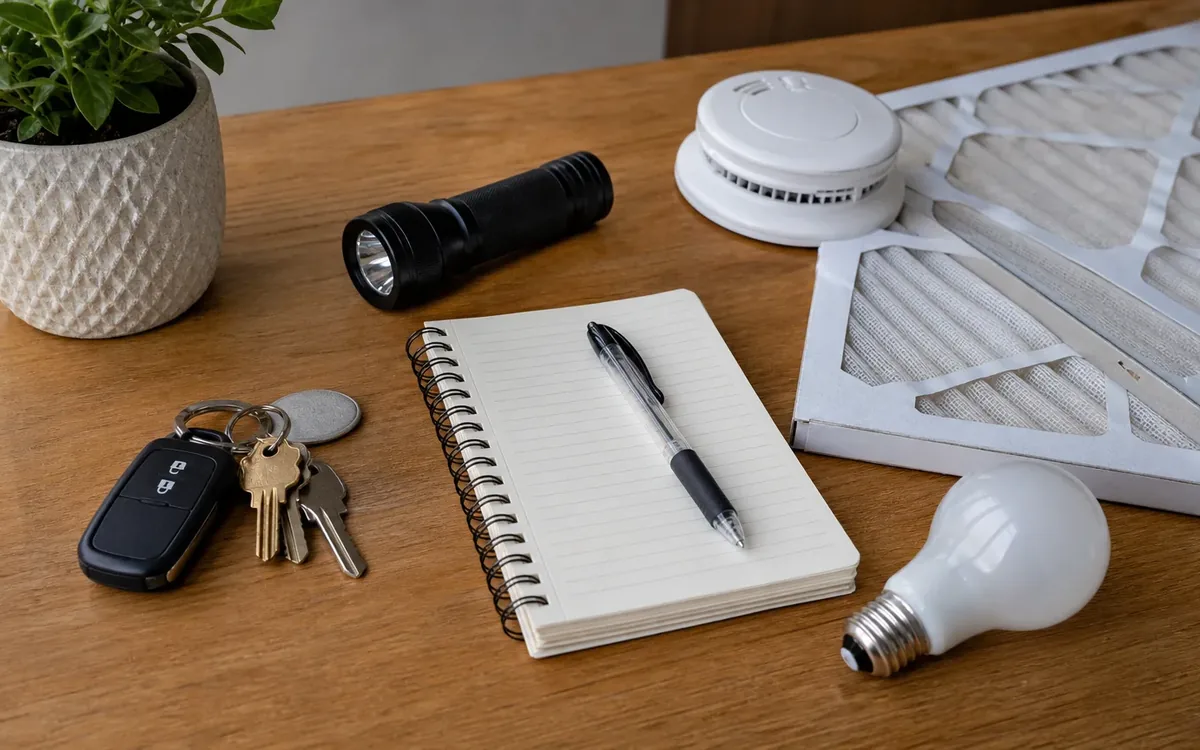
Collect access items before the last person leaves. Keep them in a labeled container or envelope rather than loose on a counter.
Account for:
- Exterior and interior door keys
- Mailbox and parcel-box keys
- Garage-door remotes
- Gate, parking, elevator, or amenity devices
- Alarm fobs and smart-lock instructions
- Fireplace and ceiling-fan remotes
- Appliance remotes or controls that stay
- Shed, cabinet, and utility keys
- Community or building access credentials
Do not send alarm codes, Wi-Fi passwords, or smart-home credentials through an insecure group message. Ask the receiving party how access information should be transferred. Remove personal accounts from smart devices when appropriate, while avoiding a reset that conflicts with written handoff instructions.
Count the items and obtain a receipt or written acknowledgment when the responsible party provides one. Follow the lease, closing instructions, or property manager’s procedure for where and when to deliver access items. A mover or cleanout team can gather labeled objects if that is within the agreed project scope, but it should not decide who is legally entitled to receive them.
Make the last pass different from the first
After the room-by-room review, conduct one uninterrupted exit pass. This is not another detailed inspection. It is a final check for problems created during departure.
Use this order:
- Confirm people, pets, medications, documents, and valuables are out.
- Check that labeled handoff items remain in their designated place.
- Look for fresh debris, moving supplies, or accidental damage.
- Verify windows, doors, and agreed utilities according to written instructions.
- Photograph the final entry area and secure the property as directed.
- Transfer access items through the approved handoff method.
Avoid turning off breakers, water, gas, HVAC equipment, or other systems unless the owner, property manager, utility provider, or qualified professional has specifically directed it. Seasonal property protection and utility transfer decisions depend on the property and agreement.
If damage is discovered, stop and document it. Notify the appropriate contact promptly. Do not conceal it or authorize a repair on behalf of another owner without permission. A qualified contractor can discuss repair options, while the responsible party decides what work to approve.
What can a practical cleanout or move team discuss?
A practical team may discuss the physical workflow needed to reach an empty, orderly handoff. Depending on the agreed scope, conversation may cover room sequencing, sorting zones, removal destinations, packing coordination, donation plans, sale preparation, and a final belongings check.
Clutter Cleaner of South Carolina lists move management, estate cleanouts, downsizing and organizing, auctions and estate sales, home sale preparation, and code compliance support among its statewide services. The physical business location is Mount Pleasant, and Charleston is the primary market. Specific project scope and availability should be confirmed directly.
The household or authorized representative decides:
- What personal property to keep, transfer, donate, sell, or discard
- Who may approve removal
- Whether off-site storage is appropriate
- Which service providers to hire
- What records and photographs to retain
Other professionals or authorities retain separate responsibilities:
- Attorneys and authorized representatives address legal rights and disputes.
- Appraisers provide valuations within their qualifications.
- Real-estate and closing professionals address transaction procedures.
- Inspectors evaluate property conditions within their inspection scope.
- Contractors propose and perform authorized repairs.
- Landlords and property managers administer rental requirements.
- Government or utility authorities determine applicable compliance and disposal rules.
Code compliance support can assist with organizing a response or physical cleanup plan, but the responsible authority determines whether a condition complies and whether a matter is closed.
Short FAQ
Should the home be completely empty?
That depends on the lease, sales agreement, estate instructions, or written arrangement. Personal property generally needs a clear decision, while fixtures and agreed inclusions may remain. Ask the responsible professional if the status of an item is unclear.
Should renters photograph the home after moving out?
Photos can provide a useful condition record. Renters should also follow the landlord’s inspection, key-return, and documentation process. Deposit rights and deductions are legal or lease matters for the responsible parties or qualified counsel.
Who decides whether damage must be repaired?
The property owner or authorized party approves work, subject to the relevant agreement and applicable requirements. Inspectors assess conditions, contractors propose repairs, and legal or real-estate professionals address contractual questions.
What if an item is found after keys are surrendered?
Contact the property manager, landlord, buyer’s representative, closing contact, or new owner through the established channel. Do not re-enter without explicit authorization, even if an old key or code still works.
Where should the final record be kept?
Store the checklist, photos, receipts, written instructions, and handoff acknowledgment together in a secure digital or paper file. Keep sensitive codes and identity documents separate from broadly shared move records.
A successful final walkthrough leaves fewer assumptions behind. The household should know what left, what remained, what was documented, and who received access. Questions involving ownership, condition, compliance, repairs, value, or contractual duties should be sent to the professional or authority responsible for that decision.



