
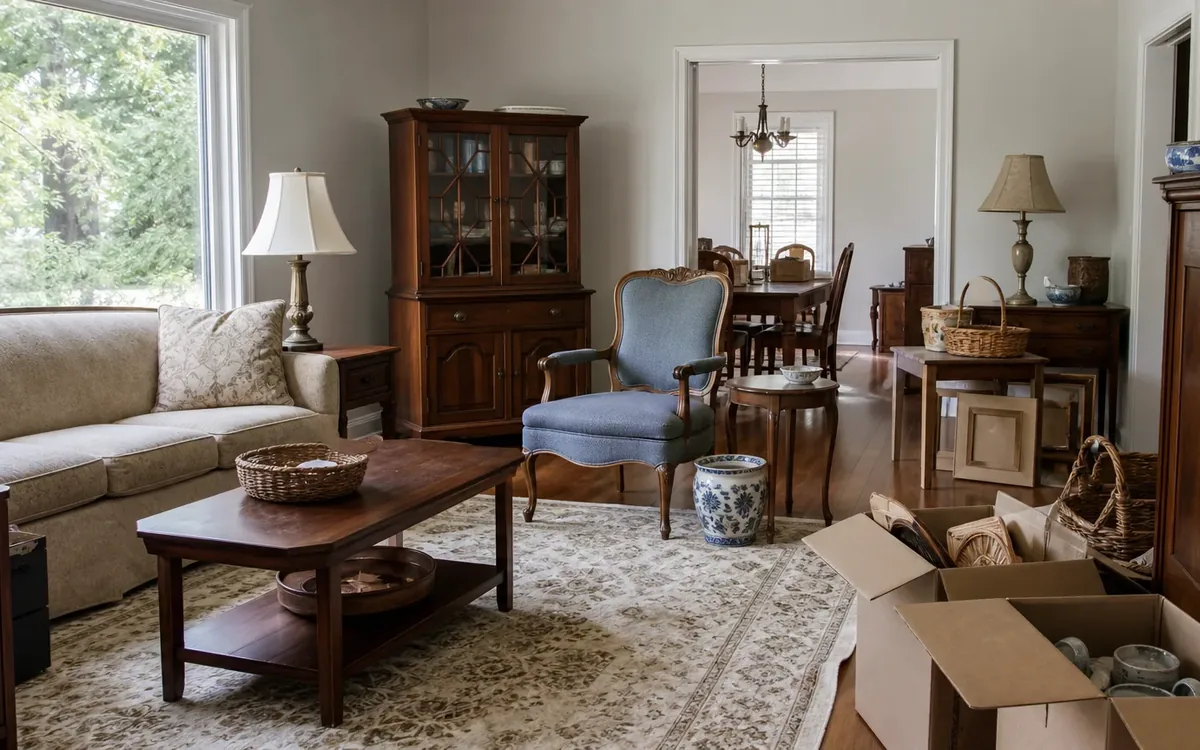
Choosing an estate sale date in South Carolina means balancing the household’s deadline with heat, afternoon storms, tropical weather, and local events that may affect access. Start with several acceptable dates, check event and weather information close to the sale, and create a written backup plan before advertising. The household can set priorities, while estate-sale professionals, appraisers, real-estate professionals, inspectors, attorneys, and local authorities handle decisions within their respective roles.
Quick answer: Select a preferred date and at least one alternate. Review seasonal weather risks, local event calendars, parking restrictions, property access, and the home’s readiness. Decide in advance what conditions would trigger delayed opening, restricted outdoor use, postponement, or cancellation. Confirm any contract, advertising, permit, insurance, or property-sale implications with the responsible professional.
Why does the estate sale date matter in South Carolina?
An estate sale depends on more than shopper availability. People need to enter, move through, and leave the property safely. Purchasers may also need to load furniture or other large items without blocking traffic or exposing belongings to rain.
South Carolina weather can complicate those activities. High heat may make garages, attics, porches, and unconditioned rooms uncomfortable. Afternoon storms can affect outdoor displays and loading. Tropical systems may create broader concerns involving travel, power, flooding, wind, and official emergency guidance.
Local calendars matter too. A major festival, sporting event, parade, road race, school activity, holiday gathering, or construction project may change traffic and parking near the property. Effects vary by neighborhood, so a busy regional weekend is not automatically a bad sale weekend. The question is whether the event interferes with this property’s access or competes for the likely audience.
Timing also affects preparation. Before selecting a date, separate sale inventory from family keepsakes, documents, donations, trash, and items requiring specialist handling. Clutter Cleaner of South Carolina provides information about auctions and estate sales support statewide. Households still decide what may be sold unless an executor, personal representative, court order, contract, or other legal arrangement assigns that authority elsewhere.

Build the date around the estate’s real constraints
Start with nonnegotiable obligations rather than choosing an attractive weekend and forcing everything else to fit. Relevant constraints may include a closing, lease turnover, family travel, court requirements, insurance conditions, contractor access, or an estate-sale provider’s availability.
Use three date categories:
- Preferred date: The best overall fit if preparation and conditions remain workable.
- Alternate date: A viable option that has been checked for staffing, access, and conflicts.
- Unavailable dates: Days blocked by legal obligations, family needs, property work, or serious local access problems.
Avoid scheduling the sale before authority and ownership questions are resolved. A household member should not assume that possession of keys creates authority to sell every item in the home. An attorney, personal representative, trustee, court, or other responsible party may need to clarify control of the estate and disputed property.
The same separation applies to value. The household can flag jewelry, art, collections, vehicles, firearms, coins, and unusual objects for review. A qualified appraiser or appropriate specialist determines appraisal conclusions. A practical cleanout or move team may discuss sorting, staging, access, removal sequencing, and what should be set aside, but it should not replace formal valuation or legal advice.
If the house is still crowded, read the best way to clean out an estate before committing to advertising. That guide helps frame the sorting decisions that should precede sale setup.
How should heat influence an estate sale date?
Heat is both a scheduling issue and a property-layout issue. An air-conditioned house may remain usable while its garage, shed, attic, or driveway does not. Evaluate each area separately rather than treating the entire property as one environment.
Before confirming a warm-weather date, consider:
- Whether the cooling system is operating and who may adjust it
- Which sale areas lack climate control
- Whether attendees would have to wait in direct sun
- Whether loading routes cross hot pavement or exposed driveways
- Which goods could be damaged by heat or direct sunlight
- Whether doors must remain open and how that affects indoor conditions
- Whether water, shade, and rest arrangements are appropriate for workers
Do not move vulnerable goods outdoors merely to create more selling space. Heat and sunlight may harm artwork, photographs, records, electronics, candles, cosmetics, medicines, fabrics, and other sensitive materials. A specialist can advise on objects requiring controlled conditions.
A practical team may discuss moving sale tables indoors, limiting use of unconditioned rooms, creating clear loading routes, and keeping exits unobstructed. The household or authorized representative decides whether those arrangements fit the estate’s goals. HVAC repair remains a contractor decision, and any concern about the building’s safety belongs with the appropriate inspector, contractor, real-estate professional, insurer, or authority.
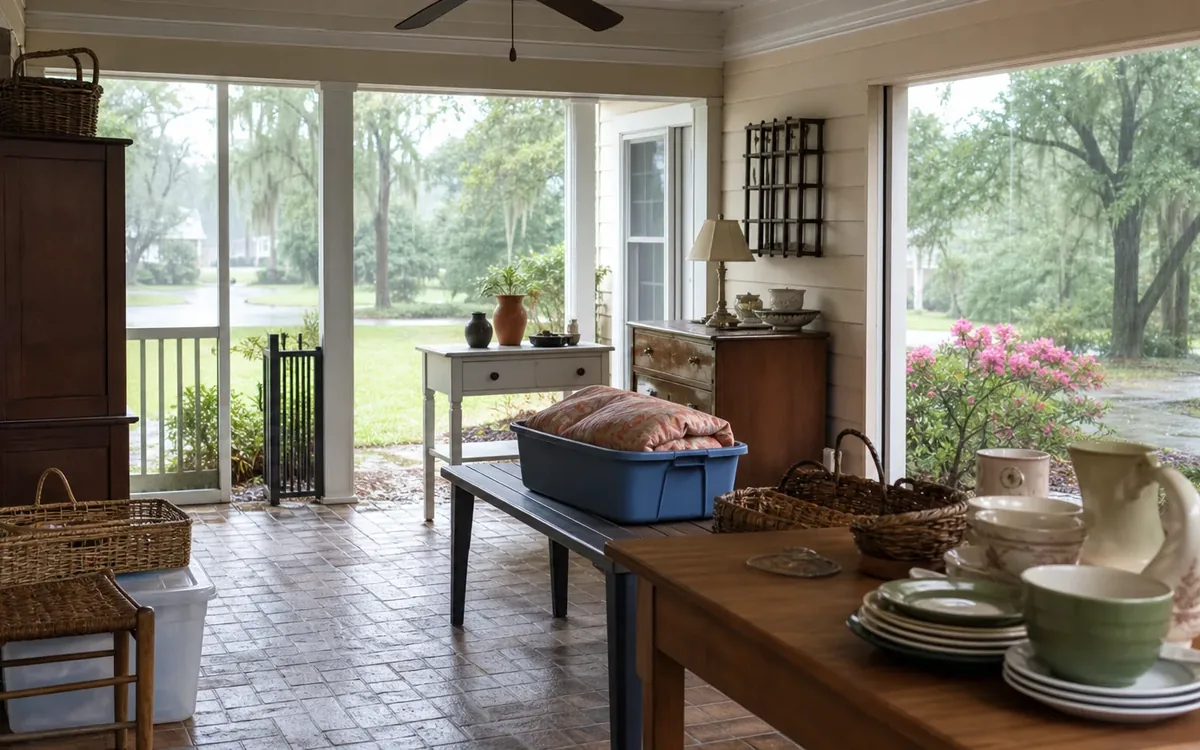
What is the best plan for afternoon storms and heavy rain?
Do not rely on a general promise to “move everything inside if it rains.” Decide where items, shoppers, and vehicles will go before the sale opens. The plan should account for sudden rain as well as lightning, wind, water intrusion, and reduced visibility.
Create a rain plan with four parts:
- Protect inventory. Keep rain-sensitive goods indoors and elevate items where water could enter. Do not use porches, tents, or garages as assumed safe zones without evaluating their actual exposure.
- Control entry. Identify a sheltered check-in point if one exists, and avoid creating a line where people must stand near traffic, slick steps, or runoff.
- Preserve loading access. Choose a route for furniture pickup that does not block emergency access, neighboring driveways, or public travel lanes.
- Set decision thresholds. Write down who can pause entry, close outdoor areas, delay opening, postpone the sale, or cancel it.
Check drainage near doors, stairs, driveways, and walkways. Loose rugs, extension cords, cardboard boxes, leaves, and plastic coverings can create hazards when wet. A cleanout or move team may identify clutter and access concerns, but a qualified inspector or contractor should evaluate structural, electrical, roof, drainage, or water-intrusion problems.
Avoid presenting tarps or temporary coverings as complete protection. Wind can displace them, trapped moisture can damage goods, and covered cords may remain hazardous. If electrical service or fixtures appear unsafe, stop using the affected area and consult the responsible professional.
How should hurricane season affect the backup plan?
Hurricane-season planning is not about predicting a storm when dates are first discussed. It is about preserving options if a tropical system threatens South Carolina, disrupts travel, or leads to official instructions.
The backup plan should identify:
- Who monitors forecasts and official notices
- Who has authority to postpone or cancel
- How staff, buyers, neighbors, and vendors will be notified
- Whether advertising can be changed or paused
- Where staged items will remain secure
- How keys, alarm codes, and access permissions will be handled
- What happens if utilities or communications are disrupted
- Which alternate date remains available
Official emergency instructions take priority over a sale schedule. Evacuation, road closure, reentry, shelter, and public-safety decisions belong to government and emergency-management authorities. Insurance coverage questions belong to the insurer or agent. Contract consequences should be discussed with the relevant estate-sale provider, real-estate professional, attorney, or other contracting party.
Do not leave staged merchandise outdoors or in unsecured temporary structures when severe weather is possible. If postponement occurs, review perishable supplies, signs, access codes, cash procedures, online listings, and pickup appointments rather than assuming everything can simply shift to another day.
A named decision-maker is essential. In an estate with several heirs, informal group approval can be slow and unclear. The authorized representative should understand the legal scope of that authority and obtain professional guidance if the governing documents or ownership rights are uncertain.
Check local calendars at the property level
A Charleston-area event may affect one neighborhood heavily and have little effect elsewhere. Likewise, an event in Columbia, Greenville, Myrtle Beach, Spartanburg, or a smaller South Carolina community should be evaluated according to the property’s specific roads, parking supply, and likely shoppers.
Review these sources before committing to a date:
- Municipal and county event calendars
- Venue schedules near the property
- School and college calendars
- Parade, race, and festival route notices
- Roadwork and planned closure information
- Neighborhood or property-association notices
- Holiday weekends and community gatherings
- Public parking restrictions and posted signage
Then ask practical questions. Will shoppers be able to find the street? Could event traffic block furniture pickup? Are public spaces being mistaken for customer parking? Will signs be permitted where the sale team expects to place them? Could noise, crowds, or restricted entry affect the property?
The household may choose to avoid a conflict, adjust opening plans, or accept the event’s effects. An estate-sale team may discuss likely operational concerns. Parking enforcement, signage rules, permits, occupancy requirements, and use of public property are determined by the relevant authority. Verify them rather than relying on neighborhood custom.
Prepare the house for heat and rain
Once a date is selected, focus preparation on the areas people will actually use. A polished room does not compensate for blocked exits, unstable stacks, dim stairs, or a slippery loading path.
Prioritize the following work:
- Clear a continuous route from entry to sale areas and exits
- Separate private rooms with clear boundaries
- Remove personal records, medications, keys, and valuables not for sale
- Stabilize displays without blocking vents, panels, or doorways
- Keep outdoor items off wet ground
- Check lighting in halls, stairs, garages, and pickup areas
- Plan where sold furniture will wait for authorized pickup
- Confirm who locks the property after each sale period
Storage is a separate household decision. The authorized party may choose on-site retention, off-site storage, family distribution, donation, sale, or disposal according to ownership rights and the estate plan. A storage provider controls its own terms and facility conditions.
Contractor work is separate as well. Repairs to cooling, roofing, drainage, stairs, electrical systems, or structural elements should be evaluated and completed by the appropriate provider. Appraisers address value. Real-estate professionals advise on listing and transaction strategy. Inspectors assess conditions within their scope. Authorities determine code, permit, traffic, and emergency requirements.
A practical cleanout or move team may discuss sorting zones, room access, staging order, removal paths, and post-sale clearing. Disposal choices should account for local rules and the nature of the materials. Hazardous, regulated, confidential, or specialty items may require an appropriate facility or provider.
Put the contingency plan in writing
A written plan prevents last-minute disagreements. It does not need to be elaborate, but everyone involved should know where to find the current version.
Include:
- Preferred and alternate dates
- Authorized decision-maker and contact details
- Weather and event information sources
- Conditions that trigger a change
- Indoor and outdoor areas that may be used
- Buyer-notification and advertising responsibilities
- Security, key, and alarm procedures
- Large-item pickup rules
- Postponement arrangements for staged goods
- Post-sale cleanout and property-access responsibilities
Review provider agreements for cancellation, postponement, advertising, deposits, unsold items, and pickup terms. The provider explains its contract, while an attorney should address legal interpretation when needed. If the sale relates to a pending real-estate transaction, ask the real-estate professional how a date change could affect showings, inspections, repairs, possession, or closing obligations.
Clutter Cleaner of South Carolina can be contacted at (843) 972-7020 to discuss practical estate cleanout, downsizing, move-management, home-preparation, and estate-sale support needs across South Carolina. Availability and scope should be confirmed for the specific project.
Short FAQ
Should an estate sale be scheduled around the weather forecast alone?
No. Forecasts are one input. Also consider property readiness, legal authority, staffing, parking, local events, pickup access, contracts, and backup dates. Continue monitoring conditions after the initial date choice.
Who decides whether weather requires postponement?
That depends on authority and contracts. The authorized household or estate representative and the estate-sale provider should identify the decision-maker in advance. Official emergency orders and access restrictions must be followed.
Can estate-sale items be displayed outside?
The authorized party and sale provider can decide whether outdoor display is appropriate, subject to property rules and local requirements. Consider rain, heat, wind, security, ground conditions, and item sensitivity before using outdoor areas.
Should repairs be completed before setting the date?
Address conditions that affect safe access or property use with the appropriate contractor or inspector. Cosmetic projects are a separate household and real-estate strategy decision. Do not conceal known concerns behind sale displays.
What if family members disagree about the date or inventory?
Pause decisions affecting disputed items. Confirm who has legal authority and seek guidance from the estate’s attorney or other responsible professional. A cleanout or estate-sale team should not decide ownership disputes.
What happens to unsold belongings after the sale?
The authorized party chooses among retention, family distribution, another sales channel, donation, storage, recycling, or lawful disposal. Confirm provider terms in advance and use specialist options for regulated or sensitive materials.



