
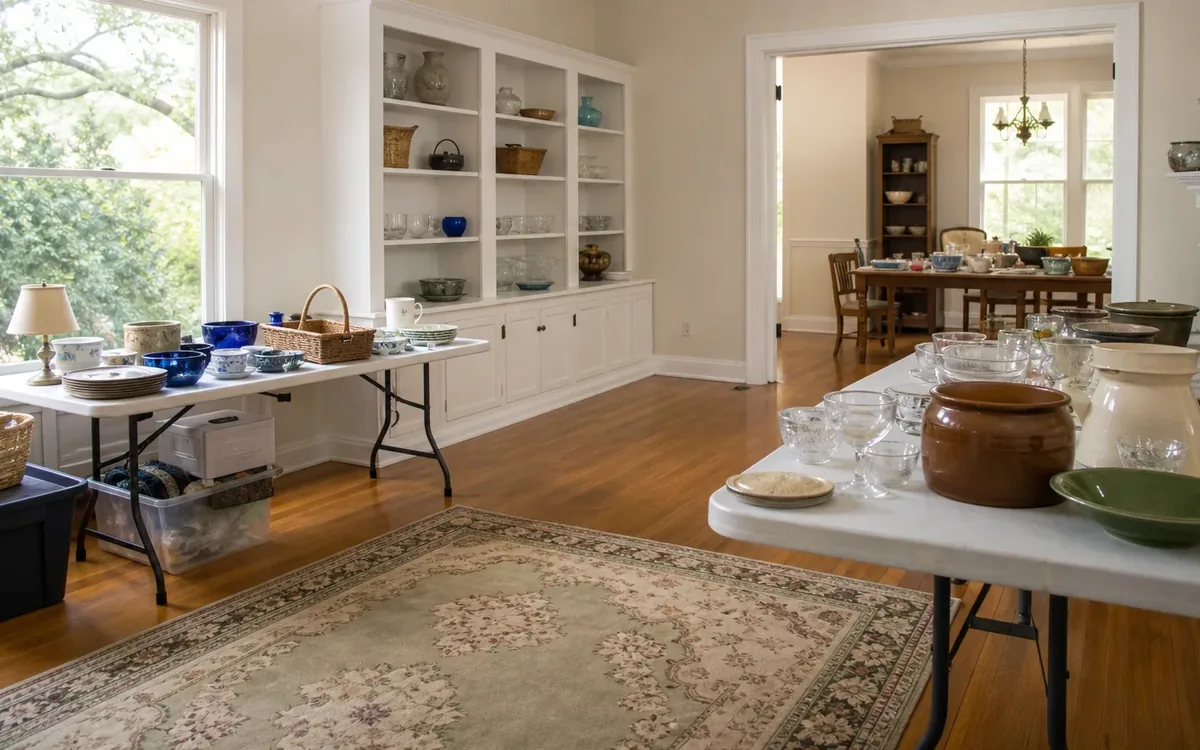
Safe estate sale demonstrations start with a written agreement about what may be shown, who may operate it, and when a demonstration must stop. South Carolina households should discuss those limits with the sale organizer before buyers arrive. Keep demonstrations simple, decline hazardous testing, and clearly label anything that has not been tested. Showing that an item powers on is not the same as proving it works correctly or is safe.
Quick answer: Allow only controlled, low-risk demonstrations that the organizer agrees to supervise. Do not let buyers plug in, fuel, heat, pressurize, or operate unfamiliar equipment on their own. Record exactly what was observed, identify untested functions, and refer safety, valuation, and legal questions to the appropriate professional.
What counts as a simple demonstration rather than unsafe testing?
A demonstration shows a limited, observable feature. Testing can involve evaluating performance, safety, reliability, or suitability for use. That distinction matters because a sale floor is not a repair bench or inspection setting.
Opening an empty drawer shows that it moves. It does not establish that the furniture is structurally sound. Turning on a radio may show that it receives a station, but it does not establish electrical safety or reliable operation over time.
Potentially simple demonstrations include:
- Opening accessible cabinet doors without moving the cabinet.
- Showing a manual adjustment on a stable, unloaded item.
- Displaying included accessories and readable model information.
- Showing a previously reviewed, low-risk device operating under the organizer’s approved procedure.
Unsafe testing includes activities that introduce hazards just to answer a buyer’s question. Examples include running combustion equipment indoors, adding fuel to stored machinery, operating exposed cutting tools, or connecting an unfamiliar appliance to water or gas.
The household and organizer can agree to decline demonstrations altogether. A buyer’s interest does not create an obligation to operate an item.
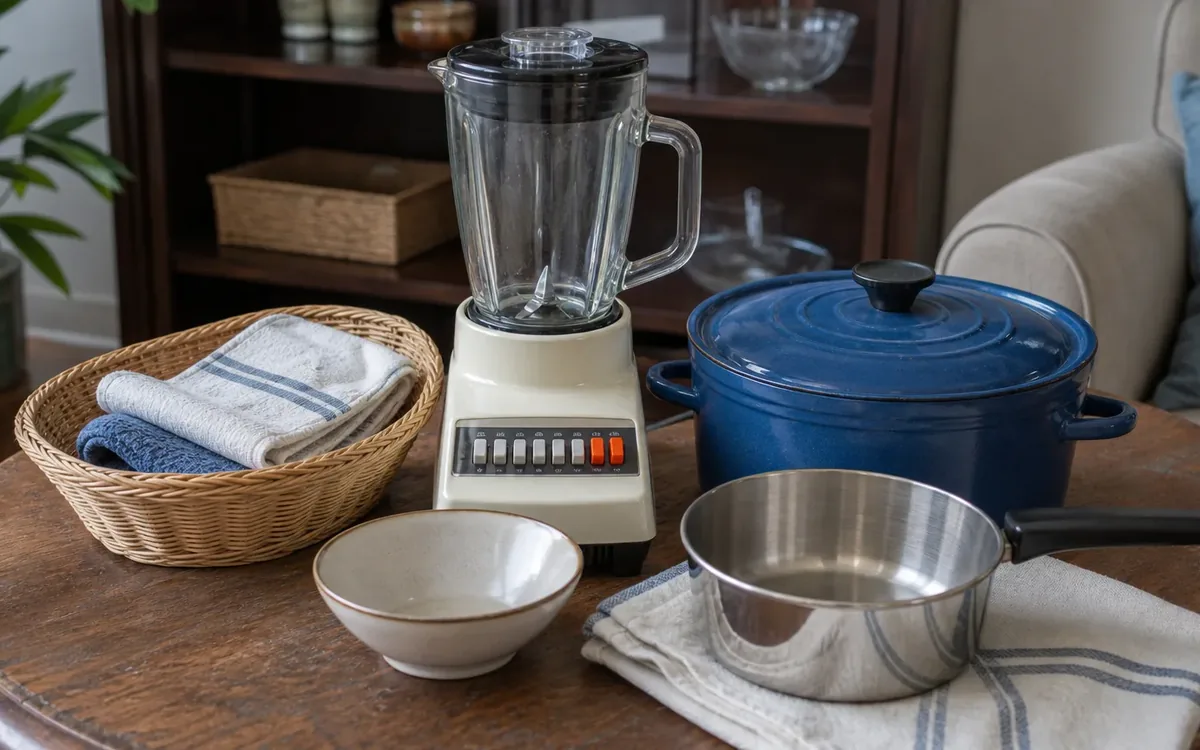
Agree on demonstration limits before the sale opens
For a Charleston-area household or an estate elsewhere in South Carolina, the useful conversation is about boundaries, not how many items can be switched on. The person responsible for the property should confirm who has authority to approve sale-floor decisions.
Clutter Cleaner of South Carolina’s auctions and estate sales service is a relevant starting point for discussing sale planning. Ask what demonstration procedures, if any, fit the proposed sale arrangement rather than assuming every item will be tested.
A practical cleanout, move, or sale team may discuss:
- Which items will be displayed without operation.
- Who may approve and supervise a permitted demonstration.
- Where buyers should stand during an approved demonstration.
- How observed functions and untested functions will be labeled.
- What happens when a buyer requests a demonstration outside the agreed limits.
- Who can stop an activity immediately.
The household can decide whether to offer an item, withhold it, or seek a separate evaluation, subject to ownership authority and the sale agreement. The organizer controls activities within the agreed sale procedure. Neither decision replaces professional inspection, legal advice, or an appraisal.
If sorting is still underway, the guide to how estate cleanouts work can help distinguish the broader cleanout process from sale-floor decisions. Keep demonstration planning focused on items actually selected for sale.
Sort items by demonstration risk, not buyer interest
A popular item is not necessarily a suitable demonstration candidate. Start with its condition, operating requirements, and the hazards that operation could introduce into an occupied house.
Use three planning groups:
- Display only: Items remain off, disconnected, unloaded, or otherwise inactive. Buyers may view permitted surfaces and accessories without operating them.
- Limited demonstration considered: The organizer may approve a specific, low-risk action after reviewing the item and the setting. Permission is not automatic.
- Separate evaluation needed: Operation depends on specialized knowledge, uncertain condition, or a hazardous setup. Keep it out of buyer-operated demonstrations.
Fuel-powered equipment, heating appliances, pressure equipment, damaged electrical goods, and machinery with cutting or crushing hazards generally warrant restrictive handling. Medical devices and protective equipment also raise questions that a brief sale demonstration cannot resolve.
For an unfamiliar item, missing instructions are a reason to pause, not improvise. Do not use a buyer’s confidence or claimed expertise as a substitute for the agreed procedure.
If a qualified evaluator is needed, the household chooses that separate provider and authorizes the work. Storage, repair, appraisal, and disposal are also separate decisions, not automatic parts of demonstrating or selling an item.
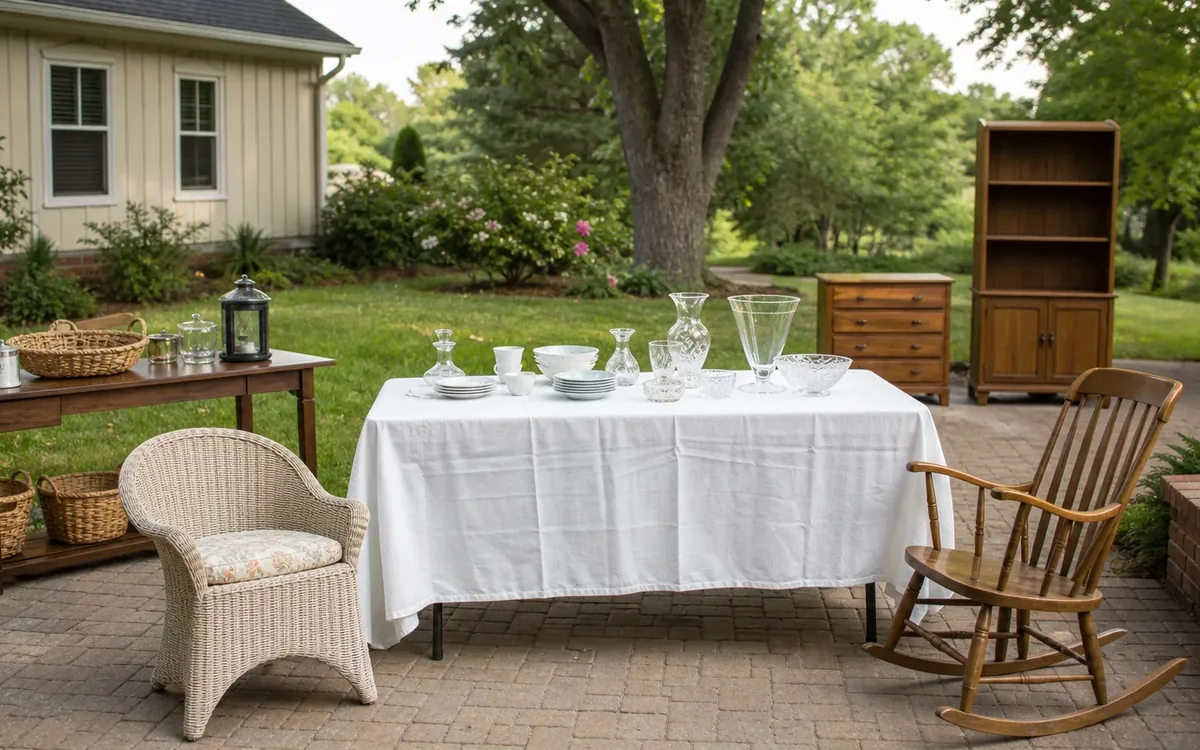
What should an item label actually say?
A useful label distinguishes direct observations from assumptions. Avoid a broad claim such as “works great” when the only observation was that an indicator light came on.
Labels should make the limits understandable without requiring buyers to ask for the backstory. Use plain descriptions such as:
- Not tested. No operating demonstration offered.
- Powered on; other functions not tested.
- Drawer opens and closes; structural condition not evaluated.
- Accessories shown are included; completeness not verified.
- Cord damage observed. Do not connect to power.
Where practical, note who made an observation and when it was made in the organizer’s item record. The public label can remain short, while the record preserves the exact scope of what happened.
Do not turn recollections into current-condition claims. “The family remembers using it” is different from a recent observed function. Similarly, a manufacturer’s label identifies the product but does not prove its present condition.
An “as-is” phrase does not explain which functions were checked. Ask the organizer how condition statements should fit the sale terms. Questions about warranties, disclosures, liability, or the legal effect of those terms belong with a qualified attorney, not the demonstration team.
Set up a controlled demonstration area
If limited demonstrations are permitted, choose a location where the activity will not obstruct exits, crowd fragile merchandise, or invite unsupervised experimentation. The setup should suit the specific item rather than become a general testing station.
Keep cords and accessories out of walking paths. Place eligible items on an appropriate stable surface. Do not stack equipment to make room or use furniture whose strength is uncertain as a workbench.
Agree on basic controls:
- Only the designated person operates the item.
- Buyers do not connect their own accessories or power supplies.
- Children and bystanders remain outside the operating area.
- Items stay within the demonstrated configuration.
- The operator stops if the item behaves unexpectedly.
Visible damage, unusual odor, smoke, sparking, leaking, instability, or unexpected movement means the demonstration should stop. Do not repeatedly restart an item to see whether the problem disappears. Keep people away and follow the property’s emergency procedure if a hazard develops.
Do not troubleshoot building wiring, gas connections, plumbing, or protective electrical devices during a sale. Property defects should be addressed by the responsible qualified professional. Home inspection and code questions stay with the inspector or relevant authority.
How should staff handle a buyer who wants more testing?
A consistent response protects the agreed boundary without turning the conversation into an argument. Explain the observation already made, name what remains unknown, and offer the buyer a chance to inspect within the permitted limits.
For example: “We observed the display turning on. The other functions have not been tested, and we are not offering additional operation here.” That is clearer than saying the item probably works.
When buyers request a load test, disassembly, water connection, heating cycle, or fuel-powered run, staff should refer back to the approved procedure. Buyer permission or an offer to accept the risk is not a reason to abandon it.
Useful responses include:
- “You may look at the visible condition, but the housing will remain closed.”
- “This is offered as untested, with no operating demonstration.”
- “That request needs a separate qualified evaluation.”
- “We cannot verify that it is suitable for your intended use.”
Do not allow a buyer to quietly conduct the declined test elsewhere in the house. Keep restricted accessories and controls under the organizer’s agreed handling arrangement.
If a condition question materially affects the sale, pause the transaction and involve the authorized organizer. The household can decide whether to withdraw the item or seek more information rather than make an unsupported assurance.
Keep observations separate from professional decisions
A demonstration record supports accurate communication. It is not an inspection certificate, appraisal, or guarantee. Record the specific action performed, the visible result, and any reason operation was stopped.
If an item is moved, damaged, reassembled, or fitted with a different accessory after a demonstration, its earlier observation may no longer describe the current setup. Update the label or return it to untested status rather than relying on the old note.
Responsibilities should remain distinct:
- Household or authorized estate representative: Ownership permissions, whether to offer an item, and authorization for separate evaluations.
- Sale organizer or practical team: Agreed handling, display arrangements, buyer communication, and permitted demonstration boundaries.
- Appraiser: Professional valuation within the appraiser’s assignment, not an assumed safety certification.
- Qualified technician or inspector: Evaluation within their expertise and stated scope.
- Attorney, real-estate professional, or authority: Applicable legal, property-sale, disclosure, and compliance questions within their respective roles.
A move or cleanout team may discuss separating restricted items from sale inventory and planning access around them. That does not mean it undertakes repairs, regulated disposal, or specialized testing.
For an unsold item, the household may choose storage, a separate repair assessment, another sale channel, or appropriate disposal. Confirm the chosen provider’s requirements before arranging transport or handing over potentially hazardous equipment.
Short FAQ
Can a buyer plug in an item just to check it?
Not without the organizer’s approval under the agreed procedure. A buyer’s quick check can introduce electrical hazards or create a misleading impression of verified condition. Display-only items should remain inactive.
Does powering on mean an appliance works?
No. Powering on establishes only the observed response. It does not verify every function, safe operation, performance under load, or reliability. Describe the observation narrowly and identify the untested functions.
Should every untested item be removed from the sale?
Not necessarily. The authorized household representative and organizer can decide whether clearly labeled, display-only sale is appropriate. Hazardous conditions, applicable requirements, and uncertainty about permitted sale may require separate professional advice or withdrawal.
Who should answer questions about sale terms or safety certification?
The organizer can explain the agreed sale terms and demonstration policy. Legal interpretation belongs with an attorney, while safety evaluation belongs with a suitably qualified professional. A sale-floor demonstration should never be presented as certification.
The strongest plan is modest: demonstrate only what can be responsibly observed, make unknowns visible, and give everyone permission to stop. Buyers can then decide based on an accurate description rather than an improvised test.



