
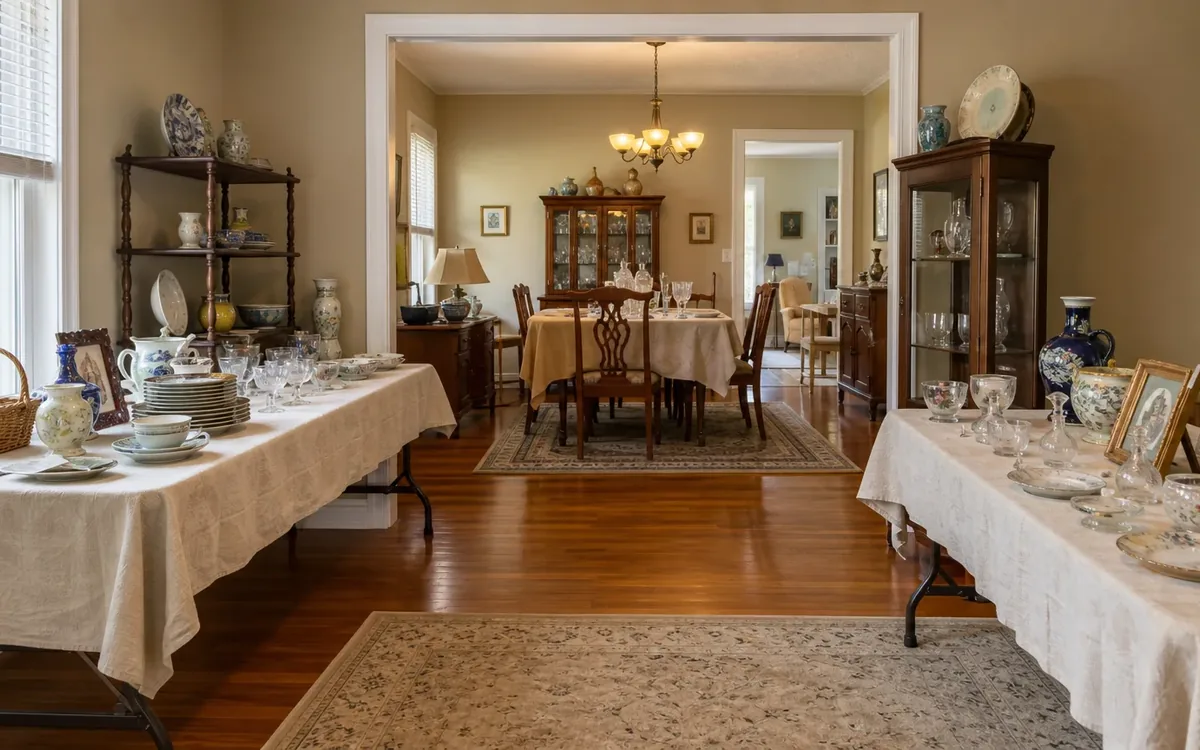
Estate sale displays should make items easy to see without narrowing walkways, hiding steps, blocking exits, or encouraging shoppers to reach over unstable furniture. Keep most merchandise between comfortable knee and shoulder height, use sturdy display surfaces, separate fragile or valuable pieces, limit access to tight rooms, and clearly close off private areas. In South Carolina homes with porches, stairs, narrow halls, or detached sale spaces, the safest layout often uses fewer items per room rather than trying to display everything at once.
Quick answer: Build the sale around a clear walking route. Keep doors, stairs, thresholds, and exits visible; place goods on stable tables or shelving; avoid floor-level browsing in traffic lanes; control how many shoppers enter confined areas; and remove merchandise from any space that cannot support safe browsing. The household can choose what to sell and which rooms to use. A sale or cleanout team may discuss staging and item flow, while occupancy, fire, building, accessibility, appraisal, legal, and compliance questions belong to the appropriate professional or public authority.
What makes an estate sale display easier to browse?
A useful display lets shoppers understand where to walk, where to pause, and what they may touch. It also gives staff or family members a clear view of the room. Crowded tabletops, open boxes on floors, and furniture placed at angles can make even a large room difficult to navigate.
Start by choosing one primary route through the home. Whenever the floor plan permits, shoppers should be able to enter a room, view the merchandise, and leave without turning against incoming traffic. A dead-end room may need controlled entry rather than unrestricted browsing.
Good display planning emphasizes:
- A visible path from entrance to checkout and exit
- Unobstructed doors, stair landings, and thresholds
- Stable tables that do not rock, fold unexpectedly, or tip
- Enough open space for shoppers to stop without blocking others
- Clear separation between merchandise and household belongings
- Price labels that can be read without lifting fragile objects
- Staff sightlines to small, valuable, or breakable items
Before arranging the sale, identify property that is not ready for sale. Family documents, medication, firearms, keys, financial records, photographs, and personal devices should be removed or secured according to household decisions and applicable professional guidance.
For help understanding the broader process, read how estate cleanouts work. Households considering sale support can also review the auctions and estate sales service overview. These are related processes, but deciding what to sell, donate, store, discard, or retain remains with the owner or authorized decision-maker.
How high should estate sale items be displayed?
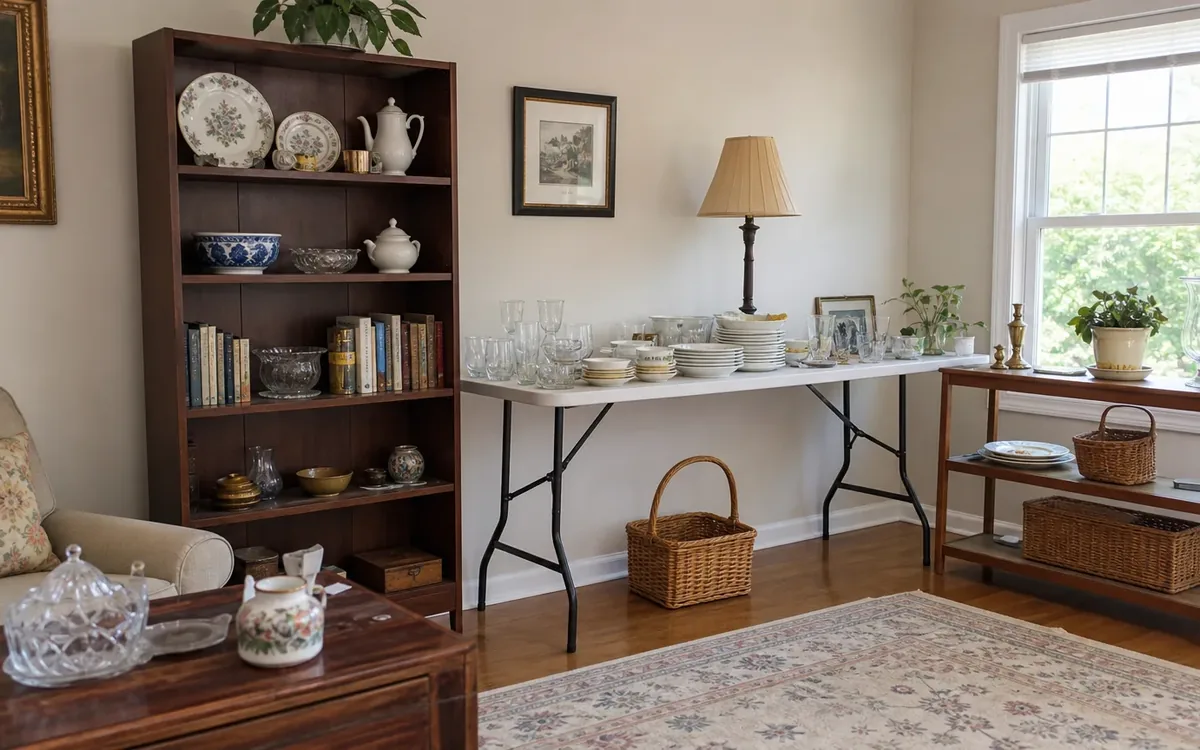
Place frequently handled merchandise where shoppers can inspect it without deep bending, overhead reaching, or kneeling in an aisle. A practical target is the space from around knee height to shoulder height, adjusted for the item and available furniture. This is a layout principle, not a formal accessibility measurement.
Use tabletop and shelf space deliberately:
- Put small household goods and readable labels at comfortable viewing height.
- Reserve lower shelves for larger, sturdy pieces that are easy to grasp.
- Avoid placing heavy objects above shoulder level.
- Do not balance merchandise on top of tall cabinets or unstable stacks.
- Keep breakables away from table edges and narrow turning points.
- Display sets together so shoppers do not search under tables for matching parts.
- Move empty bins, packing material, and overflow stock outside browsing paths.
Floor displays require extra care. Rugs, baskets, tools, framed art, and boxes can become trip hazards when they project into a route. Large objects may sit on the floor if their boundaries are obvious and there is sufficient space around them. Small loose pieces should not be scattered at ankle level.
Wall-mounted objects also need a plan. If artwork, mirrors, or shelving will be sold from a wall, the household or sale organizer should decide whether shoppers may remove them. Where removal requires tools, ladder use, or detachment from the structure, keep the item in place and arrange controlled pickup. Any repair or contractor work is a separate household decision.
Build clear aisles before filling tables
Set the route before placing merchandise. Begin with empty rooms or with only the largest furniture in place. Walk the intended path while carrying a box or tote to identify tight turns and pinch points that may not be obvious when walking empty-handed.
Use this four-part layout sequence:
- Mark fixed hazards. Note steps, low ceilings, raised thresholds, uneven flooring, door swings, floor vents, and changes in surface material.
- Choose the path. Decide where shoppers enter, move between rooms, pay, collect purchases, and leave.
- Place stable furniture. Position tables, shelving, and large sale items without intruding into the path or blocking doors.
- Add merchandise gradually. Stop adding items when browsing begins to reduce aisle clearance or visibility.
Avoid creating narrow channels between two loaded tables. Shoppers tend to stop side by side, carry bags, and turn suddenly. A route that feels open during setup can become difficult once people are browsing.
Do not run electrical cords through an aisle. Lamps and electronics can be grouped near outlets, but cords should not cross walking routes or doorways. Whether an outlet, fixture, railing, stair, or floor condition needs inspection or repair should be determined by a qualified tradesperson or inspector, not assumed during staging.
Which surfaces are suitable for displays?
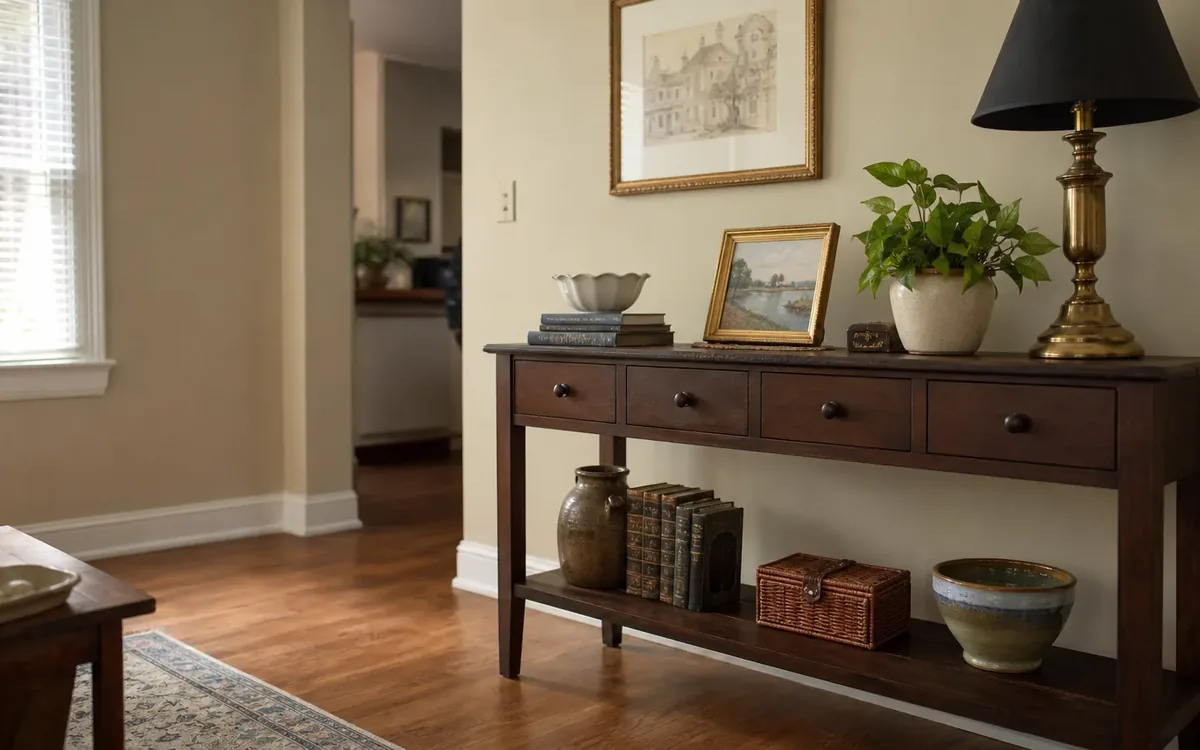
A display surface must support both the merchandise and normal shopper contact. People may lean lightly, pick up objects, or set an item down in a different place. Decorative accent tables, damaged furniture, ironing boards, cardboard boxes, stacked totes, and makeshift planks may not be dependable display platforms.
Before loading a table or shelf, check:
- Whether all legs sit firmly on the floor
- Whether folding legs are fully locked
- Whether shelves are correctly seated
- Whether the unit sways when touched
- Whether the top is level enough for round or fragile objects
- Whether drawers can open without tipping the furniture
- Whether the surface blocks a vent, door, or necessary walkway
Heavy goods belong low and close to structural support. Do not place stoneware, tools, dense book stacks, or small appliances on a weak upper shelf. Round objects should be contained so they cannot roll off.
Table coverings should lie flat and should not trail into an aisle. Long cloths can hide stored boxes, table legs, cords, or merchandise from view. If under-table stock is used, it should not force shoppers to crouch in a main traffic path.
Furniture being sold presents a separate issue. A chair or table may look like sale equipment even when it is merchandise. Use clear tags to show whether shoppers may sit, open drawers, test a mechanism, or request assistance. Items that are unstable or awaiting professional evaluation should not be used as displays.
How should porches, steps, and detached areas be handled?
South Carolina properties may include raised porches, exterior stairs, garages, sheds, workshops, or other detached spaces. Do not treat these areas as automatic extensions of the indoor sale. Evaluate each route independently before placing merchandise there.
Porches should retain a clear route to the entry and exit. Keep items away from stair tops, railings, narrow corners, and door swings. Merchandise should not obscure a step edge or encourage shoppers to stand on stairs while browsing.
Weather can also affect outdoor displays. Moisture can make hard surfaces slippery, wind can move signs or light objects, and strong sunlight can make level changes harder to see. The household or sale organizer can decide not to use an exterior area when conditions make the route unsuitable.
For detached spaces, consider:
- The walking surface between the home and sale area
- Gates, slopes, roots, gravel, hoses, and landscaping edges
- Lighting inside the structure
- Door width and threshold condition
- Tools, chemicals, fuel, or equipment requiring restricted access
- Whether shoppers can return to the main checkout without confusion
- Whether large purchases have a separate collection route
Do not invite shoppers into a shed, attic, crawl space, unfinished area, or workshop simply because items remain there. Merchandise can be brought to a safer display location. If moving it would require specialized lifting, disassembly, hazardous-material handling, or contractor work, that task should be assigned separately to an appropriate provider.
Control capacity in narrow rooms and hallways
Small rooms should not be filled to their physical maximum. A crowded room becomes harder to monitor and harder to leave. Instead, use selected displays and replenish them as needed, or allow controlled entry.
Useful controls include:
- A staff member or responsible adult at the doorway
- A simple one-in, one-out approach when a room is full
- One viewing side per table in a narrow room
- Fragile goods concentrated at a monitored station
- Large furniture marked for purchase without requiring shoppers to circle it
- Closed doors and signs for areas not included in the sale
Hallways should function as passageways, not bargain aisles. Avoid placing boxes, garment racks, leaning frames, or small furniture along both sides. If a hall contains built-in cabinets with sale items, control browsing so open doors and drawers do not block movement.
Bedrooms often create dead ends. Position displays around the perimeter only if the center remains open enough for entry, viewing, and return. Do not put a loaded table directly behind the door. In tight rooms, keep merchandise out of closets because shoppers bending or reaching inside can block the only path.
Capacity limits required by law, fire rules, a venue, or a public authority are not household estimates. Questions about applicable occupancy, exit, or safety requirements should go to the authority or qualified professional responsible for that determination.
Keep exits, checkout, and private areas distinct
An exit is not extra display space. Keep exit doors visible and operable, and do not place furniture where it interferes with the approach or door swing. Never cover exit hardware with signs, merchandise, or hanging garments.
Checkout should sit outside the primary traffic stream. Shoppers waiting to pay should not block stairs, exterior doors, narrow halls, or access to fragile displays. Provide a separate holding area for purchased items only if it can be supervised without reducing the exit path.
Private rooms should be physically clear and consistently marked. A handwritten sign may help, but a sign alone may not prevent entry. Remove sale merchandise from private areas, close doors, and use an appropriate barrier that does not itself obstruct an exit or create a trip hazard.
Keep these functions separate:
- Browsing: Open areas containing clearly priced sale merchandise
- Checkout: Payment and transaction record handling
- Holding: Supervised placement of paid or reserved goods
- Private storage: Personal property and records not included in the sale
- Pickup: Controlled removal of bulky purchases
The authorized seller decides payment terms, holds, pickup expectations, and who may enter restricted parts of the property. Questions involving estate authority, title to property, contracts, taxes, firearms, regulated materials, or disputed ownership should be referred to an attorney, tax professional, regulator, or other responsible authority as applicable.
Separate staging decisions from professional decisions
Display planning overlaps with estate administration, valuation, property condition, and disposal, but these responsibilities should not be blended together.
The household or authorized representative can decide:
- Which belongings are included in the sale
- Which rooms are available to shoppers
- Whether items are retained, donated, stored, or discarded
- Whether outdoor or detached areas will be used
- Who is permitted to make transaction decisions
A practical sale, move, organizing, or cleanout team may discuss:
- Sorting and grouping merchandise
- Furniture placement and shopper flow
- Clear routes for moving sold pieces
- Separating sale goods from remaining household contents
- Coordinating cleanout or home preparation after the sale
Other decisions remain with the appropriate professional. An appraiser determines value within the scope of an appraisal engagement. A real-estate professional advises on marketing or showing the property. An inspector or contractor evaluates building conditions and repairs. Attorneys and estate representatives address ownership and authority. Public agencies interpret and enforce applicable rules.
Storage is also a separate choice. The household selects a storage provider, location, terms, and insurance arrangements. Likewise, disposal destinations and acceptance rules depend on the material and receiving facility. A cleanout plan should not assume every object can be removed, donated, recycled, or discarded in the same way.
For broader sequencing after sorting, the guide on the best way to clean out an estate explains how to separate important records, retained property, sale goods, donations, and disposal decisions.
Do a final shopper-view review
Before opening the space, walk through it as a shopper would. Do not only inspect tables. Look at the complete route from parking approach or property entrance through checkout and exit.
Review these points:
- Can each step, threshold, and floor change be seen?
- Are doors and exit routes free of merchandise?
- Do tables remain stable after being loaded?
- Can fragile items be viewed without reaching across other goods?
- Are floor displays obvious and outside the walking line?
- Are private areas secured and free of sale signs or merchandise?
- Can bulky purchases remain in place until controlled pickup?
- Are checkout and waiting shoppers kept out of the main path?
- Have unsafe rooms or exterior spaces been removed from the plan?
Repeat the review as merchandise sells or moves. Empty tables can drift into walkways, shoppers can relocate objects, and sold furniture may expose cords or uneven surfaces. Closing a problem area is preferable to preserving every display.
Short FAQ
Should every estate item be displayed at once?
No. A smaller, orderly selection is often easier to browse than a room filled to capacity. Additional items can be brought out if there is a controlled replenishment plan. Property not yet reviewed for ownership, value, privacy, or safe handling should remain outside the sale area.
Can stairs be used for displaying small items?
Stairs should remain walking surfaces, not shelves. Items on treads, landings, railings, or at the top and bottom of steps can obstruct movement or hide changes in elevation. Use a stable display away from the stair route.
Who decides whether a room is legally suitable for shoppers?
The household may choose not to use a room. Formal determinations about occupancy, building conditions, fire requirements, accessibility compliance, or other legal standards belong to the relevant inspector, qualified professional, or public authority.
Where should valuable or fragile goods go?
Place them in a monitored area on a stable surface, away from edges and tight turns. For value opinions, authentication, or formal appraisal, consult a qualified appraiser or appropriate specialist.
What should happen after the sale?
The authorized decision-maker should account for sold and unsold property, then choose what to retain, store, donate, dispose of, or offer through another channel. Cleanout, moving, storage, repairs, appraisal, and real-estate preparation are separate choices that can be coordinated without assuming one provider handles every task.



