
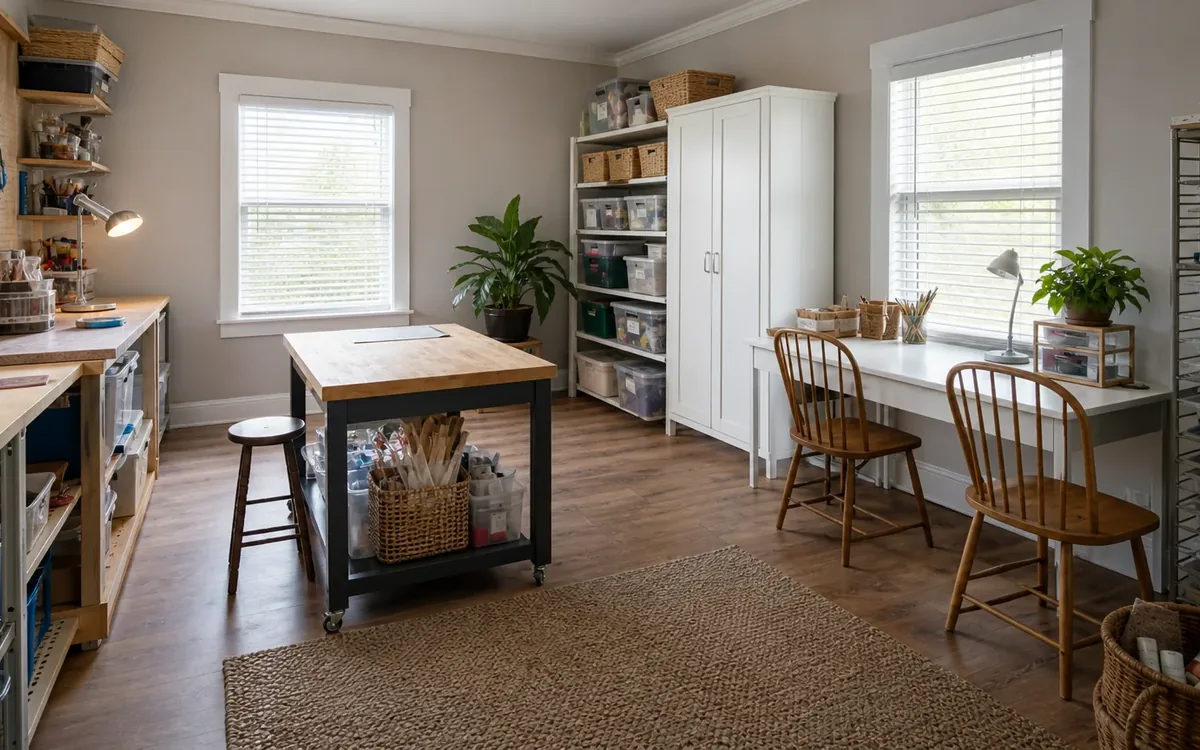
Downsize a shared hobby space by keeping a complete working setup for the activities your household still practices, then fitting supplies and unfinished projects around the space available in your next home. Start with the work surface and essential tools, not the number of boxes you hope to keep. A smaller collection is only useful if people can still reach, use, and put away what remains.
For South Carolina households moving into smaller homes, the challenge is often sharing one room, table, or cabinet among several interests. Sewing, model building, painting, puzzles, and other hobbies may need different setups. The goal is to preserve those activities without making every session begin with a major rearrangement.
Quick answer: Measure the future workspace, choose the hobbies that need regular access, and define the smallest complete setup for each. Keep active projects together, consolidate genuinely shared tools, and assign every retained item a home. Let household members decide ownership and priorities before discussing packing or removal with a practical cleanout or move team.
What does a minimum functional hobby setup include?
A minimum functional setup is the smallest collection that lets someone complete a real session comfortably and safely. It is not necessarily the smallest possible collection. Keeping paint but losing the brush-cleaning supplies, for example, creates a collection that cannot easily be used.
For each hobby, identify:
- A working surface: The table, bench, counter, or portable board where the activity happens.
- Essential equipment: Tools needed for current work, including necessary attachments.
- Active materials: Supplies for projects someone is actually pursuing.
- Supporting supplies: Lighting, protective coverings, cleaning materials, or other practical necessities.
- A stopping point: A way to protect unfinished work and clear the surface afterward.
Ask each user to describe a normal session from start to finish. What comes out first? What needs to stay within reach? What happens when dinner, work, or another hobby needs the same table?
This exercise exposes missing pieces and unnecessary duplicates. It also prevents downsizing from favoring whichever person’s materials happen to look tidier.
Households that need help coordinating sorting and placement can explore downsizing and organizing services. Household members still decide which activities, belongings, and personal priorities the plan should preserve.
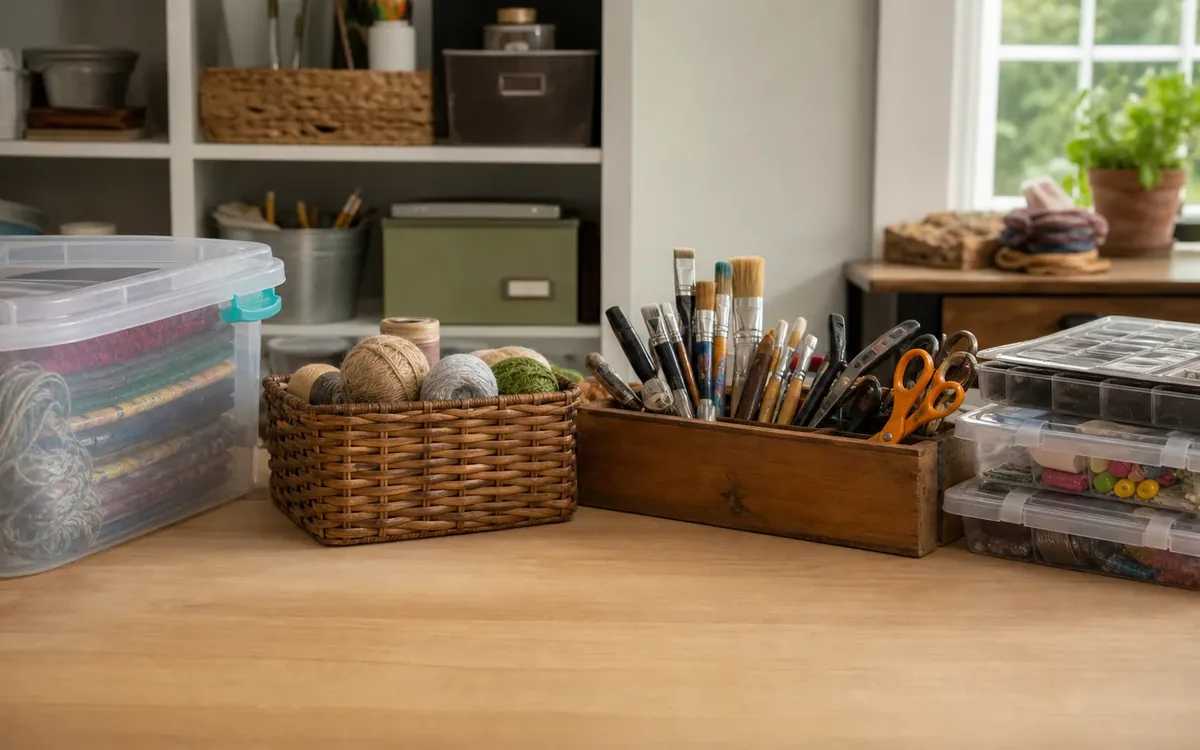
Start with the room you will have, not the room you are leaving
A large spare room can hide inefficient storage. A smaller home makes those inefficiencies visible. Before sorting supplies, gather the measurements and restrictions that will shape the new setup.
Record the usable dimensions of the intended surface and storage area. Include clearance for chairs, cabinet doors, drawers, and ordinary movement. A cabinet that fits against a wall may still be impractical if its doors block the only route through the room.
Consider these questions:
- Will the hobby area share space with meals, office work, or guests?
- Can unfinished work remain out without blocking another household activity?
- Are electrical outlets and suitable lighting available where needed?
- Does the activity require ventilation or other conditions the space cannot provide?
- Can heavy equipment be reached without awkward lifting?
- Are supplies accessible to children, pets, or visitors who should not handle them?
If access to the next home is limited, create a provisional layout using confirmed measurements rather than guesses. Avoid buying storage until its footprint and access needs are clear.
Lease terms, community rules, building conditions, and safety requirements may affect equipment or workspace choices. Ask the relevant property representative, qualified contractor, inspector, or authority when those questions arise. An organizing plan does not establish that a proposed use is permitted or safe.
How do you choose which projects deserve space?
An unfinished project is not automatically clutter. It may be meaningful work that needs a better place to pause. The problem begins when every abandoned idea receives the same priority as a project someone regularly uses.
Have each person sort projects into practical categories:
- Active: Work they currently intend to continue and can explain the next step for.
- Ready to restart: Work they still want, with the required materials and a realistic place to use them.
- Reference or memory: Work kept for its design, history, or personal meaning rather than completion.
- Release candidate: Work the owner is willing to let go after reviewing it.
Then compare the active and restart groups with the actual storage capacity. If they do not fit, the owners need to choose priorities. A helper should not make that decision based on appearance, age, or assumed value.
Keep each retained project with its instructions, specialty parts, and necessary materials. Label its next action, such as “attach backing” or “test circuit.” That makes restarting easier than opening a bin full of unidentified pieces.
For memory projects, consider whether a photograph, pattern, or finished sample would meet the owner’s goal. This is an option, not a requirement to discard an irreplaceable object.
If the hobby collection belongs to an estate rather than the current users, ownership and authority need to be clarified first. The guide What Is the Best Way to Clean Out an Estate? provides a broader starting point for that situation.
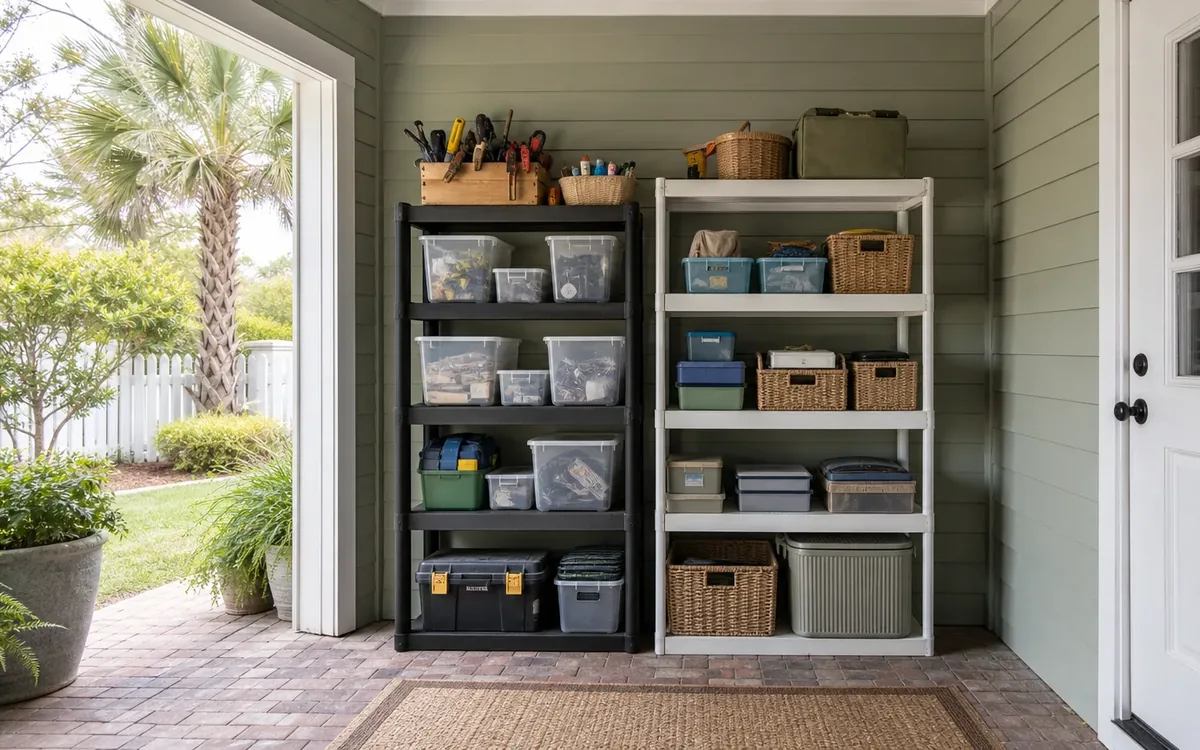
Separate shared tools from personal collections
Shared tools can reduce storage, but only when everyone agrees on access and use. Two similar scissors may serve different materials. A general household cutter may not replace a dedicated sewing tool. Consolidation should reflect function, not just visual similarity.
Lay out potential duplicates and ask their users what each one does. Check condition, compatibility, attachments, and whether sharing would interrupt an activity. Keep distinct tools when there is a clear reason; release redundant ones only with the owner’s agreement.
A useful shared-tool arrangement includes:
- A clearly identified home for communal items.
- Labels that distinguish specialized tools from general-use tools.
- An agreement about returning tools after a session.
- A separate place for personal or delicate equipment.
- A way to flag missing parts or tools needing attention.
Avoid combining small accessories into one miscellaneous container. Model-making blades, sewing-machine feet, and electronic components can become difficult to identify once separated from their equipment.
Before anything leaves, check cases, drawers, and packaging for attachments or documentation. A tool kept without its essential accessory may take up space while offering little practical use.
Design the work surface around setup and reset
In a shared hobby space, the work surface is often the limiting resource. Keeping more supplies does not help if there is nowhere to use them.
Choose a default state for the surface. In a dining area, that may mean completely clear. In a dedicated corner, it might mean one machine remains in place while smaller supplies return to storage.
Build the layout around that default:
- Store frequently used items near the point of use.
- Keep active project materials in trays or containers that can move together.
- Give drying, curing, or fragile work a protected location when the activity requires it.
- Keep ordinary household pathways clear.
- Place occasional supplies farther from the working surface.
Test the arrangement with a real task before packing everything into its final place. Bring out the required tools, work through a representative step, and return the space to its default state. Notice what lacks a landing place.
If resetting requires stacking unrelated projects on top of one another, the setup still holds too much or needs a different arrangement. The answer may be fewer active projects, not another cabinet.
Furniture alterations, mounted storage, electrical changes, and ventilation work are separate contractor or household choices. A practical organizing team may discuss layout concerns, but qualified professionals should address work that requires technical assessment or authorization.
What should happen to supplies that no longer fit?
Once the working setup is defined, review the remaining supplies by condition, ownership, and likely use. Avoid treating everything outside the new setup as one disposal category.
Unopened materials may be useful to someone else, while deteriorated or unidentified products need a different decision. Specialty tools or collections may warrant valuation before the household selects a sale route.
Possible paths include:
- Keeping a limited reserve of materials used consistently.
- Offering suitable items to a recipient who actually wants them.
- Exploring donation after confirming an organization’s acceptance requirements.
- Discussing sale options for appropriate tools or collections.
- Consulting an appraiser when value or identification requires expertise.
- Checking local handling requirements for paints, solvents, batteries, electronics, or other regulated materials.
Donation, sale, appraisal, and disposal are separate decisions and may involve separate providers. Do not assume a move or organizing arrangement includes them. Confirm what is accepted, who handles transportation, and who authorizes release.
Off-site storage is also a separate household or provider choice. It can preserve selected items, but it does not make the new hobby area more functional if essential tools are stored elsewhere. Keep the working setup together and assess storage against the actual reason for retaining each item.
What can a cleanout or move team help you discuss?
A practical cleanout or move team may discuss sorting zones, packing groups, labels, furniture placement, and the order in which belongings should be accessible. The useful conversation starts with the household’s decisions, not a request to “make everything fit.”
Prepare a brief that identifies the retained activities, shared tools, active projects, and measured destination spaces. Mark anything that must not be removed without further approval.
Clarify responsibilities before work begins:
- Who decides whether an item stays or leaves?
- Which person can approve decisions about shared belongings?
- Which tasks are included in the agreed scope?
- Which items need special handling instructions or another provider?
- Who will confirm donation, sale, storage, or disposal arrangements?
Clutter Cleaner of South Carolina lists downsizing and organizing, move management, and estate cleanouts among its services, with a statewide South Carolina service territory. Its physical business location is Mount Pleasant; Charleston is its primary market. Discuss the specific project rather than assuming every related task is included.
Legal ownership and estate authority stay with the responsible parties and their legal advisers. Appraisals belong with appropriate valuation professionals. Real-estate, inspection, contractor, and compliance determinations likewise stay with the responsible professionals or authorities.
FAQ: Keeping a smaller shared hobby space usable
Should every person receive the same amount of storage?
Not necessarily. Agree on a fair allocation based on equipment size, current use, and the room’s other functions. Equal shelf space may not produce equal access. Revisit the arrangement if one activity consistently displaces another.
Should we buy matching containers before sorting?
Sort and measure first. Existing containers may work, and some activities need flat, upright, or protected storage rather than uniform bins. Choose containers for the materials and available space, not appearance alone.
What if someone is not ready to release a collection?
Keep ownership clear and discuss a defined holding area that fits the household’s limits. Separate the retention decision from the question of daily access. Disagreement is not permission for another person to discard belongings.
How do we know the downsizing plan worked?
Each person can start a retained activity, find the necessary tools, protect unfinished work, and restore the shared surface without relocating unrelated belongings. That practical test matters more than how neat the shelves look.



