
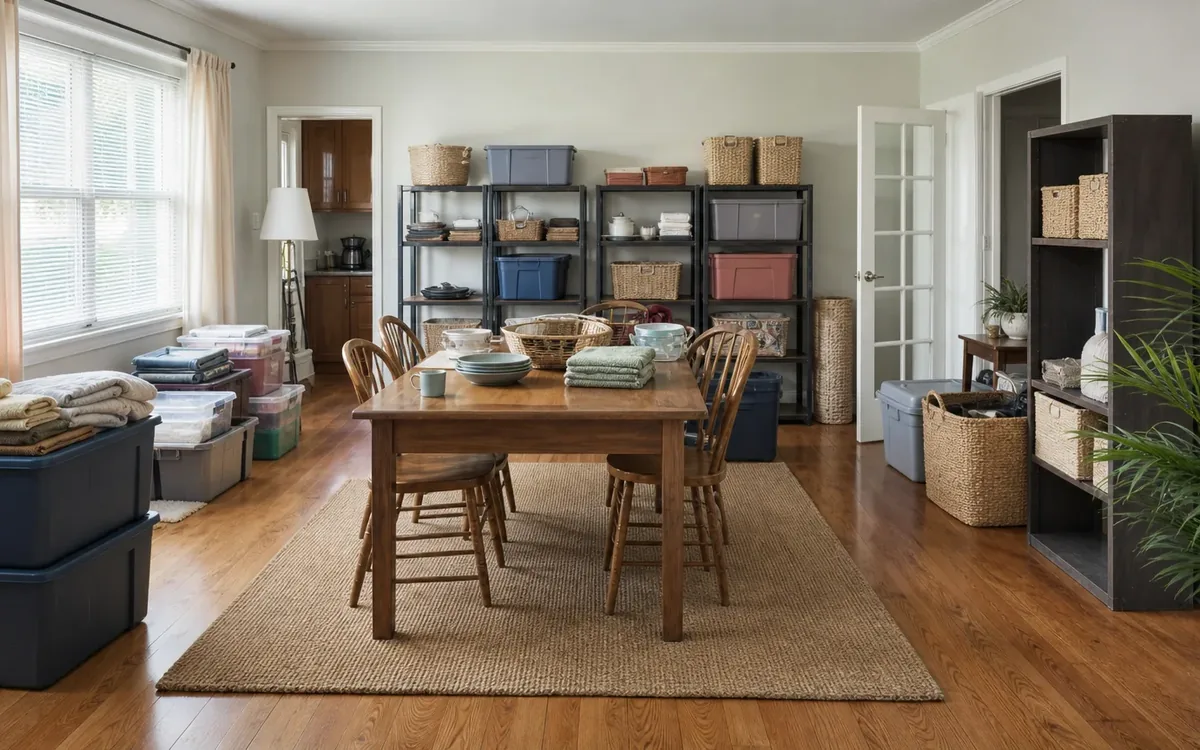
Calculate storage capacity before downsizing by measuring the usable interior of each cabinet, shelf, drawer, and closet in the future home, then comparing those spaces with the belongings you actually need to store. Account for shelf thickness, door openings, practical reach, and room to retrieve items. The goal is not maximum packing density. It is a home where everyday belongings fit and remain accessible.
For South Carolina households moving between homes, this comparison is more useful than relying on total square footage. A smaller home may have better storage, while a larger one may have awkward cabinets that hold less than expected.
Quick answer: Create a storage budget for each category of belongings. Measure clear interior width, depth, and height; identify which spaces you can comfortably reach; test representative items; and reserve room for access. Compare your current inventory with the future home’s usable capacity before deciding what to keep, sell, donate, or leave out of the move.
Start with storage zones, not total home size
A room’s floor area tells you little about how many dishes, coats, towels, or hobby supplies it can hold. Start with the places where those belongings will actually live.
Make a simple inventory of storage zones in both homes:
- Kitchen cabinets, drawers, pantry shelves, and appliance storage.
- Bedroom closets, dressers, and bedside storage.
- Bathroom cabinets and linen storage.
- Laundry, utility, and cleaning-supply spaces.
- Bookshelves, office cabinets, and hobby storage.
- Garage or outdoor storage, where available and suitable.
Label each zone by location and intended use. “Hall closet, towels” is more useful than “closet.” It gives belongings a destination and prevents several categories from claiming the same space.
If you are retaining furniture, include its storage capacity, but only after confirming that the furniture itself fits the future room. A large dresser offers no practical storage benefit if it blocks a doorway or leaves inadequate movement space.
For help connecting these measurements to sorting decisions, review Clutter Cleaner of South Carolina’s downsizing and organizing service. Keep the measurement record available when discussing your priorities and the scope of assistance.
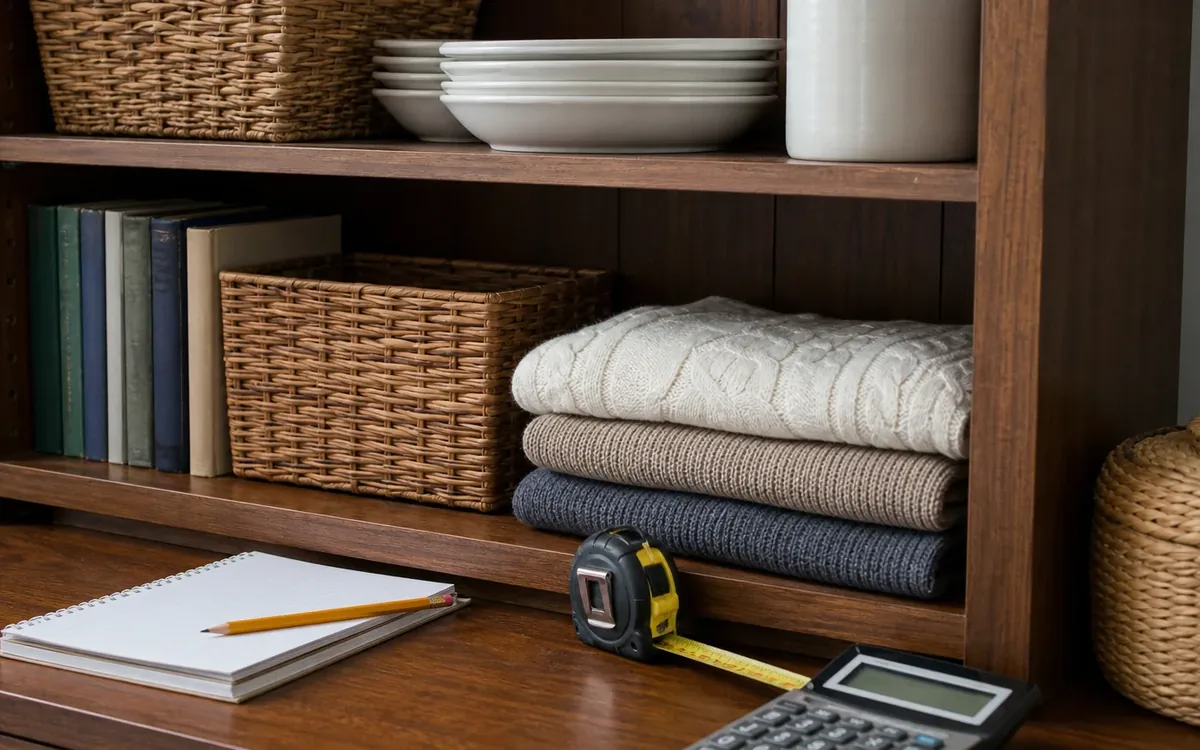
How do you measure usable cabinet and shelf space?
Measure inside the storage space, not across the outside of the cabinet. Exterior measurements include material that cannot hold belongings.
For each compartment, record:
- Clear width: The narrowest usable distance from side to side.
- Clear depth: The distance available without interfering with doors, hinges, or closing mechanisms.
- Clear height: The space above the shelf or drawer base, allowing for anything projecting into it.
- Opening size: The doorway or drawer opening through which an item must pass.
- Access constraints: Fixed dividers, plumbing, corner obstructions, or difficult reach.
Record each shelf separately. Multiplying a cabinet’s overall height by its width and depth can overstate capacity because shelves, dividers, and inaccessible corners occupy part of that volume.
For a rectangular compartment, use this basic calculation:
Interior width × usable depth × clear height = gross interior volume.
If your measurements are in inches, divide the result by 1,728 to express cubic feet. Keep the original dimensions, too. A volume total cannot tell you whether a tall pitcher or wide serving platter fits through the opening.
Do not treat awkward corners as fully usable just because they contribute to the calculation. Record them as restricted space until a real item or container has been tested there.
Convert measurements into category space budgets
Cubic volume helps compare spaces, but most belongings need a more specific measure. Books use shelf length. Hanging clothes use rail length. Plates need a footprint and stack height. Storage bins need a matching opening and enough room to lift them out.
Choose a useful unit for each category:
- Books: Linear shelf inches, plus the height and depth needed for larger books.
- Clothing: Usable hanging length, drawer footprints, and folded-stack height.
- Kitchenware: Shelf footprints, stack heights, and appliance dimensions.
- Linens: Folded bundle dimensions and the number of accessible stacks.
- Paper files: File-box or drawer dimensions, with room to remove folders.
- Hobby supplies: Container footprints and access to frequently used tools.
Build a worksheet with columns for category, current amount, future usable capacity, access restrictions, and proposed decision. A notes column can flag items that need another household member’s approval.
For example, a hypothetical shelf measuring 30 inches wide, 12 inches deep, and 10 inches high has 3,600 cubic inches of gross space. That does not mean every combination of items totaling that volume will fit. A 13-inch-deep container will not fit properly, and tightly packed stacks may be difficult to remove.
If downsizing also involves inherited belongings, the guide What Is the Best Way to Clean Out an Estate? provides a separate framework for estate sorting. Use it alongside your capacity worksheet, not as a substitute for confirming ownership or decision-making authority.
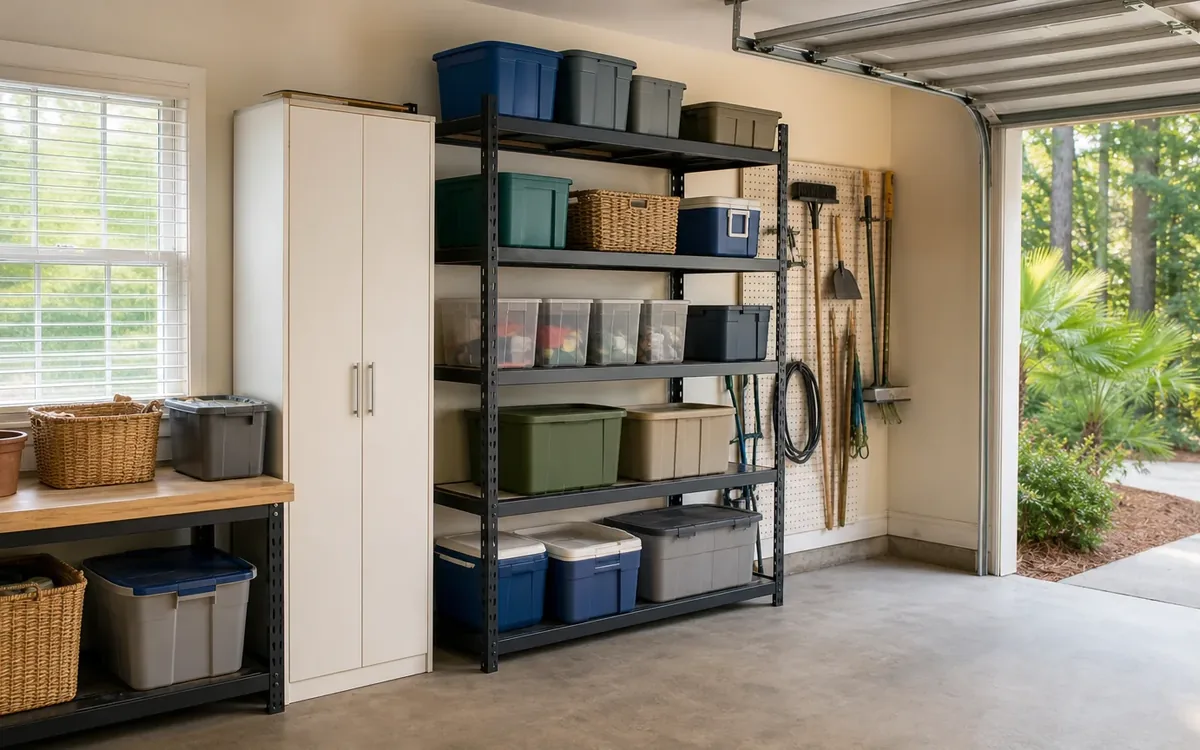
How much storage can you comfortably reach?
Reach limits turn theoretical capacity into realistic capacity. A shelf that exists but cannot be used comfortably should not count toward your everyday storage budget.
Identify spaces you can access from a stable standing or seated position without awkward stretching, deep bending, or heavy lifting. Needs can differ among household members, so evaluate the storage for the person who will actually use it.
Divide capacity into practical access bands:
- Everyday access: Comfortable spaces for frequently used belongings.
- Occasional access: Spaces appropriate for lighter, less frequently used items.
- Restricted access: Areas requiring assistance, equipment, or movement that the user cannot comfortably manage.
Avoid assigning heavy cookware, bulk supplies, or regularly used items to restricted areas simply to make the totals work. That transfers the space problem into an access problem.
Do not assume adding a step stool solves the issue. The household can decide that an upper shelf is unsuitable for routine use. Questions about mobility needs, fall prevention, or specialized adaptations belong with an appropriate health or accessibility professional.
Measure the depth you can actually use, too. In a deep cabinet, the back portion may be reasonable for occasional storage but unsuitable for daily items unless a workable access solution is confirmed.
Test the fit before committing belongings to the move
A physical fit test catches problems that arithmetic misses. Use a representative item, a cardboard outline, or an empty container with the same exterior dimensions.
For shelves and drawers, mark the usable footprint on a table or the floor. Arrange sample items within that outline and check whether they can be retrieved without dismantling the whole arrangement.
Test these conditions:
- The largest item passes through the opening.
- The door or drawer closes fully.
- Stacks stay stable and manageable.
- Frequently used items can be removed independently.
- Handles, lids, and protruding parts have clearance.
- Containers can be lifted out rather than dragged against obstructions.
For hanging clothes, measure a representative group as it hangs naturally. Compressing hangers tightly may create an impressive capacity figure but make clothes harder to find and remove.
If you cannot access the future home, request interior storage measurements and photographs where possible. Treat unverified capacity as provisional. A floor plan may show a closet without revealing its shelving, rail arrangement, or door clearance.
Reserve space for use, not just possession
A completely filled cabinet can still function poorly. Belongings need room to move, and storage needs to accommodate ordinary household changes.
Instead of applying an unsupported universal percentage, identify specific working space. Leave enough clearance to grasp a container, lift a lid, separate hangers, or remove a folded towel without pulling out the entire stack.
Also budget for belongings temporarily outside their usual place:
- Clean laundry waiting to be put away.
- Groceries awaiting pantry placement.
- Documents being reviewed.
- Guest linens or seasonal items in rotation.
- Supplies already owned but not currently visible in cabinets.
Count all storage promised to a category only once. The same hall closet cannot simultaneously absorb excess kitchenware, spare bedding, household records, and coats unless the combined fit has been tested.
Buying bins before measuring can make matters worse. Containers add walls, lids, and handles that consume space. Choose organizers only after you know the clear opening, usable footprint, and retrieval needs.
What should you do when belongings exceed capacity?
When a category exceeds its space budget, start with use and suitability rather than a target number of discarded items. Ask which belongings support life in the future home and which require storage that no longer exists.
The household can decide:
- Which duplicates are worth keeping.
- Which activities still need dedicated supplies.
- Which sentimental items deserve accessible space.
- Whether another household member wants a specific item.
- Whether furniture or organizers should be reconsidered.
- Whether separate paid storage serves a defined purpose.
Temporary storage is a household choice involving a separate storage provider. Compare access, suitability for the contents, contract terms, and ongoing expense before relying on it. Avoid counting a possible storage unit as confirmed capacity until you have selected an appropriate space.
Keep unresolved ownership questions separate from ordinary sorting. Do not sell, donate, or discard estate property simply because it exceeds the new home’s capacity. The authorized decision-maker should resolve those questions, with legal advice where needed.
For potentially valuable belongings, an appraiser can address valuation. An auction or estate-sale discussion may help explore disposition options, but a shelf measurement does not establish market value.
Use the worksheet to define practical help
A cleanout or move team may discuss category sorting, organizing priorities, furniture placement, move sequencing, and how approved belongings will be grouped for the destination. Ask what is included rather than assuming every related task comes with the same service.
Clutter Cleaner of South Carolina is physically located in Mount Pleasant, with Charleston as its primary market and a service territory covering all of South Carolina. Its listed services include downsizing and organizing, move management, estate cleanouts, auctions and estate sales, home sale preparation, and code compliance support.
Storage rental, contractor modifications, appraisals, and disposal arrangements remain separate household or provider choices. Confirm responsibility for any proposed work before planning around it.
A contractor or qualified installer should evaluate proposed shelving changes and mounting requirements. Inspectors and relevant authorities retain responsibility for inspection or compliance determinations. Real-estate professionals advise on sale-related decisions, and legal professionals address rights and authority. A practical storage plan supports these conversations without replacing them.
Short FAQ
Should I compare total cubic feet between homes?
Use cubic feet as a broad comparison, then check category-specific dimensions. Equal volumes can have very different usefulness because of openings, shelf layouts, and reach limits.
Can I count garage storage for everything that does not fit inside?
No. Check whether the space and conditions suit the belongings. Moisture, temperature exposure, access, and household safety considerations may make it unsuitable for certain items.
What if the future home’s storage layout changes?
Update the worksheet and retest affected categories before finalizing the move inventory. Keep uncertain items clearly identified instead of treating proposed storage as guaranteed.
What is the most useful final document?
Keep a destination-based inventory showing each category’s assigned space, confirmed dimensions, access limits, and unresolved decisions. It gives the household and any assisting team a shared plan grounded in what will actually fit.



