
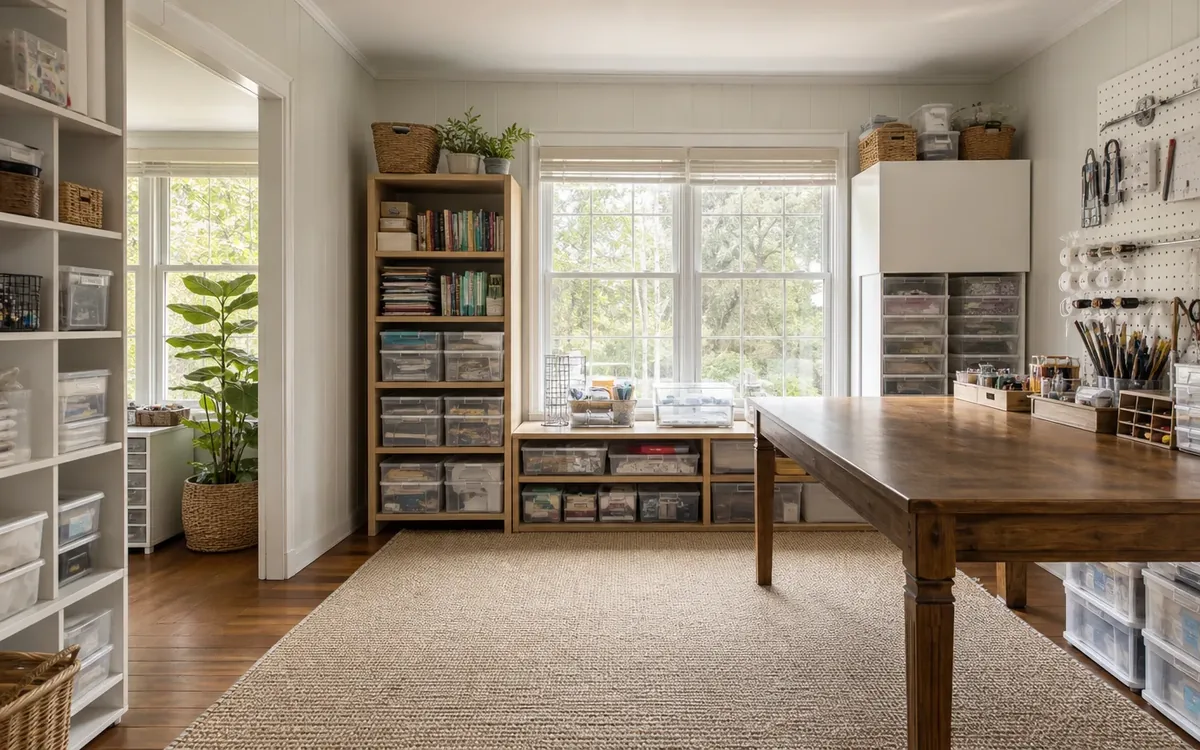
You can downsize hobby supplies without giving up your hobby by keeping a usable core kit, separating active projects from abandoned ones, and choosing storage that fits your new indoor workspace. Start with what you actually make or practice, not with everything you have collected. For South Carolina households moving to smaller homes, the goal is a hobby setup you can open, use, and put away comfortably.
Quick answer: Keep the tools and materials needed for your current hobby routine and a manageable selection of active projects. Give each project a defined storage space. Evaluate surplus supplies separately, and confirm that your new workspace supports safe use before deciding what moves.
What belongs in a usable core hobby kit?
A core kit is the smallest practical collection that lets you enjoy your hobby without constantly borrowing or replacing essentials. It is not necessarily the smallest possible collection. A quilter, model builder, painter, and woodcarver will each need a different balance of tools, materials, and working space.
Describe your hobby in terms of activities. “I sew repairs and occasional gifts” is more useful than “I own sewing supplies.” That description helps distinguish equipment you use from equipment saved for an imagined future routine.
Build the kit around these categories:
- Essential tools: Items needed for the activities you currently enjoy.
- Working materials: Supplies suitable for your next chosen projects.
- Supporting items: Measuring tools, task lighting, protective equipment, and cleanup materials.
- Reference material: Patterns, instructions, or books you still consult.
- Containment: Storage that keeps the kit accessible and safe.
Test whether the kit is complete by walking through a familiar project from setup to cleanup. Missing a necessary tool is different from missing a duplicate or specialized accessory.
For help coordinating these choices with the rest of a household move, explore downsizing and organizing support. The household still decides which hobbies, projects, and possessions matter most.
Separate active projects from abandoned supplies
An active project has a clear next step and still interests you. An abandoned project may be unfinished, but its defining feature is that you no longer want to continue it. Age alone does not decide the category.
Create distinct groups before evaluating individual pieces:
- Active: You want to continue and can name the next step.
- Paused with a reason: You still want the result but need a missing component, instruction, or suitable workspace.
- Ready to release: You no longer want to finish or maintain it.
- Uncertain: You need information before making a decision.
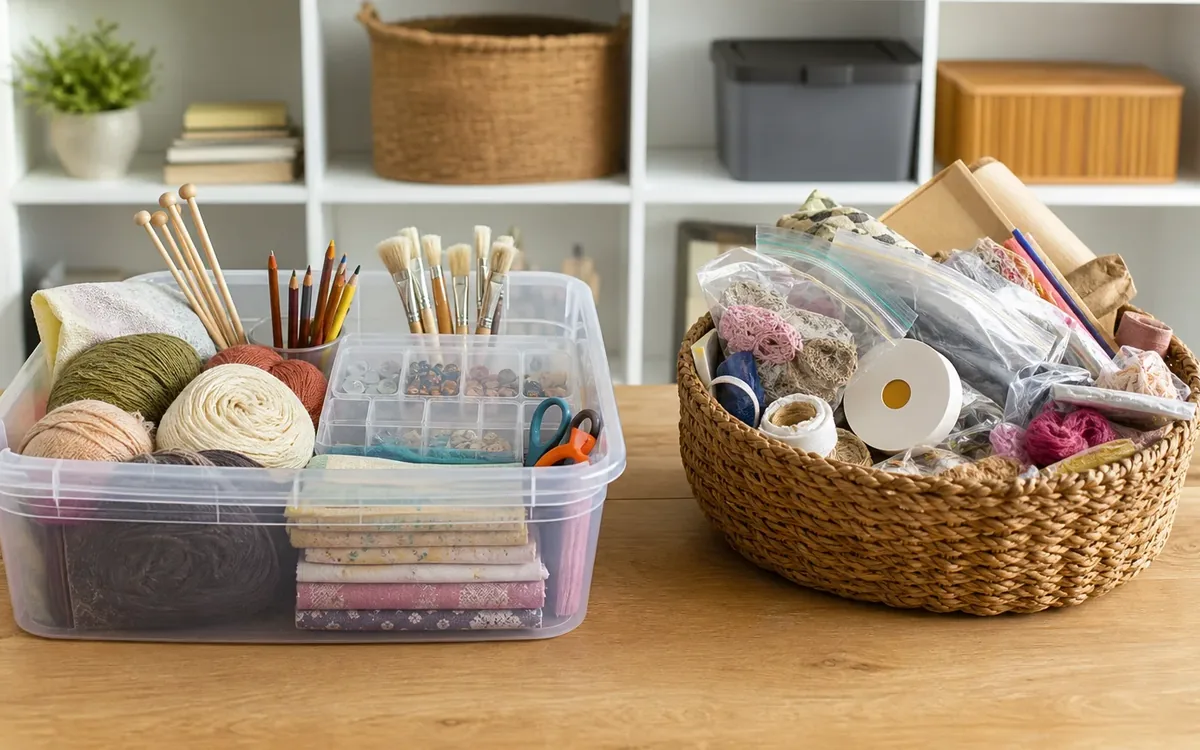
Keep each active project together with its instructions and necessary components. A labeled project pouch or box prevents materials from disappearing into general inventory. Note the next action on the label so restarting does not require reconstructing your plan.
For paused projects, identify the obstacle. If completing a large model requires a work surface your new home cannot accommodate, moving every component may preserve a problem rather than an opportunity.
Give uncertain projects a specific decision condition, such as checking whether parts are available. Avoid creating an indefinite storage category called “maybe.”
Inherited supplies deserve a separate conversation. Keeping a meaningful tool does not require taking on every unfinished project. If hobby materials are part of a larger inherited household, the guide to the best way to clean out an estate provides broader context for sorting belongings without treating everything as the same decision.
How much hobby storage will fit your smaller home?
Start with the space available at the destination, not the number of containers you already own. Measure the proposed cabinet, closet, desk, or shelving area. Include room for opening doors, pulling out bins, sitting comfortably, and using the work surface.
A storage plan can look successful while leaving no room to practice the hobby. A sewing machine that fits inside a cupboard still needs a suitable operating surface. An easel needs both storage space and a workable position when in use.
Map the indoor setup into separate functions:
- Working area: Where the hobby happens.
- Accessible storage: Where frequently used supplies live.
- Reserve storage: Where limited backup materials remain.
- Cleanup area: Where tools and materials can be put away safely.
For a shared dining table or guest room, consider how the hobby will pack away when the room changes use. A portable core kit may work better than spreading materials across several closets.
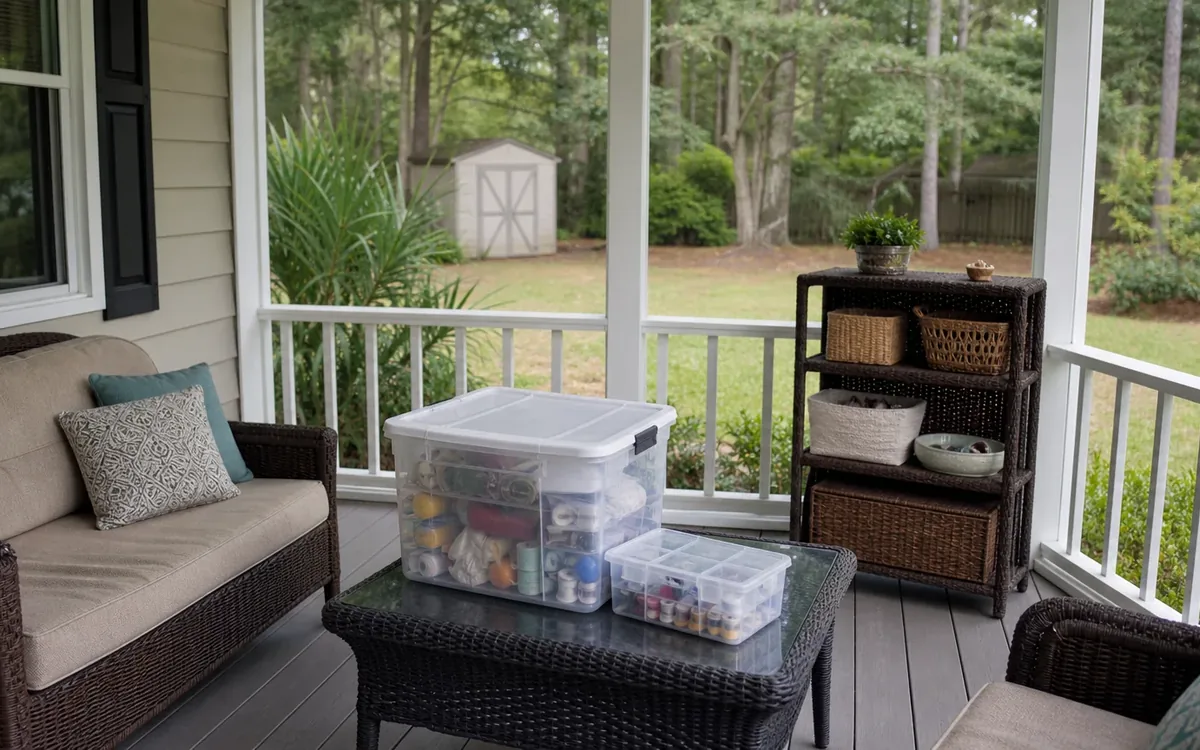
Do not assume a garage, attic, or outdoor shed is a suitable substitute for indoor storage. Review manufacturer guidance for materials affected by heat, moisture, or temperature changes. The household chooses storage arrangements; any separate storage provider should confirm its own conditions and restrictions.
Set a material limit that protects the hobby
Once the workspace is defined, assign each supply category a storage boundary. A boundary might be a drawer for thread, a shelf for yarn, or a cabinet section for model components. It should reflect access and safe storage, not simply how tightly items can be packed.
Keep enough variety to support the hobby you actually practice. Too little material can make every session feel constrained, while too much can hide useful supplies and make starting difficult.
Evaluate surplus using practical questions:
- Does this material work with the tools I am keeping?
- Is it in usable condition?
- Do I have a project that calls for it?
- Can I identify it without opening several containers?
- Would choosing it today still make sense?
Separate duplicate tools from useful alternatives. Two paintbrushes with different functions are not necessarily redundant. Several damaged brushes kept because they might become useful usually deserve a closer look.
For fabric, paper, yarn, or small parts, retain pieces that suit your real projects. A scrap collection can be worthwhile when scraps are part of your practice. It becomes less useful when sorting and storing it displaces the activity you enjoy.
Buying smaller containers before sorting can create extra work. Decide what belongs in the collection first, then choose storage that supports it.
What should you do with hobby supplies you will not keep?
Match the exit route to the material, its condition, and any ownership restrictions. Giving something away is not complete until a recipient agrees to accept it. Selling something requires preparation and a realistic plan for handling unsold items.
Useful options include:
- Offer usable materials to someone who practices the hobby. Describe contents and condition clearly.
- Ask organizations about acceptance. Do not assume a school, club, or nonprofit can use open containers, incomplete kits, or specialized equipment.
- Explore resale for suitable items. Gather model numbers, accessory lists, and available documentation.
- Arrange appropriate disposal. Check requirements for materials that cannot safely go into ordinary household trash.
Keep project sets intact where possible. A bag of unexplained components is harder to evaluate than a labeled kit with instructions and a note about missing pieces.
Do not rely on purchase price to establish current value. Collectible tools, artwork, instruments, and specialized equipment may need a qualified appraiser or another relevant specialist. Appraisal is a separate professional decision, not an automatic part of organizing.
Adhesives, solvents, paints, batteries, blades, and unknown chemicals need particular care. Retain labels, avoid mixing materials, and ask the appropriate local authority or disposal provider about requirements. Disposal arrangements and acceptance policies are separate from deciding what leaves the household.
Preserve the hobby identity, not every object
Hobby supplies often represent more than their practical use. They may connect you to a family member, a former career, or a period when you had more room and energy. Downsizing can feel like rejecting that part of yourself.
Separate the meaning from the volume. You might keep a favorite tool, a completed piece, or a small selection of materials while releasing the rest. Photographing a project can preserve its appearance, although it does not replace an object you genuinely want to keep.
Ask what you want the hobby to provide now: quiet concentration, creative expression, useful repairs, social connection, or a finished product. Your core kit should support that purpose.
If several household members share supplies, agree on ownership before items are offered or removed. Estate ownership, disputed property, and authority to sell or distribute belongings stay with the responsible legal representative or qualified legal professional. An organizing decision cannot resolve a legal question.
Coordinate the move around a working kit
Pack the core kit so it can be identified easily at the destination. Keep active projects separate from surplus awaiting another destination. Otherwise, supplies you intended to release may move simply because they were already boxed.
Label hobby containers by function rather than using vague descriptions such as “miscellaneous.” Include fragile contents or handling concerns where relevant. Keep instructions with equipment and retain identifying information for tools with detachable components.
A practical cleanout or move team may discuss:
- Which containers are moving and which are not.
- Access to the current workspace and destination room.
- Heavy, fragile, sharp, or unusually shaped equipment.
- Household-approved sorting categories and labels.
- Whether separate providers or professional guidance are needed.
Confirm the agreed scope directly rather than assuming every material can be handled or transported. Contractor work, electrical changes, ventilation modifications, and equipment installation require separate arrangements where needed. A home inspector, relevant trade professional, property manager, or authority should address questions within their responsibility.
Likewise, built-in shelving changes and home-sale decisions belong with the responsible property owner and relevant real-estate professionals. Code compliance questions belong with the appropriate authority or qualified professional, even when practical support helps organize the work.
Clutter Cleaner of South Carolina is physically located in Mount Pleasant, with Charleston as its primary market and a service territory covering South Carolina. Households can discuss downsizing and organizing or move management needs without assuming that specialized hobby handling is included.
Short FAQ
Should I keep supplies for a hobby I might restart?
Keep a restart kit if you still want to return to the activity and your new space supports it. Choose enough equipment and material to begin meaningfully, rather than preserving the entire former collection.
Is off-site storage a good answer for excess supplies?
It can be a household choice, but it should solve a defined problem. Confirm access, permitted contents, and storage conditions with the provider. Storage is less useful when it simply postpones decisions about materials you no longer want.
What if downsizing makes the hobby less enjoyable?
Review whether the kit lost something essential or whether the workspace is difficult to use. Adjust those problems before restoring the whole collection. The successful result is not the fewest possessions; it is a manageable setup that lets you keep doing the hobby.



