
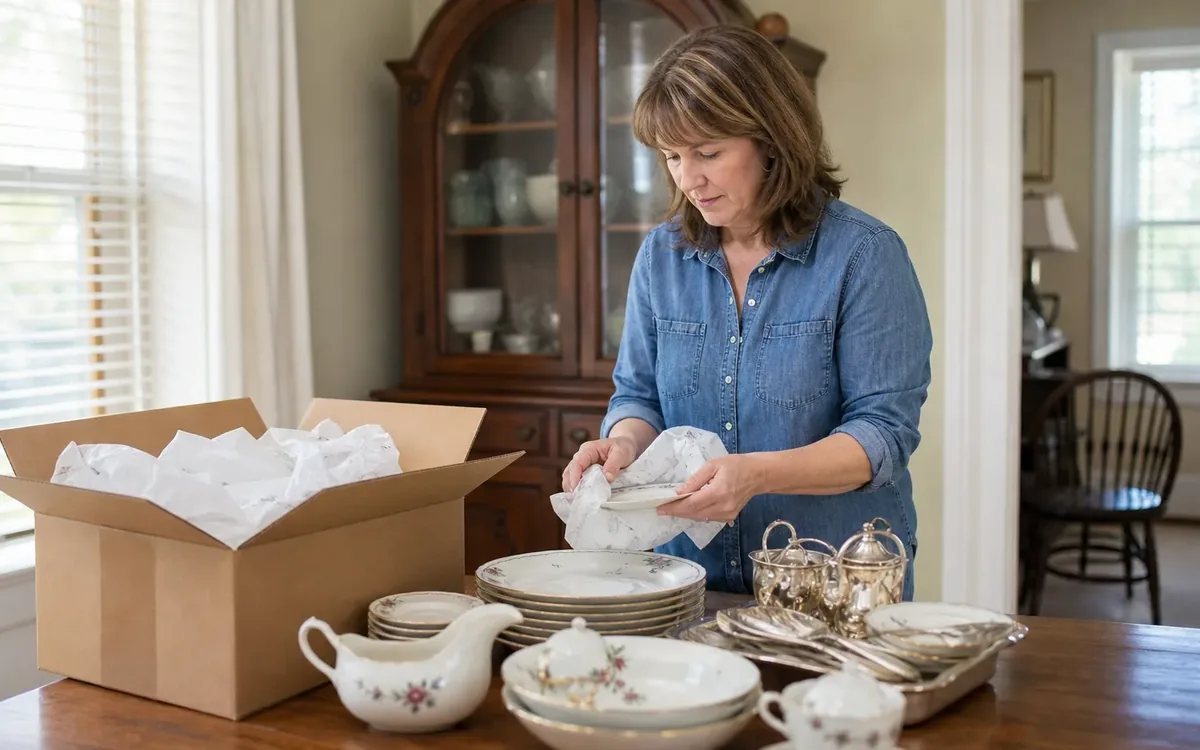
Downsize family china, silver, and serving pieces by keeping what fits your current hosting habits, available storage, and genuine family interest. Do not begin by asking what each item might be worth. First identify what you use, what relatives want, what is complete and in good condition, and what you can store safely. Then refer uncertain silver, antiques, or collectible pieces to the appropriate appraiser, auction professional, or specialty buyer.
Quick answer: Build a practical dining collection around the number of people you actually host. Keep useful settings and versatile serving pieces, offer meaningful items to family with a clear response deadline, and separate damaged or unwanted goods from pieces that may merit professional valuation. Household members decide what to retain or give away. Appraisers, auction professionals, buyers, and disposal providers make decisions within their own specialties.
Why dining collections are difficult to reduce
Formal dining pieces often carry several kinds of value at once. A platter might be useful at Thanksgiving, associated with a grandparent, and part of a pattern that no one currently wants to store. Those values do not always point toward the same decision.
Multigenerational South Carolina households may have accumulated wedding china, inherited silver, holiday serving pieces, crystal, linens, and duplicate sets from more than one branch of the family. The resulting collection may reflect past entertaining habits rather than the household’s present life.
This category also creates practical friction. Plates are heavy, stems are fragile, silver needs appropriate storage, and unusually shaped serving pieces consume cabinet space. An item can be beautiful and still be a poor fit for the next home.
The goal is not to preserve an entire dining room in miniature. It is to identify the portion of the collection that remains useful, meaningful, manageable, or appropriate for professional evaluation.
Households facing a broader transition can review downsizing and organizing support for help structuring decisions across the home. If the dining collection is part of an inherited property, the guide to the best way to clean out an estate explains how to coordinate a larger cleanout without treating every object the same way.
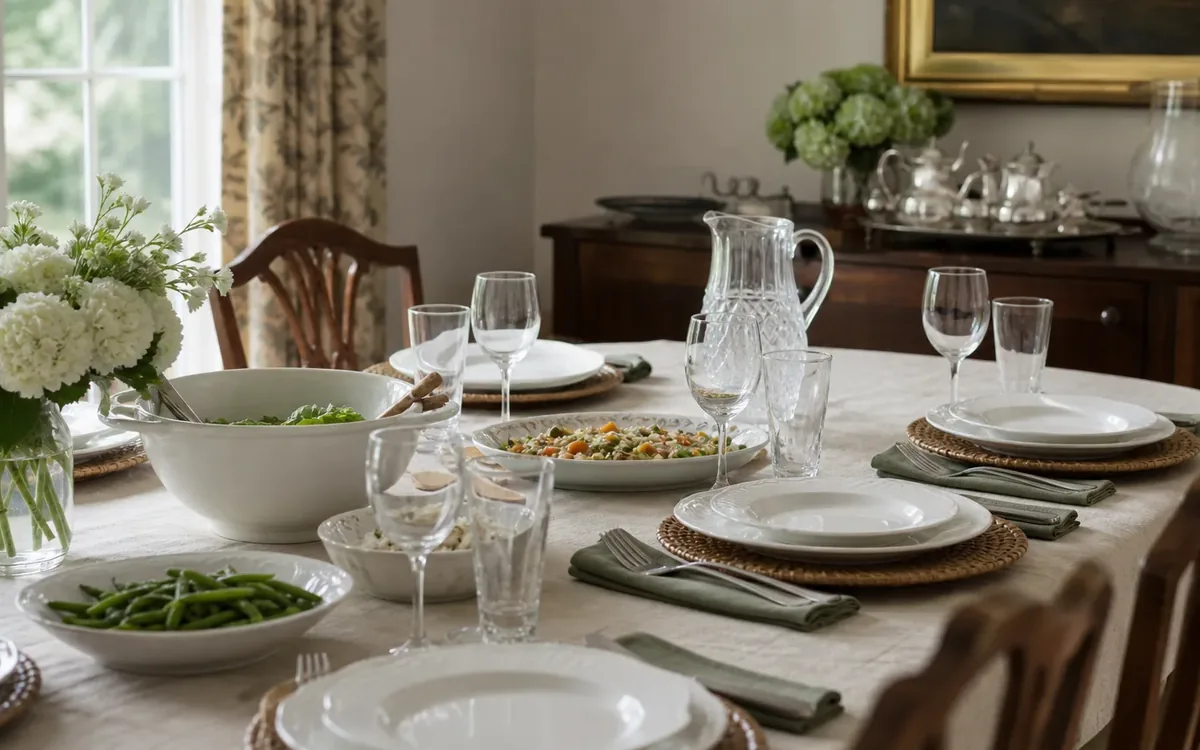
What do you actually use when you host?
Start with real hosting patterns rather than the maximum capacity of the collection. A set for a large formal dinner may not deserve the most accessible storage if the household now serves smaller, casual meals.
Ask concrete questions:
- Who normally gathers at the table?
- Are meals plated formally, served buffet-style, or brought in by guests?
- Which holidays or occasions still happen at this home?
- Are dishes used in the microwave, dishwasher, or oven?
- Which platters, bowls, trays, or utensils are chosen first?
- Do younger relatives host differently?
- Will the next home have a dining room, hutch, pantry, or secure closet?
Use those answers to define a working set. A working set might combine everyday plates with a favorite formal platter and a few useful bowls. It does not have to preserve the original boundaries between inherited collections.
Photograph a typical table before sorting if recreating a familiar holiday setting matters. The photograph can preserve the arrangement even when some objects leave the household.
Do not keep specialized pieces solely because they once belonged in a complete service. Gravy boats, covered vegetable dishes, salt cellars, punch cups, and narrow trays should earn their space through use, meaning, or credible resale interest.
Build the right number of place settings
Choose a realistic hosting capacity, then assemble the best settings for that number. Count each component separately because inherited sets are often uneven.
Create a simple inventory with columns for:
- Dinner plates
- Salad or dessert plates
- Bread plates
- Soup bowls
- Cups and saucers
- Water or wine glasses
- Forks, knives, and spoons
- Specialty flatware
Select complete, sound pieces first. If twelve dinner plates survive but only six cups are used, the household does not have to retain twelve of everything. Keep quantities tied to how each item functions.
A modest reserve can be reasonable for breakage or occasional guests, but it should have a defined storage location. An undefined reserve tends to become several boxes that no one opens.
Mixed place settings can also work. Coordinating white china, inherited floral plates, and contemporary glassware may be more usable than a complete set held back for rare formal occasions. The household controls this aesthetic decision. An organizer or move team may help count, group, photograph, and pack pieces, but should not determine which family history deserves preservation.
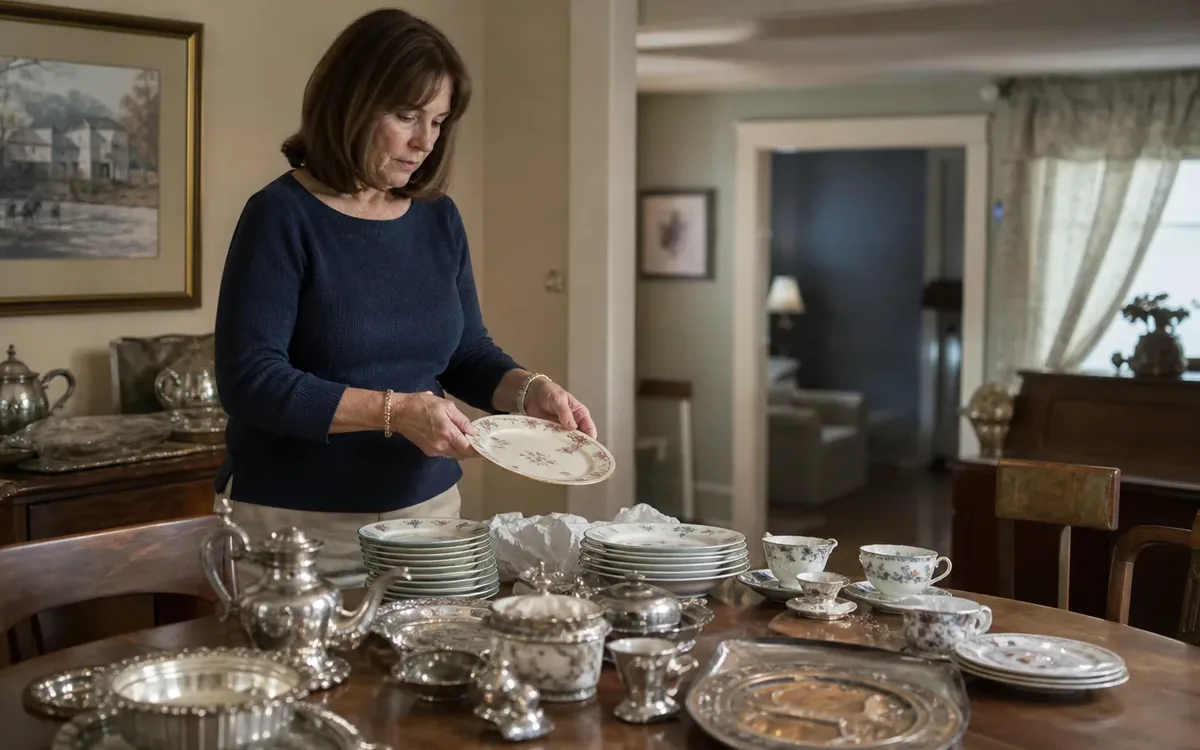
Which pieces have real family interest?
Family interest should be confirmed, not assumed. A relative who loves a pattern may want one cup and saucer rather than the full service. Another may care about the platter used every holiday but have no interest in the matching plates.
Use a transparent offer process:
- Photograph grouped items clearly.
- Describe quantities, condition, and known family history.
- Ask relatives to name specific items they would actually accept.
- Set a household-selected response date tied to the move or cleanout plan.
- Resolve overlapping requests according to a method the responsible family members approve.
- Confirm pickup, shipping, packing, and delivery responsibility before assigning an item.
The family can choose a fair method, such as taking turns, drawing names, prioritizing direct descendants, or dividing a collection. If ownership is disputed, an estate is under administration, or governing documents restrict distribution, the executor, personal representative, attorney, court, or other responsible authority must direct the decision.
Do not ship fragile pieces casually. The household should decide whether to pack and send items itself or hire a separate specialty packer or carrier. Insurance, declared value, carrier rules, and claims procedures belong with the chosen shipping provider.
Record the story separately from the object. A note identifying the original owner, wedding year, holiday tradition, or remembered recipe may make one retained piece more meaningful. It also allows the family to release duplicates without losing all context.
Sort by function, condition, and storage burden
After selecting family pieces, evaluate what remains using three practical filters.
Function
Favor objects that perform more than one role. A broad platter may serve roast, vegetables, appetizers, or desserts. A highly specialized dish may be less useful unless it anchors an important tradition.
Condition
Inspect each item in good light. Look for:
- Chips, cracks, crazing, and repairs
- Stains or discoloration
- Cloudy, etched, or chipped glass
- Bent or loose utensil components
- Missing lids, underplates, or handles
- Worn decoration or metallic trim
- Tarnish, pitting, corrosion, or plate loss
Condition affects safe use, desirability, and potential value, but visual inspection alone may not identify composition, age, restoration, or market significance. Do not polish, glue, scrub, or alter an uncertain piece before obtaining qualified advice. Aggressive cleaning can damage finishes or remove information a professional would use.
Storage burden
Measure the actual shelves, drawers, or boxes available in the next home. Include height and depth, not just width. Large chargers and covered dishes often fail to fit standard cabinets.
Choose whether retained items will be displayed, used regularly, or stored. Each category needs a specific location. If off-site storage is considered, that is a separate household choice involving the storage provider’s access rules, environmental conditions, insurance terms, and fees. A cleanout or move team may discuss packing and space planning, but it cannot guarantee another provider’s storage conditions.
How can you tell whether silver or china needs appraisal?
Set aside an item for professional review when it has marks you do not understand, appears unusually old or finely made, has documented provenance, is associated with a notable maker, or might be sterling rather than silver plate. Also pause when family members attach conflicting financial expectations to it.
Useful preparation includes:
- Photographing the full piece and all marks
- Recording dimensions and quantities
- Noting visible damage or repairs
- Keeping receipts, prior appraisals, and family records together
- Avoiding unverified claims about age, origin, or value
A practical organizing, cleanout, or move team may help create an inventory, isolate items from general removal, and prepare them for review. The team may also discuss whether auction or estate-sale consultation appears appropriate based on the household’s goals.
Only a qualified appraiser should provide an appraisal for the intended purpose. Fair market value, replacement value, insurance scheduling, charitable donation substantiation, equitable distribution, and tax matters are not interchangeable. Ask the appraiser which standard and effective date apply.
An auction company or buyer may offer a sale estimate or purchase offer, but that is not necessarily an independent appraisal. The responsible owner, executor, trustee, or authorized decision-maker chooses whether to accept an offer, consign an item, seek another opinion, or retain it. Legal and tax questions stay with the appropriate attorney, tax professional, court, or agency.
Give every remaining piece a destination
Avoid creating a vague pile labeled “decide later.” Assign each item or grouped set to a destination that can actually receive it.
Possible paths include:
- Keep for regular use
- Keep for occasional hosting
- Give to a named relative
- Hold for qualified appraisal
- Discuss with an auction professional or specialty buyer
- Donate, subject to the recipient’s current acceptance rules
- Recycle where an appropriate facility accepts the material
- Dispose of through a suitable provider
Acceptance should be confirmed before packing or transport. Donation organizations, consignment shops, auction companies, recyclers, and disposal facilities set their own standards. Complete sets may be preferred in one setting, while another recipient may accept individual pieces. Damaged ceramics and mixed-material serving pieces may have limited outlets.
Do not place sharp shards or broken stemware loose in a bag. Contain and label breakage according to the requirements of the receiving waste or recycling provider. Local rules, facility policies, and any property-specific compliance requirements should be confirmed with the responsible authority or provider.
Contractor work is separate. If a hutch must be detached, cabinetry changed, shelving repaired, or built-ins removed, the household should select an appropriate contractor. That provider determines scope, methods, permits, and site requirements. A move or cleanout plan should account for the work without presenting it as an organizing decision.
Pack retained pieces around their next use
Pack according to destination rather than pattern. Items needed for an upcoming family meal should not be buried beneath display pieces intended for long-term storage.
Create distinct groups such as:
- Everyday dining
- Holiday table
- Display only
- Family pickup
- Appraisal review
- Sale consultation
Label boxes on the top and at least one side. Include the contents, destination room, and handling note. Use smaller boxes for dense dishes and flatware so weight stays manageable. Protect pieces from direct contact and prevent movement inside the container.
Keep inventories outside the boxes as well as with them. Photograph a box before closing it if the contents are valuable or difficult to describe. Packing methods, materials, carrier requirements, and coverage questions should be confirmed with the selected mover, shipper, insurer, or specialty packer.
If the collection is being addressed before listing a home, the household and real-estate professional should decide what remains for showings. A real-estate agent advises on presentation and market strategy. Inspectors evaluate matters within their inspection scope. Attorneys and authorities handle legal or compliance questions. An organizing or cleanout team may help clear cabinets and prepare selected contents, but it does not replace those professionals.
A focused decision sequence
Use this order to keep emotional and financial questions from colliding:
- Define the dining life you are planning for.
- Set the storage space available for tableware.
- Choose a functional collection for that life and space.
- Invite specific family requests and document them.
- Isolate uncertain pieces for professional evaluation.
- Match all remaining goods with confirmed destinations.
- Pack retained items according to where and when they will be used.
This sequence keeps potential value from dominating every choice. It also prevents a disposal decision from being made before relatives or qualified professionals have reviewed the pieces that matter.
Short FAQ
Should we keep a china set complete?
Only if completeness supports your goals. A complete set may matter for family transfer, appraisal, consignment, or sale, but a household may prefer a smaller usable group. Ask an appraiser or auction professional before dividing a set believed to have notable market interest.
Is tarnished silver necessarily damaged?
No. Tarnish and permanent condition problems are not the same. Avoid aggressive polishing until marks and materials are understood. A qualified silver specialist, appraiser, or conservator can advise on an important or uncertain piece.
Can chipped china be donated?
Acceptance varies. Confirm current condition standards with the intended organization. Do not assume damaged food-contact items will be accepted.
Who decides what happens to inherited dining pieces?
The owner or legally authorized representative decides, subject to wills, trusts, court orders, agreements, and applicable law. Attorneys, fiduciaries, courts, or other authorities should address disputed ownership and legal distribution questions.
What can a practical cleanout or move team discuss?
The team may discuss sorting zones, inventory, family pickup logistics, packing, space planning, and removal categories. Appraisals, sale terms, legal distribution, real-estate advice, inspections, contractor methods, and compliance rulings remain with the responsible professional or authority.



