
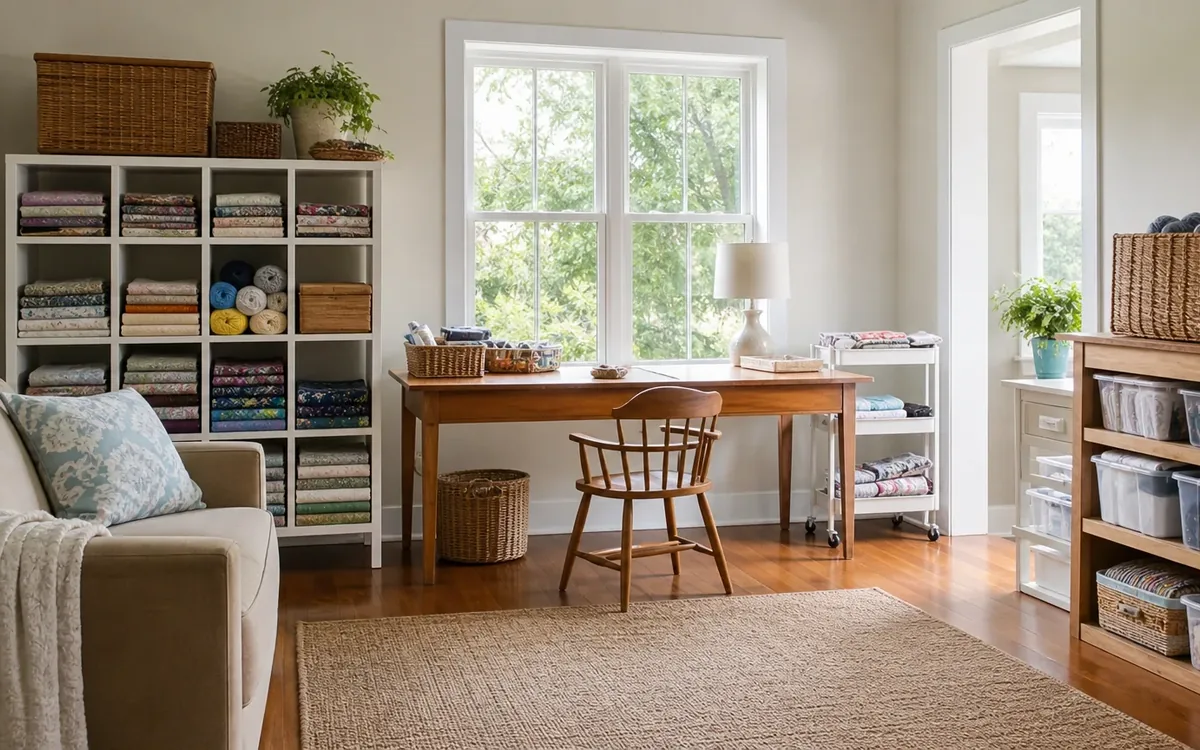
Downsize fabric, yarn, and unfinished craft projects by separating usable supplies from project commitments, choosing what you realistically want to make, and keeping only what fits your available space. Start with your future crafting plans, not everything you once hoped to finish. For South Carolina households, donation should come after confirming that a recipient accepts the specific materials and condition you have.
Quick answer:
- Choose the crafts you still want to practice and the storage space you can give them.
- Sort loose materials separately from unfinished projects.
- Keep supplies that support specific plans, along with a limited everyday selection.
- Decide whether each unfinished project deserves completion, recovery of its materials, or release.
- Verify donation acceptance before packing anything for a recipient.
The goal is not to eliminate a hobby. It is to make your remaining collection easier to use, move, and enjoy without transferring an unmanageable backlog into your next home.
What crafting do you realistically want to keep doing?
Before opening every bin, name the activities you want your next craft space to support. A household moving into a smaller home may still want to knit, but no longer have room for large quilting layouts or equipment used only occasionally.
Separate current interests from former interests. Materials for a craft you once loved can carry genuine memories without needing to remain active supplies.
Ask yourself:
- Which crafts do I choose when I actually have free time?
- What equipment and work surface will be available after the move?
- Which projects suit my current eyesight, mobility, attention, and comfort?
- Am I keeping this because I want to use it, or because buying it felt important?
Write a short future-crafting statement, such as: “I want to knit wearable items and mend household textiles.” That statement gives you a practical reason to keep some supplies and release others.
If the craft collection is part of a larger household transition, downsizing and organizing support can help frame a discussion about sorting priorities, household decisions, and the space available. The household still decides which hobbies and belongings matter most.
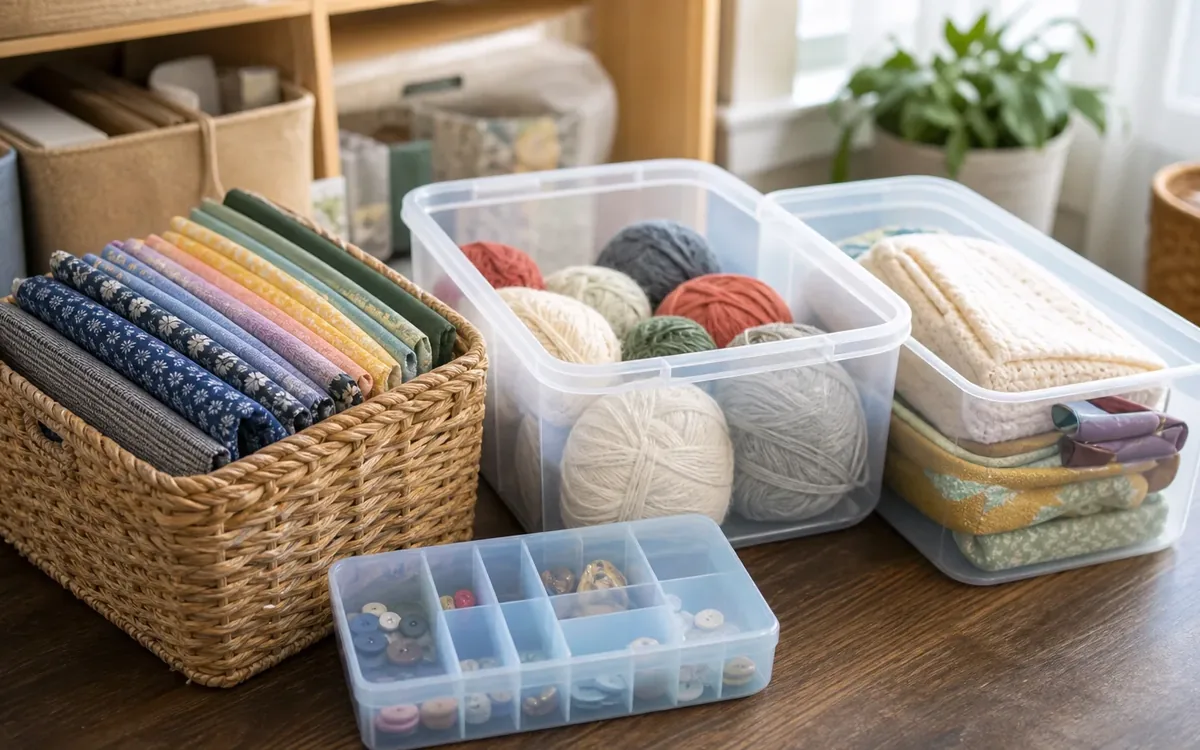
Set storage limits before choosing individual materials
A storage boundary is more useful than a vague promise to keep less. Identify the shelves, drawers, or containers that will hold your retained supplies. Leave room to retrieve things without unloading the whole collection.
Choose separate limits for everyday materials and unfinished projects. Otherwise, project bags can quietly consume the space intended for supplies you actually use.
Useful boundaries might include:
- A designated shelf for folded fabric.
- A drawer for sewing notions and frequently used tools.
- A defined set of containers for yarn, grouped by intended use.
- A separate place for the projects you actively plan to finish.
These are household choices, not universal rules. Someone who regularly quilts may reasonably keep more fabric than someone who mostly repairs clothing.
Test the limit with real objects rather than imagined capacity. Oversized cones, batting, cutting mats, and project frames can change what fits. If you are considering off-site storage, treat that as a separate household and storage-provider decision, not an automatic solution to unresolved sorting.
How do you tell usable supplies from materials worth releasing?
Usability depends on condition, identification, and a plausible purpose. An intact item is not necessarily useful to you, and a beautiful material may be unsuitable for the work you plan to do.
Inspect supplies in good light. Keep uncertain or compromised materials separate so they do not get mixed into a clean donation or keep pile.
For fabric, check:
- Odor, visible staining, moisture damage, or signs of pests.
- Whether the piece is large enough for its intended use.
- Whether the fiber content or care needs are known.
- Whether scraps are practical for a craft you still do.
For yarn, check:
- Labels, fiber content, color information, and available quantity.
- Whether loose strands can be matched confidently to a labeled batch.
- Tangling, damage, unpleasant odor, or evidence of pests.
- Whether there is enough compatible yarn for a realistic project.
Do not guess at fiber content or promise that unidentified materials are suitable for a recipient’s needs. Label uncertainty honestly. Material with possible contamination should not be offered as clean craft stock; ask the appropriate receiving organization or disposal provider about its requirements.
A usable item can still belong in the release pile. Condition answers whether it can be used. Your plans answer whether you should keep it.
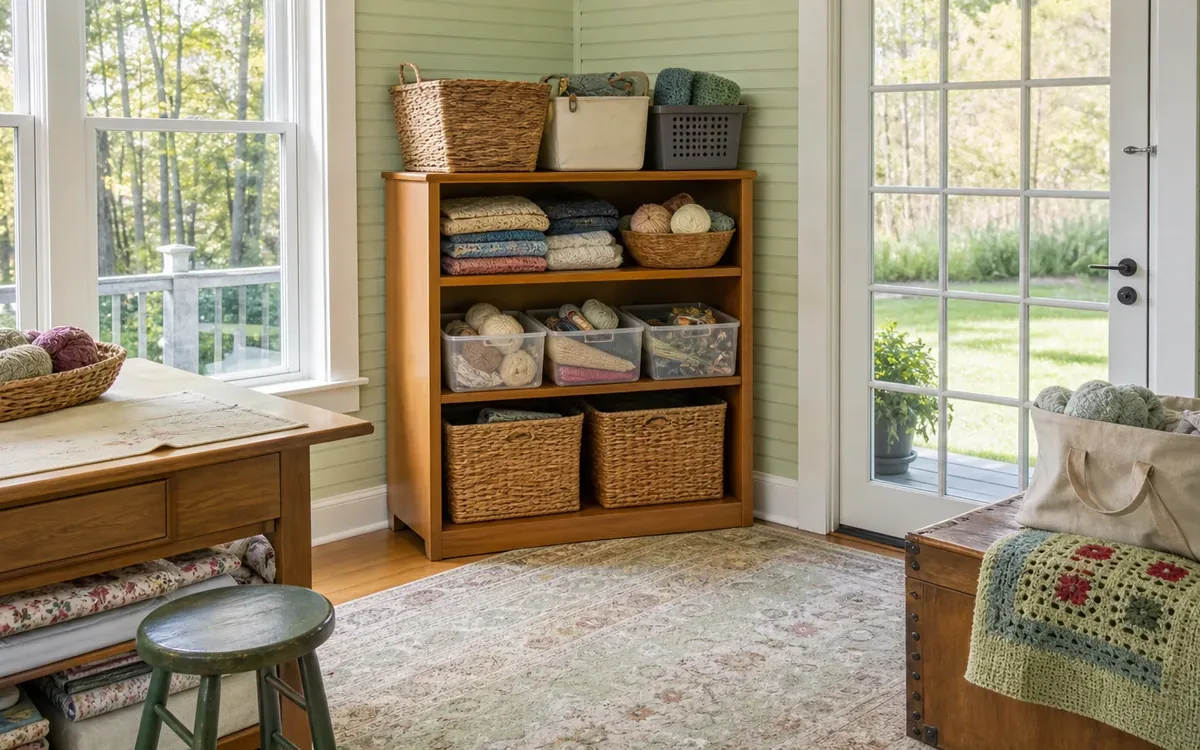
Sort unfinished projects as commitments, not loose supplies
An unfinished project contains more than fabric or yarn. It may also hold instructions, tools, decisions, and an expectation that you will eventually complete it. Evaluate that commitment separately from the value of the materials.
Give each project a clear outcome:
- Continue: You still want the result, understand the next step, and have the needed materials.
- Simplify: You can change the scope into something you genuinely want to complete.
- Recover: You do not want the project, but some materials or tools can return to usable stock.
- Release: You do not want to finish it or recover its components.
Look inside every project bag before deciding. Scissors, needles, patterns, or personal notes may be tucked into otherwise unwanted work.
For inherited collections, distinguish ownership questions from sorting questions. Family agreement or the responsible estate representative may be needed before items are sold, donated, or discarded. The guide to cleaning out an estate offers broader context for that kind of household transition.
A practical cleanout team can discuss how to keep project components together and identify items needing a household decision. It should not substitute its preferences for the maker’s or responsible decision-maker’s wishes.
Which unfinished projects deserve space in your next home?
Keep a project because you want its finished result, not simply because you have already invested effort. Past effort cannot tell you whether the remaining work fits your current life.
For each candidate, describe the next action. “Finish the quilt” is broad. “Choose backing and confirm the remaining steps” is more useful. If you cannot identify the next action, determine whether you want to investigate it before committing storage space.
Consider these questions:
- Would I start this project today if I did not already own it?
- Do I like the intended result enough to use, display, or give it?
- Are essential instructions or materials missing?
- Does completion depend on a skill I no longer want to practice?
- Would someone else actually want to receive it unfinished?
A sentimental project can be retained as a keepsake without pretending it is active work. Label it accordingly and store it within your keepsake allowance rather than your active-project space.
Photographs and a brief note can preserve the design, maker, or story when you choose to let the physical project go. They are options, not obligations; some households prefer to keep a small representative piece instead.
Build a usable collection rather than a smaller backlog
Once you have chosen active projects, match materials to them. Keep the pattern, relevant notes, and compatible supplies together so future work does not begin with another search.
Separate general-purpose stock from project-specific stock. This prevents yarn reserved for a sweater or fabric reserved for a quilt from being used accidentally elsewhere.
For general supplies, favor what you repeatedly reach for:
- Fabric types and colors that suit your actual sewing.
- Yarn weights and fibers you enjoy working with.
- Tools that are comfortable, complete, and appropriate for your chosen crafts.
- Notions you can identify and use without buying an entirely new setup.
Evaluate duplicates by function. Similar-looking tools may serve different purposes, while several identical tools may add little benefit. Keep what supports your work and fits the boundary you established.
Do not create a new collection of “potential gifts” unless you genuinely want to make them. A donation pile can easily become another project pile if every outgoing item requires sewing, repairing, or elaborate repackaging first.
Verify South Carolina donation options before setting supplies aside
A group that welcomes finished blankets may not accept loose yarn. A program that uses fabric may need particular sizes, washable materials, or unopened supplies. Interest in crafting does not automatically mean a recipient has storage, sorting capacity, or a use for incomplete projects.
South Carolina crafters can contact potential recipients such as community groups, craft guilds, schools, or charitable programs to ask about current needs. These are possibilities to investigate, not confirmed acceptance options.
Describe the materials accurately:
- Type, approximate quantity, and condition.
- Whether labels and instructions are included.
- Whether fabric is cut, washed, or partly assembled.
- Whether yarn is in complete skeins, partial balls, or mixed bundles.
- Whether a project is incomplete and what remains to be done.
Ask about packaging, delivery arrangements, and restrictions before assigning a recipient’s name to a pile. If they decline, respect the answer rather than leaving materials outside or adding them to an unrelated collection.
Keep confirmed donations separate from items still awaiting a response. The household can also explore resale or disposal independently. Those routes involve their own provider requirements and should not be treated as guaranteed outcomes of a cleanout.
Prepare clear instructions for a cleanout or move discussion
A craft collection is easier to handle when its categories are visible. Use plain labels such as “keep together,” “household review,” “confirmed recipient,” and “do not move until decided.” Avoid labels like “miscellaneous,” which conceal important distinctions.
For retained projects, secure loose components and include a short contents note. Identify fragile tools, sharp items, bulky equipment, or containers that should stay upright. Discuss suitable packing and handling rather than assuming every container is move-ready.
Clutter Cleaner of South Carolina provides downsizing and organizing and move management across South Carolina. Its physical business location is Mount Pleasant, SC, and Charleston is its primary market. A conversation can address your collection, decision points, and the scope appropriate to your transition.
Keep responsibilities clear. The household chooses what to retain and authorizes release. Appraisal questions belong with an appropriate appraiser; legal ownership questions belong with the responsible representative or legal professional. Real-estate, inspection, and compliance determinations remain with the responsible professional or authority. Storage arrangements, contractor work, and disposal requirements are separate decisions to confirm with the relevant provider.
Short FAQ
Should I keep every small fabric scrap?
Only if scrap-based work is part of your realistic plans. Choose a defined container and retain pieces you can actually use, rather than keeping every offcut automatically.
Can I donate an unfinished project?
Possibly, but explain its condition and missing components first. A recipient must explicitly accept unfinished work; willingness to take yarn or fabric does not imply willingness to finish a project.
What if I regret letting supplies go?
Keep a focused selection tied to the crafts you value most. The aim is to preserve your ability to create, not every possible option. Review uncertain items against your space limit and future-crafting statement.
Should valuable tools or textiles go straight into a sale pile?
Not solely because they look unusual or old. Set aside items with a plausible value question for appropriate assessment. Sorting help is not a substitute for a professional appraisal.



