
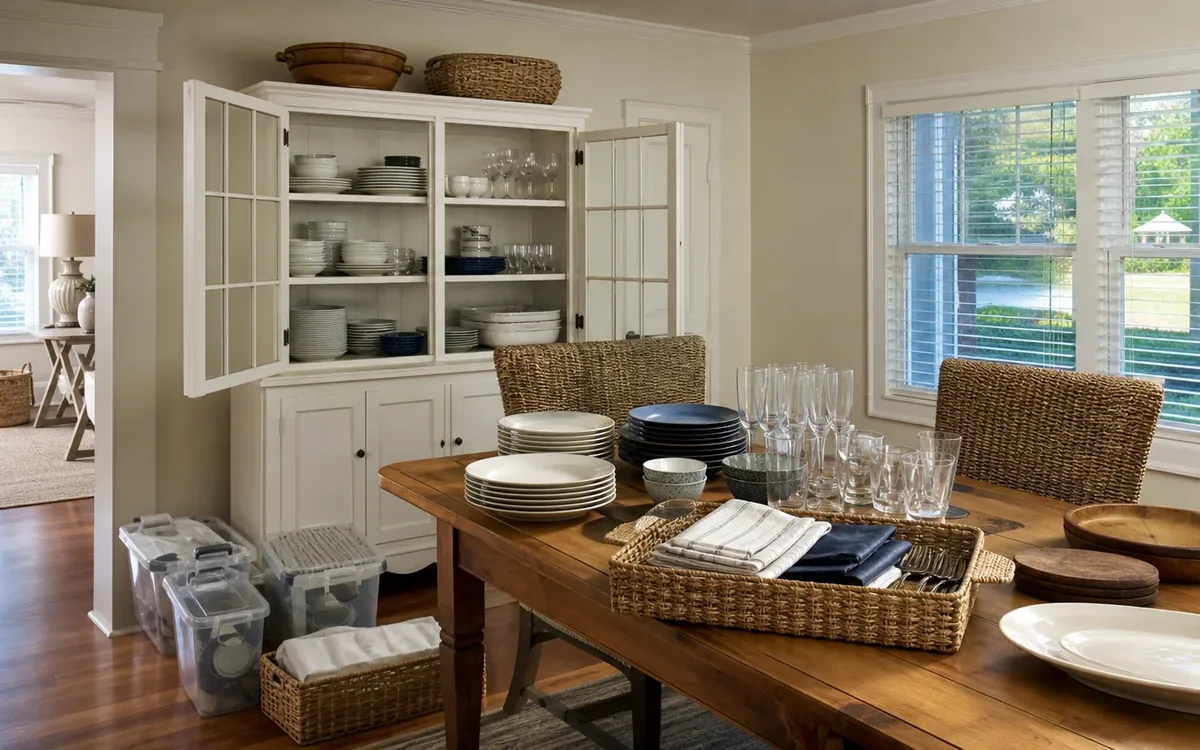
Downsize entertaining supplies by keeping what supports gatherings you can comfortably host in your smaller home, not the largest party you once held. Start with seating, table space, and kitchen capacity, then choose guest dishes, serving pieces, and equipment that fit those limits. Keep flexible favorites and make separate plans for duplicates, inherited pieces, and items used only for oversized events.
Quick answer: Picture a realistic gathering in your next home. Set out the dishes, glasses, serving pieces, and seating it requires. Keep a coordinated, easy-to-store collection for that gathering, then decide whether larger-event supplies should be transferred, sold, donated, or replaced by borrowing or renting when needed.
For South Carolina households, this approach preserves hospitality without asking a smaller kitchen, dining area, or storage closet to function like the previous home. The goal is not to stop entertaining. It is to make the gatherings you still enjoy easier to prepare for and clean up afterward.
What size gathering should your supplies support?
Choose your hosting pattern before choosing your possessions. A holiday meal, porch supper, card night, and neighborhood drop-in do not require identical supplies. Base your core collection on the gatherings you expect to host regularly, with a modest allowance for guests joining unexpectedly.
Look at the actual space rather than an imagined maximum. A table may extend, but chairs still need room to move. A buffet arrangement may work better than a seated meal, but guests still need comfortable places to eat.
Consider these practical constraints:
- Where guests will sit and place drinks.
- How much counter space remains available while preparing food.
- Whether the refrigerator can accommodate dishes before serving.
- Where dirty dishes will collect during the gathering.
- Whether outdoor seating remains useful if the event moves indoors.
- How easily you can retrieve and return stored supplies.
If the smaller home has not been selected, build a provisional collection rather than making irreversible choices based on guessed cabinet dimensions. Mark uncertain items for review when the layout is known.
The household decides what kind of hosting matters most. A practical organizing team may help translate that preference into categories and storage priorities. Clutter Cleaner of South Carolina offers downsizing and organizing services statewide, including support for households making these choices in the Charleston area.
Build one everyday-to-guest collection
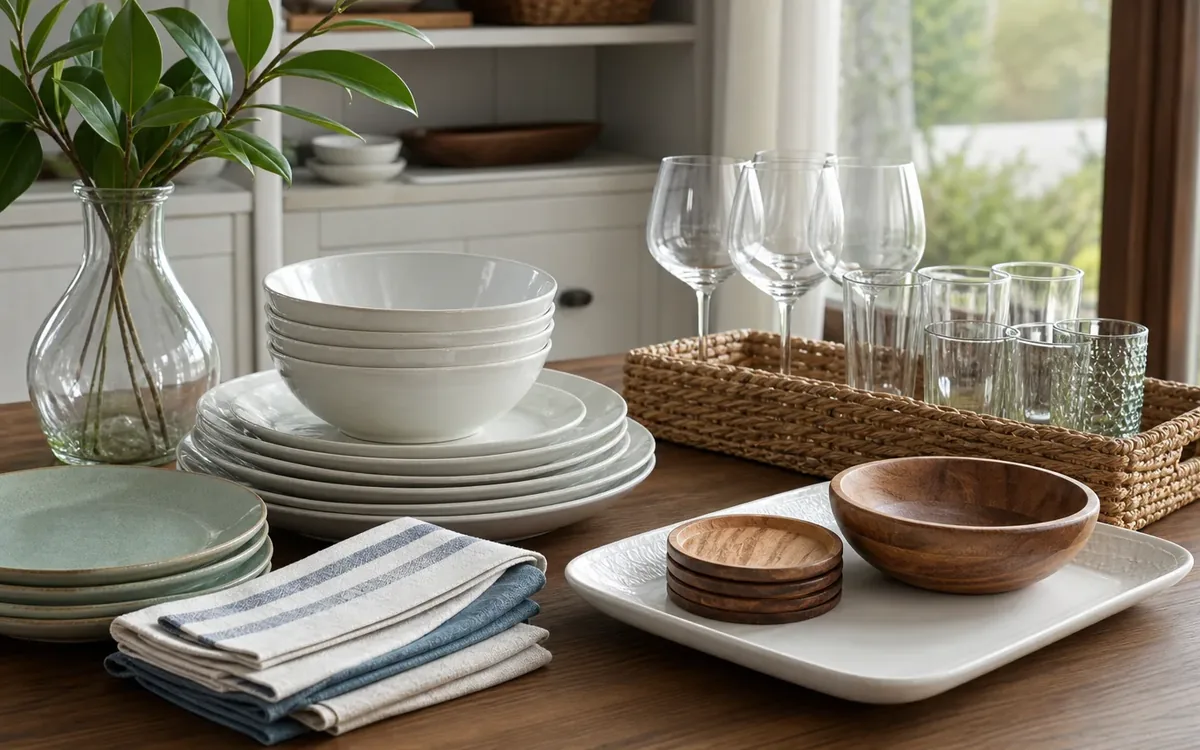
An entertaining collection becomes easier to manage when everyday pieces can also serve guests. You do not necessarily need separate casual, holiday, outdoor, and formal sets. Start by asking which existing dishes you enjoy using and can comfortably handle.
Set up a sample place setting. Include only what your meals actually require. If you rarely serve a separate soup course, soup bowls may not belong in the core guest collection. If small bowls work for dessert, breakfast, and side dishes, they may earn more space than specialty dessert plates.
Assess each category on its own:
- Dinnerware: Keep usable settings rather than assuming every piece in a boxed set must stay.
- Flatware: Prioritize comfortable, compatible pieces with enough complete settings.
- Drinkware: Choose glasses that cover your usual beverages without maintaining a separate shape for every drink.
- Mugs and cups: Keep the styles guests actually use, with attention to grip and storage space.
- Linens: Retain sizes that fit the current table and napkins you are willing to wash and store.
Matching is optional. A deliberate mix can work well if the pieces stack safely and suit the same meals. Conversely, several nearly complete sets can create more inconvenience than one consistent collection.
Keep sentimental exceptions visible in your plan. A cherished pair of cups can stay without requiring the entire unused service to remain.
Which serving pieces earn their cabinet space?
Serving pieces are often where entertaining clutter accumulates. Platters, tureens, pitchers, cake stands, divided trays, and covered dishes may each have a purpose, yet several can compete for the same occasional job.
Arrange your favorites as though you were serving a familiar meal. Choose a main dish, sides, bread, dessert, and drinks. Notice which pieces do real work and which appear only because they are available.
A useful serving piece should answer a practical question: What will I serve in this, where will it sit, and where will it live afterward?
Favor versatility where it suits your habits:
- A medium platter may handle sandwiches, roasted vegetables, or sliced meat.
- A plain bowl may work for salad, fruit, or a side dish.
- A pitcher may serve water at dinner and another beverage at a casual gathering.
- An appropriate oven-to-table dish may reduce transfers and washing.
- A compact tray may help carry drinks without occupying a whole cabinet shelf.
Check manufacturer instructions before treating a dish as oven-safe, microwave-safe, or dishwasher-safe. Appearance alone does not establish suitability.
Inherited serving pieces deserve a separate decision rather than an automatic place in the hosting collection. If your sorting is part of a broader family-property transition, the guide What Is the Best Way to Clean Out an Estate? offers a useful wider framework. Ownership and authority to distribute estate property should be settled before pieces leave the home.
Separate occasional equipment from everyday hosting
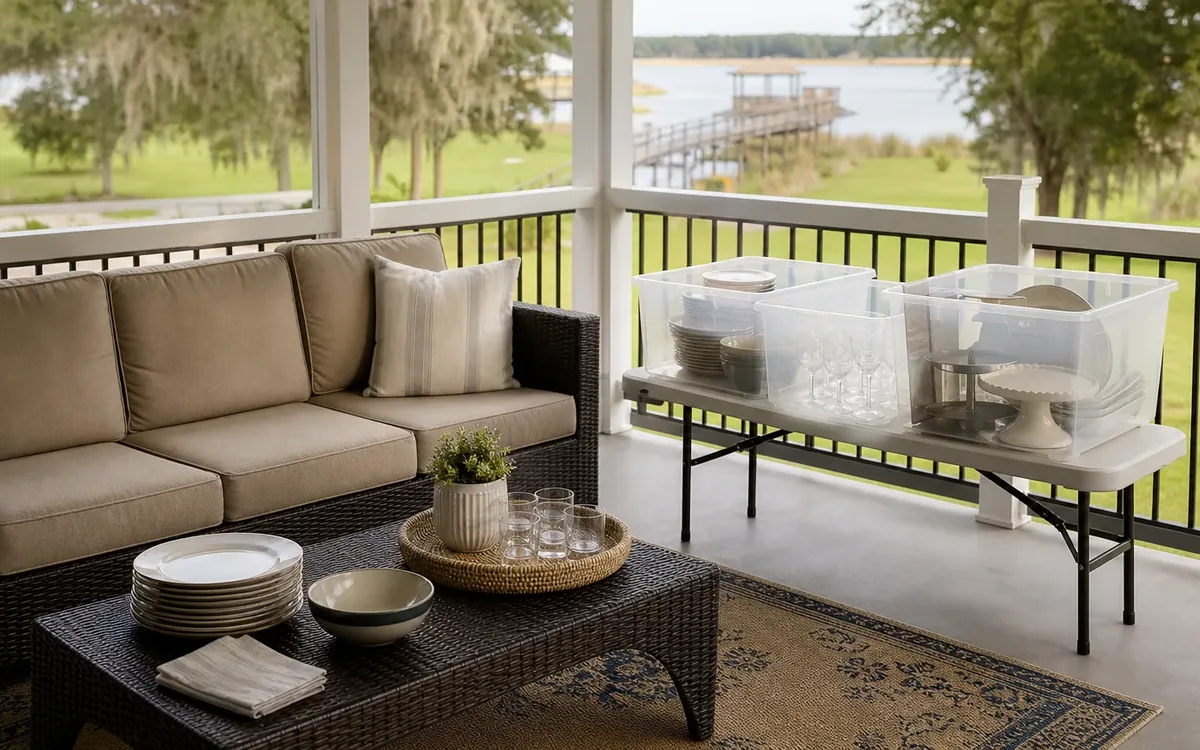
Large beverage dispensers, warming equipment, punch bowls, folding tables, and extra coffee makers can consume substantial space while serving very few gatherings. Evaluate these items by the event they support, not by the possibility that they might someday be useful.
For each item, write down its purpose and storage location. Then compare keeping it with alternatives. Borrowing from a willing relative, renting from a separate provider, changing the menu, or asking guests to bring ready-to-serve dishes may be more practical than permanent storage.
Those alternatives are choices, not guarantees. Check availability, handling requirements, transport, and return conditions before relying on borrowed or rented equipment.
Give particular attention to equipment that requires setup or accessories:
- Keep cords, lids, stands, and operating instructions together.
- Review condition and manufacturer safety guidance.
- Avoid keeping incomplete equipment solely because replacing a missing part seems possible.
- Consider whether carrying and cleaning it still feels manageable.
- Confirm it fits the intended storage area without blocking access to other items.
Do not plug in questionable electrical equipment simply to decide whether it deserves a place in the move. Ask an appropriate repair professional when its condition is uncertain.
Off-site storage is a separate household decision. Before choosing it, consider retrieval, packing, environmental requirements, and whether storing the item merely postpones a decision about future use.
How many extra chairs and tables should you keep?
Keep seating that supports a workable gathering layout, not just a guest count. Extra chairs are useful only if they can be placed comfortably and stored safely between visits.
Try the arrangement before moving, if the destination is accessible. Otherwise, use room measurements and furniture dimensions. Include space for guests to stand, pull out chairs, and move between the table and nearby rooms.
Distinguish dining chairs from other seating. A comfortable living-room chair may suit conversation but not a meal at a standard dining table. A folding chair may be convenient to store yet unsuitable for a guest who needs a stable seat with arms.
Review occasional furniture with these questions:
- Can someone carry and unfold it without difficulty?
- Does it sit securely on the intended surface?
- Is there a dedicated storage location?
- Does its use obstruct doors or everyday routes through the home?
- Would a smaller gathering eliminate the need for it?
Do not count porch or patio seating as your only backup if the event might move indoors. Plan a gathering that still works when outdoor space is unavailable.
If furniture placement raises questions about accessibility, exits, building rules, or occupancy requirements, consult the appropriate professional or authority. An organizing plan does not establish compliance.
Give sentimental and valuable pieces a separate review
Some entertaining supplies represent family traditions more than practical hosting needs. Separating those meanings makes it easier to keep a small useful collection without treating every reduction as a rejection of the past.
Choose the pieces that best carry the memory. You might keep a serving spoon used at family meals, display a favorite platter, or retain a small set for a particular celebration. A photograph and a written note can preserve context for pieces you decide not to keep.
Before transferring belongings, distinguish personal ownership from jointly owned or estate property. The household can decide about items it owns and is authorized to distribute. Questions about estate authority, competing claims, or legal restrictions belong with the responsible representative and legal adviser.
For potentially valuable china, silver, crystal, or collectible equipment, obtain qualified appraisal advice when warranted. A practical cleanout or move team may discuss sorting, access, packing, and possible next steps, but appearance, age, and family stories do not establish market value.
Selling, gifting, and donation are different routes. Confirm that a recipient wants the pieces, a sales provider considers them suitable, or an organization accepts them. Disposal arrangements and local acceptance requirements should also be confirmed separately rather than assumed.
Pack for the gatherings you will actually host
Once decisions are made, organize the retained collection around use. Avoid scattering one complete dinner setup across several unrelated boxes. Keep the everyday-to-guest pieces accessible and place specialty items in clearly labeled groups.
Make labels specific enough to guide unpacking:
- Guest dinner plates and bowls.
- Serving platters and salad bowl.
- Table linens for the dining table.
- Outdoor serving supplies.
- Holiday pieces retained for family use.
Use appropriate protective packing for fragile items, and avoid overloading boxes. Keep heavy pieces low in storage and frequently used items within comfortable reach. Do not stack delicate or awkward pieces merely to make the cabinet look full.
A practical move team may discuss packing categories, handling concerns, destination measurements, and placement priorities. The household should identify fragile, sentimental, disputed, or undecided items before work begins and confirm the actual scope with the provider.
Cabinet alterations belong with a separate qualified contractor. Property-condition questions belong with the relevant inspector, while sale-related advice belongs with the real-estate professional. Keeping these responsibilities distinct prevents a storage decision from becoming an unsupported construction or property recommendation.
After unpacking, set the table once and stage a simple serving area. This reveals missing essentials and awkward storage before guests arrive, without turning the move into a reason to buy another full collection.
Short FAQ
Should I keep a complete formal china set?
Keep it if you enjoy using it, can store it safely, and expect it to support your gatherings. Completeness alone is not a reason to retain it. Consider value and ownership before separating or transferring pieces.
What if I still host a large holiday meal?
Plan that event separately from everyday hosting. Decide which supplies must stay and which could come from guests, borrowing, or a rental provider. Confirm those arrangements rather than assuming they will be available.
Can an organizing team choose what leaves?
A team may help compare usefulness, storage demands, and handling needs. The household or authorized decision-maker should approve what stays and what leaves, especially when belongings are sentimental, valuable, jointly owned, or part of an estate.
What is the best final test?
Ask whether the retained collection lets you welcome guests without difficult retrieval, crowded surfaces, or unnecessary cleanup. A smaller collection succeeds when it supports the hospitality you want to offer in the home you actually have.



