
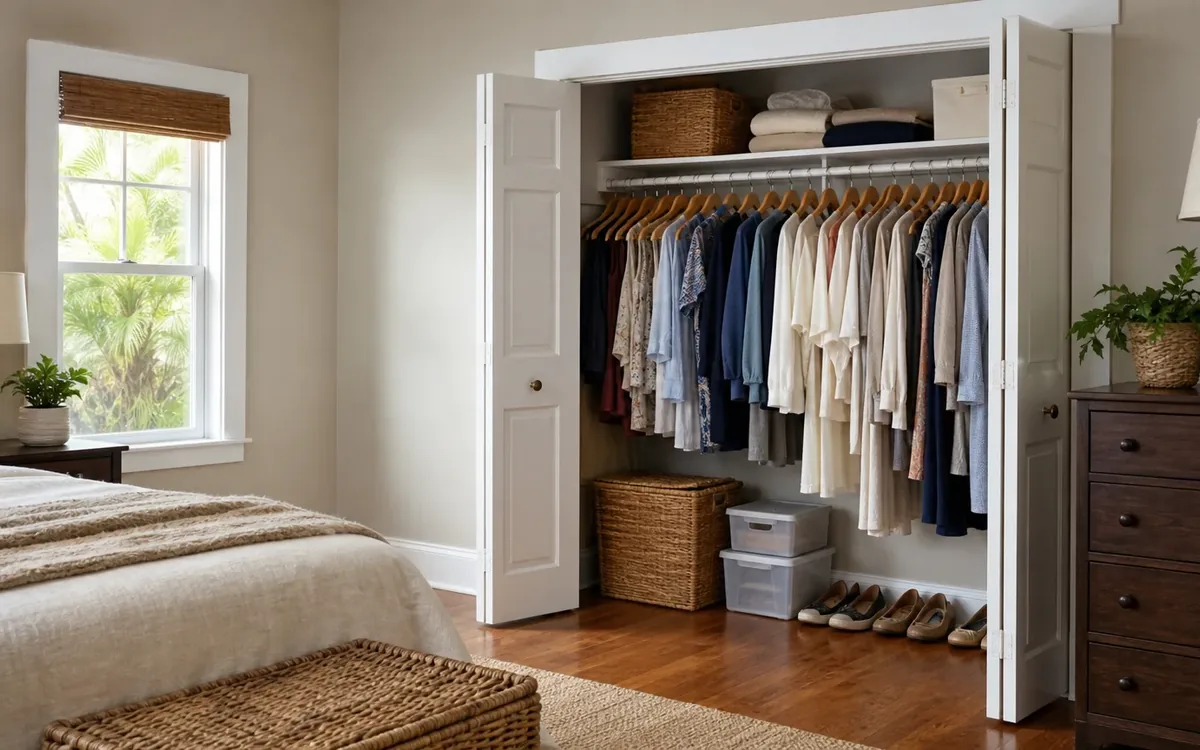
Moving into a South Carolina condo, apartment, or senior community often means trading generous storage for a much smaller closet. The most practical solution is to measure the new space, define what must fit, and keep clothing that supports your current routine and the Lowcountry climate. Sort by actual use rather than sentiment, purchase price, or hopes about a future lifestyle.
Quick answer: Measure the usable rods, shelves, drawers, and floor area in the new closet. Then sort clothes by category, compare similar items, and keep the pieces that fit your body, activities, climate, and available space. Decide separately what to donate, sell, give to family, recycle, store elsewhere, or discard.
This approach is not about creating a picture-perfect closet. It is about making everyday dressing easier after a move. If wardrobe decisions are part of a broader transition, downsizing and organizing support can help a household structure the sorting process without taking personal decisions away from the owner.
Why should you measure the new closet first?
Without measurements, people often sort toward a vague goal such as “keep less.” A measured closet provides a physical limit and turns that goal into a workable plan.
Measure the new closet before packing if access is available. Record:
- Total rod length, including separate upper and lower rods
- Vertical clearance beneath each rod
- Shelf width, depth, and spacing
- Drawer interiors rather than exterior dimensions
- Usable floor space after accounting for doors and baseboards
- Door swing, sliding-door overlap, and any blocked corners
- Space occupied by utility panels, vents, lights, or fixed hardware
- Room outside the closet for an approved dresser or wardrobe
Photograph the empty space and sketch its layout. Note whether long garments can hang without touching shelves or the floor. A closet with substantial rod length may still have little space for dresses, coats, or trousers hung at full length.
Measure the storage items you expect to bring, too. A wide dresser may not fit the intended wall. Deep bins can overhang shallow shelves. A shoe rack may interfere with a closet door. Checking these conflicts before the move prevents containers from dictating which clothing stays.
The household can decide how much of the new home should be devoted to clothes. A move manager or organizing team may discuss layout, sorting zones, packing order, and practical storage options. The property owner, community manager, contractor, or other responsible professional must determine whether built-ins, wall anchors, electrical changes, or structural alterations are permitted and appropriate.

Build a clothing budget from the available space
Treat closet capacity like a fixed budget. Allocate space to the categories you actually wear rather than trying to squeeze in every item and improve the system later.
Divide the measured space into zones such as:
- Everyday hanging clothes
- Folded shirts, knitwear, and casual clothing
- Shoes used in normal routines
- Undergarments, sleepwear, and exercise clothing
- Work, worship, or social clothing
- Outerwear and rain gear
- Limited special-occasion garments
- Accessories with a defined storage location
Assign each category a boundary. One section of rod might hold everyday tops, while one drawer holds exercise clothes. A shelf may be reserved for shoes. Once a category fills its boundary, compare items within that category instead of borrowing unlimited space from another.
Use the actual hangers and containers when testing capacity. Slim hangers may reduce bulk, but they do not create unlimited room. Leave enough space to see garments and remove one without pulling several others down.
Avoid buying organizers before deciding what will remain. Empty bins, extra racks, and hanging cubbies consume space of their own. Select storage products only after confirming the final inventory and checking the new residence’s rules.
For a move involving many rooms or an inherited household, the broader decisions in how estate cleanouts work can help clarify sorting, distribution, and removal roles. Wardrobe reduction should remain its own focused project within that larger process.
What clothing works for your real South Carolina routine?
A useful wardrobe reflects what you do now. It should not be dominated by clothing for an earlier job, a former social calendar, or activities you rarely pursue.
Write down the settings that make up your current routine:
- Time at home
- Work or volunteer responsibilities
- Worship and community activities
- Exercise and outdoor recreation
- Casual meals and social gatherings
- Medical appointments and errands
- Travel
- Formal occasions that genuinely occur
Next, consider South Carolina’s warm, humid conditions and seasonal temperature changes without using climate as a reason to keep every variation. Breathable, washable pieces that combine easily may earn more space than delicate garments requiring special care. A light layer may be more versatile than several highly specific items. Rain protection and cooler-weather clothing can stay, but their quantity should match real use.
For each garment, ask whether it works with the shoes, layers, and activities you are also keeping. A jacket that coordinates with nothing else occupies more functional space than its hanger suggests. A top that needs a special underlayer or frequent repair may be less useful than a simpler alternative.
Medical needs, mobility, sensory preferences, and dressing assistance matter as much as style. Prioritize manageable fasteners, comfortable waistbands, safe garment lengths, easy-care fabrics, and pieces that are simple to put on. The person wearing the clothes should guide these choices whenever possible.
Sort by evidence of wear, not by category alone
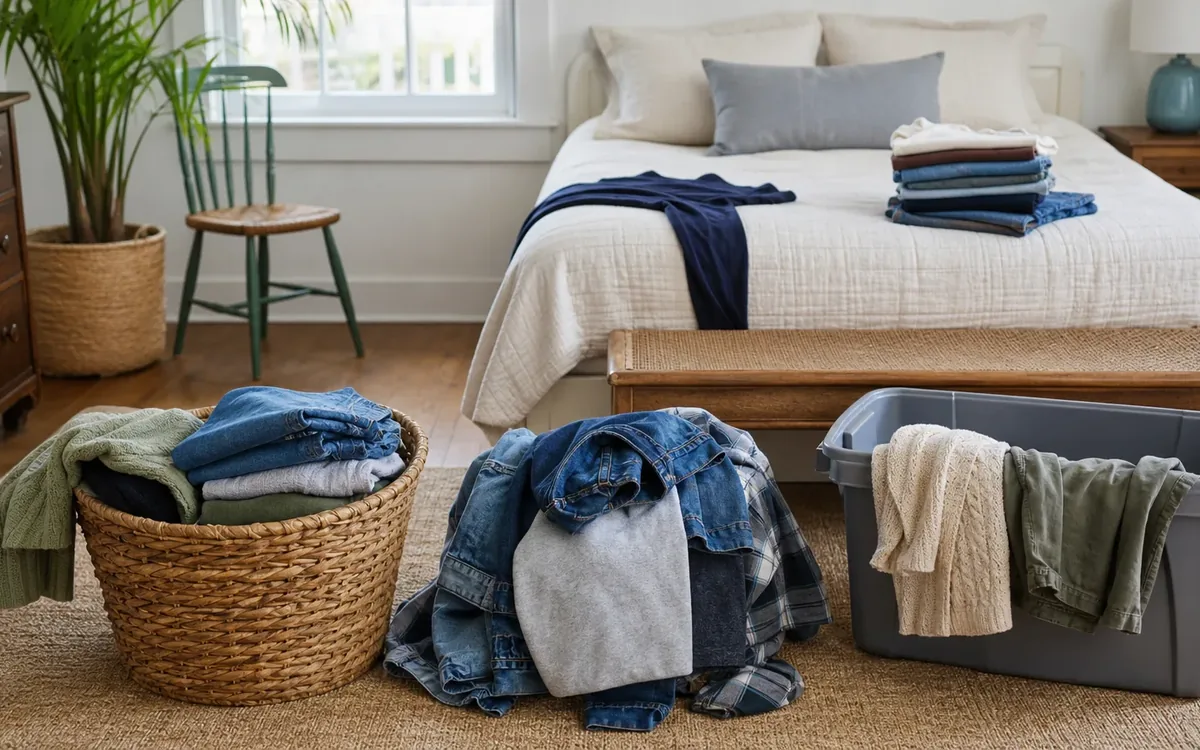
Begin with one clothing category at a time. Comparing all trousers together or all casual tops together makes duplication visible and reduces decision fatigue.
Use five decision groups:
- Keep in the new closet: Current, comfortable pieces that support real routines.
- Keep elsewhere by choice: A small, defined group with an approved storage destination.
- Give to a specific person: Items the recipient has agreed to accept.
- Sell or donate: Usable clothing that no longer deserves space.
- Textile recycling or disposal: Worn, stained, damaged, or otherwise unsuitable pieces, subject to the receiving facility’s rules.
Actual wear is the strongest evidence. Look for familiar favorites, recent laundry patterns, suitable fit, and easy coordination. If an item has not been worn, identify why. The reason may be uncomfortable fabric, difficult care, poor fit, missing accessories, or lack of an occasion.
Try on uncertain pieces if doing so is physically comfortable and safe. Fit is not only whether a zipper closes. Sit, reach, walk, and test the garment with the shoes or layers it requires. Keep a small repair group only when there is a concrete plan for tailoring, cleaning, or mending.
Do not make value judgments based solely on original cost. Purchase price is already spent and does not increase closet capacity. Designer labels also do not guarantee resale demand. A qualified appraiser, auction professional, consignment business, or resale specialist should assess market value and suitability. An organizing or cleanout team may help separate and inventory items, but valuation belongs with the appropriate professional.
How do you choose between similar clothes?
Duplicates become clearer when placed side by side. Instead of asking whether each shirt is “still good,” ask which shirts you choose first and why.
Compare similar pieces using these factors:
- Current fit and comfort
- Frequency of wear
- Condition
- Ease of washing and care
- Compatibility with other retained clothing
- Suitability for present activities
- Climate usefulness
- Accessibility in the smaller closet
Keep the strongest versions within the space assigned to that category. If several items serve the same purpose, favor those that combine with more outfits. Neutral does not automatically mean useful, and colorful does not automatically mean impractical. The best choice is the one that integrates with the retained wardrobe and gets worn.
A simple outfit test can expose isolated garments. For each uncertain piece, identify a complete outfit using only items that are also staying. If that is difficult, the piece may require too much supporting inventory.
Uniform dressing can reduce volume for people who prefer it. Repeating dependable combinations is valid. Someone who enjoys variety can preserve it through coordinated colors, accessories, or interchangeable layers rather than large numbers of nearly identical garments.
Avoid keeping multiple sizes without a defined reason and boundary. Body size can change, but an unrestricted backup wardrobe can consume the entire closet. The household might reserve one clearly labeled container if alternate sizes are genuinely needed and permitted by the residence. Reassess that container rather than letting it become indefinite overflow.
Handle sentimental clothing without filling the daily closet
Sentimental garments represent people, achievements, and earlier stages of life. They should not automatically compete with everyday clothes for prime hanging space.
Separate memory value from wearing value. A wedding garment, uniform, handmade sweater, or relative’s jacket may matter deeply even if it will never be worn. Decide whether the goal is to wear it, preserve it, pass it on, document it, or repurpose it.
Possible household choices include:
- Keeping a small, intentionally selected memory collection
- Photographing a garment and recording its story
- Offering an item to a relative who wants it
- Consulting a textile conservator about fragile or significant pieces
- Hiring an independent sewing professional for an approved project
- Using suitable off-site storage chosen and managed by the household
Storage is a separate decision, not a default escape from sorting. Confirm the cost, access, environmental conditions, insurance implications, facility terms, and retrieval responsibility directly with the storage provider. Delicate textiles may require professional preservation advice.
When family members disagree, pause distribution rather than making an irreversible choice. Ownership, estate instructions, fiduciary responsibilities, and disputed property are legal matters. The executor, personal representative, attorney, court, or other responsible authority must direct those decisions. A practical team may help label, photograph, group, or pack items according to authorized instructions, but it should not determine ownership.
Plan where outgoing clothes will actually go
A “remove” pile is not a completed decision. Give each outgoing group a destination and keep it separate from moving inventory.
Before sending items elsewhere:
- Ask recipients before assigning clothing to them
- Review a charity’s current acceptance standards
- Confirm consignment or auction requirements directly
- Remove personal documents and objects from pockets
- Check handbags, garment bags, and luggage compartments
- Keep potentially valuable items separate for qualified review
- Follow facility rules for textile recycling and waste
Condition matters. Donation sites may decline wet, moldy, contaminated, heavily damaged, or otherwise unsuitable textiles. Disposal and recycling requirements vary by provider and jurisdiction, so confirm current rules with the receiving organization or responsible local authority.
If an auction, estate sale, or consignment route is being considered, the relevant professional should decide whether the garments fit that market. Do not delay the whole move based on assumed resale value.
A cleanout or move team may discuss sorting stations, packing labels, donation preparation, transport planning, and removal options within its confirmed scope. The household chooses what may leave, unless an authorized legal representative has that responsibility. Appraisers determine value, receiving organizations determine acceptance, and authorities or facility operators determine compliance and disposal rules.
Set up the smaller closet for daily use
Move only the final keep group into the closet. Arrange it around ease of access rather than visual perfection.
Place frequently used clothing between comfortable shoulder and knee height when possible. Reserve harder-to-reach shelves for lightweight, less frequently used items. Keep heavy objects low. Avoid unstable stacks and overloaded rods.
Group clothes in a way that matches dressing habits. Some people prefer garment type, while others prefer complete activity zones such as work, exercise, and casual wear. Either system is effective if it makes items visible and easy to return.
Before adding hardware, verify residence policies and installation requirements. A contractor or qualified installer should evaluate work involving secure mounting, built-ins, lighting, electrical components, or alterations. Building management, an owner, or the responsible authority determines what is allowed. A home inspector addresses inspection questions within their professional scope, not wardrobe selection.
After unpacking, keep one temporary review box for pieces that remain uncertain. Do not mix it with donations. If the closet is still crowded, compare the least-used items again rather than purchasing overflow storage automatically.
Keep the wardrobe within its boundary
A smaller closet stays functional when new clothing has a defined entry rule. That rule can be simple: a new item must have a storage location, coordinate with retained pieces, and replace something serving the same purpose when the category is full.
Review trouble spots when hangers stop moving freely, drawers no longer close comfortably, or clean laundry remains outside the closet. These are capacity signals, not evidence that the organizing method has failed.
Seasonal rotation can help if the home has suitable storage, but it should be limited and labeled. Do not place textiles in damp, unsafe, inaccessible, or unauthorized areas. Confirm any community storage rules and ask an appropriate professional about environmental concerns when needed.
The final measure of success is practical: you can see what you own, reach it safely, assemble clothing for normal activities, and return clean items without forcing them into place.
Short FAQ
Should I keep clothes that do not fit?
Keep only a limited amount if there is a specific, realistic reason and a designated storage boundary. Prioritize clothing that fits and supports daily life now. Medical guidance about expected body changes belongs with the appropriate healthcare professional.
Should seasonal clothing stay in the closet?
It can if capacity allows. Otherwise, the household may choose a small labeled rotation stored in a suitable, permitted location. Confirm residence rules and storage conditions before moving clothing elsewhere.
Can valuable clothing go into the donation pile?
Set potentially valuable garments aside until a qualified appraiser, auction professional, or resale specialist reviews them. An original price or brand name does not establish current market value.
Who decides what gets removed during a downsizing project?
The owner or legally authorized representative decides. A practical downsizing, cleanout, or move team may organize categories and carry out authorized plans, but it does not resolve ownership disputes, interpret estate documents, or make legal decisions.
What if the wardrobe still does not fit after sorting?
Recheck measurements, storage products, and category limits. Then compare the least-used pieces again. Additional storage, custom carpentry, off-site storage, or further reduction are separate household choices, with contractors, property managers, storage providers, and other responsible professionals consulted as appropriate.



