
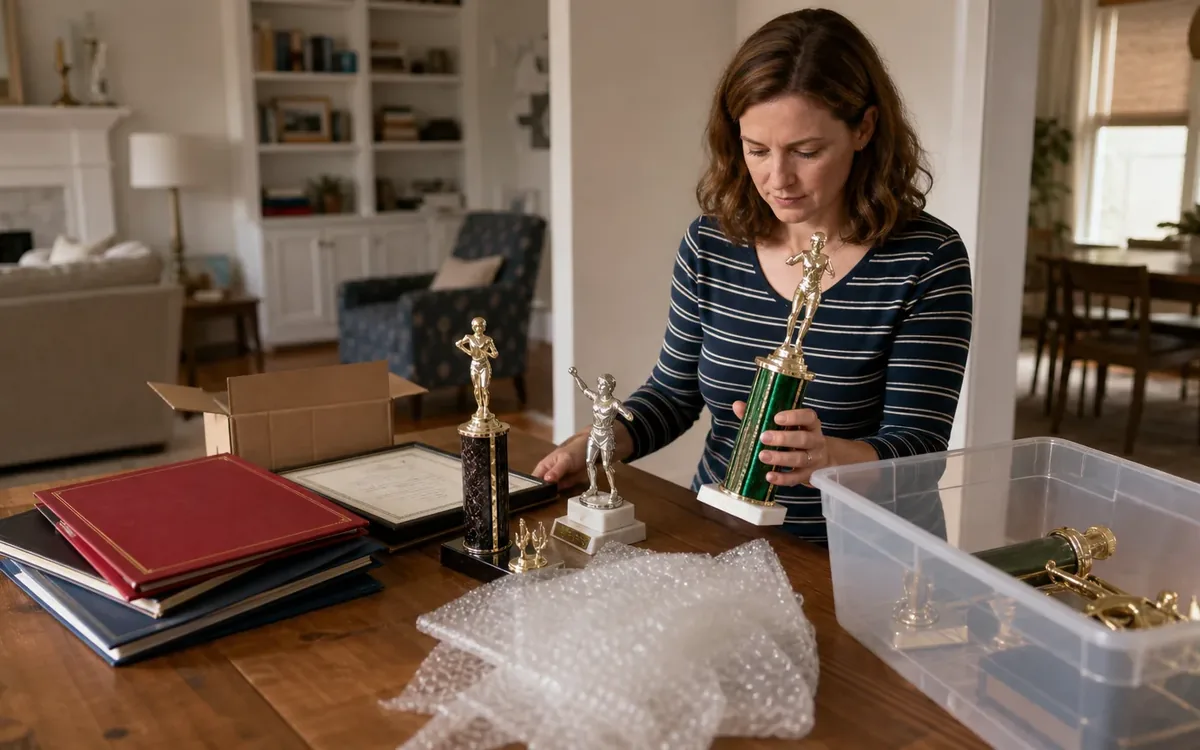
To Downsize Awards, keep a small display group and make a clear photo record. Then sort the rest for storage, family handoff, or disposal. For a move from a family home in Mount Pleasant, SC, let the new home’s space guide your choices. Keep the story, even when the object leaves.
Quick answer: Choose the awards that still matter to their owners. Photograph each chosen piece and record its name, date, and meaning. Set a firm shelf or box limit. Ask before passing awards to relatives. Check local disposal rules before discarding mixed materials, frames, or plaques.
How do you choose which awards to keep?
Start with downsizing and organizing support and the guide to choosing an estate cleanout approach. Keep awards that tell a clear story or bring real joy. Give each owner a voice. Size, age, and shine should not decide the whole choice. A small medal may mean more than a large trophy.
Spread one person’s awards across a clear table. Keep different family members’ items apart at first. This avoids treating one person’s memories as shared household clutter. Ask the owner which moments they want to recall.
A useful question is, “Would I miss this exact object?” Some people value the event, yet feel little bond with the award. A photo may serve them well. Others want to hold a medal or see a plaque each day.
Use these prompts to narrow the group:
- Keep an award that marks a turning point you still value today.
- Choose one strong example when several awards tell the same story.
- Set aside items whose names, dates, or history need more research.
- Ask each owner before removing awards tied to their work or childhood.
- Treat signed, rare, or unusual pieces as review items before making disposal choices.
Don’t make the oldest award the default winner. A recent work honor may matter more than school ribbons. Nor does a full set always need to stay together. The owner can choose a few pieces that show the arc of their life.
For a late relative’s awards, first confirm who may make decisions. Family wishes and legal control can differ. An executor, attorney, or other responsible person should resolve disputed ownership. A practical team should not decide who inherits a keepsake.

How can you make a compact record of accomplishments?
Use downsizing and organizing help alongside the guide to how estate cleanouts work. Build one small record before packing or releasing awards. Take clear photos, add brief notes, and group them by person. The goal is a usable family record, not a perfect archive that delays the move.
A record needs enough detail to make sense later. A trophy photo alone may leave out the event or year. Capture the front, any nameplate, and the back if it has marks. Place small medals beside their cases or ribbons.
For certificates, take a straight-on image in even light. Check that all words are clear when you enlarge it. Keep the whole sheet in view. Take a second image if a seal or signature matters.
Follow these five steps to build the record:
- Group the awards by owner, then choose a clear name for each group.
- Photograph each item against a plain surface with its key details visible.
- Add the person’s name, award title, date, and a brief note about its meaning.
- Save the files in a named folder and keep a separate backup copy.
- Check that another trusted person can find and open the finished record.
Use simple file names, such as a person’s name and award title. Add the year only when you know it. Mark unclear dates as unknown rather than guessing. A short voice recording can preserve a story that feels hard to write.
Keep public sharing separate from family storage. Certificates may show full names, school details, or other private facts. Ask before posting them online. Crop or hide private details in shared copies, while keeping the full image in the private record.
Downsize Awards to fit the smaller home
Plan the new space with downsizing and organizing support and the estate cleanout planning guide. Choose the display space before choosing the final display group. A shelf, wall, or small case sets a real limit. That limit helps preserve the best pieces without turning the new home into an award room.
Measure the usable shelf width and height. Note where doors open and where people walk. A tall trophy may fit a shelf yet block a window. A heavy plaque may need a safe mounting plan from the right installer.
Test the display at the current home. Place the chosen pieces within the planned space. Leave room to lift and dust each item. If the group feels crowded there, it may feel crowded after the move.
Give display and storage different roles. Display pieces should be things someone wants to see often. Stored pieces should have a clear reason to stay. “We haven’t decided” is a review status, not a lasting storage plan.
A small memory box can hold medals, ribbons, and unframed copies. Label it with the owner and its contents. Choose a place in the new home before moving it. Paid storage is a separate household choice, not a reason to keep everything.
Keep these practical limits in view:
- Reserve a named shelf or wall area for the final display group.
- Choose a storage box that fits the new home’s planned storage space.
- Keep heavy pieces where they can rest safely without crowding walkways.
- Leave fragile parts enough room so they won’t press against nearby items.
Shared rooms need shared agreement. One person may love a large display while another wants less visual clutter. A rotating display can help when both want to keep items. The stored group still needs a clear size limit.
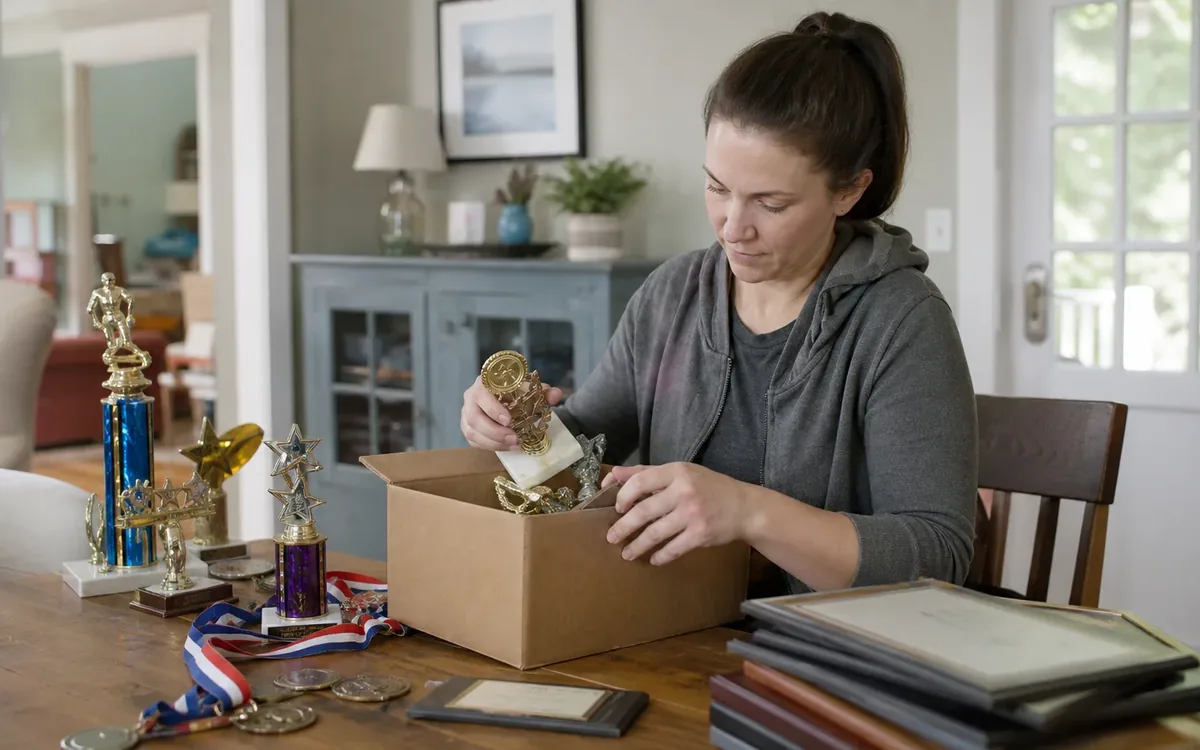
What should happen to awards you won’t keep?
Review options with downsizing and organizing support and the guide to estate cleanout steps. Ask about family handoffs, reuse, and local disposal rules before releasing items. Don’t assume a charity wants personalized trophies. Separate sentimental value from market value, and seek an appraisal when the item gives you a sound reason to do so.
Offer selected pieces to the person named on them first. For a deceased owner, follow the authorized decision process. A relative may want a photo but not the object. Make it easy to decline without guilt.
Schools, clubs, or trophy shops may have their own reuse policies. Contact them before making a trip. Describe the materials, names, and condition. A possible reuse option is not proof that a group accepts donations.
For awards, the key is to confirm a willing recipient. Don’t leave boxes with a group that hasn’t agreed to take them.
Trophies often mix plastic, metal, wood, and stone. A whole trophy may not belong in a recycling bin. The EPA’s guidance on reuse and recycling lists ways to reduce waste. Ask the waste provider about the actual parts you have.
A signed award, precious-metal medal, or unusual historic piece may need review. A qualified appraiser can assess value and explain the basis. A sales provider can discuss sale options separately. A cleanout worker should not be treated as the final authority on value.
Certificates can contain personal details. Use a suitable shredding option for papers you release. Ask about coated paper, foil seals, and attached materials first. Handle glass frames with care, and confirm disposal rules for broken glass.
Pack the kept pieces without losing their stories
Pair downsizing and organizing planning with the guide to how estate cleanouts work. Pack only after the display, storage, and release groups are clear. Keep labels with the items they describe. Protect loose parts and thin paper. Discuss packing needs with the move team rather than assuming all awards can travel the same way.
Make a short contents list for each award box. Match its label to the photo folder or record. This makes unpacking easier when many boxes arrive at once. It also helps the household find an item without opening every carton.
Look for weak joints, loose nameplates, and cracked bases. Record existing damage before packing. Don’t pull apart a trophy unless you know how it fits together. Old glue and thin plastic can break with little force.
Use packing methods suited to each item’s shape and condition:
- Wrap each trophy on its own and cushion points that can snap easily.
- Place medals in small labeled holders so ribbons and chains stay together.
- Keep certificates flat and support them so corners do not bend during handling.
- Protect framed glass separately and tell the move team which boxes contain it.
- Keep the contents list and photo record outside the packed award boxes.
For valued papers, choose storage materials suited to their long-term care. A paper conservator can advise on fragile or damaged certificates. Don’t tape tears or peel away seals without advice. A quick repair may harm the words or paper.
Plan where award boxes will land in the new residence. Keep them away from busy paths while unpacking. If wall mounting needs tools or changes to the home, arrange that work separately. The homeowner, property manager, or qualified contractor should address permission and safe mounting.
Keep household choices separate from professional decisions
Use downsizing and organizing support and the estate cleanout decision guide to frame a clear handoff. The household chooses which memories to keep and where they belong. A practical team may discuss sorting, labels, packing needs, and access. Legal rights, market value, home condition, and compliance questions stay with the responsible professional or authority.
Write down who may approve each release group. Name one contact for routine questions. Keep disputed items out of removal boxes. This reduces the risk of a keepsake leaving before the right person agrees.
Ask a team what its proposed work covers. Confirm who supplies packing materials and who handles transport. Discuss separate arrangements for storage, appraisals, repairs, sales, and disposal. These choices should be clear before anyone acts.
Home sale preparation may create pressure to clear shelves fast. A real-estate professional can advise on presentation needs. An inspector addresses condition within their role. Neither role replaces the household’s choice about which awards remain personal keepsakes.
Clutter Cleaner of South Carolina is based in Mount Pleasant, SC. Charleston is its primary market, with a statewide service territory. Its listed services include downsizing and organizing and move management. To discuss your award-sorting needs within a broader move, call (843) 972-7020.
FAQ
Should I keep every award my child earned?
Let your child help choose, when possible. They may value different items than you expect. Pick a few that tell their story, then photograph the rest. If they live elsewhere, ask what they want before packing a box for them. Don’t treat a handoff as complete until they agree.
Can photographs replace original certificates?
Photos can preserve memories, but some originals may serve a formal purpose. Keep certificates tied to current work, training, or required credentials until you check. Ask the issuing body or responsible professional what records they accept. A family photo archive should not be treated as proof of a current qualification.
Should I remove names before donating trophies?
Ask the recipient what they accept before changing anything. Some may want blank parts; others may decline trophies altogether. Removing a plate can damage the base or leave sharp edges. Photograph the full award first. Keep personal details private when items leave the household, and choose safe handling methods.
How can siblings divide a parent’s awards fairly?
Start with the authorized person and any relevant estate instructions. Then invite each sibling to name the pieces they value. Share photos so everyone can recall the full collection. If claims conflict, hold those items aside. An attorney or responsible estate representative should address legal rights, rather than the sorting team.
What if I feel guilty about discarding an award?
Separate the honor from the space the object takes. Write a short note about what it meant, and keep a clear photo. You can value the work without keeping every object tied to it. If you’re unsure, set aside a small review group with a named decision point before the move.



