
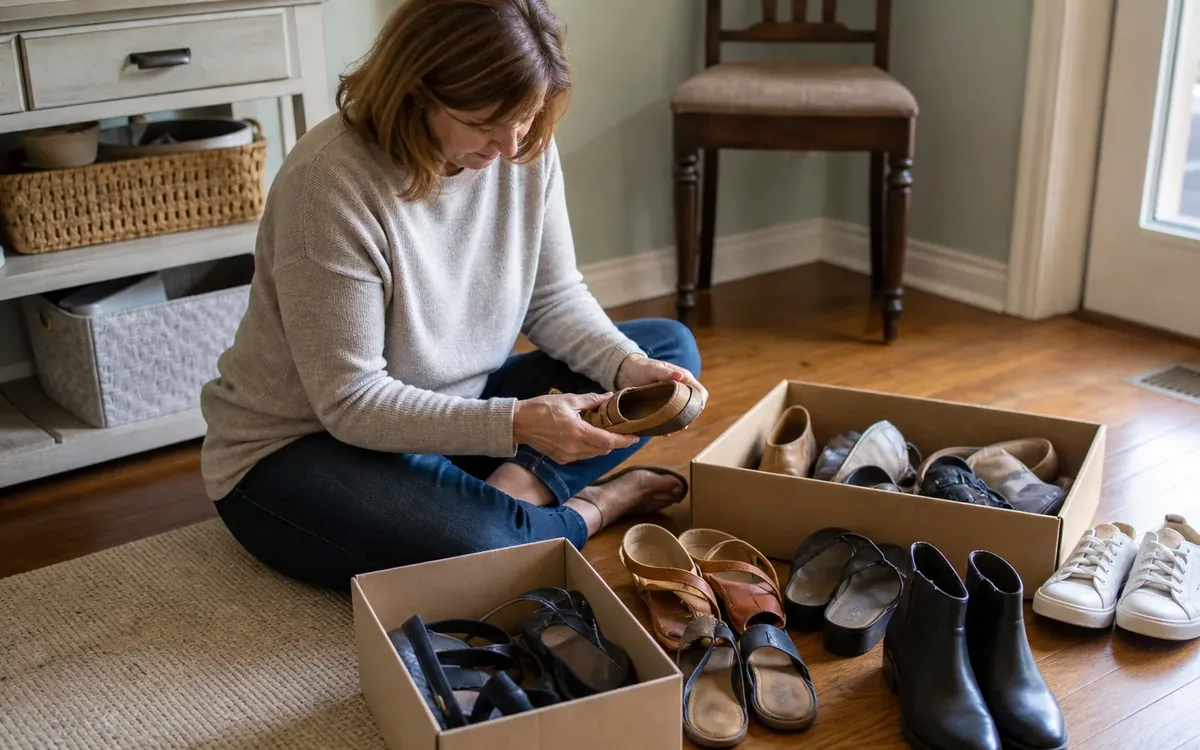
To Downsize Shoes for a smaller home in Myrtle Beach, SC, choose pairs that fit well and serve your real life. Start with comfort and current use, then consider rain, heat, and walking surfaces. Closet space comes last. An empty shelf doesn’t make an unused pair worth keeping.
Quick answer: Keep shoes you comfortably wear for activities you still do. Compare pairs that serve the same need. Give occasional shoes a clear purpose, and assign unwanted pairs a next step. Plan storage around the shoes you select, rather than filling every space available.
Downsize Shoes by Need Before Closet Space
Use the downsizing and organizing service page for broader household planning. Browse the home-transition resource guides for related topics.
Build your shoe plan around the life you’re moving into. Keep pairs that support work, walks, home routines, and events you expect to attend. Set aside shoes tied to old habits. Your goal is a useful collection, with enough choice for real needs and fewer pairs waiting without a purpose.
A large closet can hide hard choices. You may own several pairs for the same task. Yet none may feel good enough for regular wear. Start by asking which pairs earn their place through use. Don’t choose a target number before you know your needs.
Think about your new home’s daily routine. You might walk farther to collect mail or reach your car. You may spend less time at formal events. A move could change your work clothes or favorite hobbies. These changes matter more than the number of shelves.
Write down the activities that need distinct footwear. Keep this list short and tied to your actual plans. For each activity, name the pair you reach for first. That pair gives you a useful starting point for comparing the rest.
You don’t need one pair for every possible event. Some shoes serve several roles well. Others serve one rare need that still matters. The household decides which needs deserve space. A practical organizing team may help record those choices, but shouldn’t choose your comfort needs for you.
How Can You Tell Which Shoes Still Fit Your Life?
The downsizing and organizing service overview can help frame the household project. The home-transition guide collection offers more planning ideas.
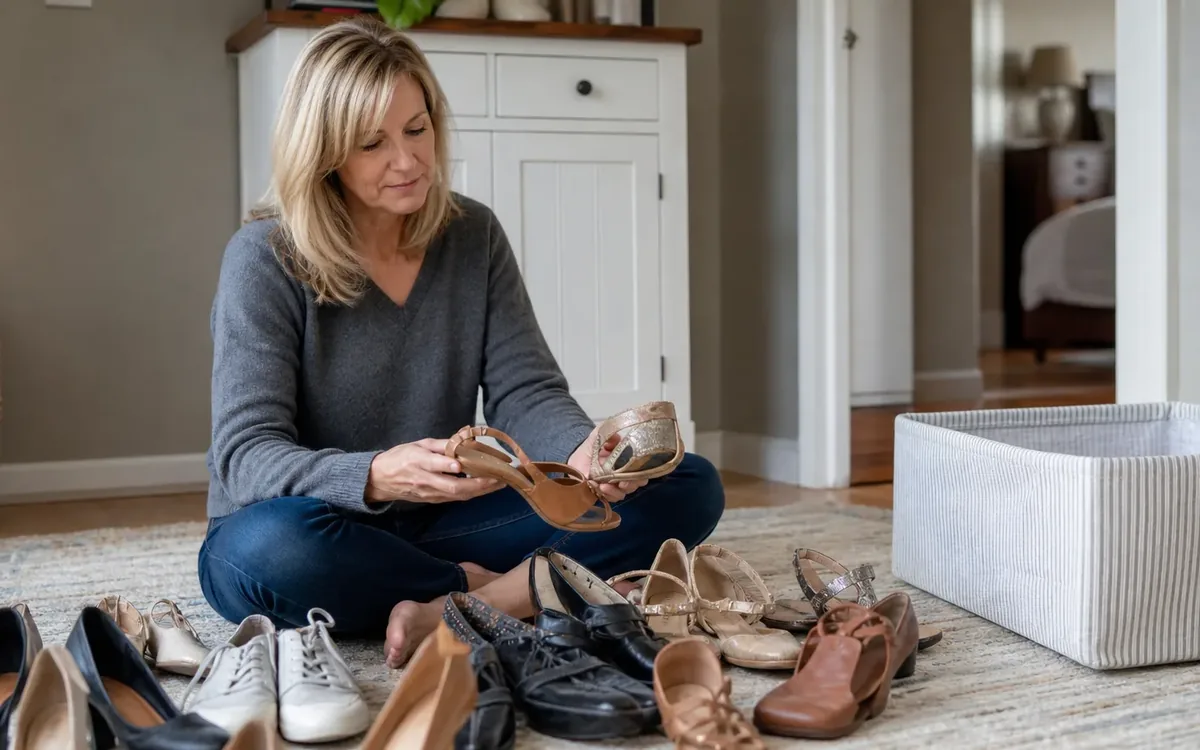
Use your own recent wear experience to judge fit and comfort. A pair belongs in your daily group when you choose it willingly and wear it comfortably. Shoes you avoid because they hurt, feel cramped, or slip deserve a separate decision. Don’t count hoped-for future comfort as present comfort.
Size labels alone won’t settle this choice. Different pairs with the same size can feel quite different. Memories can mislead, too. A shoe that worked years ago may no longer suit your feet or routine. Record what you know now, rather than what you paid then.
If you haven’t worn a pair lately, label its comfort as unknown. You don’t need to settle every uncertain pair during one sort. Keep it apart from confirmed favorites. Any needed personal wear review should happen on your terms, without a move deadline forcing the choice.
Use these notes to make each decision more concrete:
- Record which pair you choose first for each activity you still do.
- Note any pain, pressure, slipping, or other concern you already notice during wear.
- Mark pairs with unknown comfort separately from shoes you know work well.
- Ask a qualified health professional about foot pain or changing footwear needs.
A cleanout or move team can help track labels and groups. It can’t diagnose foot problems or decide which shoes meet medical needs. Keep prescribed footwear and related records outside the general discard group. Ask the responsible health professional before changing a care plan.
Which Shoes Do You Actually Use?
Start with the downsizing and organizing planning page for help defining the project. Explore the home-transition resource library for other sorting topics.
Actual use means more than wear frequency alone. Daily shoes need a strong place in your plan. A comfortable pair for a rare family event may deserve space, too. The useful question is what each pair does for you now, and why another retained pair can’t reasonably serve that need.
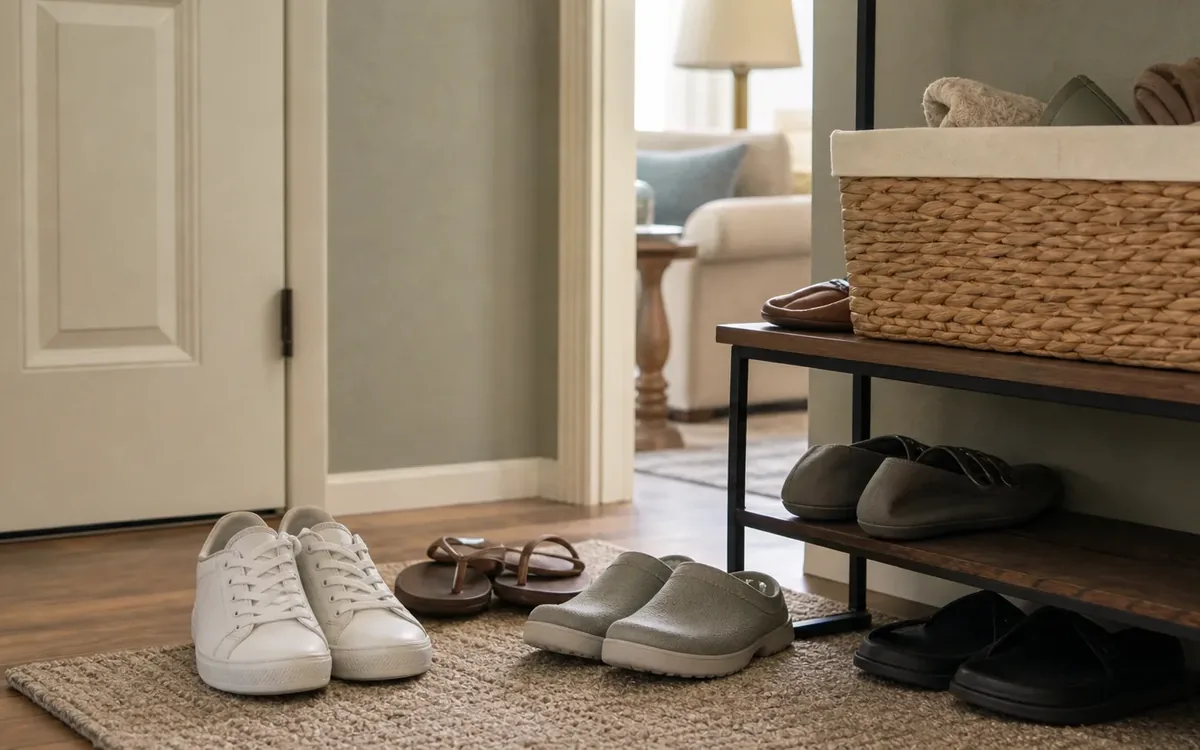
Look at the shoes near your door first. They often show your real choices more clearly than a tidy closet. Then look at the pairs left behind. Ask what makes you pass them over. It may be fit, weight, upkeep, style, or a change in routine.
Compare shoes with the same role side by side. Focus on the pair you prefer wearing. A spare can make sense when it serves a clear need. Keeping every backup creates a pile of choices you may never use. Each extra pair should have its own reason.
Give special-use footwear a specific job. That might mean a work requirement, a hobby, or an event you expect. Keep shoes required for work apart from fashion choices. Direct questions about workplace rules to your employer or the responsible safety professional.
Sentimental shoes need a different label. Wedding shoes or a loved one’s slippers may matter without being wearable. Decide if they belong with keepsakes rather than daily footwear. A photo may preserve part of the memory, but the choice to keep the object remains yours.
Don’t use purchase price as proof of present value. Money already spent can’t create comfort or a useful role. If you hope to sell a valuable pair, seek qualified advice when needed. An organizing team doesn’t determine an appraisal value or authenticate a collectible item.
How Should Rain, Heat, and Walking Surfaces Shape Choices?
The downsizing and organizing service page supports planning around a smaller home. The home-transition guides provide broader moving context.
For South Carolina rain and heat, retain footwear that suits the weather and activities you expect. Consider the walking surfaces at the new home, too. Use your known comfort experience and product information. Don’t assume a pair suits wet ground or long walks because of its style or appearance.
Picture ordinary trips rather than ideal days. Think about reaching the car, walking a pet, buying groceries, or meeting friends. Rain can change those plans. Heat may change which shoes you prefer. These needs should shape your choices without creating a separate pair for every weather forecast.
Ask about the new home’s routes before packing. Useful details include steps, outdoor paths, shared halls, and parking access. Seek facts from the owner, property manager, or appropriate property professional. Don’t treat shoe selection as proof that a route or property is safe.
Use those details as prompts for your shoe inventory:
- List the outdoor trips you expect to make as part of daily life.
- Note known steps, paths, and indoor surfaces that affect your footwear choices.
- Identify the shoes you already prefer during warm weather and rainy days.
- Check maker information before relying on claims about grip or weather resistance.
Keep a weather-related pair because you use it, not from fear alone. Boots kept for a past climate may have little role now. A pair with a known local use may matter more. Avoid judging performance from the look of the sole or material.
If balance, mobility, or foot health affects your choices, seek qualified advice. A household sorting plan can’t assess those needs. Likewise, a property inspection belongs with the proper professional. A move team may note access details for its planning, not certify surfaces or recommend medical footwear.
Give Every Pair a Clear Next Step
Use the downsizing and organizing service information to frame the scope of help. The guide to cleaning out an estate covers a broader household sort.
Once you know which shoes serve your life, give each remaining pair a clear destination. Separate daily wear, special-use shoes, keepsakes, and items leaving the home. Keep uncertain choices visible rather than hiding them in packed boxes. A labeled decision is easier to hand off than a mixed pile.
Use this five-step sorting order:
- Gather shoes from closets, entry areas, bags, and other places you use for storage.
- Group complete pairs by current activity, keeping loose shoes in a separate search group.
- Choose known comfortable favorites before comparing extra pairs that serve the same purpose.
- Assign other pairs to keepsakes, possible sale, donation, disposal, or a pending decision.
- Record the chosen destination and the person responsible for completing each next step.
A pending group should have a named question. Perhaps you need to find the mate or ask a relative. You may need current donation rules or advice about value. Write that question on the label. This keeps uncertainty from turning into a second hidden collection.
Keep ownership separate from usefulness. In a shared home, ask before removing another person’s shoes. Estate items can involve rights that household members can’t settle through sorting alone. The executor, attorney, or other responsible party should resolve ownership questions before a handoff.
Avoid treating every unwanted pair as a donation. The receiving group decides what it accepts. Check its current rules and describe condition honestly. The AARP guide to getting rid of items offers broader help with items leaving your home.
Ask about local disposal options for pairs that won’t be accepted. Don’t assume shoes belong in curbside recycling or a clothing collection bin. The EPA guide to reducing waste and recycling offers general guidance. Check local rules before choosing a route for your shoes.
Plan Storage and Provider Handoffs Around Your Choices
The downsizing and organizing service page describes the broader planning service. The guide to how estate cleanouts work explains a related household transition.
Plan storage after you choose the shoes, not before. Record how many pairs need daily access and which can stay with occasional-use items. A practical cleanout or move team may discuss labels, packing groups, access needs, and removal scope. Confirm the agreed work instead of assuming every destination is included.
Measure available space only as part of your inventory plan. Note existing shelves, cupboards, and other storage areas. List any furniture you hope to keep. For shoe racks or cabinets, record the item and intended destination. Leave assembly, repair, anchoring, and other technical work to a qualified provider.
Keep the first-needed shoes in a clearly marked group. Each household member should know where their chosen pairs are going. Use names on labels when shoes look alike. A short written inventory can prevent confusion between a donation bag and a box meant for the new home.
Useful handoff notes include the following tasks:
- Name the household member who can approve each outgoing group before removal begins.
- List daily shoes separately from keepsakes, work footwear, and items awaiting a decision.
- Confirm who will contact donation groups, sale providers, or local disposal programs.
- Record any storage furniture that needs a separate qualified provider’s review or work.
Paid storage is a separate household and provider choice. It can defer a decision, but it doesn’t create a purpose for unused shoes. If you choose it, keep a clear inventory. Sale arrangements, appraisals, and disposal routes also need their own terms and responsible providers.
Clutter Cleaner of South Carolina serves all of South Carolina. Its physical location is Mount Pleasant, and Charleston is its primary market. Households in Myrtle Beach, SC can discuss project scope by calling (843) 972-7020. Any contractor, legal, property, or compliance decision stays with the responsible professional or authority.
FAQ: Fit, Comfort, and Shoe Downsizing
Refer to the downsizing and organizing service page for project planning. Browse the home-transition resource guides for related household decisions.
How many pairs should I keep?
There isn’t one right count for every home. Start with your current activities and known comfortable choices. Add special-use pairs only when they have a clear role. Then compare the chosen group with available storage. If space is tight, review duplicate roles before cutting shoes that meet distinct needs.
Should I keep shoes that were expensive?
Price alone isn’t a reason to keep them. Ask if they fit, feel good, and serve your life now. Separate any resale plan from the keep decision. Check condition and market interest with an appropriate sale provider. Seek a qualified appraisal if the item’s value calls for one.
What should I do with shoes that hurt?
Keep them out of your confirmed daily-use group. Note the concern instead of expecting it to disappear after the move. Ask a qualified health professional about ongoing pain or changed needs. If the shoes belong to a care plan, get advice before replacing or discarding them.
Can I donate worn shoes?
That depends on the receiving group’s current rules and the shoes’ condition. Contact the group before packing a donation handoff. Describe wear, missing parts, or other issues honestly. If the pair isn’t accepted, ask the relevant local program about disposal. Don’t assume donation and recycling rules are the same.
Should sentimental shoes stay in the closet?
They can, but they don’t need daily shoe space. Decide if you’re keeping them for wear or memory. A keepsake label makes that purpose clear. You might keep the pair, retain a photo, or let it go. Family wishes and ownership questions may need discussion before any removal.
Can a move team choose my keep pile?
A team may help group, label, and track shoes within agreed work. Your comfort, use, and personal priorities remain household decisions. Give clear approval before outgoing items leave. Medical questions, legal ownership, and appraisal needs belong with the right professional. A handoff plan should show who decides each unresolved issue.



