

A piano or musical instrument should move to a smaller home only if it fits the space, supports the household’s plans, and can be transported safely. Decide first whether each instrument will move, stay with family, find a new owner, or be discarded. Then involve the right separate professional, such as a piano mover, technician, appraiser, auction specialist, or disposal provider.
Quick answer: Measure the new space and access route, identify the instrument’s owner, document its condition, and choose one destination for it. A household can decide what it wants to keep. A practical cleanout or move team may discuss sorting, sequencing, and clearing surrounding contents. Piano condition, value, transport method, repairs, sale terms, and disposal requirements belong with the relevant specialist or authority.
This distinction matters because instruments are not ordinary furniture. A piano can be heavy, awkward, mechanically sensitive, and difficult to place. Smaller instruments may be valuable, fragile, sentimental, or easy to lose among cases and household contents. The goal is not simply to remove them. It is to make a deliberate decision before a move or property transition forces one.
Why are pianos and organs difficult to downsize?
A piano occupies both physical and emotional space. Families may remember lessons, recitals, holidays, or a relative who played. That history can make an instrument feel important even when nobody currently uses it.
Its physical requirements are equally important. A smaller South Carolina home may lack a suitable wall, floor area, or access path. Doorways, stairs, turns, thresholds, elevators, porch steps, and parking access can affect whether a move is practical. Humidity, direct sunlight, vents, and room use may also influence placement, but a piano technician should advise on instrument-specific environmental concerns.
Organs raise different questions. Some are freestanding electronic instruments, while others have separate benches, pedals, speakers, cables, or accessories. Older electronic models may be difficult to evaluate without model information and specialist input. Do not assume that age makes an organ valuable, or that working keys mean all components function properly.
A practical downsizing plan treats these as separate issues:
- Ownership: Who has authority to decide what happens to the instrument?
- Use: Will anyone realistically play it in the next home?
- Fit: Is there an appropriate location and a workable access route?
- Condition: Does it need an assessment, repair, tuning, or electrical evaluation?
- Value: Is a formal appraisal or market opinion warranted?
- Transport: Does it require a specialist mover?
- Destination: Will it move, transfer to family, sell, be donated, or be discarded?
Clutter Cleaner of South Carolina offers downsizing and organizing support statewide. That support can help a household sort possessions and organize transition decisions, but a piano technician, specialist mover, appraiser, electrician, or other qualified provider should handle decisions within that provider’s expertise.
What should you decide before requesting estimates?
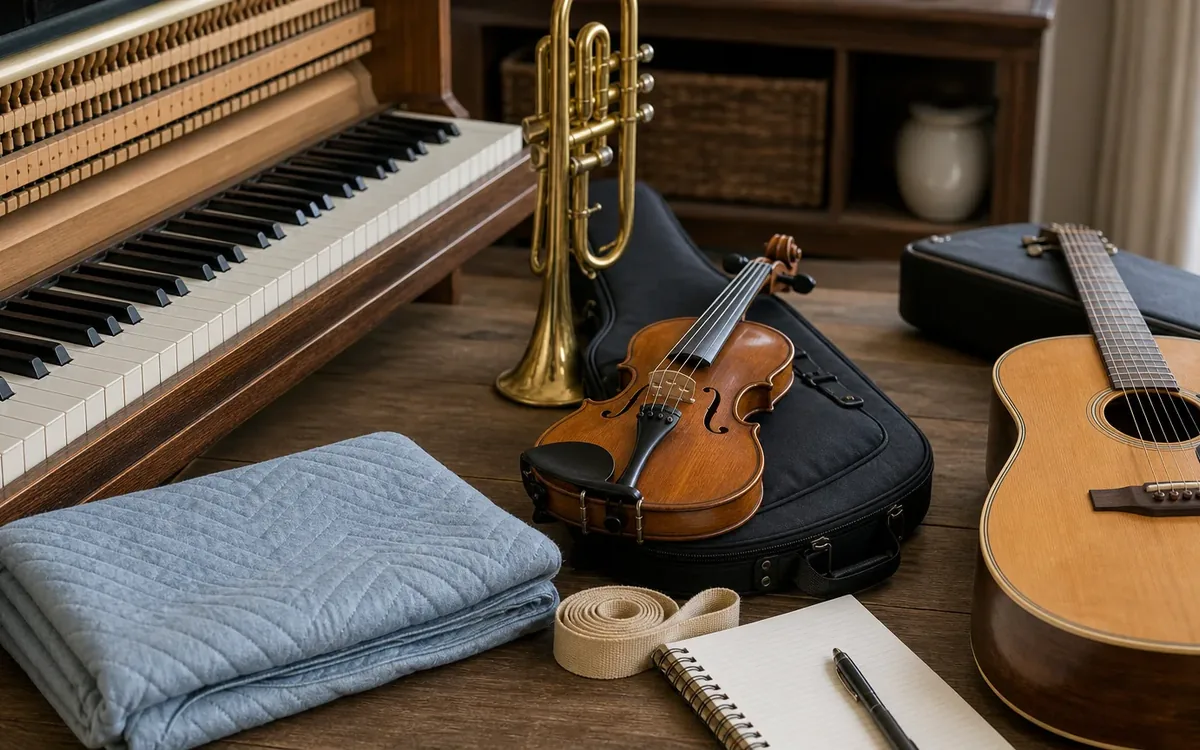
Make the household decisions before asking providers to solve an undefined problem. A mover cannot decide whether a piano belongs in the new home, and an appraiser cannot decide whether its sentimental meaning outweighs its market value.
Start with four decisions:
-
Choose the preferred outcome. State whether the first choice is moving, family transfer, sale, donation, or disposal. A backup choice prevents the instrument from stalling the entire transition.
-
Confirm who may authorize it. For a jointly owned instrument, estate asset, trust asset, or item involved in a dispute, identify the person with decision-making authority. Questions about an estate, will, trust, ownership, or required consent belong with the appropriate attorney, fiduciary, court, or other responsible authority.
-
Set a space priority. Decide how much of the smaller home can reasonably be devoted to music. Compare the instrument with competing needs such as seating, dining, mobility clearance, storage, or a home office.
-
Identify nonnegotiable accessories. Benches, sheet music, pedals, stands, amplifiers, bows, mouthpieces, covers, cases, certificates, receipts, and maintenance records can become separated during a move. Decide what must remain with each instrument.
Create a simple record for every major instrument. Include the maker, model, serial number if visible, dimensions, known repair history, current location, accessories, and photographs. Do not dismantle a piano or move heavy components merely to find an identifying number. Ask a qualified technician if safe access is unclear.
For a broader explanation of sorting property during a major transition, see the guide to cleaning out an estate. Its decision framework is useful even when the immediate challenge is a piano or instrument collection rather than an entire estate.
Will the instrument actually fit in the smaller home?
Measure more than the destination room. The complete route matters. A piano that fits against a wall may not pass through a narrow turn or reach an upper floor safely.
Record these details for discussion with a specialist mover:
- Instrument width, depth, and height
- Door and hallway widths along the route
- Stair width, landings, turns, and railings
- Exterior steps, gates, porches, and thresholds
- Elevator dimensions and building requirements, if applicable
- The proposed room and exact placement area
- Driveway, loading, and parking limitations
- Known weak, uneven, or recently repaired surfaces
Measurements collected by the household are planning information, not a professional transport assessment. A piano mover should determine crew needs, equipment, protection methods, disassembly requirements, and whether the route is acceptable. A structural professional should address concerns about floor capacity or building alterations. A building manager, homeowners association, landlord, or local authority may set access or work rules.
Do not plan to remove doors, railings, windows, or architectural features without the owner’s approval and qualified contractor input. Contractor work is a separate household choice. The contractor should define scope, feasibility, permits, restoration, and cost.
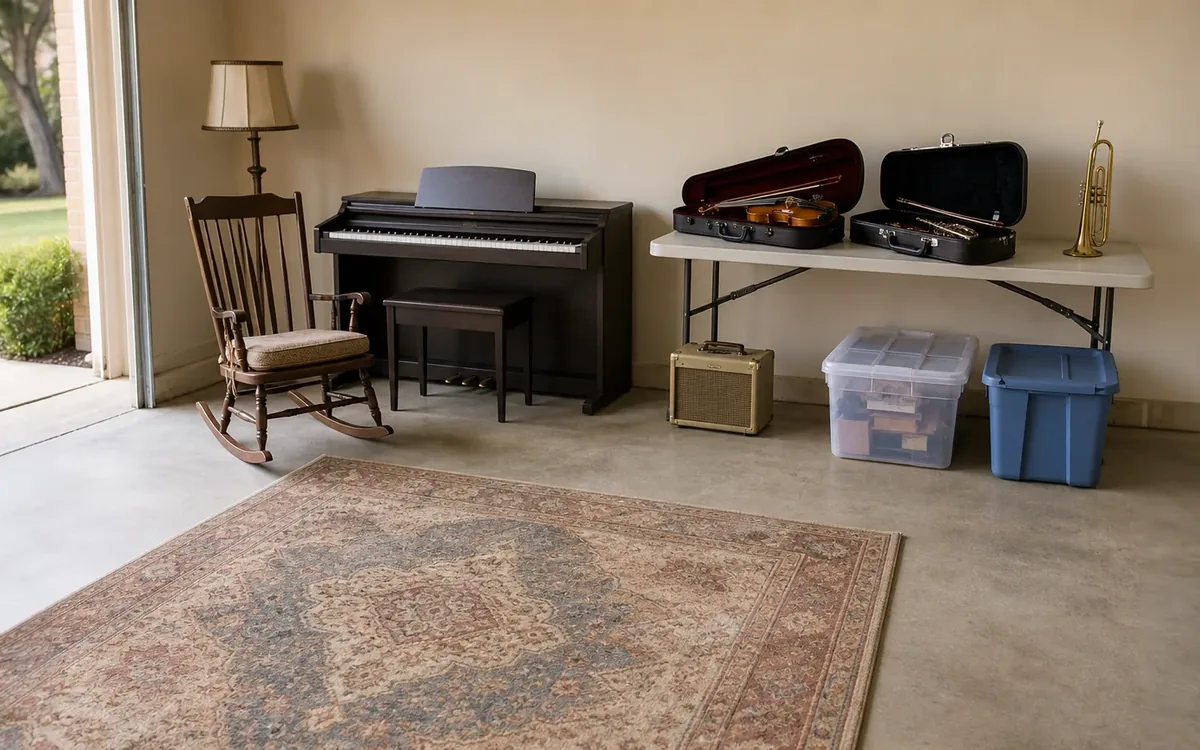
It can also help to make a paper floor plan. Mark the piano footprint, bench clearance, walking paths, doors, vents, and nearby furniture. If the instrument forces daily movement through a narrow path or eliminates an essential use of the room, it may not be a sensible fit even when it technically fits.
How should you decide whether to keep, transfer, sell, or donate it?
Use one consistent test rather than making the decision solely from guilt or a hopeful online asking price. Consider use, fit, condition, transfer interest, and the effort required for the chosen outcome.
Keep and move it
Keeping may make sense when the instrument will be played, fits the new home, and has a workable specialist-approved route. Confirm who will arrange transport and whether the destination has building, elevator, insurance, or scheduling requirements.
Transfer it to family or a friend
A family transfer should be an actual agreement, not a vague expression of interest. The recipient should confirm that they want the instrument, have room, accept any transport or repair responsibilities assigned to them, and can receive it under the property’s access rules.
Write down what accompanies the instrument. Clarify whether the bench, music, cover, accessories, and records are included. If ownership or tax consequences are uncertain, seek advice from the appropriate legal or tax professional.
Offer it for sale
A household may choose a private sale, consignment, dealer inquiry, auction, or estate sale. The best channel depends on the instrument, condition, documentation, demand, and sale circumstances. An auctioneer, dealer, or consignment business should explain acceptance criteria, commissions, pickup terms, reserves, payment, and unsold-item policies.
Online asking prices do not establish value. Compare exact models where possible, but obtain a qualified appraisal when value affects an estate, equitable distribution, insurance, tax reporting, charitable documentation, or another consequential decision. The responsible attorney, insurer, accountant, court, or tax professional can explain whether a particular valuation format is required.
Explore donation
Ask a prospective recipient before arranging transportation. Schools, churches, nonprofits, music programs, and community organizations may have limited space, specific condition standards, or no current need. The receiving organization decides whether it will accept the item and what documentation it provides.
Do not promise that a donation is deductible or assign your own tax value. Tax eligibility, substantiation, and appraisal requirements belong with the recipient’s documentation and qualified tax advice.
Choose disposal when other routes are not practical
An instrument may be damaged, incomplete, contaminated, structurally unsound, or unwanted by potential recipients. A qualified disposal provider should determine handling methods and accepted materials. Local facilities and authorities control disposal rules. Do not leave an instrument at a donation site without confirmed acceptance.
When should a piano mover or technician be involved?
Contact a specialist early when the preferred outcome involves keeping, transferring, selling, or donating a piano. The household can explain the goal, but the specialist should assess the technical work.
A piano mover may discuss:
- Access at the current and destination properties
- Instrument type and dimensions
- Protective equipment and handling approach
- Whether specialist disassembly is needed
- Building or elevator requirements
- Responsibility for preparation and reassembly
- Transport-related limitations or exclusions
A piano technician may discuss:
- Apparent mechanical condition
- Tuning and maintenance needs
- Repair feasibility
- Environmental placement concerns
- Whether movement could affect service needs
- Identification details relevant to further research
These roles are not interchangeable. A mover’s transport assessment is not necessarily a condition appraisal. A technician’s service opinion is not necessarily a formal valuation. Ask each provider to describe qualifications, scope, insurance, exclusions, and written terms.
For an electronic organ, keyboard, amplifier, or powered studio equipment, an electronics technician or manufacturer-authorized resource may be more appropriate. Electrical safety questions should go to a qualified electrician or repair professional. Disconnect equipment only according to manufacturer guidance, and label cables before packing.
How do you sort a mixed instrument collection without losing parts?
Small instruments often create a different problem from pianos: many related pieces spread across drawers, closets, music rooms, and storage areas. A violin without its bow, a woodwind without its mouthpiece, or an amplifier without its power cable may be harder to identify, use, or transfer.
Sort by instrument system, not merely by object type. Keep the instrument, case, essential components, documentation, and clearly associated accessories together.
Use these categories:
- Ready to play
- Needs specialist assessment
- Moving to the new home
- Reserved for a named recipient
- Pending appraisal or sale decision
- Accepted for donation
- Approved for disposal
- Ownership or authority unresolved
Avoid permanent labels on instruments and cases. Place a removable tag on the case handle or use a labeled container. Photograph valuable or delicate items before packing, including visible condition and identifying marks.
Sheet music deserves its own decision. Separate family-marked scores, out-of-print materials, teaching books, loose copies, and ordinary duplicates. Copyright questions about copying or distributing music should be referred to an appropriate rights source or legal professional.
For collections with violins, guitars, brass, woodwinds, percussion, recording equipment, or rare accessories, consider whether one specialist can competently assess everything. Different dealers and appraisers may focus on different categories. Appraisal is a separate service selected by the household or responsible fiduciary, not a guaranteed part of organizing or cleanout assistance.
What can a cleanout or move team help coordinate?
A practical cleanout or move team may discuss how instrument decisions fit into the larger home transition. The conversation can cover sorting zones, room-clearing order, packing dependencies, destination labels, family pickups, and coordination points with separately selected providers.
Clutter Cleaner of South Carolina lists estate cleanouts, downsizing and organizing, auctions and estate sales, move management, home sale preparation, and code compliance support within its statewide scope. The exact scope for a particular project should be confirmed directly rather than assumed.
A team may help the household plan around questions such as:
- Which rooms must be cleared so a specialist has safe access?
- Which accessories belong with each instrument?
- Has a family recipient confirmed the transfer?
- Is an appraisal decision still pending?
- Must the instrument leave before staging or property photography?
- Are there other contents blocking doors, stairs, or loading areas?
- Who will communicate with the piano mover, technician, auction provider, or recipient?
The household or authorized decision-maker still chooses the outcome. The piano mover controls specialist transport methods. Technicians evaluate instrument condition within their scope. Appraisers determine valuation under their professional standards. Real-estate agents advise on marketing and showing strategy. Inspectors report within the terms of their inspection. Contractors decide how to perform agreed building work. Government agencies, facility operators, associations, and other authorities determine applicable compliance requirements.
Storage is also a separate choice. If an instrument cannot move directly to its destination, the household should evaluate a storage provider’s access, environment, insurance terms, handling rules, and contract. A technician can advise whether proposed conditions are suitable for the specific instrument. Do not treat storage as a substitute for making an ownership decision.
Build a decision file before the home transition advances
Keep instrument information in one folder, whether digital or paper. This reduces repeated searches and makes it easier to brief specialists accurately.
Include:
- Ownership or authorization notes
- Maker, model, serial number, and dimensions
- Current-condition photographs
- Repair, tuning, purchase, or appraisal records
- The preferred outcome and backup outcome
- Recipient or buyer contact details
- Written acceptance from a donation recipient, if applicable
- Provider estimates and scope documents
- Building, elevator, parking, or access instructions
- A list of included accessories
- The confirmed destination
Do not place keys, small components, receipts, or irreplaceable records loose on top of the instrument. Keep them in a clearly labeled document pouch or container controlled by the responsible person.
Before anyone arrives, remove ordinary clutter from the route without shifting the instrument itself. Secure pets, identify fragile flooring or walls, and tell the provider about stairs, tight corners, gates, or access restrictions. Let the specialist decide how to prepare and move the instrument.
Short FAQ
Should I move a piano because it belonged to a relative?
Sentimental importance is a valid reason to consider keeping it, but it is not the only factor. Confirm ownership, future use, available space, transport feasibility, and condition. If the original instrument will not fit, the family might preserve photographs, recordings, sheet music, or a small associated object instead.
Can an ordinary household mover move a piano?
Ask the mover directly about piano-specific experience, equipment, insurance, exclusions, and the exact instrument and route. A specialist piano mover may be appropriate. The provider, not a cleanout guide, should determine whether it can safely accept the work.
Is an old piano automatically valuable?
No. Age alone does not establish market value. Maker, model, condition, restoration history, local demand, and transport burden can matter. Use a qualified appraiser when a formal or consequential value is needed.
What if nobody wants the instrument?
Confirm that potential recipients have given a clear answer. Then explore relevant dealers, auction or consignment providers, donation recipients, and lawful disposal options. Each party decides what it accepts and under what terms.
Who decides whether repairs are worthwhile?
A technician can describe condition and repair options. An appraiser or market specialist can address value within their scope. The owner or authorized fiduciary decides whether to proceed, with legal, tax, estate, or insurance advice when those issues affect the choice.
A successful instrument downsizing plan ends with a named destination, a responsible decision-maker, and the correct specialist for any technical work. Make those decisions before the piano or collection becomes the last unresolved obstacle in the home.



