
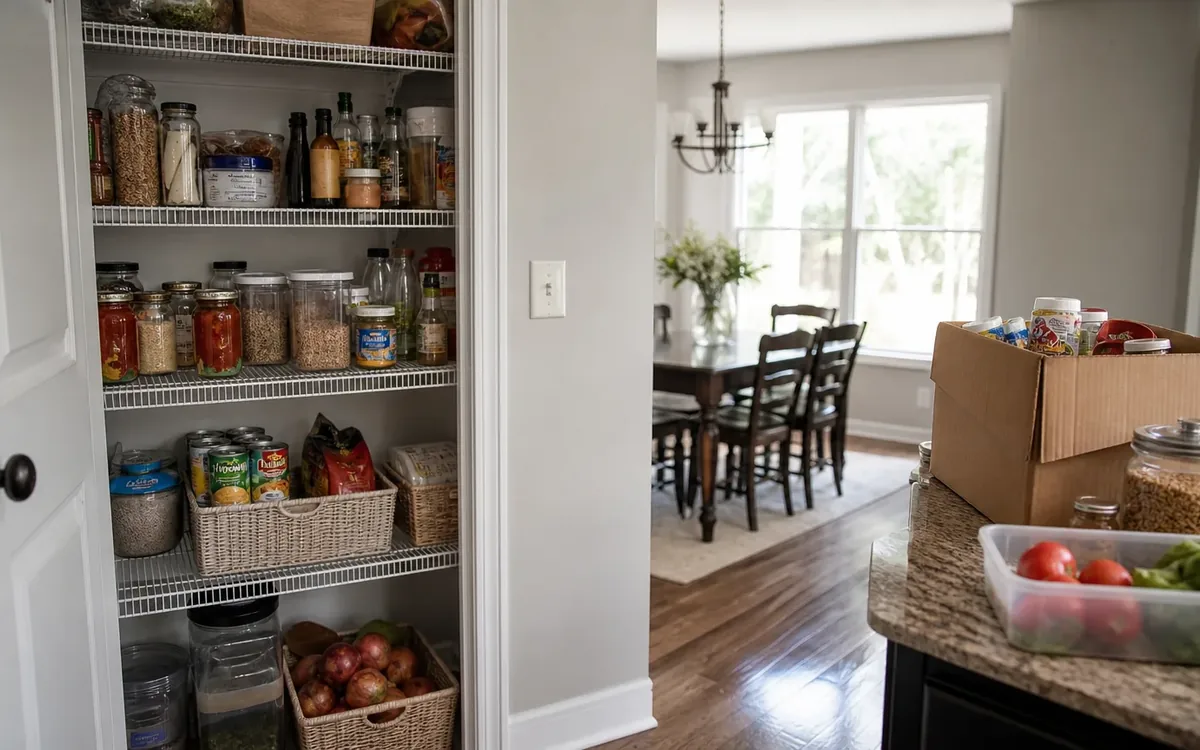
Downsize a pantry and freezer before a move by stopping bulk purchases, inventorying what you have, planning meals around priority foods, and setting firm limits on what will travel. In South Carolina heat, chilled and frozen food needs especially careful handling. Treat moving day as the final checkpoint, not the day to decide what to keep.
Quick answer: Create four food zones: use first, donate if accepted, move safely, and discard. Eat freezer items and open packages first, keep only worthwhile shelf-stable goods, and confirm food-safety guidance with the appropriate authority. Do not assume a mover, cleanout team, charity, or storage provider will accept food without asking.
This approach is not an estate-cleanout checklist. It is a use-first calendar designed around food, spices, containers, and backup supplies. The goal is to steadily reduce volume while protecting food safety and avoiding a last-minute kitchen purge.
Why should you start with a use-first inventory?
A pantry inventory is most useful when it tells you what to eat next. A long spreadsheet may look organized, but it does not help if the foods that require attention remain hidden behind newer purchases.
Begin with a quick category count rather than documenting every detail. Group items as:
- Frozen meat, seafood, vegetables, fruit, and prepared meals
- Refrigerated sauces, dairy, produce, and beverages
- Open pantry packages
- Unopened shelf-stable foods
- Baking supplies and spices
- Snacks and breakfast items
- Emergency or storm-season backup supplies
- Food-storage containers, coolers, and reusable bags
Within each category, move open, perishable, damaged, or awkward-to-transport items to the front. Keep questionable food separate until you can evaluate it using package directions and current food-safety guidance.
The household can decide which foods fit its tastes, dietary needs, destination, and available packing space. A practical downsizing and organizing service may discuss sorting zones, room flow, packing priorities, and what should be addressed before moving day. Food-safety determinations belong to the household using guidance from the appropriate public-health authority, not to a cleanout or move team.
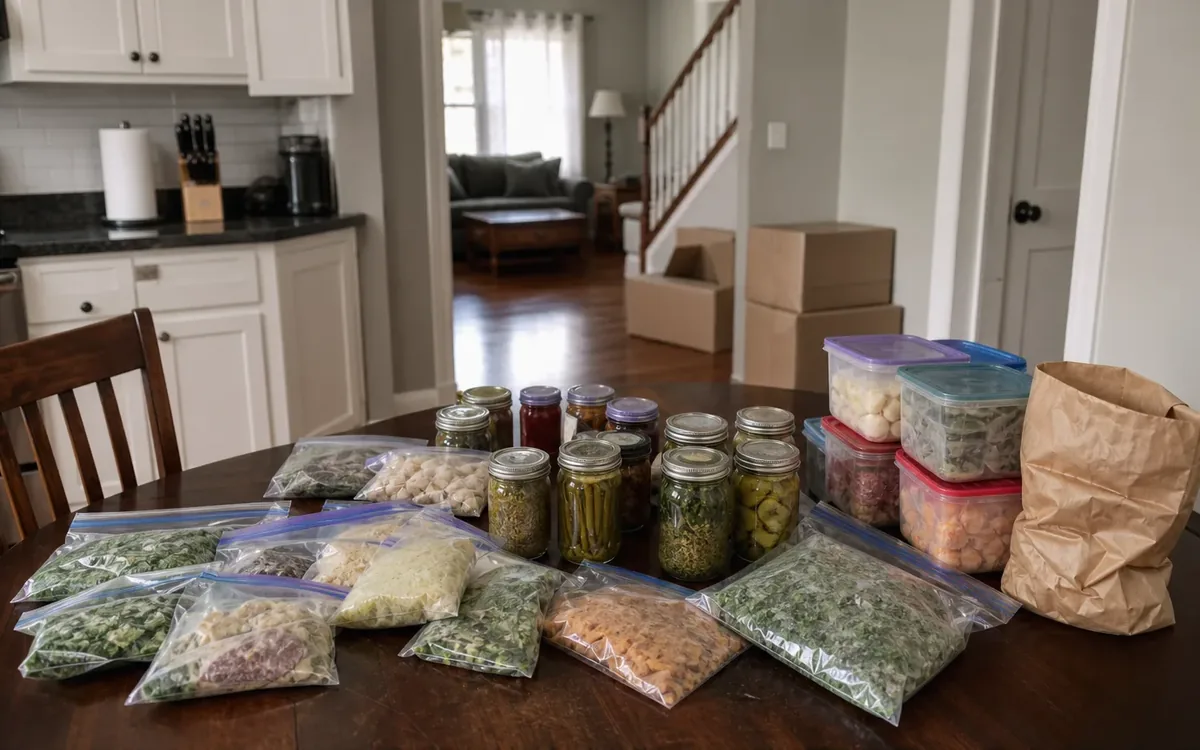
Build a calendar around food priority, not expiration dates alone
Printed dates can be one useful input, but the practical issue is broader. An open bag of flour, a half-used condiment, or a bulky frozen casserole may deserve attention before a compact unopened item, even if its printed date is later.
Use three planning phases.
Early phase: stop adding volume
Pause purchases of duplicate staples, frozen convenience foods, oversized snack packs, and specialty ingredients. Shop for fresh foods only when they support meals built around what is already on hand.
Choose several pantry anchors, such as rice, pasta, oats, beans, canned tomatoes, or baking mixes. Then pair them with freezer and refrigerator items. This creates meals that reduce multiple categories at once.
Middle phase: simplify choices
Designate a visible shelf or bin for foods to use next. Build meals from that zone before opening replacements. Combine partial packages when doing so is appropriate, but preserve labels, allergen information, preparation directions, and date information.
This is also the point to decide whether unopened foods are realistic to move. Consider weight, leakage risk, destination storage, and whether the item is inexpensive and easy to replace.
Final phase: protect the move
Avoid leaving a full freezer, crowded refrigerator, or large donation decision for moving day. The final phase should focus on a small number of clearly labeled foods with a confirmed plan.
If downsizing is part of a broader household transition, the guide on how estate cleanouts work explains how sorting and removal decisions may fit into a larger project. Food, however, still requires separate handling because acceptance policies and safety conditions vary.
What pantry foods are worth moving?
Move pantry food selectively. The fact that an item is shelf-stable does not mean it is sensible to pack.
A good candidate generally has all of these qualities:
- The household expects to use it
- The packaging is sealed or securely contained
- It is not leaking, torn, swollen, infested, or otherwise questionable
- It is costly or inconvenient to replace
- It fits the available kitchen space at the destination
- The mover or transportation method permits it
Spices deserve their own review. Keep frequently used seasonings, specialty blends, and costly extracts if their containers close tightly and the contents remain useful. Let go of duplicate jars, faded labels, hardened powders, and seasonings that have not supported the household’s actual cooking habits.
Open oils, syrups, sauces, and powders can create disproportionate packing problems. Even a well-closed bottle can leak when tipped or exposed to heat. Place any approved items in leak-resistant secondary containment and keep food separate from household chemicals.
The household chooses what is valuable enough to move. A move-management provider may discuss packing sequence, carrier restrictions, cooler space, and destination setup. The carrier decides what it will transport under its terms. If an item appears contaminated, unsafe, or improperly packaged, consult current official guidance rather than asking an organizer to make a health determination.
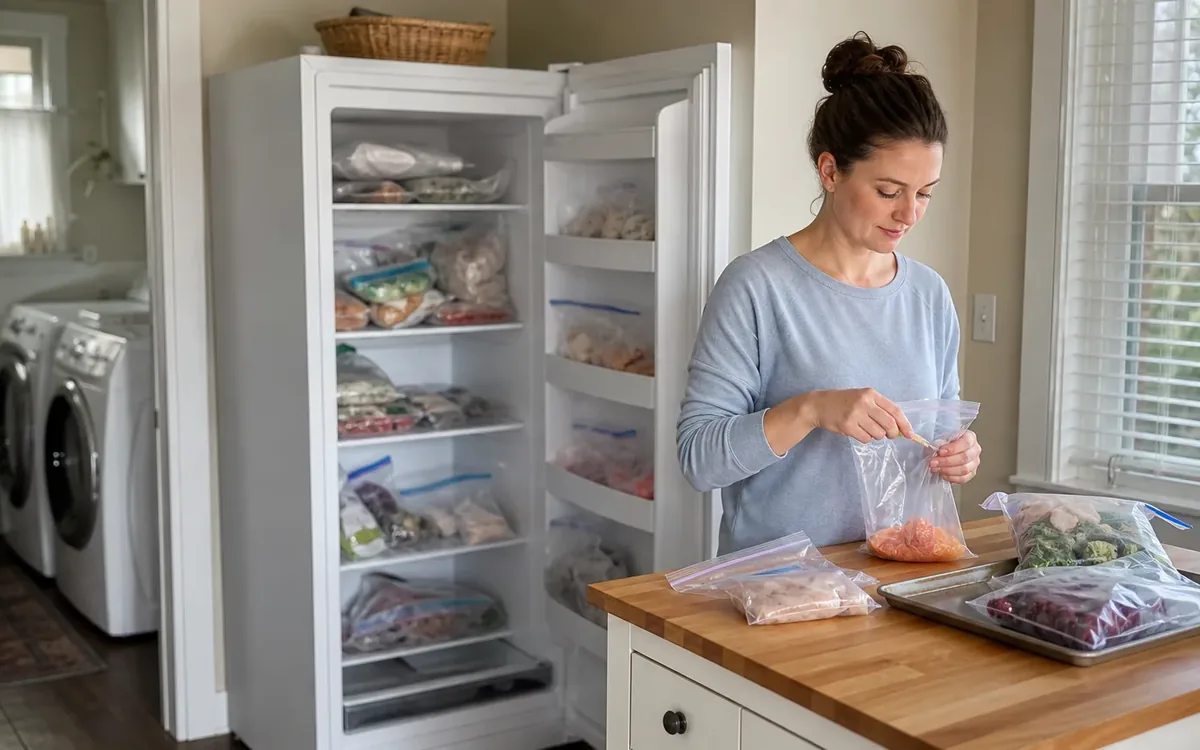
How do you reduce a freezer without wasting everything?
Start with visibility. Freezers often contain unidentified packages, duplicate ingredients, and foods that require more preparation than the remaining schedule allows.
Use this four-step freezer review:
- Identify: Label recognizable items and separate anything that cannot be confidently identified.
- Prioritize: Put prepared meals, open packages, bulky items, and foods vulnerable to quality loss at the top of the use-first list.
- Plan: Assign priority items to realistic meals rather than writing a vague goal to eat from the freezer.
- Limit: Establish a fixed cooler or container allowance for anything intended to travel.
A fixed allowance makes the decision concrete. If the selected frozen food will not fit, choose what matters most rather than adding another unplanned cooler.
Do not rely on South Carolina outdoor temperatures to preserve chilled food. Warm conditions, a parked vehicle, loading delays, and repeated cooler opening can affect safety. Use properly insulated containers and adequate cold sources when transporting food, follow current public-health guidance, and discard items when their safety is uncertain.
A cleanout or move team may discuss access, staging, packing order, and whether the freezer must be empty before handling. It should not replace public-health advice or guarantee that food remained at a safe temperature. Appliance preparation requirements should be confirmed with the mover, appliance manufacturer, property manager, or other responsible provider.
Make donations before moving day
Food donation can reduce waste, but acceptance is never automatic. Organizations may limit donations based on packaging, dates, allergens, refrigeration requirements, available storage, or current needs.
Before setting food aside, ask the intended recipient:
- Does it accept food from private households?
- Are opened items excluded?
- Are glass containers allowed?
- Does it accept frozen or refrigerated food?
- Are there packaging or labeling requirements?
- Where and when can items be delivered?
Keep donation candidates in their own box or shelf. Do not mix them into moving cartons, where they may be forgotten. If the intended organization declines an item, return it promptly to the use-first plan or determine the appropriate disposal method.
Never leave food outside a donation site without permission. Donation decisions belong to the receiving organization, and transportation remains the household’s responsibility unless another provider explicitly agrees to it.
Containers and backup supplies need a separate limit
A pantry downsize can fail even after the food is reduced because empty containers, shopping bags, coolers, water bottles, and backup supplies still occupy substantial space.
Match food-storage containers with usable lids. Keep sets that fit the household’s cooking routine and destination storage. Recycle or discard pieces according to local rules when they are cracked, warped, heavily stained, or missing essential parts.
For reusable bags and coolers, assign a physical boundary. One shelf, bin, or cabinet creates a clearer limit than an abstract promise to keep fewer.
Emergency supplies require more thought. South Carolina households may maintain food and water for storm readiness. Do not eliminate necessary preparedness supplies simply to create an emptier cabinet. Instead:
- Review the destination’s risks and storage capacity
- Check package condition and household needs
- Separate emergency supplies from ordinary overstock
- Decide what should travel and what should be replaced after the move
- Follow current emergency-management guidance for preparedness decisions
An organizer may help create categories and storage limits. Emergency-planning recommendations come from the relevant authorities, while the household decides how to apply them to its needs.
What should happen on moving day?
Moving day should involve verification, not major food sorting. Keep chilled-food handling separate from general household packing so coolers do not disappear into a truck or sit in direct sun.
Use this five-point check:
- Confirm which foods are traveling and which vehicle will carry them.
- Pack cold items with suitable cold sources immediately before departure.
- Keep coolers accessible and limit unnecessary opening.
- Separate food from cleaners, fuel, paint, pesticides, and other chemicals.
- Put chilled and frozen food away promptly at the destination, evaluating uncertain items under current official food-safety guidance.
If the refrigerator or freezer is moving, follow the manufacturer’s instructions and the carrier’s preparation requirements. Questions about electrical disconnection, water lines, repairs, or installation belong to a qualified contractor or appliance professional. Property-condition and inspection decisions belong to the inspector, owner, buyer, property manager, or other responsible party.
Do not place food in off-site storage unless the facility explicitly permits it and the storage conditions suit the item. Storage contracts, pest-control policies, temperature conditions, and prohibited-item rules are determined by the storage provider.
Coordinate the kitchen with the larger home transition
Food decisions should connect to the rest of the move without becoming part of an undifferentiated cleanout pile. Give the pantry and freezer their own workflow, labels, and responsible household decision-maker.
A practical cleanout or move team may discuss:
- Sorting and staging areas
- Packing order and access paths
- Household items designated for removal
- Coordination with a chosen mover, estate-sale provider, or donation recipient
- Destination organization based on the available space
The household decides what to eat, retain, donate, or discard, subject to safety and local disposal requirements. An appraiser determines value when professional valuation is needed. A real-estate professional advises on listing and market-preparation choices. An inspector evaluates property conditions. Attorneys, courts, executors, personal representatives, or other authorized parties handle ownership and estate decisions. Government agencies and property authorities determine compliance requirements.
Clutter Cleaner of South Carolina is physically based in Mount Pleasant, with Charleston as its primary market and a statewide South Carolina service territory. Contact the company at (843) 972-7020 to discuss whether downsizing, move management, estate cleanout, home-sale preparation, or another listed service fits the broader transition. Scope and food-handling expectations should be confirmed before work begins.
Short FAQ
Can movers take pantry food?
Policies vary by carrier and type of move. Ask the mover directly about sealed dry goods, liquids, glass, refrigerated food, frozen food, and coolers. Do not pack food until its acceptance is confirmed.
Should I unplug the freezer before moving?
Follow the appliance manufacturer’s directions and the mover’s requirements. Defrosting, water-line disconnection, and electrical work may require separate planning or a qualified provider.
Can opened food be donated?
Many recipients restrict opened food, but policies differ. Contact the organization before transporting anything and follow its current packaging and acceptance rules.
What if frozen food starts to thaw?
Use current guidance from the appropriate food-safety authority. Temperature history and condition matter, and a cleanout or organizing team should not make the final safety determination.
Should pantry food go into storage?
Only if the storage provider permits it and conditions are appropriate. Many food products can attract pests or suffer heat damage, so review the facility’s rules before packing.
Who decides what remains with a sold home?
The contract and authorized real-estate or legal professionals guide that decision. Do not assume a refrigerator, freezer, shelving unit, or its contents are included without written clarification.



