
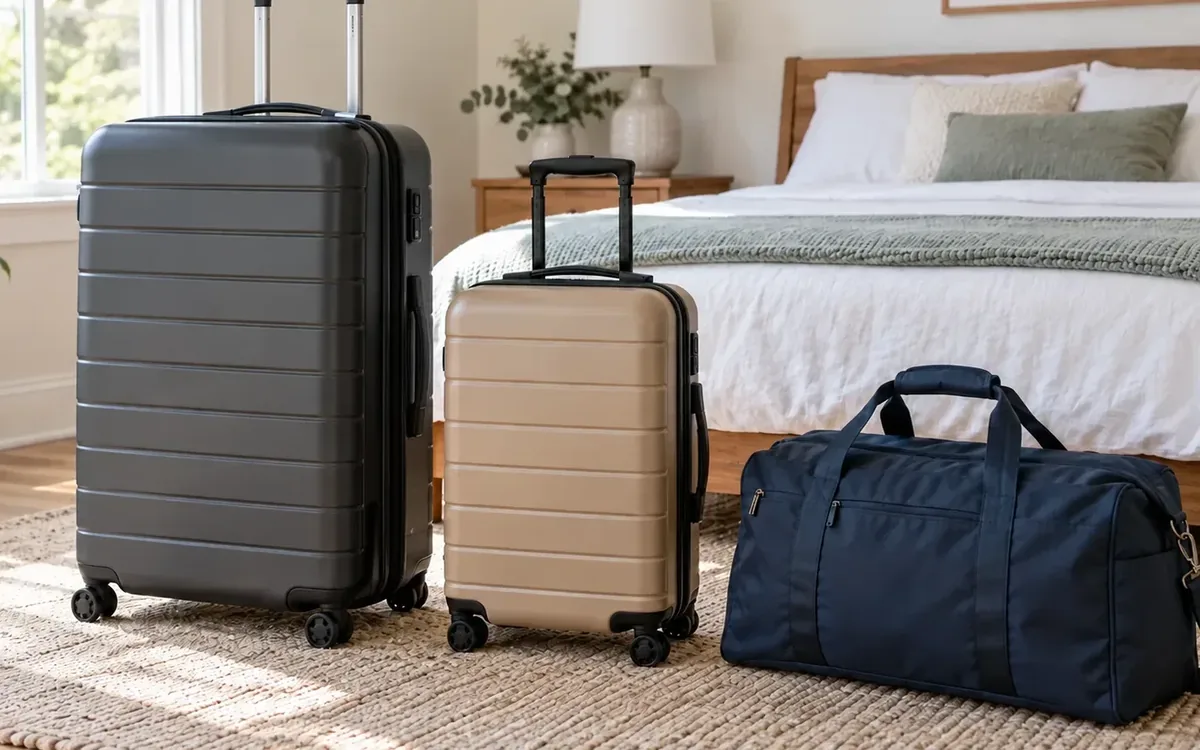
Keep luggage that fits the trips you still take. Check that each bag works and fits your storage space. Let go of bags that need repairs you are unlikely to make. Let go of bags that serve no clear purpose. Before choosing what stays, test packing, lifting, rolling, and nesting. In South Carolina, also check whether a humid garage or closet is a suitable home for the bags you keep.
Quick answer: Build a small luggage set around your current travel habits. Choose a reliable main suitcase, a carry-on if you use one, and a tote or day bag with a clear role. Keep extras only when they solve a real need. Clean and dry retained bags, nest compatible pieces without forcing them, and store them where you can inspect and reach them.
Which trips should your luggage still support?
Start with your current plans rather than the trips you once hoped to take. The downsizing and organizing service page is relevant when bag sorting is part of a larger household reduction, while the home-transition resource library offers reading for related decisions about belongings and space.
Luggage often reflects several stages of life. A large suitcase may date from long family vacations. A garment bag may belong to a former work routine. Small backpacks may remain after children have grown.
None of those bags needs to leave simply because it is old. Each does need a present role.
Write down the kinds of trips you expect to repeat:
- Short visits to family or friends.
- Road trips where bags must fit beside other gear.
- Flights where you prefer to avoid checked luggage.
- Longer stays that require more clothing.
- Trips involving formal clothes or special equipment.
- Travel where someone else helps carry your bags.
For each trip type, note what you carry and how you move it. Stairs, uneven paths, public transit, and limited trunk space can change which bag works best.
Use actual habits as your guide. If you always pack lightly, a large suitcase may add bulk without value. If you regularly carry medical supplies, an accessible tote may earn its place even when another bag looks similar.
Separate realistic plans from vague possibilities. An extra bag can stay for a likely family need, but “someone might want this someday” is not a travel plan.
Which bags pass a real-use test?
A practical bag check makes the choices clearer before broader sorting begins. The downsizing and organizing service overview helps frame that household task, and the guide to how estate cleanouts work provides related context if the luggage belongs to a larger estate cleanout.
Gather the bags in one place. Empty every pocket before judging condition. Check for documents, cash, keys, medication, and luggage tags with personal details. Put found items in a separate tray so they do not disappear into another suitcase.
Then test each bag as equipment, rather than as an empty shell:
- Run every zipper through its full path.
- Extend and retract the handle.
- Roll the bag with a realistic load inside.
- Check wheels for wobble, cracks, or sticking.
- Inspect seams, straps, buckles, and lining.
- Look for damp patches, unusual odors, and visible growth.
- Lift the packed bag using the handles you normally use.
A suitcase that rolls well when empty may be awkward when full. A tote with a comfortable shoulder strap may still be too deep to find essential items easily.
For flights, compare the bag’s measurements with the current rules of the airline you plan to use. Include wheels and handles when the airline’s instructions require them. An old “carry-on” label does not establish current acceptance.
Create a repair category only for specific, worthwhile work. Name the defect and identify a repair provider before treating the bag as usable. Repair cost and feasibility belong with that provider; the household decides whether the result would meet its needs.
How many suitcases and totes earn a place?
Choose by function before counting bags. The downsizing and organizing page is useful when deciding what belongs in limited household space, while the home-transition guide library offers resources for the wider move or downsizing process around that choice.
There is no correct luggage count for every household. Two people who always travel together may need separate main bags. Someone who takes both road trips and flights may need different shapes for each.
The aim is to avoid keeping several bags that do the same job equally well.
Assign each candidate a role:
- Main travel bag: The suitcase or duffel used for most trips.
- Flight bag: A bag suited to your usual airline and packing habits.
- Accessible personal bag: A tote or backpack for items needed during travel.
- Special-purpose bag: A garment bag or equipment case with a recurring use.
- Shared spare: An extra with a named user or credible household need.
Compare duplicates side by side. Favor the one that is easier to handle, easier to pack, and in better condition. A matching set need not stay together if some pieces are awkward or unused.
Give travel totes the same scrutiny as suitcases. Promotional totes, beach bags, and foldable shopping bags can accumulate unnoticed. Keep those with useful closures, comfortable straps, and sizes that fit real tasks.
If two bags seem equally useful, pack each with the same items. That simple test often reveals poor access, wasted space, or an uncomfortable carry. Keep the better fit rather than the bag with the strongest memory attached.
Can nesting reduce space without hiding problems?
Nesting works best after you choose useful bags, rather than before. The downsizing and organizing service information relates to making storage more workable, and the guide to cleaning out an estate is relevant when you are also sorting belongings found inside inherited luggage.
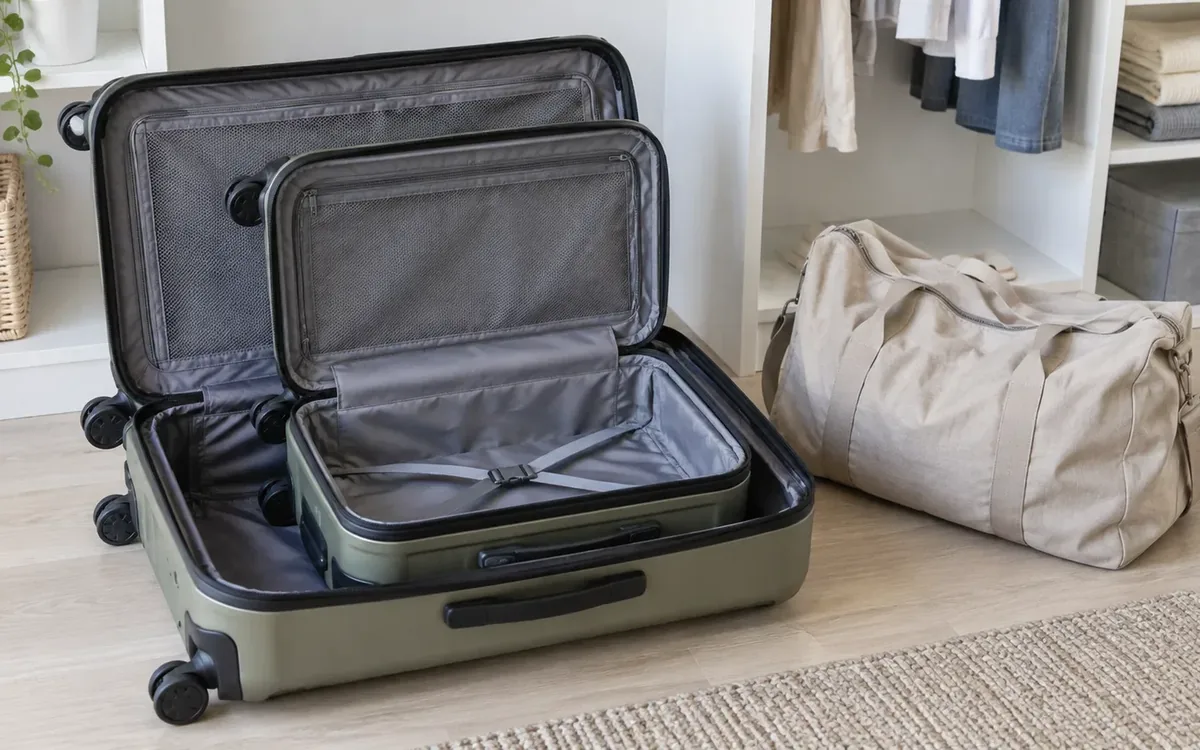
Place smaller bags inside larger ones only when both are clean and fully dry. Test the arrangement with the bags open. Handles, rigid corners, and wheels may prevent an easy fit even when the dimensions seem promising.
Do not force a suitcase closed around another bag. Pressure can strain zippers and distort soft sides. Nor should nesting turn your most-used bag into the hardest item to reach.
A workable arrangement should let you:
- Remove the inner bag without pulling hard.
- Close the outer bag without compressing hardware.
- Find the travel tote without emptying every suitcase.
- Inspect the stored bags for dampness or damage.
- Lift the combined set safely.
Keep the outer bag empty of unrelated household goods when possible. Using it for holiday decorations or spare linens can make it unavailable when a trip comes up. If you do use a suitcase as storage, label the contents and decide where they will go before travel.
Take a photo of the successful nesting layout or add a simple label inside the outer bag. This helps another household member return the pieces correctly. It also keeps the arrangement from becoming a puzzle after each trip.
Where should luggage live in a humid South Carolina home?
Treat storage conditions as part of the keep-or-release decision. The downsizing and organizing service page is relevant to planning usable space, while the home-transition resource library can support broader sorting if you need to clear a better indoor storage area.
A garage may offer room, but available space is not the same as suitable space. In humid conditions, enclosed bags can hold moisture. Closets also deserve attention, especially when they have weak airflow, a damp smell, or a history of leaks.
Inspect the proposed location before placing luggage there. Look for moisture marks, condensation, pests, and signs of water entry. Choose a dry indoor location when practical. Keep bags away from known leaks and direct contact with damp surfaces.
Before storage:
- Remove crumbs, toiletries, and forgotten laundry.
- Clean surfaces according to the maker’s instructions.
- Let linings, pockets, and straps dry completely.
- Leave enough access to check condition later.
- Avoid packing bags tightly into a damp or unventilated corner.
A cover can protect against dust, but it does not correct a damp room. Moisture-control products also do not replace fixing a leak or dealing with a building problem. Follow product instructions and keep such products away from children and pets.
If a bag has visible growth or a persistent musty smell, set it apart from clean luggage. Do not assume a quick wipe makes it suitable for storage with clothing. Ask an appropriate cleaning or remediation provider about treatment where needed.
Building moisture, structural damage, and inspection findings belong with the responsible contractor, inspector, or other qualified professional. A cleanout or organizing team may discuss access and placement, but that discussion is not a building assessment.
What should happen to bags you release?
Sort outgoing luggage by condition and ownership before arranging removal. The guide to how estate cleanouts work is relevant when authority over belongings must be settled, while the estate cleanout planning guide offers broader context for sorting items within an estate.
Start with bags that belong to someone else. Ask the owner whether to return, keep, or release them. For estate property, the responsible person must confirm authority and any restrictions before items are sold or given away.
Then separate useful bags from damaged ones:
- Gift: Offer a sound bag to a specific person who wants it.
- Donate: Check the recipient’s current rules and condition requirements.
- Sell: Consider whether likely interest justifies the effort.
- Repair: Seek a provider’s assessment before committing.
- Discard: Check local disposal instructions for unusable items.
Do not send stained, broken, or musty luggage to a donation site without checking acceptance. Remove old travel labels, identification cards, and personal contents from all outgoing bags.
A practical cleanout or move team may discuss separating bags, grouping retained items, and arranging access around the larger project. Donation acceptance, transport, disposal, and any related charges should be confirmed with the relevant provider. They are separate choices, not assumed parts of every service.
An auction or estate sale discussion may be appropriate for certain belongings, but ordinary used luggage should not be treated as valuable without evidence. An appraiser determines an appraisal. Legal authority stays with the responsible legal professional or estate representative.
How can you keep the smaller set useful after a move?
Give retained luggage a clear home before other items fill the space. The downsizing and organizing service page is relevant to planning that placement, and the home-transition guide library can help connect it with other decisions during a household move.
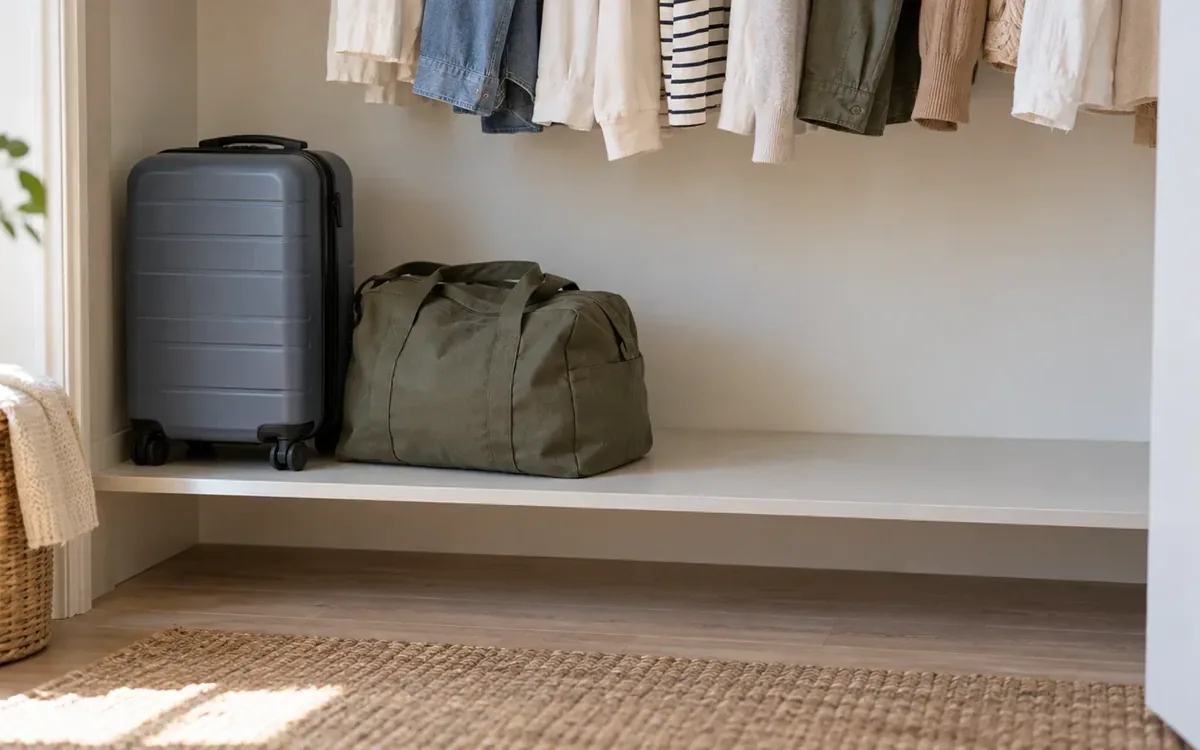
Measure the actual shelf, closet opening, or storage corner. Include room to pull a bag out. A suitcase that technically fits may still be impractical if furniture blocks it or lifting it requires an unsafe reach.
Store frequently used pieces where they are easiest to retrieve. Put special-purpose bags farther back only if you can still inspect them. Keep a simple packing pouch inside the main bag if useful, but avoid turning every pocket into miscellaneous storage.
After a trip, empty the bags, check condition, and let them dry before nesting them again. Reconsider any piece that repeatedly stays home while another does its job.
Clutter Cleaner of South Carolina is physically located in Mount Pleasant, serves all of South Carolina, and has Charleston as its primary market. Households can call (843) 972-7020 to discuss downsizing and organizing or move management needs. Confirm the tasks for your project rather than assuming storage, repairs, or disposal arrangements are included.
FAQ
Should I keep a complete matching luggage set?
Keep the pieces you use. Matching color or branding is less important than comfort, condition, and a clear travel role.
Can I keep luggage in the garage?
Only if the conditions are suitable. Check for dampness, leaks, pests, and access. A dry indoor space may be a better choice.
Should I replace an old suitcase before downsizing?
Test it first. Replace it only when its condition or design no longer meets your needs. Buying before sorting can create another duplicate.
Who decides whether inherited luggage can leave?
The person with proper authority makes that decision. A cleanout team can discuss practical handling, but does not determine ownership or resolve legal disputes.



