
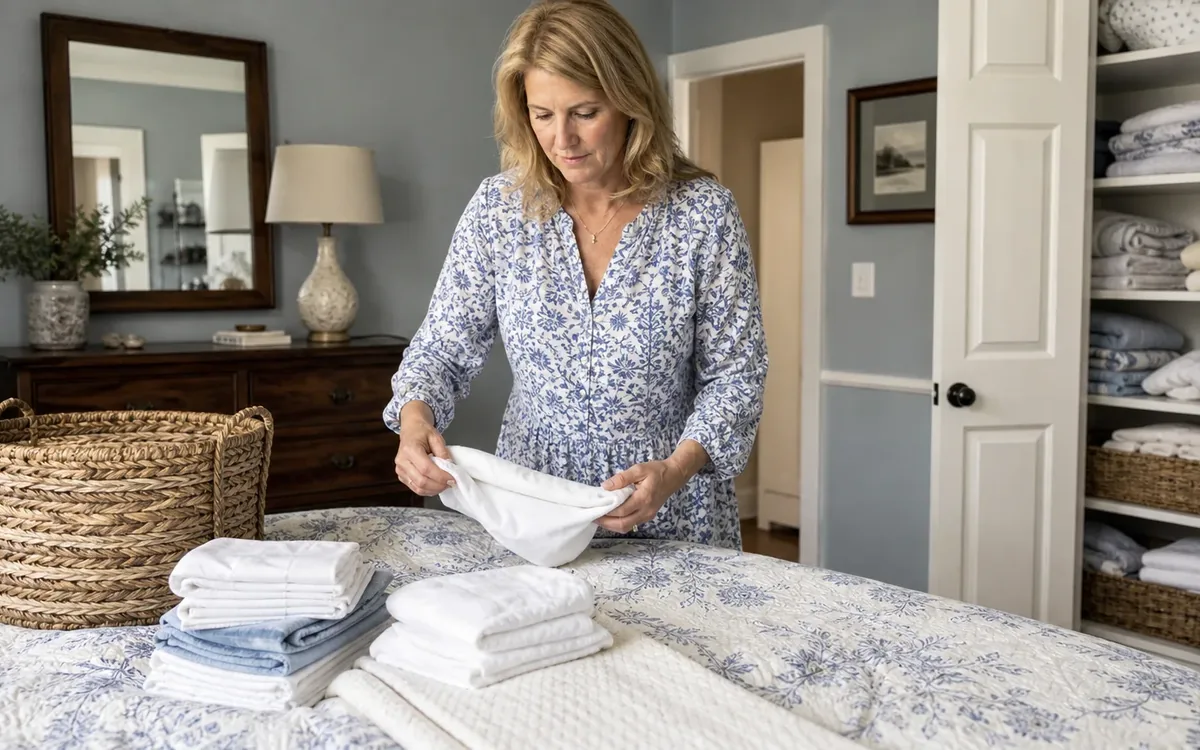
South Carolina households can downsize linens by keeping only what fits current beds, serves the people who live in the home, handles warm and humid conditions well, and fits available storage without crowding. Sort bedding and towels by size and purpose first. Then reduce duplicates, damaged pieces, rarely used seasonal layers, and guest linens that exceed realistic needs.
Quick answer: Keep a practical working set for each occupied bed and regular household member, plus a modest guest reserve based on actual visitors. Favor breathable, washable items that dry reliably. Remove linens that are the wrong size, uncomfortable in warm weather, musty, stained, worn, or difficult to store.
This approach is more useful than choosing an arbitrary number of sheets or towels. A household with children, frequent overnight guests, pets, or limited laundry access may need a different reserve than one person moving into a compact condo. The goal is enough capacity for ordinary life without dedicating scarce closets to unlikely scenarios.
Why does South Carolina’s climate affect linen choices?
Warm, humid conditions influence which linens earn space in a smaller home. Heavy bedding that felt useful elsewhere may spend most of the year compressed into a closet. Dense towels and thick comforters may also take longer to dry fully if airflow is limited.
Climate alone should not dictate every decision. Indoor temperature preferences, allergies, laundry habits, health needs, and travel patterns matter too. Still, each item should have a realistic role in the new home rather than being kept merely because it belongs to a traditional linen set.
Favor items that are:
- Comfortable in the household’s usual indoor temperature
- Easy to wash with available equipment
- Able to dry fully before folding or storing
- Suitable for the beds and bathrooms in the new home
- Used often enough to justify their volume
- In sound condition and free from persistent odors
Breathable sheets, lighter blankets, and washable layers often provide more flexibility than a large collection of bulky, single-purpose bedding. A light blanket can work alone in warmer conditions and combine with another layer when needed.
Do not seal damp or questionable fabric in plastic bins. Moisture and odor should be addressed before packing. If linens show suspected mold or contamination, the household should seek appropriate cleaning, remediation, or health guidance rather than treating the issue as a routine organizing decision.
Start with bed size, not the linen closet
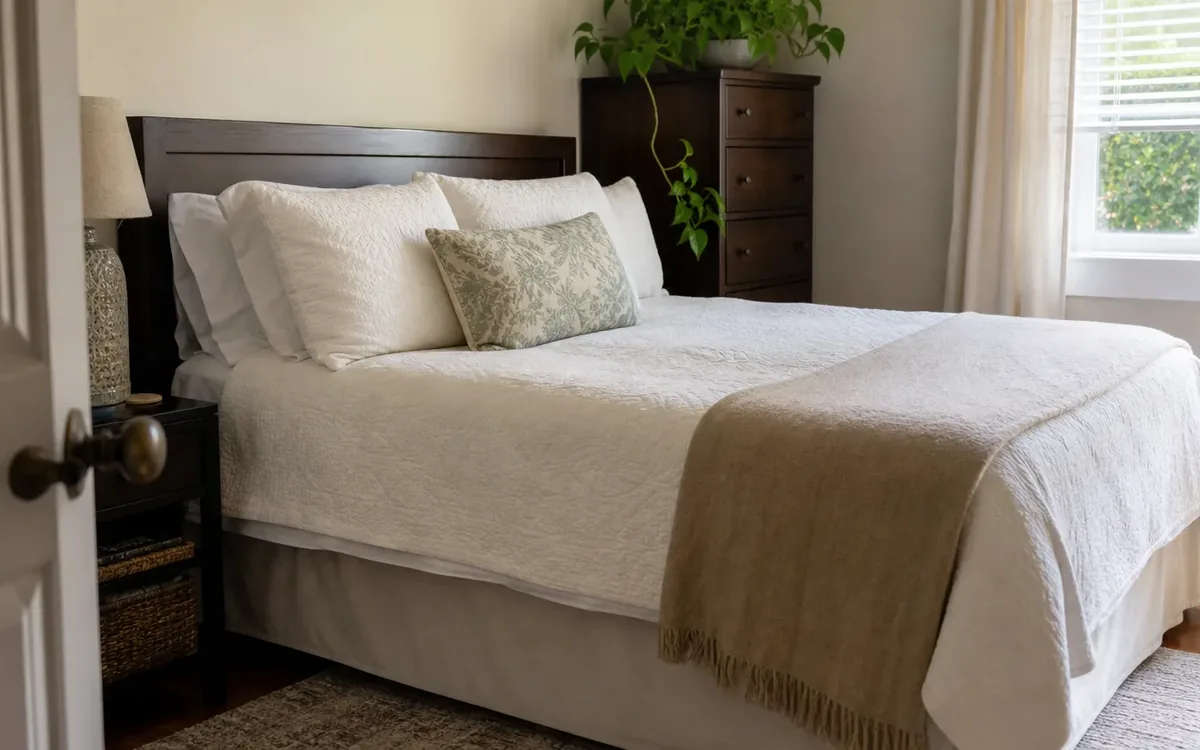
The most efficient first sort is by mattress size. Labels can fade, and folded sheets are hard to distinguish, so spread questionable pieces across the appropriate bed or measure them before deciding.
Create separate groups for:
- Twin or twin XL
- Full
- Queen
- King or California king
- Crib or specialty beds
- Sleeper sofas, air mattresses, or other guest setups
- Items whose size still needs verification
Next, compare these groups with the beds that will actually be in the smaller home. Sheets for a bed being sold, donated, or left behind usually have no continuing household purpose. Exceptions may include a confirmed future bed purchase or an established guest arrangement, but vague possibilities should not occupy prime storage.
Keep complete, compatible sets where practical. A fitted sheet without a matching mattress, a lone pillowcase in an unused size, or a duvet cover without an insert may be easier to release than to integrate into the new home.
For a broader transition plan, review the downsizing and organizing service. A practical cleanout or move team may discuss sorting zones, packing order, and which items the household wants to retain. The household still decides what belongs in the new home and which sentimental or personal items should remain.
How many sheets and towels should you keep?
There is no universal correct count. Base capacity on use, laundry, storage, and genuine guest needs rather than a rigid formula.
Ask five questions for each category:
- How many people regularly use these items?
- How often can laundry realistically be washed and dried?
- Are extra sets needed for children, pets, illness, caregiving, or accessibility?
- How many overnight guests are actually hosted at one time?
- Where will every retained item fit in the smaller home?
For each occupied bed, identify the set currently in use and the reserve needed while it is being washed or if it becomes soiled. Keep more only when the household can name a recurring reason.
Use the same reasoning for bath towels. Separate everyday bath towels from hand towels, washcloths, beach towels, pet towels, cleaning rags, and decorative pieces. One towel should not be counted in several imagined roles.
Guest capacity deserves particular scrutiny. Plan for the guest space that will exist, not the guest space available in the previous home. If visitors will use a sleeper sofa, keep linens that fit that setup. If there is no overnight accommodation, a closet full of queen bedding does not create one.
Households preparing an inherited property may face a different volume and decision structure. The guide to how estate cleanouts work explains the broader process without treating personal-property decisions as automatic disposal choices.
Evaluate condition before sentimental value
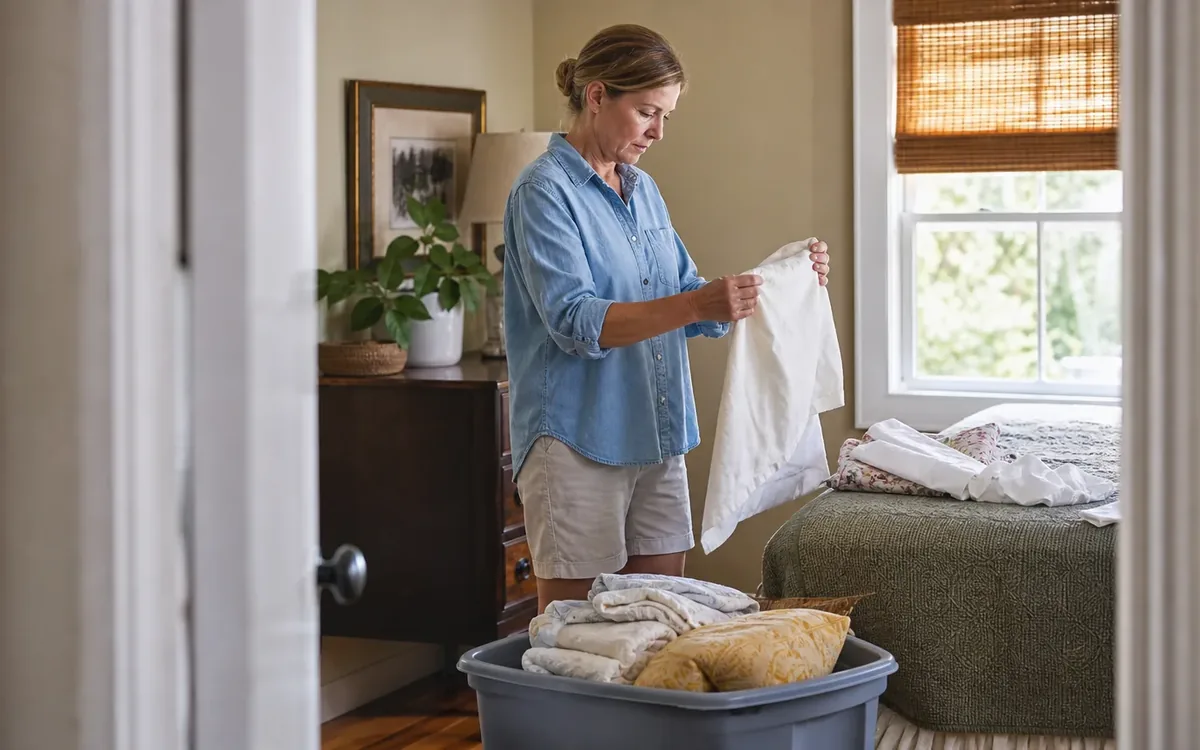
Condition is a useful early filter because it reduces the volume requiring harder decisions. Inspect linens in good light and, when appropriate, after laundering.
Look for:
- Frayed hems or thinning centers
- Failed elastic on fitted sheets
- Tears, holes, or unraveling seams
- Permanent stains or discoloration
- Persistent musty, smoke, or pet odors
- Lumpy fill or damaged quilting
- Towels that no longer absorb well
- Fabric that feels uncomfortable against the skin
Assign each item to one of four condition groups: ready to use, needs cleaning or repair, suitable for another household if accepted, or unsuitable for continued textile use.
Do not turn every worn towel into a rag. Keep a small, defined rag supply for tasks the household actually performs. A stack of downgraded textiles can consume as much space as the original towel collection.
Donation and textile-recycling requirements vary by receiving organization and location. Confirm acceptance directly before loading a vehicle or leaving items. Wet, moldy, contaminated, or heavily soiled textiles may not be suitable for donation. Disposal requirements are determined by the relevant facility or local authority, not by an organizer’s preference.
Sentimental linens can be assessed after damaged and mismatched pieces are removed. A handmade quilt, embroidered pillowcase, or family tablecloth may deserve space even if it is not part of the everyday rotation. The household should decide whether the item will be used, displayed, passed to a specific person, or stored as an heirloom.
An appraiser should evaluate items when value is uncertain or could affect an estate, sale, insurance matter, or equitable distribution. A cleanout or organizing team may help isolate and label an item for review, but should not substitute for a qualified appraisal.
Build a climate-conscious bedding capsule
A bedding capsule is a compact group of compatible layers rather than a separate bulky arrangement for every season. The concept works especially well when storage is limited and indoor comfort needs change.
Build the capsule in four parts:
- Base layer: Keep sheets that fit current mattresses, feel comfortable, and withstand normal laundering.
- Light layer: Retain a breathable blanket or coverlet for warmer conditions and air-conditioned rooms.
- Added warmth: Choose a compact layer that can be added when someone needs more insulation.
- Special-purpose piece: Keep only confirmed items for medical needs, protected bedding, or actual guest arrangements.
Check compatibility while sorting. Duvet covers should fit their inserts, pillowcases should fit retained pillows, and mattress protectors should match both mattress dimensions and depth. Labeling a shelf “queen” does not help if half the contents fit an older full bed.
Bulky cold-weather items deserve individual review. Consider whether each item is used in the current home, needed for travel, or retained from a former climate. If one warm layer meets the household’s needs, several near-duplicates may not justify their storage volume.
Vacuum bags can reduce volume, but compression is not a remedy for dampness, odor, pests, or uncertain condition. Follow the textile manufacturer’s care guidance, particularly for delicate fibers, quilts, and filled bedding. Long-term storage choices belong to the household and, when needed, an appropriate textile-care or storage provider.
What should happen to guest and specialty linens?
Guest linens should match a defined sleeping arrangement and realistic hosting pattern. Avoid maintaining multiple hypothetical setups for visitors who would not have beds in the smaller home.
Create one guest group and test it against three facts:
- The size and type of the available guest bed
- The greatest number of guests the home can reasonably accommodate
- The household’s actual hosting habits
Include the necessary sheets, pillow protection, blanket, and towels for that arrangement. Remove unrelated sizes and duplicate decorative pieces unless they serve another established purpose.
Review specialty categories separately:
- Beach and pool towels: Keep enough for actual household use and routine guests, considering laundry access and storage.
- Pet linens: Retain washable items assigned to beds, crates, bathing, or furniture protection.
- Table linens: Match them to tables that are moving and gatherings the household still hosts.
- Holiday linens: Keep pieces that are displayed or used, not entire themes abandoned years ago.
- Protective bedding: Base decisions on current health, caregiving, child, or mattress-protection needs.
- Air-mattress linens: Keep them only if the air mattress is retained and usable.
If family members may want heirloom pieces, name the recipients and set the items aside rather than mixing them back into general storage. Questions about ownership, estate distribution, divorce, trusts, or disputed property should go to the responsible attorney, personal representative, fiduciary, or court. An organizing or move team may follow authorized directions, but it does not decide legal ownership.
Fit retained linens to the new storage
Do not finalize the keep pile without comparing it to actual storage. Measure shelves, drawers, baskets, under-bed clearance, and any furniture confirmed for the new home. Account for doors, plumbing, vents, and shelf spacing.
Give the most accessible space to everyday sheets and towels. Less frequent guest or seasonal items can occupy higher or less convenient shelves, provided they remain dry, protected, and retrievable.
Use these storage principles:
- Store by bed size or function, not color alone
- Keep complete sheet sets together
- Label opaque containers clearly
- Avoid packing shelves so tightly that air cannot circulate
- Place clean, fully dry items in storage
- Keep household textiles away from chemicals or leak risks
- Recheck rarely used categories instead of expanding storage automatically
Storage products should be selected after measuring. Buying bins first can create a new clutter problem or waste closet capacity. If built-ins, shelving, ventilation changes, or repairs are being considered, a qualified contractor should assess feasibility, materials, permits, and installation. Those decisions are separate from linen sorting.
A home inspector, contractor, property manager, homeowners association, or local authority may need to address moisture intrusion, ventilation defects, code requirements, or building restrictions. A practical cleanout team may note an area that affects safe access or storage planning, but it does not replace inspection or compliance professionals.
Plan the linen cleanout without creating chaos
Keep the project focused on textiles rather than opening every box in the home. A controlled sequence prevents sorted sheets from being mixed back into clothing, decor, or paperwork.
Use this six-step process:
- Confirm beds, bathrooms, guest arrangements, and storage in the destination home.
- Gather household linens into clearly labeled categories.
- Verify size, compatibility, condition, and current use.
- Select the everyday supply, reserve, and realistic guest set.
- Route remaining items to named recipients, accepted donation outlets, textile recycling, or lawful disposal.
- Pack retained linens by room and label each container with size and purpose.
The household controls retention, gifting, and sentimental decisions. A practical downsizing, move, or cleanout team may discuss workflow, packing categories, access, and the household’s intended disposition of items. Separate providers may handle off-site storage, specialty textile cleaning, repairs, appraisal, hauling, or disposal according to their own terms and applicable rules.
If the transition is connected to a property sale, the real-estate professional should advise on listing strategy and what should remain for presentation. Inspectors evaluate property conditions within their scope. Attorneys and authorized representatives address ownership or estate questions. Relevant authorities determine code and disposal compliance.
Clutter Cleaner of South Carolina is physically located in Mount Pleasant, with Charleston as its primary market and a statewide South Carolina service territory. Households can call (843) 972-7020 to discuss whether downsizing and organizing, move management, estate cleanouts, home sale preparation, auctions and estate sales, or code compliance support fits the broader transition. Availability and scope should be confirmed for the specific project.
Short FAQ
Should I keep winter bedding in South Carolina?
Keep it if someone uses it, the home’s indoor temperature makes it useful, or it supports confirmed travel or guest needs. Release bulky duplicates that have no realistic role. Personal comfort matters more than a generic seasonal rule.
Can stained towels be donated?
Acceptance rules differ. Ask the receiving organization before donating. Items that are wet, moldy, contaminated, or heavily soiled may require another route determined by the appropriate facility or local authority.
Are vacuum bags good for linen storage?
They can reduce volume, but only for clean, completely dry items that tolerate compression. Follow care guidance and avoid using compression to conceal odor, moisture, or deterioration.
Who decides whether an old quilt is valuable?
A qualified appraiser should address monetary value. The household or legally authorized representative decides whether to keep, gift, sell, or otherwise transfer it, subject to any applicable estate or ownership requirements.
What if the new home has almost no linen closet?
Assign storage based on frequency of use, consider measured furniture or under-bed options, and reduce backup sets before adding containers. Any construction or built-in work should be evaluated by an appropriate contractor, with required approvals handled by the responsible parties.



