

When downsizing to a home without a guest room, keep only the items that support a realistic plan for overnight visitors or serve another regular purpose. Start with the new home’s dimensions, decide how often you genuinely expect guests, and compare a sleeper sofa, daybed, air mattress, or nearby lodging before keeping furniture and extra linens.
Quick answer: Do not try to recreate an entire guest room without a dedicated room. Keep one workable sleeping solution, one compact set of guest linens, and only the stored items that belong in your next home. Release duplicate furniture, excess bedding, and objects that were merely parked in the guest room.
This decision can feel especially personal for South Carolina households whose spare room has long welcomed children, grandchildren, or friends. Losing that room does not mean losing hospitality. It means separating the experience you want to offer from the furniture and storage that once supported it.
What role will overnight guests have in the smaller home?
Before sorting anything, decide what hosting should look like after the move. This is a household decision, not a verdict imposed by the old room’s contents.
Ask practical questions:
- Who is reasonably likely to stay overnight?
- Does a guest need privacy, an accessible bed, or space for medical equipment?
- Will the main living area need to return to daily use each morning?
- Are household members comfortable sharing a bathroom and common areas?
- Could some visitors stay with other relatives or in nearby lodging?
- Would you rather make occasional lodging arrangements than store a bed year-round?
Use actual patterns rather than an idealized future. A room that hosted frequent family visits may justify a flexible sleep setup. A room used once in several years may not justify moving a full bedroom suite.
Hospitality can take several forms. You might keep a compact sleep option, provide daytime gathering space while guests sleep elsewhere, or host shorter visits. The right answer depends on relationships, accessibility, privacy, budget, and the layout of the new home.
For help structuring the broader sorting process, review the downsizing and organizing service. A practical downsizing team may discuss categories, room plans, packing priorities, and disposition options. The household still decides what matters and what level of guest accommodation feels appropriate.
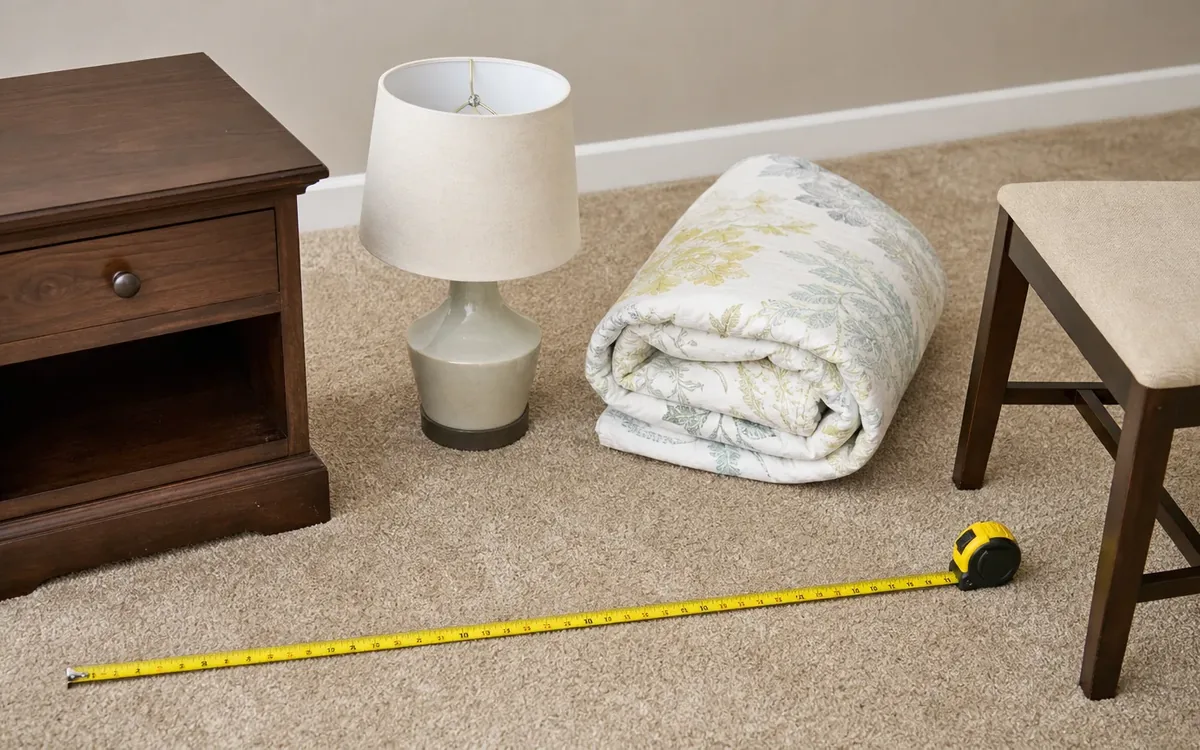
Measure the future space before choosing furniture
A piece can be emotionally important and still be physically wrong for the new home. Obtain reliable measurements before deciding that a bed, dresser, or sleeper sofa will move.
Record more than the open floor area:
- Wall lengths and ceiling height
- Doorway, hallway, stair, and elevator clearances
- Closet depth and available storage
- Window, outlet, vent, and radiator locations
- Space needed to open doors and drawers
- Walking clearance around furniture
- Building rules that may affect moving or deliveries
Mark the proposed furniture footprint with painter’s tape if you can access the new home. Include the full opened dimensions of a sleeper sofa, foldout chair, or drop-leaf table. A sofa that fits while closed may block a walkway, door, or kitchen path when converted into a bed.
Households can decide whether a layout feels comfortable. A move team may discuss furniture placement, access, packing, and the sequence for moving accepted pieces. Structural changes, electrical work, accessibility modifications, or building-code questions belong with qualified contractors, inspectors, property managers, or the authority responsible for compliance.
If the guest room has also become a holding area for estate belongings, the guide to how estate cleanouts work can help distinguish personal selection from the wider cleanout process.
Which guest-room furniture deserves space in the new home?
Evaluate furniture according to future function, not the fact that it currently forms a matching set. A full suite rarely needs to remain intact.
Give each piece four tests:
- Fit: Does it fit through the route and in the intended location?
- Function: Will it serve guests or regular household life?
- Condition: Is it stable, clean, comfortable, and worth moving?
- Preference: Would you choose it again for the smaller home today?
A bed frame and mattress may not survive this test if there is no room where they can remain set up. A small nightstand might pass because it can serve as an end table. A dresser could provide valuable storage, but only if its dimensions suit a bedroom, hallway, or living space without causing congestion.
Do not let a matching headboard, dresser, mirror, and two nightstands become one inseparable decision. Keep the useful component and make an independent plan for each remaining piece.
Mattress condition requires special attention. Consider support, odors, stains, damage, age as understood by the household, and whether the intended guest can use it comfortably. Disposal or donation acceptance varies by organization and facility. Confirm current requirements directly rather than assuming a used mattress will be accepted.
Antiques or potentially valuable furniture may warrant an appraisal before sale or disposition. A cleanout or move team can flag pieces for separate review, but valuation should come from an appropriate appraiser, auction professional, or buyer. The owner or legally authorized decision-maker approves any sale.

Should you keep a sleeper sofa or another flexible bed?
A flexible bed is useful only when it works well in both modes. It should support everyday life when closed and offer an acceptable sleeping arrangement when open.
Consider these options separately:
- Sleeper sofa: Combines regular seating with a guest bed but can be heavy and requires full opening clearance.
- Daybed: Offers seating and a standard sleeping surface, though its visual scale may dominate a small room.
- Futon or convertible chair: May suit tighter layouts, but comfort and ease of operation vary.
- Air mattress: Stores compactly and preserves floor space, but setup, floor access, and guest mobility matter.
- Folding guest bed: Can be stored between visits if the home has a suitable storage location.
- Murphy-style bed: Preserves floor area when closed, but installation and wall suitability require professional evaluation.
Test a convertible piece before moving it. Open and close it, lie on it, inspect the mechanism, and check whether bedding can be stored nearby. Consider who will perform setup and whether that person can safely handle the weight and movement involved.
A wall bed or built-in conversion is not simply a sorting decision. Product selection, anchoring, structural suitability, permits, and installation belong with the manufacturer, a qualified contractor, the property owner, and any relevant building or community authority. A practical move or cleanout team may discuss where retained pieces could go, but it should not substitute for those determinations.
Reduce bedding to a complete, compact guest set
Guest linens often multiply because the room provides easy storage. Downsizing is a chance to keep a coherent set instead of several incomplete ones.
Build the collection around the sleeping option you actually chose. A useful guest-linen group may include:
- One fitted sheet or appropriate bottom sheet
- One flat sheet, if used
- Pillowcases matched to the pillows kept
- One suitable blanket or comforter
- A mattress protector appropriate to the bed
- Guest towels, if everyday household towels will not be shared
Retain an additional set only when it solves a real laundry or hosting need and fits the available storage. Avoid keeping sheets for bed sizes you will no longer own. Label folded sets by size so they do not become anonymous stacks in a closet.
Inspect every textile in good light. Remove pieces with persistent odors, worn elastic, tears, or stains that make them unsuitable for guests. Household members decide whether sentimental quilts remain in active use, become display pieces, or receive archival storage.
Long-term textile storage is a separate choice. If valuable or fragile linens need conservation, seek guidance from a textile conservator or appropriate specialist. A storage provider determines its own conditions, contracts, access rules, and charges. Neither off-site storage nor preservation should be assumed to be part of a household cleanout.
What should happen to items that were merely stored there?
Many guest rooms are part bedroom, part archive, and part overflow closet. Do not classify everything in the room as guest-related.
Sort stored objects by their next destination:
- Use in the new home: The object has a defined function and location.
- Give to a named person: Confirm that the recipient wants it and set a handoff plan.
- Sell or appraise: Separate items that may justify professional valuation or an appropriate sales channel.
- Donate: Verify the recipient’s current acceptance standards.
- Recycle or dispose: Follow facility, municipal, association, and material-specific rules.
- Undecided: Use a limited holding area for genuinely difficult choices, not routine postponement.
Assigning an object to a future room is a strong test. “It goes in the hall cabinet for weekly use” is a plan. “We might need it somewhere” is not.
Paperwork, family photographs, jewelry, medications, firearms, financial records, and potentially hazardous materials should be separated from ordinary household contents. Legal control, record-retention requirements, medication handling, firearm transfer, and hazardous-material disposal must be addressed by the owner, authorized representative, relevant professional, or responsible authority.
If ownership is disputed or the contents are part of an estate, pause disposition. An executor, personal representative, attorney, probate court, or other authorized party may need to determine who can approve removal or sale. A cleanout team can discuss physical sorting and removal only after authority and instructions are clear.
Preserve family hospitality without preserving the whole room
The hardest part may be the fear that family visits will change. Address that concern directly instead of allowing it to hide inside furniture decisions.
Invite likely visitors into the conversation. Explain the available options and ask what they would actually use. Adult children may prefer nearby lodging. Grandchildren may be comfortable with a convertible bed. A relative with mobility limitations may need a standard-height, accessible sleeping surface and a clear bathroom route.
Preserve a few details that make visits welcoming:
- A reading light near the sleep space
- A place for a phone and water
- Accessible outlets or a safe charging option
- Empty hangers or a small amount of drawer space
- Clean linens stored together
- A clear path to the bathroom
- Privacy measures that suit the layout
These small choices often support guests more effectively than a large inherited bedroom set. They also keep the new home’s everyday areas functional.
Photograph the old guest room before dismantling it if the space carries family memories. Keep a meaningful quilt, framed photograph, or small bedside item rather than every object associated with past visits. The memory of hosting does not depend on retaining the room unchanged.
Make disposition decisions before moving day
Moving unwanted furniture to the new home delays the decision and consumes limited space. Once the keep list is stable, create a separate disposition plan for everything else.
The household or authorized decision-maker chooses whether items will be offered to family, appraised, sold, donated, recycled, stored, or discarded. A practical team may discuss sorting order, removal logistics, packing, and possible disposition categories. Auction companies, estate-sale operators, donation organizations, storage providers, recyclers, and disposal facilities each set their own acceptance terms and processes.
For potentially valuable contents, obtain appropriate advice before discarding or promising items. Real-estate agents can advise on presentation priorities for a home listing. Inspectors assess property conditions within their professional scope. Contractors evaluate repairs or alterations. Local governments, community associations, property managers, and other responsible authorities determine applicable rules.
Clutter Cleaner of South Carolina has a physical business location in Mount Pleasant and serves households across South Carolina, with Charleston as its primary market. Its verified service areas include downsizing and organizing, move management, estate cleanouts, auctions and estate sales, home sale preparation, and code compliance support. The exact fit and scope should be discussed directly at (843) 972-7020. Third-party appraisal, legal, contracting, inspection, storage, and governmental decisions remain with those providers or authorities.
A focused final review
Before packing the former guest-room contents, verify that every kept item answers a specific need. Check these five points:
- The selected sleep option fits both physically and functionally.
- The bedding matches that option and has designated storage.
- Each retained furniture piece has a measured location.
- Sentimental objects are intentionally chosen rather than kept by default.
- Every released item has an appropriate next step approved by the person with authority.
If a piece fails the review, ask what problem it solves in the new home. Keeping something because it once belonged in a guest room is not the same as giving it a future role.
FAQ
Do I need to keep a bed if family visits regularly?
Not necessarily. Compare a permanent bed with convertible furniture, a folding option, an air mattress, or nearby lodging. Consider guest comfort, mobility, privacy, setup effort, storage, and the effect on daily living space.
Should I pay to store the guest-room set?
Storage can be reasonable when there is a defined future use, a recipient, or a pending move. Review the provider’s contract, access, security, environmental conditions, insurance terms, and costs directly. Avoid indefinite storage without a clear reason or review plan.
Can I sell a matching set as separate pieces?
That is the owner’s decision, provided the owner has authority to sell. Separate pieces may be more useful to different recipients, but an auction professional, estate-sale operator, appraiser, or buyer should advise on value and marketability.
What if relatives disagree about inherited guest-room furniture?
Pause sale, donation, or disposal until ownership and decision-making authority are clear. Family discussion may resolve preferences, but estate representatives, attorneys, or the probate court may need to address legal authority.
How much guest bedding should move?
Keep bedding matched to the chosen sleep setup and the household’s realistic laundry needs. Remove wrong-size, damaged, and unnecessary duplicate linens rather than filling scarce storage with contingency sets.



