
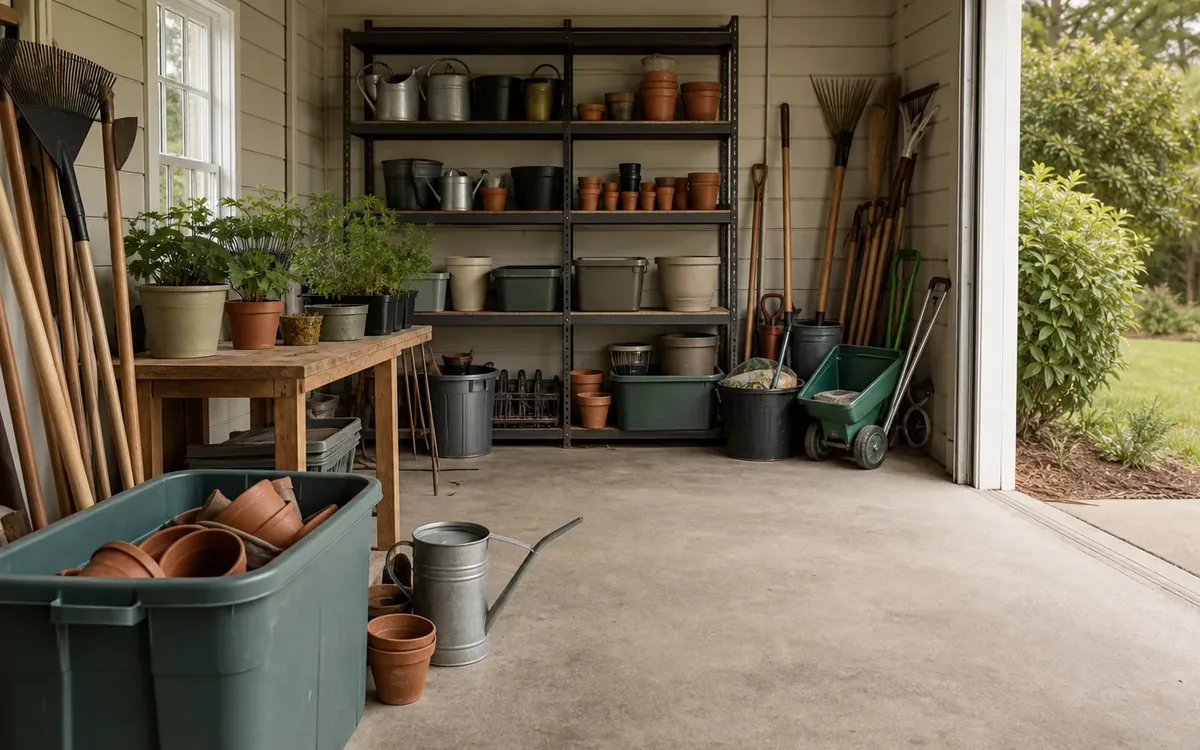
If you are moving from a full yard to a patio home or apartment, keep gardening supplies that fit the new space, match its rules, and support the plants you genuinely plan to grow. Pass along duplicate tools, oversized equipment, and containers without a clear destination. Set lawn and garden chemicals aside for label-based handling rather than placing them in ordinary donation or discard piles.
Quick answer: Plan the future garden before sorting the old one. Measure the usable outdoor area, confirm property rules, choose a small set of hand tools and right-sized containers, and separate chemicals for appropriate handling. The household decides what to keep and give away. Property management, movers, waste authorities, inspectors, and other qualified professionals decide what they can accept, transport, or approve.
This approach is especially useful for South Carolina gardeners moving from a detached home into a condominium, apartment, townhome, or patio home. The goal is not to abandon gardening. It is to build a smaller collection around the conditions and limits of the next residence.
What will your new gardening space actually support?
Start with the destination, not the garage or shed. A balcony that receives limited light calls for different plants and equipment than a sunny ground-level patio. A screened porch, shared courtyard, or narrow entry area may have its own restrictions.
Before choosing supplies, gather information the household can verify:
- Usable floor area, including space needed to walk and open doors
- Sun and shade patterns, if the space can be observed before the move
- Access to a water source and an acceptable place for drainage
- Railings, ledges, screens, and surfaces that could limit container placement
- Indoor storage available for tools, potting supplies, and seasonal items
- Building or community rules governing plants, hooks, trellises, watering, and storage
- Weight or structural limits identified by property management or another responsible professional
Do not assume that a balcony can safely hold every large ceramic planter from the current yard. Questions about structural capacity belong to the property owner, property manager, engineer, or other qualified professional. A cleanout or move team may discuss practical handling and space needs, but it does not determine load limits or approve balcony use.
Sketch the new space and assign every retained item a location. If a pot, hose, trellis, or tool has no sensible home on the plan, that is a strong reason to release it.
For broader help reducing household belongings around a move, review the downsizing and organizing service. It explains the practical scope of sorting and transition support without replacing decisions reserved for property professionals or public authorities.
Which garden tools belong on a balcony or small patio?
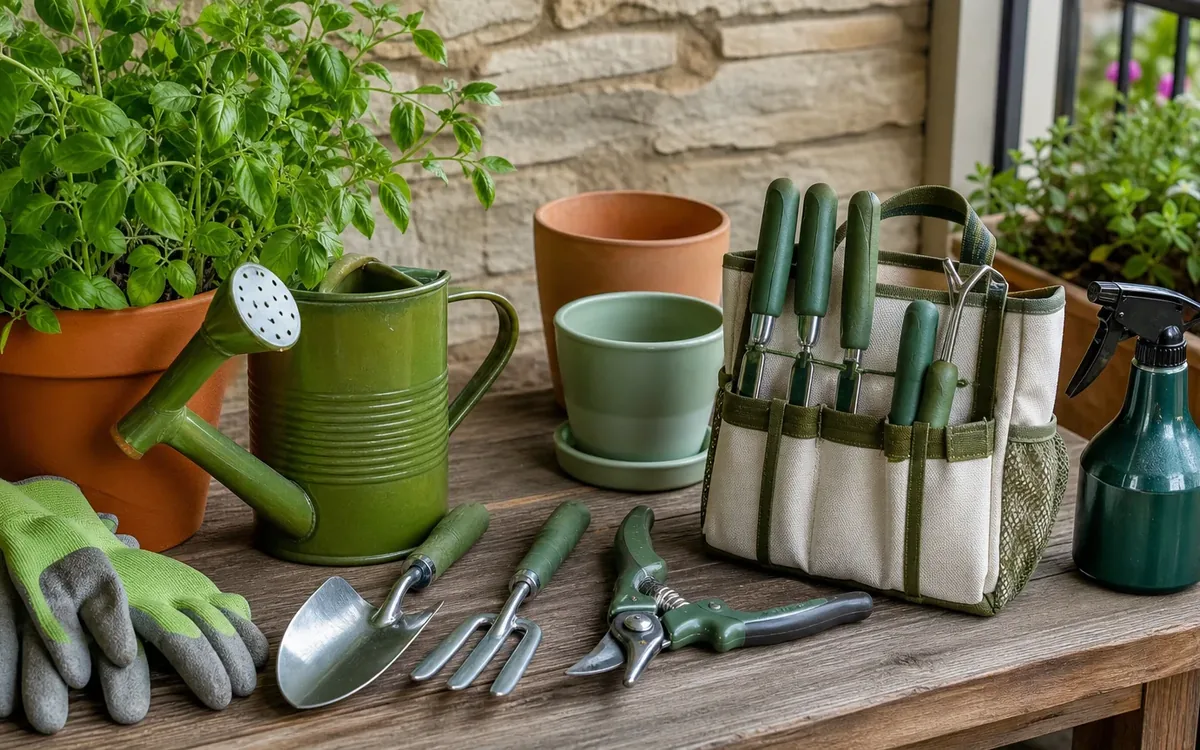
A compact garden usually needs a compact tool set. Select tools according to future tasks, not the size of the garden you are leaving.
A useful small-space collection might include:
- One hand trowel
- One hand cultivator or soil scoop
- One dependable pair of pruners
- Garden gloves that fit and remain in usable condition
- A small watering can or approved watering setup
- A brush and dustpan for spilled soil
- Plant ties, labels, and a small container for fasteners
- A kneeling pad, if it serves a clear need and stores easily
Keep the best version when several tools do the same job. Look for sound handles, minimal rust, comfortable grips, and blades that can be maintained safely. A compact tool that is unpleasant or unsafe to use is not more valuable merely because it fits.
Full-size shovels, bow rakes, wheelbarrows, spreaders, long hoses, lawn edging tools, and powered lawn equipment usually have limited use where there is no private lawn or garden bed. Retain one only when the new property permits its use and offers appropriate storage.
Remove fuel, batteries, or other regulated components only according to the product instructions and applicable disposal guidance. Ask the mover whether it transports powered equipment, batteries, fuels, or tools with sharp edges. Transportation rules are the mover’s decision, not the household’s or cleanout team’s.
If garden sorting is one part of clearing a larger property, the guide to how estate cleanouts work provides a useful overview of separating belongings into practical categories.
How do you choose pots for a patio instead of a yard?
Pots are often the hardest garden items to reduce. They are reusable and attractive, but they are also bulky, breakable, and heavy once filled.
Use these five filters to select containers:
- Fit: Confirm that each pot fits its assigned location without narrowing a required walkway or interfering with a door.
- Weight: Consider the combined weight of the container, wet soil, plant, and water. Refer structural questions to the property manager or qualified professional.
- Drainage: Keep pots with functional drainage only where runoff can be managed under property rules.
- Condition: Release containers with sharp cracks, unstable bases, severe deterioration, or damage that makes handling risky.
- Purpose: Match every retained pot to a plant or realistic planting plan.
Prioritize versatile containers. A few compatible sizes can be easier to arrange and maintain than many specialty pots. Lightweight containers may make seasonal rearrangement easier, while a heavy pot may be useful only if it can remain in a safe, approved location.
Empty containers before moving them unless the mover has agreed to handle planted pots or soil-filled planters. Ask about packing requirements and exclusions. Movers establish their own acceptance and transportation policies.
Old potting mix needs a separate decision. It may contain roots, pests, weed seeds, fertilizer, or too much moisture for convenient transport. The household can decide whether it remains useful, but local waste or composting providers determine what they accept. Do not dump soil in shared landscaping, storm drains, vacant lots, or natural areas.
Saucers, trays, pot feet, and liners should be matched to the containers being kept. Pass along unmatched accessories instead of moving a box of parts that may never be used.
Separate chemicals before sorting ordinary garden items
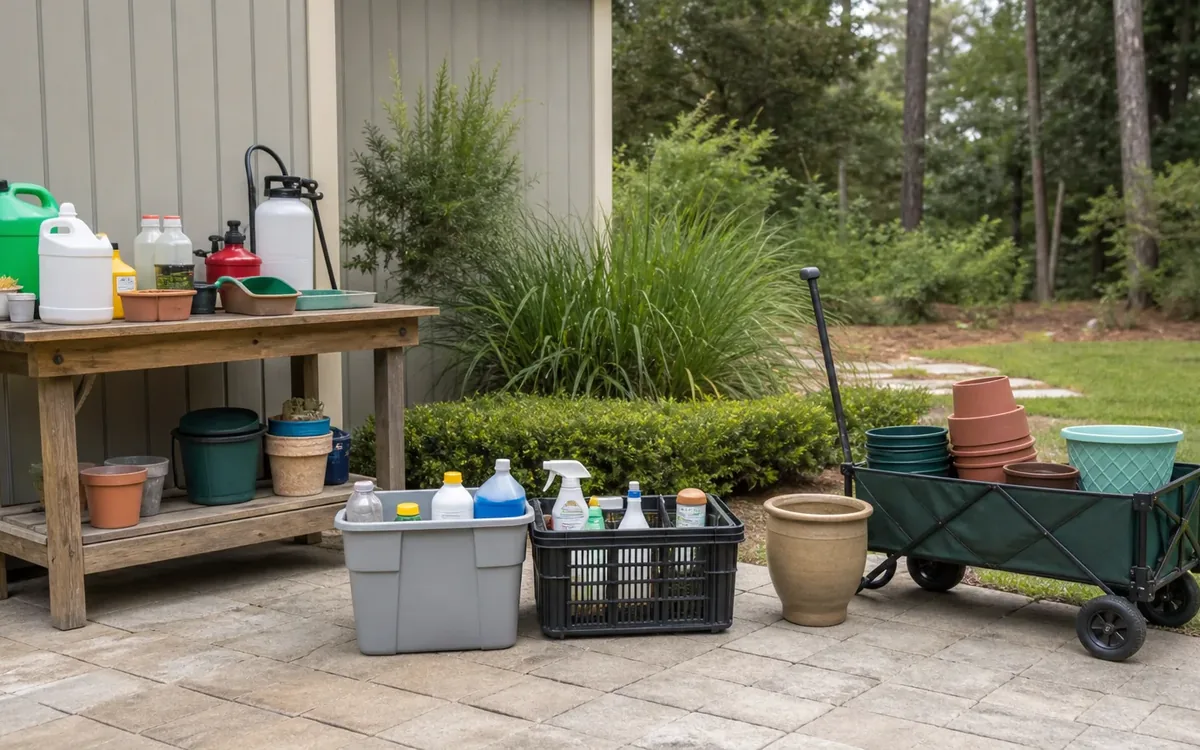
Lawn and garden chemicals should not move through the same donation, giveaway, or discard process as hand tools and empty pots. Set them in a distinct, secure area where labels remain visible and containers stay upright.
This category may include:
- Herbicides and pesticides
- Fungicides
- Concentrated or liquid fertilizers
- Pooling or pond treatments used in the landscape
- Fuel and fuel mixtures
- Solvents, cleaners, and equipment fluids
- Unidentified powders or liquids
- Products in leaking, corroded, or unmarked containers
Read the original label for storage, use, and disposal directions. Do not combine leftover products, pour them into unmarked containers, or assume that a drain, toilet, yard, or household trash is an acceptable destination.
Contact the appropriate local solid-waste or household hazardous-waste authority for current instructions. Acceptance rules, locations, container requirements, and event schedules are determined by those authorities and may differ across South Carolina. A property manager may also set rules for storing chemicals at the new residence.
A practical cleanout or move team may identify and isolate questionable materials, discuss access for removal, and help prevent them from being mixed into general belongings. It should not classify an unknown chemical, authorize disposal, or override a facility’s rules. Those decisions stay with the product guidance, receiving authority, licensed or qualified contractor when required, and other responsible professionals.
Also ask the mover about restricted materials before packing. Many garden products are unsuitable for ordinary moving loads. The mover decides what it can legally and safely transport.
What should happen to the gardening supplies you do not keep?
Give every outgoing item a specific route. Avoid a single miscellaneous pile, which encourages useful tools, chemicals, trash, and sentimental items to become mixed again.
Create these practical categories:
- Give to a named relative, friend, neighbor, or gardening contact
- Offer through a community group if its rules permit
- Sell individually or as a coordinated gardening lot
- Ask a suitable organization whether it currently accepts garden items
- Recycle through a program that accepts the specific material
- Dispose through the appropriate waste stream
- Refer chemicals or regulated materials to the responsible authority
Confirm acceptance before loading donations. An organization may decline used plastic pots, soil, opened products, powered equipment, damaged tools, or seasonal items. A recipient’s willingness to take an object is not proof that it is safe, permitted, or appropriate to transport.
For sale candidates, group related items such as hand tools, clean pots, trellises, or unopened accessories. If an item may be collectible or unusually valuable, the household can seek an independent appraisal. A cleanout or move team may discuss sorting and physical handling, while valuation belongs to a qualified appraiser or the chosen sales provider.
Auctions, estate sales, direct sales, and informal giveaways are different household choices. Their suitability depends on ownership, condition, value, effort, and the receiving party’s terms. No sale result should be assumed.
Do not give away products with missing labels, active leaks, unsafe modifications, or unclear contents. Keep sharp tools protected while they await transfer.
Build a small-space garden kit before packing
Once the outgoing items are separated, pack the retained collection as a complete kit. This makes it easier to see whether the downsizing worked and reduces the chance of buying replacements immediately after the move.
Use four groups:
- Tools: Clean hand tools, dry them, protect cutting edges, and place them in a compact tote or tool box.
- Container supplies: Nest clean pots when safe, place saucers together, and cushion fragile ceramics.
- Plant-care items: Keep labels readable and verify mover restrictions before packing fertilizers or treatments.
- Accessories: Consolidate ties, plant labels, gloves, clips, and approved hanging hardware in small marked containers.
Avoid packing damp gloves, wet soil, or water-filled equipment in sealed boxes. Moisture can damage boxes and nearby belongings. Remove loose dirt from tools and containers before they enter the home or moving vehicle.
Label boxes by both contents and destination, such as “patio hand tools” or “fragile planters.” Mark boxes containing sharp tools so anyone handling them can take appropriate precautions.
Plants require separate planning. Confirm whether the mover accepts live plants, whether the destination permits them, and whether any plant appears diseased or pest-affected. Questions about plant health or treatment should go to a qualified horticultural or pest professional. Requirements affecting movement of certain plants or soils belong to the relevant authority.
Coordinate the garden reduction with the rest of the move
Garden supplies are connected to several other move decisions. Handle them early enough that chemical questions, recipient arrangements, and packing restrictions do not become mixed into final household packing.
The household controls choices such as:
- Which plants and tools reflect the next lifestyle
- Who may receive usable belongings
- Whether potentially valuable items should be appraised
- Whether optional storage is worth arranging
- Which sentimental pots or garden objects matter most
A practical downsizing, cleanout, or move team may discuss sorting zones, packing sequence, physical access, removal pathways, and coordination with chosen recipients or providers. Exact scope should be confirmed directly.
Other decisions remain separate:
- Storage providers set unit terms and prohibited-item rules.
- Movers decide what they accept and how items must be prepared.
- Contractors assess repairs, shed removal, irrigation changes, or landscape work within their scope.
- Appraisers and sales providers address value and selling strategy.
- Real-estate professionals advise on presentation and transaction matters within their roles.
- Inspectors report on property conditions within the inspection scope.
- Property managers and associations interpret applicable community or building rules.
- Government authorities and waste providers determine compliance and disposal requirements.
- Attorneys or other legal professionals address ownership disputes, estate authority, contracts, and legal obligations.
Clutter Cleaner of South Carolina is physically located in Mount Pleasant and serves households across South Carolina, with Charleston as its primary market. Garden-item decisions can be incorporated into a broader downsizing or move-management conversation, subject to the agreed scope and any third-party restrictions.
Final review before the gardening supplies leave
Walk through the shed, garage, porch, yard, and indoor storage areas after packing. Garden supplies often hide behind doors, beneath potting benches, in outdoor cabinets, or inside decorative containers.
Check for:
- Chemicals separated from ordinary boxes
- Tools left outdoors or attached to equipment
- Irrigation timers and removable hose fittings
- Plant stands, hooks, stakes, and trellises
- Pots still containing soil or water
- Sharp items without guards or wrapping
- Items promised to someone but not labeled
- Property fixtures mistakenly included in move boxes
Do not remove built-in planters, attached shelving, irrigation components, or other possible fixtures without confirming ownership and any transaction requirements. The homeowner can identify questions, but a real-estate professional, attorney, property owner, contractor, or other responsible party should address fixture and contractual decisions.
The best final test is simple: does every retained object have a safe, permitted purpose in the next garden? If not, direct it to an appropriate outgoing route rather than moving uncertainty to a smaller home.
FAQ
Can I donate opened fertilizer or pesticide?
Do not assume a donation organization or individual can accept it. Check the product label and ask the intended recipient or relevant waste authority. Leaking, unidentified, or improperly stored products need special attention and should not enter a general donation pile.
Should I move empty plastic nursery pots?
Keep only sizes tied to a realistic plan. Confirm that pots are clean enough for the intended recipient or destination. Recycling and donation programs decide which plastics and pot conditions they accept.
What if I cannot decide which sentimental planters to keep?
Choose a firm display area in the new home, then select the pieces that fit it safely. Photographing the remaining planters or offering them to specific people can preserve their story without retaining every object.
Can a cleanout team decide what my gardening equipment is worth?
A team may help sort items and discuss possible sale or transfer routes. Formal valuation or specialized market advice should come from an appropriate appraiser or sales professional.
Where should leftover garden chemicals go?
Follow the original label and contact the relevant local waste or household hazardous-waste authority for current instructions. Do not mix products or place them in a disposal stream unless the responsible authority says that stream accepts them.



