
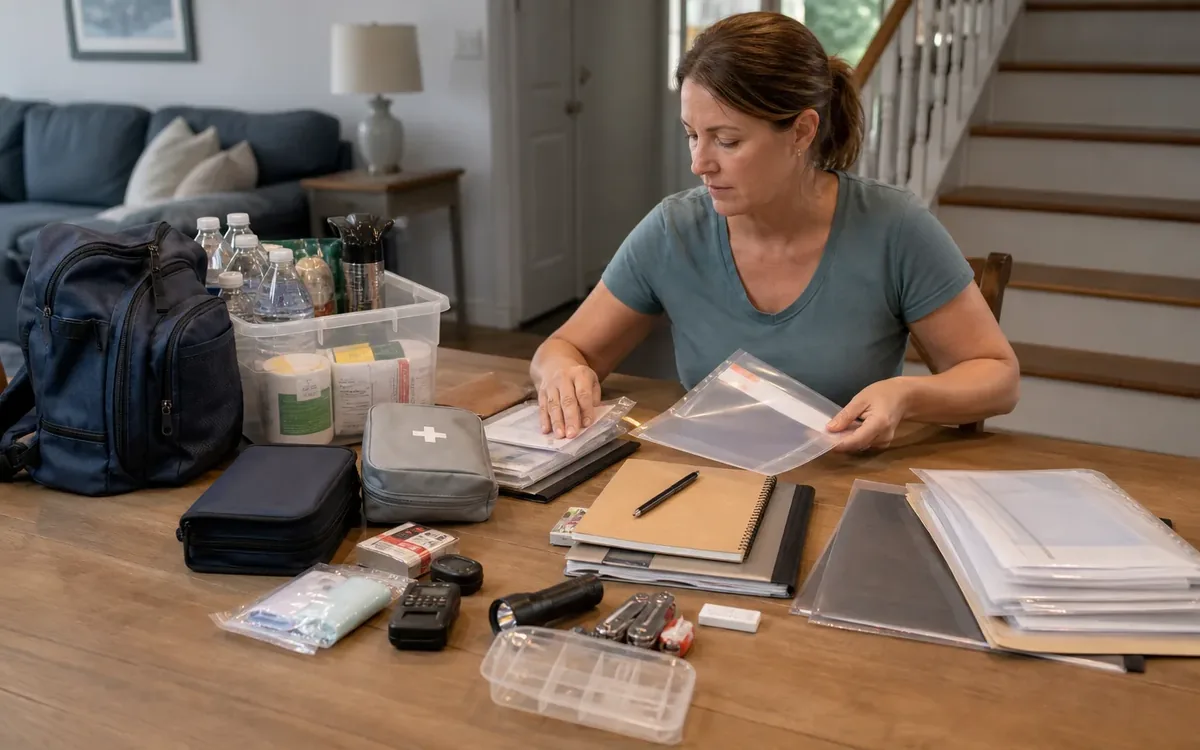
Downsizing emergency supplies does not mean becoming less prepared. Keep the documents, medications, food, water, communication tools, and evacuation items that match the household now. Remove expired goods, obsolete plans, unreadable copies, unnecessary duplicates, and equipment that household members cannot safely use. In South Carolina, the final setup should support hurricane evacuation, extreme heat, and power-outage decisions without creating clutter that blocks access.
Quick answer: Sort emergency materials into five groups: take during an evacuation, use while sheltering at home, protect as essential records, replace or update, and remove. Keep current essentials accessible, preserve secure backups, and confirm official preparedness guidance before discarding anything that may still be required.
This approach is particularly useful during a move, an estate cleanout, or a transition to a smaller home. A household can decide what fits its needs and space. A practical cleanout or move team may help sort, label, pack, relocate, or remove approved items. Government agencies, insurers, attorneys, medical professionals, inspectors, and other qualified specialists remain responsible for guidance within their fields.
Why emergency supplies require a different downsizing method
Ordinary decluttering often asks whether an object is useful, valued, or frequently used. Emergency materials are different because their purpose is to be available for an uncommon but serious event.
Frequency of use is therefore a poor test. A battery radio may remain important even if it has not been used recently. Conversely, a large box labeled “emergency” may contain expired food, batteries for devices the household no longer owns, or evacuation instructions for a former address.
The better question is whether each item supports a current emergency action. In South Carolina, those actions may include:
- Evacuating ahead of a hurricane or other official order
- Remaining safely at home during a power interruption
- Managing heat when air conditioning is unavailable
- Identifying household members and accessing critical records
- Communicating when normal charging or internet access is disrupted
- Caring for pets, children, older adults, or household members with disabilities
This decision framework keeps readiness at the center while reducing volume. It also prevents fear from turning every old document or spare object into something that feels impossible to release.
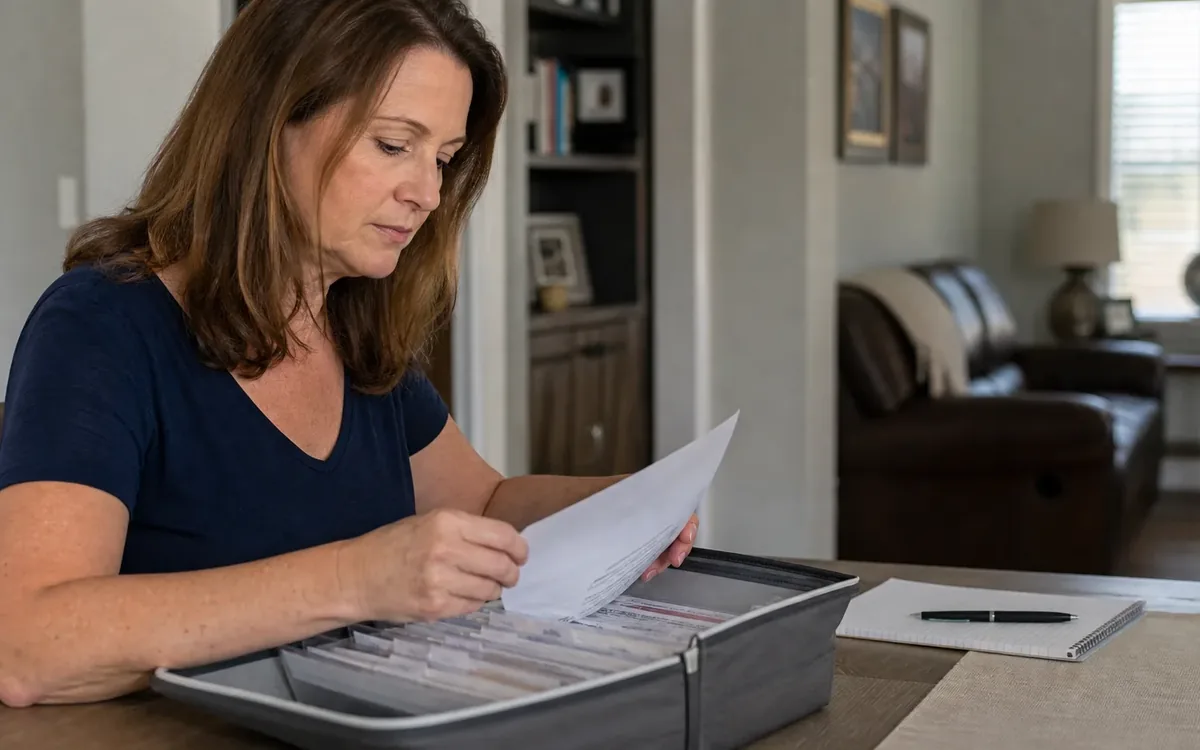
What should you keep in an evacuation-ready document set?
Keep records that help the household identify people, obtain care, contact responsible parties, document property, or complete an evacuation. The precise contents depend on the people, property, insurance arrangements, and legal responsibilities involved.
Possible categories include:
- Identification and copies of essential personal records
- Current insurance policy information and contact details
- Medication, allergy, and medical-provider information
- Emergency contacts, including one outside the immediate area
- Pet identification, vaccination, and care information
- Relevant property information and a current household inventory
- Current evacuation destinations and contact plans
- Instructions needed by caregivers or authorized representatives
Separate originals from travel copies. Some originals may belong in secure storage rather than in a portable evacuation folder. The household should decide who can access each record and how it will be protected against theft, water, fire, or accidental disposal.
Digital copies can reduce paper, but they should not automatically replace every physical document. Consider whether files will be accessible during a power, internet, device, or password problem. Encrypted storage, secure cloud access, and offline copies are separate choices. A qualified technology or security professional can advise on technical protection when needed.
Legal documents need special care. Do not discard a will, deed, power of attorney, court record, title, trust document, tax record, or other potentially significant paper solely because a scan exists. An attorney, accountant, records custodian, insurer, or issuing authority should determine whether an original is required and how long it must be retained.
Households preparing for a broader transition can pair this process with downsizing and organizing support. Sorting assistance can make materials easier to handle, but the owner or properly authorized decision-maker controls what is retained, shared, shredded, donated, or discarded.
How can you remove duplicates without removing your backup?
Not every duplicate is waste. A second copy stored separately can protect the household if the primary copy is lost or inaccessible. The goal is to distinguish intentional backup from uncontrolled accumulation.
Use three tests for each duplicate:
- Does it serve a separate access purpose? A travel copy and a secure home copy may have distinct roles.
- Is it current and readable? An outdated policy page or faded medication list is not a useful backup.
- Is it protected appropriately? Sensitive personal information should not remain in an open box simply because it might be useful one day.
Create one master list showing where important records are kept. That list should describe locations without exposing account numbers, access codes, or other sensitive details unnecessarily.
When disposing of duplicate records, match the method to the information. Routine blank forms may be recyclable where accepted. Papers containing medical, financial, identification, account, or legal information may require secure shredding. The household should select and verify the disposal provider and method.
If emergency papers are mixed into a deceased person’s belongings, pause before removing them. The authorized representative may need to identify estate, financial, insurance, property, or beneficiary records. The guide on how estate cleanouts work explains the broader sorting process without treating sensitive records as ordinary debris.
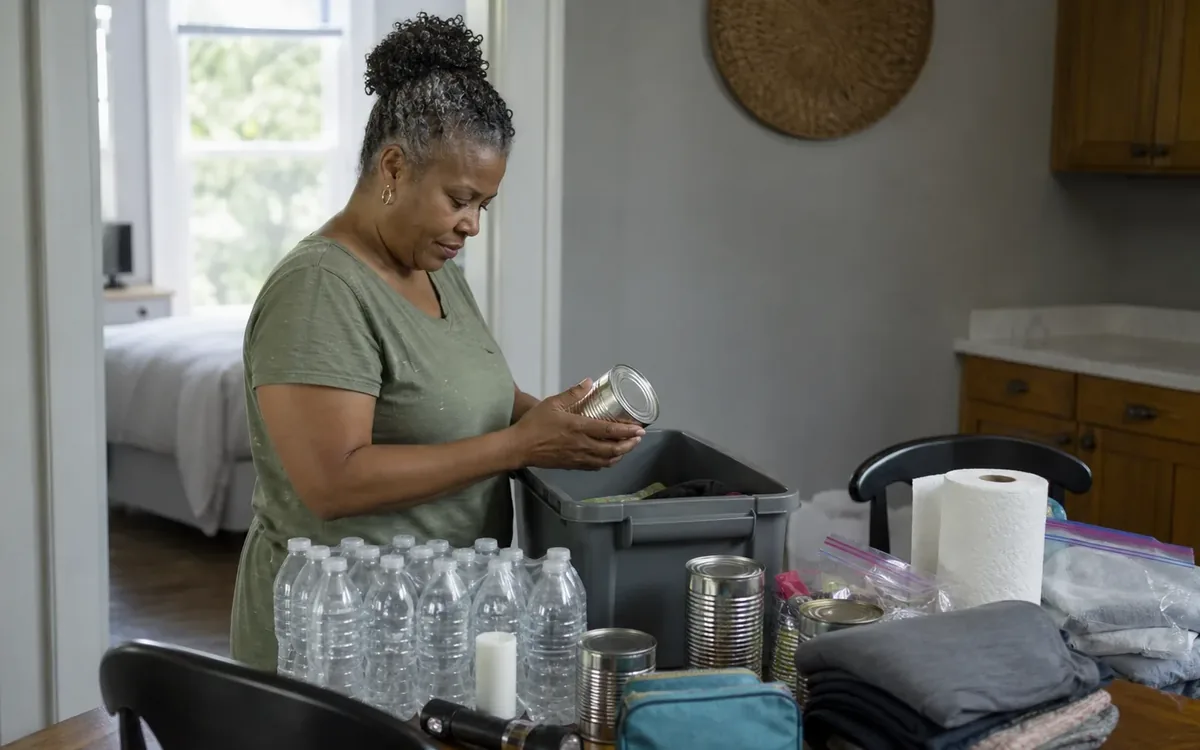
How do you decide which emergency supplies still fit the household?
Evaluate supplies by function, condition, user, location, and portability. An item can be functional yet inappropriate for the current household.
Start with these categories:
- Water and food: Check dates, packaging integrity, dietary restrictions, preparation needs, and storage conditions.
- Lighting and power: Match batteries, chargers, cables, and power banks to devices currently owned.
- Communication: Keep radios and contact tools that household members know how to operate.
- First aid and health: Review expiration information and current medical needs with a pharmacist or medical professional when appropriate.
- Heat protection: Consider hydration, cooling, shade, and medically relevant needs if power loss affects indoor temperatures.
- Sanitation: Retain practical hygiene and cleanup supplies in usable condition.
- Evacuation: Match bags, carriers, mobility aids, and vehicle supplies to the actual people and pets evacuating.
Test reusable equipment according to its manufacturer’s instructions. Remove leaking batteries promptly and handle them through an appropriate disposal option. Do not test generators, fuel-burning equipment, medical devices, or unfamiliar electrical equipment by improvisation.
Equipment should also fit the user. A heavy emergency container that no household member can lift is not truly portable. A complicated radio may be less useful than a simpler model that everyone understands. A pet carrier that no longer fits the animal should not occupy the designated evacuation space.
A practical organizing or move team may discuss container size, placement, labeling, packing, and accessibility. It should not replace medical advice, manufacturer instructions, fire-safety guidance, or official emergency directions.
Build separate home and evacuation layers
A compact system works better when supplies are organized by where they will be used. Avoid forcing every emergency item into one container.
Use these three layers:
- Evacuation layer: Portable documents, medications, communication tools, personal necessities, and other items the household has decided must leave with it.
- Home readiness layer: Supplies intended for a power outage, heat event, sanitation need, or temporary disruption while remaining at home.
- Protected backup layer: Secure copies, replacement supplies, and less frequently accessed materials kept in an appropriate location.
Label containers by purpose rather than with vague terms such as “storm stuff.” Useful labels might identify evacuation documents, pet supplies, lighting and charging, or household health information.
Placement matters. Keep priority materials away from ordinary donation boxes, routine household storage, and areas likely to be blocked during a move. Consider moisture, temperature, children, pets, stairs, and the physical abilities of everyone expected to retrieve them.
Storage products are a household purchase, not an automatic part of cleanout help. The household should select containers based on the items, environment, security needs, and manufacturer specifications. Claims such as waterproof, fire-resistant, or temperature-safe should be checked with the product manufacturer rather than assumed from appearance.
What should happen to expired, damaged, or obsolete items?
Do not place everything in one discard pile. Disposal rules vary by product, material, and local program.
Sort questionable materials into clearly marked groups:
- Expired food or damaged packaging
- Expired or unwanted medication
- Leaking, corroded, or depleted batteries
- Old electronics and mismatched charging accessories
- Fuel, chemicals, or pressurized containers
- Sensitive paper records
- Serviceable supplies that are no longer suitable for the household
Medication disposal should follow guidance from a pharmacist, authorized collection program, or appropriate public authority. Batteries, electronics, fuel, chemicals, and pressurized products may require specialized handling. Confirm current acceptance rules with the relevant local facility or program before transporting anything.
Never donate expired consumables, recalled equipment, opened medical products, or damaged safety gear. For usable items, ask the receiving organization what it currently accepts. Donation is a separate household choice, and acceptance is controlled by the recipient.
A cleanout team may discuss removal options for approved contents, but it should not decide that regulated, hazardous, medical, or sensitive materials can enter ordinary waste. The responsible facility or authority determines acceptance and handling requirements.
Update plans that belong to a former home or former routine
Emergency plans often become obsolete quietly. A move, death, divorce, new diagnosis, new pet, mobility change, or change in transportation can make an old plan unreliable.
Review whether the materials still show:
- The current home address and household members
- Working telephone numbers and emergency contacts
- Current medications, allergies, and care instructions
- Realistic transportation arrangements
- Appropriate pet plans and carriers
- Accessible exits and meeting locations
- Current insurance and property information
- A usable destination outside an affected area
Remove old versions after the current plan has been verified and placed where the right people can reach it. Marking a document “old” during review reduces the risk of following conflicting instructions.
For hurricane and evacuation decisions, use current information from the appropriate South Carolina and local authorities. Official evacuation orders, routes, shelter information, reentry requirements, and public-safety directions can change. A household organizer, mover, real-estate professional, or cleanout provider does not set or interpret those orders on the authority’s behalf.
Coordinate emergency materials with a move or smaller home
A move creates a vulnerable period because supplies may be divided among a current residence, vehicle, new home, temporary lodging, or storage. Keep the working emergency set under household control rather than packing it deep inside general household goods.
Before boxes leave, identify:
- The portable evacuation set
- Daily and emergency medications
- Documents needed for the move or property transfer
- Chargers and communication equipment
- Supplies needed immediately at the destination
- Items that require climate-sensitive or secure handling
If household goods enter self-storage or another third-party facility, review its restrictions, access terms, security features, and environmental conditions. Storage is a separate provider decision. Do not assume an emergency document set will remain accessible during severe weather or a facility closure.
Contractor work is also separate. If downsizing reveals blocked exits, unsafe wiring, water intrusion, generator concerns, damaged stairs, or structural problems, an appropriately qualified contractor or inspector should evaluate the condition. A sorting team can identify an item or area for the household’s attention, but it cannot make a technical determination outside its role.
For a home sale, the owner and real-estate professional decide what should remain at the property and what must be disclosed, repaired, or removed. Appraisers determine valuation. Inspectors assess conditions within their scope. Attorneys, closing professionals, insurers, and authorities handle their respective legal or compliance questions.
Use a final readiness review, not a final purge
After downsizing, conduct a functional review. The goal is to confirm that essential items can be found and used, not merely that shelves look tidy.
Check the following:
- Current documents are separated from obsolete versions.
- Sensitive information is secured.
- Evacuation materials are portable for the intended user.
- Food, medication, and batteries have been reviewed.
- Devices match their chargers, batteries, and instructions.
- Household members know where key supplies are located.
- Pet, medical, mobility, and caregiving needs are represented.
- Items requiring specialized disposal remain separated.
- Official plans and contacts can be updated without rebuilding the entire system.
Photographing the arrangement may help the household restore it after a move or seasonal review. Avoid capturing exposed identification numbers, account details, access codes, or private medical information.
Clutter Cleaner of South Carolina is based in Mount Pleasant and serves households across South Carolina, with Charleston as its primary market. For transition-related sorting, packing, and organizing questions, contact the company at (843) 972-7020. The household remains responsible for retention and disposal approvals, while specialized decisions stay with the relevant professional or authority.
FAQ
Should every emergency document be digitized?
No. Digital copies can improve access and reduce paper, but some originals may have legal, administrative, or practical importance. Ask the relevant attorney, insurer, agency, accountant, or records custodian before destroying an original.
Can old emergency food be donated?
Do not assume it can. Check dates and packaging, then ask the intended organization about current acceptance rules. Do not donate expired, opened, recalled, contaminated, or damaged products.
Where should evacuation supplies be stored?
Choose an accessible location that supports a quick departure and protects contents from foreseeable damage. Account for mobility, children, pets, moisture, temperature, and security. Do not block an exit or place a heavy container where it cannot be handled safely.
Who decides whether equipment is safe to keep?
The household can inspect condition and usefulness, but technical safety questions belong to the manufacturer, an appropriately qualified repair professional, medical professional, fire-safety authority, electrician, or other responsible specialist.
Can a cleanout team decide what legal papers to discard?
No. The owner or properly authorized representative approves disposition. Attorneys, courts, agencies, accountants, insurers, or records custodians should answer legal and retention questions within their authority.
How often should the system be reviewed?
Review it when household needs, addresses, medications, contacts, equipment, pets, mobility, or official guidance change. Product dates and manufacturer instructions can also determine when individual supplies need attention.



