
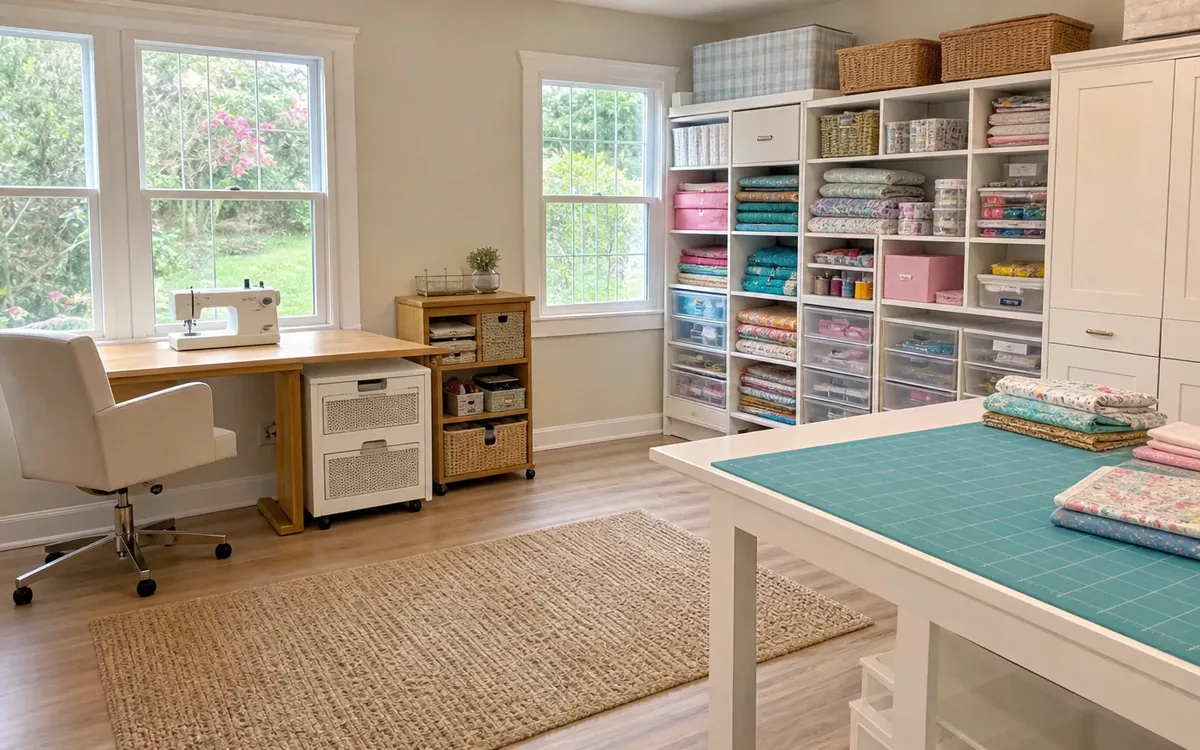
Downsizing a craft room starts with the space you will actually have, not with deciding whether every item still has potential. Choose the projects you genuinely plan to continue, set firm storage limits for fabric and yarn, and then route unfinished projects and extra supplies according to condition, value, and usefulness. This keeps the move focused on a workable creative space rather than transferring an unmanageable collection into a smaller South Carolina home.
Quick answer: Measure the storage available in the new home, reserve room for essential tools, select a limited number of active projects, and keep only materials that fit the remaining capacity. Separate complete, usable supplies from scraps, damaged materials, valuable equipment, and unfinished work so each category can be sold, donated, offered to someone, recycled where accepted, or discarded appropriately.
Why should the new craft space set the limit?
A collection can feel reasonable when it fills an established sewing room, closet, or studio. The same collection may overwhelm a guest-room corner or shared living area. The useful question is not, “Could I use this someday?” It is, “Where will this live without blocking the room’s other purposes?”
Begin with confirmed facts about the next home:
- Which room or area can support crafting?
- Will the surface be permanent or packed away after each session?
- How much closed storage is available?
- Are shelves, cabinets, and closets included, or must storage furniture also fit?
- Is there suitable access to electrical outlets for machines and lighting?
- Can tools, pins, blades, dyes, or adhesives be secured from children and pets?
Use interior measurements rather than estimates. Account for doors, vents, windows, walkways, and furniture. If shelving or cabinets may be installed, a qualified contractor or the responsible property professional should determine whether the proposed work is suitable and whether approval is required. A cleanout or move team can discuss sorting and handling needs, but it does not replace contractor, inspection, building, or compliance decisions.
For broader help reducing household contents, review Clutter Cleaner of South Carolina’s downsizing and organizing service. The household still decides what to retain and where possessions should go unless an authorized representative has been assigned that role.
Build a storage budget before sorting
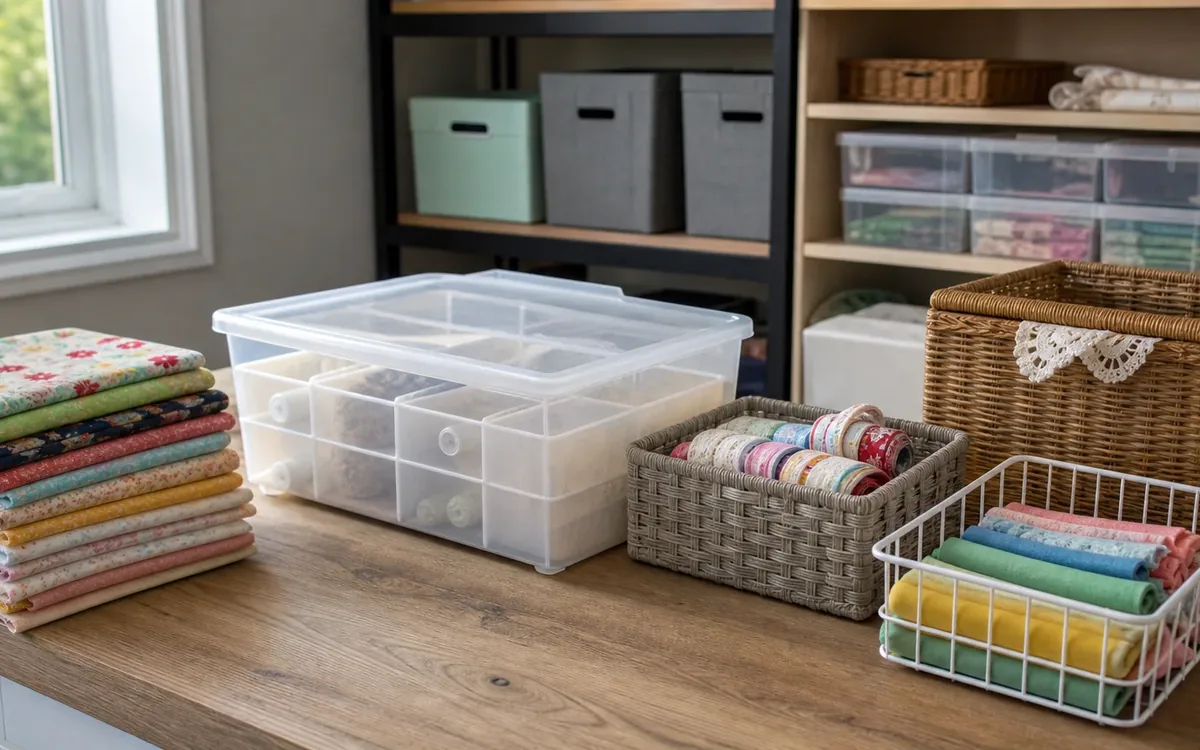
Treat available storage like a fixed budget. Divide it among the activities that will continue in the new home. This prevents one category, often fabric or yarn, from consuming every shelf before tools and projects are considered.
A practical storage budget may include:
- Frequently used sewing, knitting, quilting, or crafting tools
- One accessible area for active projects
- Fabric or yarn reserves
- Patterns, books, and reference material
- Machine accessories and maintenance items
- Cutting mats, rulers, hoops, frames, and pressing tools
- Packing or display materials needed for finished work
Assign a real container, drawer, shelf, or cabinet to each category. Avoid creating limits based on vague labels such as “a little fabric.” A designated bin or measured shelf gives you a visible stopping point.
Keep some breathing room. Storage packed so tightly that supplies cannot be seen or removed without emptying a cabinet will be difficult to use. Empty capacity also gives current projects somewhere to go between work sessions.
If the destination is not settled, create a provisional limit based on the smallest likely craft area. Renting storage is a separate household choice, not an automatic solution. Before signing an agreement, consider access, climate sensitivity, insurance terms, prohibited materials, retrieval effort, and whether storage merely delays the same decisions. The storage provider and insurer should answer facility and coverage questions.
Which active projects should move?
Active projects deserve priority only when they are truly active. A project packed away for years may represent good intentions, but that does not obligate you to move it.
Use five tests for each unfinished project:
- Interest: Do you still want the finished item?
- Readiness: Are the pattern, materials, tools, and instructions present?
- Fit: Will the completed item suit your current life, home, or intended recipient?
- Effort: Are you willing to complete the remaining work?
- Space: Can the project fit within the active-project area at the new home?
Match each numbered test with an honest yes or no. Projects with several uncertain answers should not automatically receive valuable moving space.
Place each selected project in one clearly labeled container with its pattern, materials, special notions, and a note describing the next step. Loose components are easy to separate during a move. Photograph the layout or progress if assembly details may be forgotten.
Consider limiting work in progress by physical capacity. For example, projects may continue only if they fit in the designated project drawers or baskets. This is more reliable than promising to finish an undefined pile after moving.
Projects tied to grief, identity, or family history may need a separate decision session. If an unfinished quilt, garment, or needlework piece has emotional importance, options include keeping it as-is, asking an interested person to complete it, preserving a representative portion, or photographing it before letting the materials go. The household or authorized decision-maker makes that choice.
How much fabric and yarn should you keep?
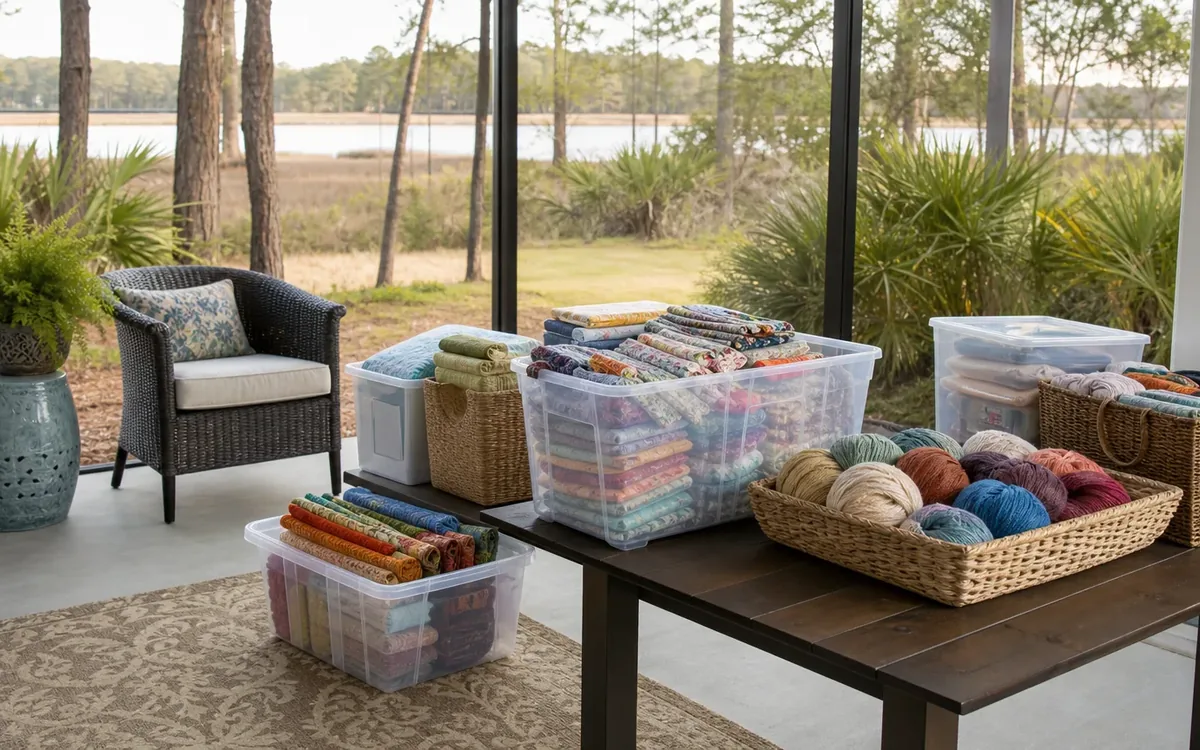
Keep fabric and yarn that has a defined use, suits your current style of making, remains in usable condition, and fits the storage budget. Yardage or skeins should not stay solely because they were expensive or might eventually become useful.
Sort fabric by function rather than color first:
- Material assigned to a selected project
- Versatile yardage you routinely use
- Specialty fabric requiring a realistic future project
- Coordinated bundles or quilt pieces
- Small remnants
- Damaged, stained, musty, or pest-affected material
Then compare each group with its assigned storage. Keep the strongest candidates until the container is comfortably full. Do not add overflow bags elsewhere, because that defeats the limit.
For yarn, group matching dye lots and project quantities together. Attach labels when fiber content, care instructions, or color information is known. Ask whether a partial skein is enough for the kind of work you actually do. A knitter who uses small amounts for colorwork may value remnants differently from someone who makes single-color garments.
Inspect natural fibers, batting, paper patterns, and other vulnerable supplies for moisture, odors, insects, and deterioration. Isolate questionable items rather than mixing them with clean inventory. Disposal or treatment requirements can vary by material and locality, so follow product guidance and instructions from the relevant waste, recycling, or pest professional.
Do not move unidentified liquids, dried adhesives, leaking paints, or chemicals without checking their labels and carrier restrictions. Local solid-waste authorities or appropriate disposal facilities determine what they accept. A practical move team may identify items needing separate handling, but the applicable authority makes disposal and compliance decisions.
Reduce tools without losing a usable setup
Tools are often easier to justify than materials because each one appears to have a purpose. Duplication still adds weight and consumes drawers.
Start with the core setup required for the crafts you plan to continue. Test machines and powered tools when it is safe to do so. Pair each item with its cords, pedals, cases, manuals, and specialty attachments.
Review duplicates by asking:
- Which scissors, cutters, needles, hooks, or rulers do I reach for first?
- Are duplicate sizes necessary for separate work areas, or are they simply accumulated?
- Does this tool work properly?
- Does it support a retained project or current craft?
- Would replacement be difficult enough to justify storing it?
Keep safety in mind. Broken blades, bent needles, damaged electrical cords, and malfunctioning equipment should not be passed to another person as usable. A qualified repair professional should assess equipment when safety or repairability is uncertain.
Specialized sewing machines, antique tools, and large equipment may warrant an appraisal before sale or distribution. The owner can decide whether to seek an appraisal, but value conclusions should come from an appropriate independent appraiser or knowledgeable marketplace professional. A cleanout team may discuss handling or destination categories, not guarantee value.
Where can unfinished projects and extra supplies go?
The best destination depends on completeness, condition, demand, and the recipient’s acceptance rules. Sort by outlet rather than creating one general giveaway pile.
Possible routes include:
- Offer a complete project kit to a friend, relative, guild member, or hobby group
- Donate clean, usable supplies to an organization that confirms it wants them
- Sell coordinated lots, working machines, specialty tools, or desirable materials
- Return borrowed equipment to its owner
- Recycle materials where an appropriate program accepts them
- Discard contaminated, unsafe, or unusable items according to local requirements
Contact potential recipients before packing or delivering supplies. Donation policies can change, and some organizations may not accept partial kits, opened products, loose scraps, outdated patterns, large machines, or materials with odors. Never leave items without permission.
Selling can make sense when the expected value justifies the household’s effort. Keep related accessories together, document condition accurately, and avoid describing untested equipment as working. Auction, estate-sale, resale, or appraisal professionals should advise on marketability and value within their own roles.
When craft supplies are part of a larger inherited household, the decisions may overlap with estate responsibilities. The guide to how estate cleanouts work explains how authorization, sorting, and removal fit into a broader property cleanout. Executors, trustees, personal representatives, attorneys, or courts determine legal authority and required handling, not a cleanout provider.
Pack the retained craft room as a working system
Packing should preserve the decisions already made. If categories become mixed again, setting up the smaller room will recreate the original problem.
Label boxes with both contents and destination, such as “Sewing cabinet: machine accessories” or “Craft closet: active knitting projects.” Mark containers holding sharp tools or fragile equipment clearly. Secure rotary cutters, needles, pins, and blades in rigid containers.
Use these packing priorities:
- Keep project components together
- Protect fabric and yarn from moisture and crushing
- Place small notions in closed, labeled containers
- Remove loose parts from equipment when appropriate and pack them together
- Photograph cable and machine setups before disassembly
- Keep irreplaceable patterns or records with important personal materials
Avoid making movers or helpers decide what is valuable, sentimental, or disposable during loading. Those are household decisions and should be resolved before removal whenever possible.
A practical cleanout or move team may discuss staging areas, box labeling, item separation, donation or disposal categories, and the order in which spaces are cleared. The team may also ask who has authority to approve decisions. It should not determine ownership, settle estate disputes, appraise property, interpret contracts, approve structural changes, inspect electrical systems, or issue legal or regulatory rulings.
Clutter Cleaner of South Carolina is physically located in Mount Pleasant and serves households across South Carolina, with Charleston as its primary market. Availability and the exact scope of assistance should be confirmed directly for the property and project.
Set up the smaller space to prevent rebound
Unpack according to the storage budget, not according to which box is easiest to open. Install the core work surface and essential tools first. Add active projects next, followed by the retained reserve materials.
If everything does not fit, do not immediately buy more cabinets. Recheck whether boxes contain duplicates, low-priority materials, or projects that lost relevance during the move. Additional furniture uses floor area and may turn a flexible room into permanent storage.
Maintain simple boundaries:
- New fabric or yarn must have an assigned project or fit existing capacity
- A new project enters the queue only when another is completed or released
- Scraps stay only if they meet a defined minimum usefulness standard
- Supplies remain labeled and visible enough to prevent duplicate purchases
- Finished pieces leave the project area for use, gifting, sale, or separate storage
These rules are not about making the smallest possible collection. They protect access to the tools and materials that support real creative work.
Short FAQ
Should I finish projects before moving?
Finish a project only if you want the result and completion will simplify packing. Do not let an unrealistic finishing plan delay necessary sorting. It may be more practical to pack a chosen project as a complete kit or release it intact.
Is it worth moving fabric scraps?
It depends on your craft and available storage. Keep scraps that meet a defined size, material, or project need. Let the assigned scrap container set the limit rather than saving every usable-looking piece.
Should I sell a sewing machine before getting it appraised?
If the machine may be antique, rare, collectible, or unusually valuable, consider advice from a qualified appraiser or relevant resale specialist first. The household decides whether to pursue appraisal, and the professional determines value within the appraisal engagement.
Can a cleanout team decide what to donate or discard?
A team can discuss categories, handling needs, and practical destinations. The owner or properly authorized representative should approve what leaves and how, while receiving organizations and disposal authorities determine what they accept.
What if several relatives claim the same craft supplies?
Pause distribution and document the items. The executor, trustee, attorney, court, or other responsible authority should resolve ownership and estate questions. A cleanout or move provider should not make that legal decision.
What should stay personally supervised during the move?
Personally track sentimental projects, valuable equipment, irreplaceable patterns, ownership records, and anything awaiting appraisal or legal direction. Keep these items clearly separated from donation and disposal areas.



