
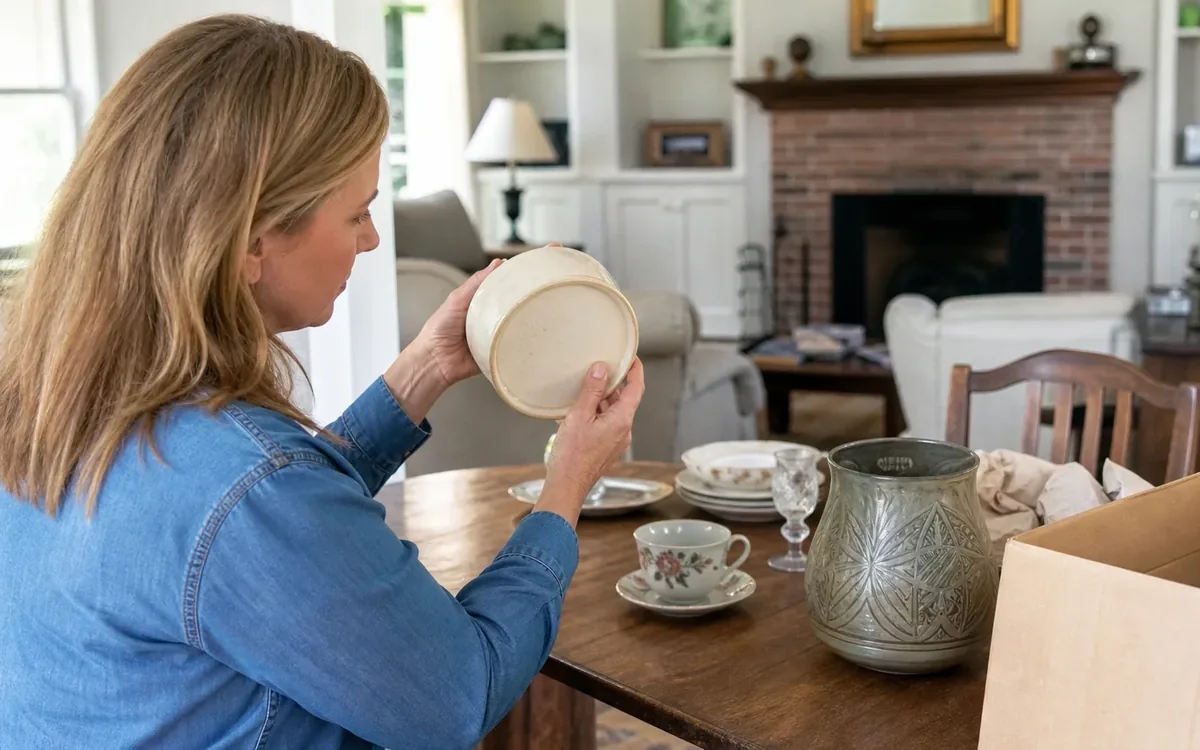
To document maker’s marks, take clear photos and copy each mark exactly. Keep those records tied to the correct item. For an estate sale in Lexington, SC, this helps preserve useful clues. It does not prove age, maker, origin, or value. Leave those judgments to qualified professionals.
Quick answer: Photograph the whole item, then its mark and nearby details. Record the exact words, numbers, symbols, and location. Give the item a record number. Keep family stories separate from visible facts. Don’t clean, scrape, or remove a label to improve a photo.
What should you record about maker’s marks?
Use the auctions and estate sales service page to frame sale-planning questions. The guide to how estate cleanouts work helps place this record step within the wider cleanout.
Record what you can see before deciding what it means. Include the item’s shape, size, material, condition, and exact mark location. Copy text as written, including odd spacing or spelling. Note unclear letters rather than guessing. Keep possible maker names in a separate field marked for review.
A mark may be stamped, pressed, painted, etched, or printed. It might sit beneath a vase or inside a drawer. Furniture can carry paper labels, branded names, or metal tags. Lamps may have marks on the base, socket, shade, or cord.
Record which part carries each mark. A marked shade does not identify the whole lamp. A drawer label may relate to one part of a desk. Loose lids, replacement parts, and later repairs can confuse the record.
Use a simple record with these fields:
- Give each item a unique record number and repeat it in the photo names.
- Write a plain description, such as “blue bowl with white flowers and one chip.”
- Record the mark’s exact text, symbols, colors, and location on the item.
- Note wear, repairs, missing parts, and anything that blocks a clear view.
- List related receipts or family notes separately, with their source clearly named.
A description such as “brown pitcher with an impressed circle underneath” stays close to visible facts. “Rare local pottery” makes claims that need support. Household items found in South Carolina can come from many places. Their location alone says nothing about where they were made.
Keep the original wording even if a search suggests a correction. If a letter could be an R or a B, write that down. A clear note about doubt is more useful than a confident guess.
How do you photograph marks without harming an item?
The estate cleanout planning guide offers context for sorting household contents. Use the auctions and estate sales service page when discussing which records may help a sale review.
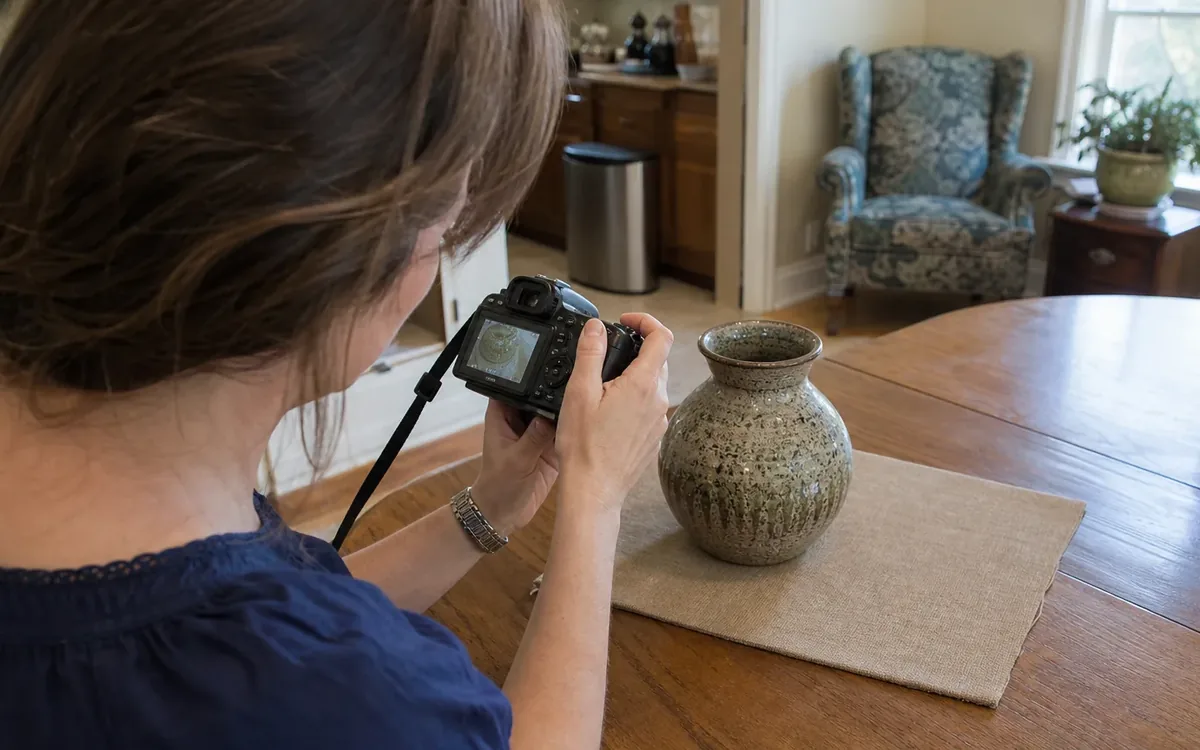
Start with a full view, then move closer to the mark. Use steady light and a plain background. Support the item before turning it. Keep filters off and save the original files. If a mark is hard to reach, stop rather than risk damage or injury.
Daylight near a window may help, provided glare stays low. A lamp set to one side can reveal shallow stamps. Try a second angle when glass or metal reflects light. Avoid direct sunlight if it makes the mark harder to read.
Follow these five steps for each item:
- Place the item on a stable surface and photograph its full shape before moving it.
- Photograph the underside, back, or inside only when the item can be handled safely.
- Take a close view of the mark, leaving enough space to show its location.
- Add a separate size photo with a ruler nearby, without covering any text or detail.
- Check the saved photos for sharp focus before returning the item to its assigned place.
Don’t lift a heavy cabinet to search beneath it. Don’t remove a wired fixture or open an electrical case. Those tasks may need a mover, electrician, or other suitable professional. A missing photo is better than a damaged item or an injury.
Leave fragile labels attached. Don’t rub chalk, polish, oil, or cleaning fluid into a mark. Don’t trace a signature directly on the item. These actions can change the surface or remove evidence. Ask a qualified conservator about fragile items that need treatment.
If glare hides the mark, save several angles. Keep the original images beside any cropped copies. Cropping can help a reviewer see detail, while the full image shows context. Note if you changed brightness or contrast on a copy.
How can you separate evidence from claims?
The guide to how estate cleanouts work helps organize information before items leave the home. The auctions and estate sales service page is a useful starting point for discussing sale descriptions.
Use separate fields for observations, reported history, and opinions awaiting review. A photo can show a name stamped beneath a bowl. It cannot establish who made the bowl or when. Quote family stories as stories, name their source, and avoid presenting a matching online image as proof.
A useful observation reads: “Base has the printed words ‘Made in England.’” A family note might read: “An aunt said this belonged to her mother.” A pending question might read: “Ask a ceramics specialist about the mark.” These entries have different levels of support.
Be careful with words such as antique, original, signed, rare, and authentic. “Visible writing appears to read ‘J. Smith’” is a record of what you see. “Signed by J. Smith” may imply a verified link to that person. That link needs review.
Online searches can help form questions. They can also show copies, look-alike marks, and poor descriptions. Save a search result as a lead, with the date and source. Don’t replace your own photos with an image from a listing.
For a vase, you might write: “Blue floral design; red printed mark underneath.” If the mark resembles a known maker’s logo, note that as a possible match. Leave the maker field unconfirmed until someone qualified reviews the evidence.
Value is a separate issue. The IRS guide to determining donated property value discusses factors such as condition and comparable sales. It addresses donation valuation, not a sale price for your item. Tax questions and appraisal needs belong with the appropriate professional.
Keep marks linked to the right estate sale items
Use the estate cleanout planning guide to plan sorting before removal. The guide to how estate cleanouts work helps explain why clear records matter during a household transition.
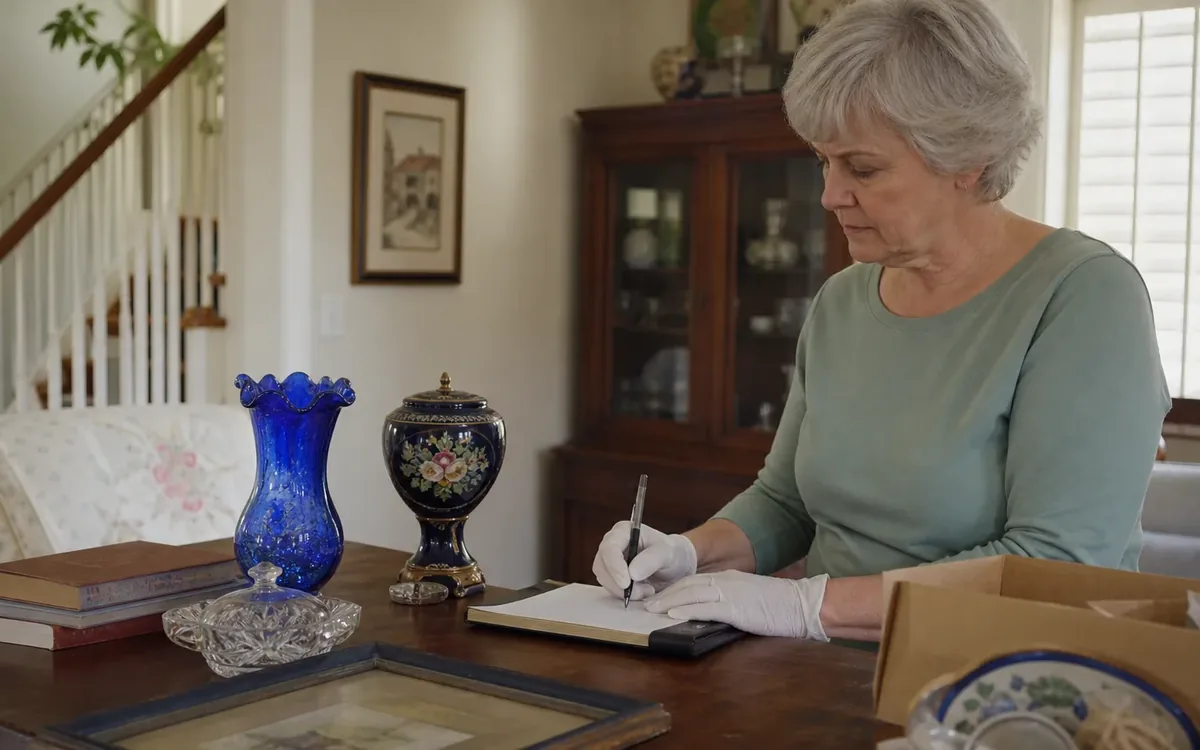
A good photo loses much of its value when nobody knows which item it shows. Give each object a stable record number. Use that number in file names, notes, and packing records. Keep sets and loose parts linked, while showing which pieces were actually found together.
A plain name such as E014_bowl_base_mark.jpg is easy to find. Use the same item number for the full view and condition photos. Avoid file names that make claims, such as rare_1800s_bowl.jpg. They can turn an early guess into an apparent fact.
For a dinner service, photograph the group first. Then check marks on different kinds of pieces. Plates, cups, and serving bowls may carry different marks. Don’t assume every piece matches because the patterns look alike.
Use a few simple habits to preserve the link:
- Put the record number on a nearby card, rather than sticking tape onto a fragile surface.
- Give loose lids and parts related numbers, and note where each piece was found.
- Keep receipts in a separate sleeve, with a note linking them to the possible item.
- Record each move to a box or room so helpers can find the item again.
- Store a second copy of the photos and notes in a secure place.
A receipt may cover several purchases. It may not identify the object beside it. Record the connection as uncertain unless the details clearly match. Keep the whole document, rather than cutting out a name or price.
Before items leave the home, compare the record with the physical group. Check that lids, drawers, and loose parts remain linked. Storage and packing are separate household or provider choices. Don’t assume record work includes those tasks.
Decide what needs a closer review
The auctions and estate sales service page can help frame questions about sale planning. The estate cleanout planning guide provides context for handling items whose next step remains undecided.
Not every mark needs a long search. Start with items that raise a clear question about identity, condition, ownership, or handling. Place them in a pending-review group. The household can set priorities, while the proper specialist handles appraisal or authenticity questions. Record why each item needs review.
A silver-colored tray may have several small stamped symbols. Record each one, but don’t infer metal content from color. A carved chair may carry a paper label and a later repair tag. Photograph both, and note that they appear in different places.
A framed print may have writing hidden by its backing. Don’t open it solely to search for a name. Ask a suitable specialist how to inspect it safely. The same caution applies to sealed cases and brittle labels.
Flag these practical reasons for review:
- The mark is partly hidden, and reaching it could damage the item or hurt someone.
- The visible name conflicts with a receipt, family account, or another label on the object.
- The item has repairs, altered parts, or labels that may affect a sale description.
- A family member disputes ownership, so the household needs to pause the sale decision.
When seeking help, send the full view with the close-up. Include size, condition notes, and exact text. Ask a focused question, such as whether more photos are needed. A maker specialist, appraiser, and auction professional may address different issues.
Legal ownership and estate authority require separate review. A cleanout or move team cannot settle an inheritance dispute. The responsible estate representative and legal adviser should resolve unclear authority before disposal or sale. Keep those items on hold while they do so.
Share records with the sale or cleanout team
Review the auctions and estate sales service page before discussing sale options. Read the guide to how estate cleanouts work to prepare questions about sorting and the agreed work scope.
Share a short item list, clear photos, and unresolved questions. Mark which statements are visible facts and which need review. Explain any household decisions already made. A practical team may discuss access, sorting, safe handling, and sale preparation. Confirm the scope before assuming research or valuation is included.
Clutter Cleaner of South Carolina serves all of South Carolina, including Lexington, SC. Its physical business location is Mount Pleasant. Household records can support a discussion about estate cleanouts or auctions and estate sales. Ask what information the team needs for the proposed work.
The household can choose which keepsakes to retain, subject to estate authority. It can name a contact and identify items awaiting review. A practical team may discuss where those items should stay during sorting. That discussion does not resolve legal title or authenticity.
Appraisals, storage, repairs, and disposal remain separate decisions. Contractors handle agreed repair work. Real-estate professionals advise on listing decisions. Inspectors and responsible authorities address their own inspection and compliance matters. Confirm each provider’s role rather than treating one conversation as approval for all tasks.
FAQ
Is a maker’s mark proof of authenticity?
No. A mark is one piece of evidence. It may be copied, altered, or attached to a replacement part. Keep clear photos and exact notes. A qualified specialist may need to review the whole item, its condition, and supporting records before offering an opinion about authenticity.
What should I do when a label is unreadable?
Record that the label is unreadable and photograph what remains. Try soft light from another angle without changing the surface. Don’t peel, wet, or scrape the label. Note any letters you can read, with clear gaps for the rest. Ask a suitable specialist if further inspection seems worthwhile.
Should I clean an item before taking photos?
Take record photos first. Cleaning can remove labels, surface details, or signs of past repair. Don’t polish metal or use chemicals to reveal a mark. For fragile or potentially valuable items, ask a qualified conservator about treatment. Safe handling matters more than a brighter photo.
Can I use an online listing to name the maker?
Use the listing as a research lead, not proof. Similar shapes and marks can appear on different objects. Listings may contain errors or unsupported claims. Save the link and note what seems to match. Keep your maker field unconfirmed until reliable evidence supports the name.
What if no mark is visible?
Write “No mark found in accessible areas” rather than “Unmarked.” Photograph the whole item and note which areas you checked. Don’t dismantle it to keep searching. Shape, material, construction, and condition may still help a specialist. A missing mark does not establish age or value.



