

A household move can continue while home health visits remain scheduled, but the care plan should set the boundaries for packing and moving. Protect visit windows, keep essential supplies accessible, maintain a usable care area, and confirm address or access changes directly with the home health provider. The household and move team can organize the physical transition, while clinicians and agencies remain responsible for care decisions.
Quick answer: Build the move schedule around confirmed care visits rather than asking care visits to fit around the move. Designate one family coordinator, create a no-pack care zone, prepare essential supplies for both residences, and give the provider verified access information. Ask the appropriate clinician or agency how a change of address affects services, equipment, records, coverage, or visit authorization.
Families moving between South Carolina residences may have to coordinate relatives, caregivers, movers, organizers, building access, and medical equipment providers. A written plan helps each participant act within a clear role without assuming responsibility for someone else’s decisions.
Who should make each decision?
Separate household logistics from clinical and regulatory decisions at the beginning. This prevents a mover, organizer, relative, or aide from being asked to approve something outside that person’s role.
The household can decide:
- Which belongings will move, remain, be donated, or be discarded
- Which family member will serve as the main logistics contact
- Where ordinary household items will be placed
- Which rooms will be packed first or left available
- How relatives will handle keys, pets, meals, and personal paperwork
- Whether separate storage, contractor, appraisal, or disposal providers are needed
A practical cleanout or move team may discuss:
- Packing sequence and room labels
- Walkways and staging locations
- Furniture placement based on household instructions
- Items designated for removal or separate handling
- Access conditions at the origin and destination
- How to keep household packing activity away from planned care space
Clutter Cleaner of South Carolina offers move management services across South Carolina, with its physical business location in Mount Pleasant and Charleston as its primary market. The scope of a particular project should be confirmed directly before the household builds other appointments around it.
Responsible professionals or authorities must address decisions such as:
- Whether a residence is clinically appropriate for the person’s needs
- Whether visits can continue after an address change
- Medication instructions or changes
- Transport and setup requirements for regulated medical equipment
- Insurance, benefit, authorization, or provider-network questions
- Required permits, inspections, accessibility determinations, or code approvals
- Legal authority to sign, sell, discard, donate, or direct care
- Property value, tax, title, or real-estate disclosures
A family member with a key is not automatically authorized to make medical, financial, or property decisions. Questions about authority should go to the relevant attorney, agency, insurer, real-estate professional, clinician, or public authority.

How do you protect home health visit windows during a move?
Treat every confirmed visit window as a protected appointment. Do not place furniture loading, utility work, contractor access, or a large family packing session in the same space unless the home health provider has said the arrangement is workable.
Use these five scheduling layers:
- Confirmed care visits: Record the date, stated window, residence, provider contact, and any entry instructions.
- Care-adjacent tasks: Note meals, personal care preparation, supply checks, rest periods, and any household responsibilities connected to the visit.
- Move activity: Add packing, loading, delivery, furniture placement, and removal appointments around the protected windows.
- Property appointments: List inspections, showings, repairs, closings, walkthroughs, or building access reservations separately.
- Fallback contacts: Identify who can answer the door, respond to a provider’s call, or pause move activity if the primary coordinator is unavailable.
Keep one schedule rather than separate family, care, and move calendars. A shared digital calendar can work, but a printed copy at each residence is useful when a phone is misplaced or a helper does not have access to the app.
Avoid writing detailed diagnoses or medication information on a calendar visible to contractors or visitors. The move team generally needs to know when an area must remain quiet and accessible, not the person’s private medical history.
Before the move date, ask the home health provider what counts as adequate access. The answer may affect parking, gate instructions, elevator arrangements, stairs, lighting, pets, or the location where the visit will occur. The provider, not the move team, should determine whether those conditions are acceptable for care delivery.
What should stay unpacked for continued care?
Create a clearly marked no-pack zone that remains under household control. It should not become a staging surface for boxes, paperwork, donations, or cleaning supplies.
The household can place commonly needed items there, based on guidance from the person receiving care and the appropriate clinician or caregiver. Possible categories include:
- Current medications and the household’s medication list
- Provider contact information and appointment details
- Identification, insurance information, and relevant care paperwork
- Mobility aids and ordinary personal-care items
- Chargers, glasses, hearing-related items, and communication devices
- Clothing, linens, and hygiene supplies needed during the transition
- Food and drinks permitted under the person’s care instructions
- Waste bags, paper products, and routine cleaning materials
Do not pack medications into a moving truck, donation load, storage unit, or unattended vehicle. Questions about temperature, refrigeration, security, timing, or transport belong with the pharmacist, clinician, home health agency, or other responsible professional.
Medical equipment should also be distinguished from ordinary furniture. The household should ask the equipment provider who may disconnect, move, install, test, or retrieve it. A general move or cleanout team should not be assumed to have that authority.
Use separate labels for three categories:
- Care essentials: Remain with the household’s designated responsible person
- Medical equipment: Follow instructions from the supplying or responsible provider
- Ordinary household goods: Pack and place according to the move plan
That distinction reduces the chance that an important supply is buried because it looked like an ordinary bathroom, kitchen, or bedroom item.
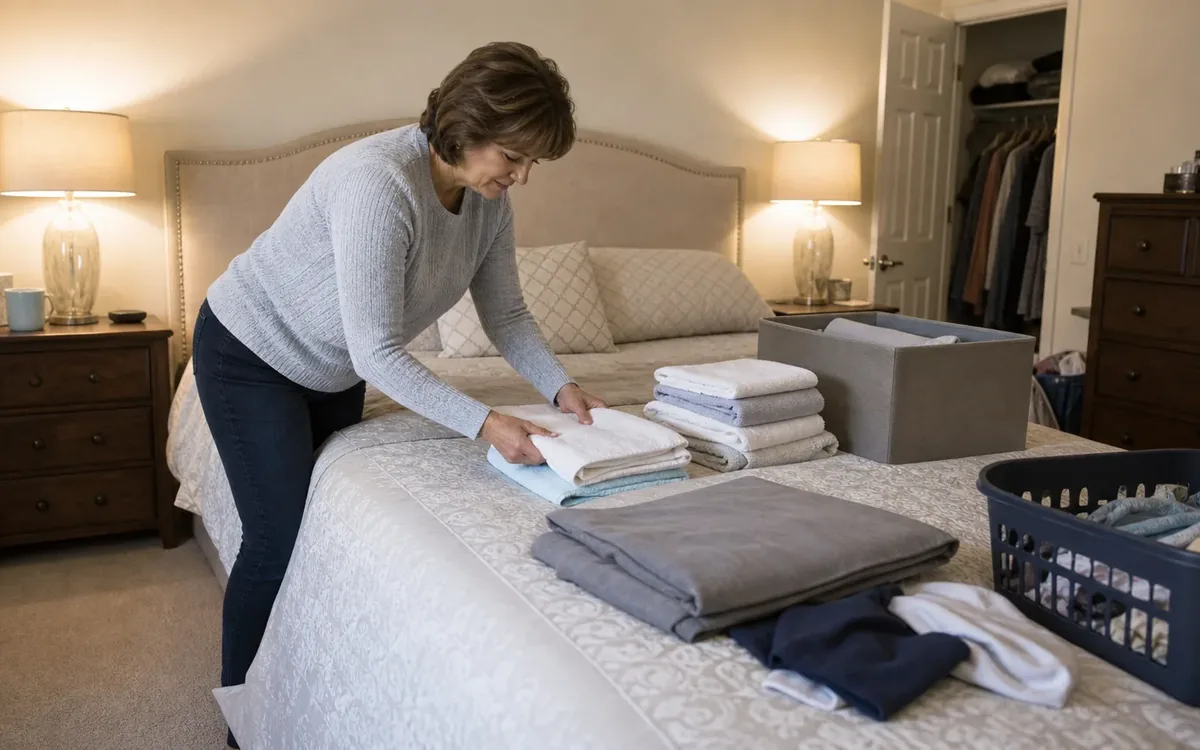
Maintain a usable care area at both residences
If belongings are leaving one home before the destination is fully arranged, plan for a functional care area at each location during the overlap. This does not mean duplicating every possession. It means preserving a clear place for the scheduled visit and the person’s basic needs.
At the origin residence, keep:
- A clear route from the entrance to the care area
- A stable seat or bed used according to the care plan
- Working lighting and accessible household facilities
- Essential supplies outside sealed boxes
- An uncluttered surface for ordinary visit needs
- Pets secured according to provider instructions
At the destination, prioritize safe access before decorative unpacking. Place essential furniture and ordinary household supplies first. Keep boxes out of the main route, and avoid stacking them where they could obstruct doors, switches, equipment, or seating.
The household may request a particular furniture layout, but a clinician, occupational therapist, physical therapist, equipment provider, inspector, or other qualified professional should address clinical positioning, accessibility, equipment clearance, or safety compliance within that professional’s scope.
If the new home needs ramps, grab bars, electrical work, plumbing changes, or other modifications, treat those as separate contractor projects. The household chooses whether to pursue the work, while licensed trades, inspectors, property managers, associations, or authorities determine applicable requirements and approvals.
How should address and access changes be communicated?
Do not assume that telling the visiting worker is enough to transfer services. Contact the provider through its required administrative channel and ask what information it needs.
Prepare these six details before calling:
- The current service address and destination address
- The final visit expected at the current residence
- The first requested visit at the destination
- The household’s primary and backup contacts
- Entry details, including gate, call-box, parking, pet, or building procedures
- Any known changes to the visit space or equipment location
Ask the agency to explain whether the new residence falls within its service area and whether orders, authorizations, staffing, records, or coverage must be updated. Those answers come from the provider, insurer, prescribing professional, or benefits administrator, not from a mover or organizer.
Also update emergency contacts and relevant household records through the proper channels. Mail forwarding alone does not update a medical provider, insurer, pharmacy, equipment supplier, or emergency response record.
Limit sensitive information to people who need it. A move team may need an entry code and the name of the household contact. It generally does not need medical records, insurance documents, or medication details.
Prevent packed supplies from interrupting support
A conventional room-by-room packing method can fail when care supplies are distributed across a bedroom, bathroom, kitchen, refrigerator, and paperwork area. Inventory by function before packing by room.
A useful supply-control system has four parts:
- Current-use container: Items actively needed and kept with the responsible person
- Destination starter area: Approved essentials placed at the new residence
- Reserve supplies: Clearly labeled backup quantities that remain reachable
- Do-not-move items: Equipment or materials awaiting instructions from a provider
Use plain labels that helpers can understand, such as “Household Coordinator Only” or “Do Not Load.” Avoid labels that reveal a diagnosis.
Assign one person to approve access to care-related containers. Too many helpers moving the same items creates confusion, even when everyone intends to help. That coordinator should also check refrigerators, bathroom cabinets, bedside drawers, and charging locations before the final household walkthrough.
Ordinary unwanted contents can follow a separate cleanout plan. Families who also need to clear the prior residence can review the guide on how estate cleanouts work without mixing removal decisions into the care-supply system.
Disposal requires its own judgment. The household can identify ordinary trash and approved donations, but medications, sharps, chemicals, electronics, regulated materials, and medical equipment may require instructions from pharmacies, suppliers, waste authorities, or other responsible programs. Do not place uncertain items into a general removal pile.
Coordinate people without sharing private medical details
A concise move brief can keep relatives and service providers aligned. Give each participant only the information needed for that person’s task.
The brief may include:
- The name and phone number of the logistics coordinator
- Protected rooms and visit windows
- Which entrance movers or helpers should use
- The location of ordinary packing and staging areas
- Boxes or equipment that must not be touched
- Pet and parking instructions
- The destination room names used on labels
- Who can approve changes when a conflict occurs
Hold a short coordination check before major packing or loading activity. Confirm that the latest version of the schedule is being used and that no provider appointment has changed.
If a home health visit shifts unexpectedly, the household coordinator can pause activity near the care area and redirect helpers to another room. Clinical decisions remain with the provider. The move team can discuss logistical adjustments, such as changing the packing order or clearing a different route, if those adjustments fit the agreed scope.
What should happen on the main moving day?
Start with a care-access check, not with loading. Verify that the essential container is with the designated person, the care route is open, and the provider has accurate access information.
During the move:
- Keep care essentials out of vehicles carrying general household goods
- Avoid using the care area as a box-counting or paperwork station
- Maintain phone access for provider calls
- Keep doors, stairs, and primary walkways clear
- Record where medical equipment went, if its responsible provider directed movement
- Direct questions to the named household coordinator
At the destination, unload priority household items according to the written plan. Confirm that the entrance route and planned visit area remain unobstructed before filling secondary rooms.
A final property walkthrough can identify overlooked belongings, but it is not a medical, legal, code, or real-estate inspection. Qualified professionals should address those separate matters. If the former residence will be sold, rented, repaired, or inspected, coordinate those activities on their own schedule rather than assuming the move walkthrough replaces them.
Storage is another separate household choice. Before sending anything to storage, decide who controls access and whether the environment is suitable for the contents. A storage provider should answer facility questions. A pharmacist, equipment provider, conservator, attorney, or other appropriate professional should address restricted, temperature-sensitive, legally controlled, or medically important property.
After arrival, verify the care setup before general unpacking
The first priority is continuity, not a finished-looking home. Check the basics with the responsible household member and, where appropriate, the care or equipment professional.
Confirm that:
- The provider has the correct address and entry instructions
- The planned visit area is usable
- Essential supplies are accounted for
- Phones and communication devices can be charged
- Ordinary household facilities needed during visits are available
- Medical equipment is handled only as directed by its responsible provider
- Important documents remain secure
- Boxes do not obstruct the primary route
Keep a written exception list for missing, damaged, misplaced, or unresolved items. Separate ordinary property issues from care issues. A missing lamp may be a move task; a question about medication storage belongs with the pharmacist or clinician.
If the old residence still needs sorting, cleaning, appraisal, sale preparation, or contents removal, manage those as distinct workstreams. Appraisers determine value. Real-estate professionals address listing and transaction matters. Inspectors and authorities evaluate conditions within their roles. Attorneys advise on ownership and legal authority. The household should not ask a move team to substitute for any of them.
Short FAQ
Should movers receive the full home health schedule?
Usually they need only the protected work windows, access restrictions, and coordinator contact. Share medical details only with people who need them and through appropriate channels.
Who decides whether care can continue at the new address?
The home health provider and any involved insurer, prescribing professional, or authorizing program should answer that question. A move team can adapt household logistics after the responsible party confirms the care arrangements.
Can medical equipment be packed with household furniture?
Do not assume so. Ask the equipment supplier or responsible clinical provider who may disconnect, transport, install, or test it. Keep its instructions separate from ordinary furniture labels.
What if supplies are discovered after the truck leaves?
Keep them secure, identify whether they are ordinary supplies, medications, or provider-owned equipment, and contact the appropriate household or professional decision-maker. Do not discard uncertain medical or regulated items.
Can a cleanout happen while care visits continue?
It may be possible to schedule household removal activity away from the protected care area and visit window. The household, home health provider, and cleanout team should each confirm their own requirements before work is arranged.
Who should families call about move-management scope?
Clutter Cleaner of South Carolina can be reached at (843) 972-7020 to discuss a household’s requested move-management tasks and statewide project location. Care authorization, legal authority, appraisal, inspection, real-estate, contractor, and compliance decisions must remain with the responsible professionals or authorities.



