
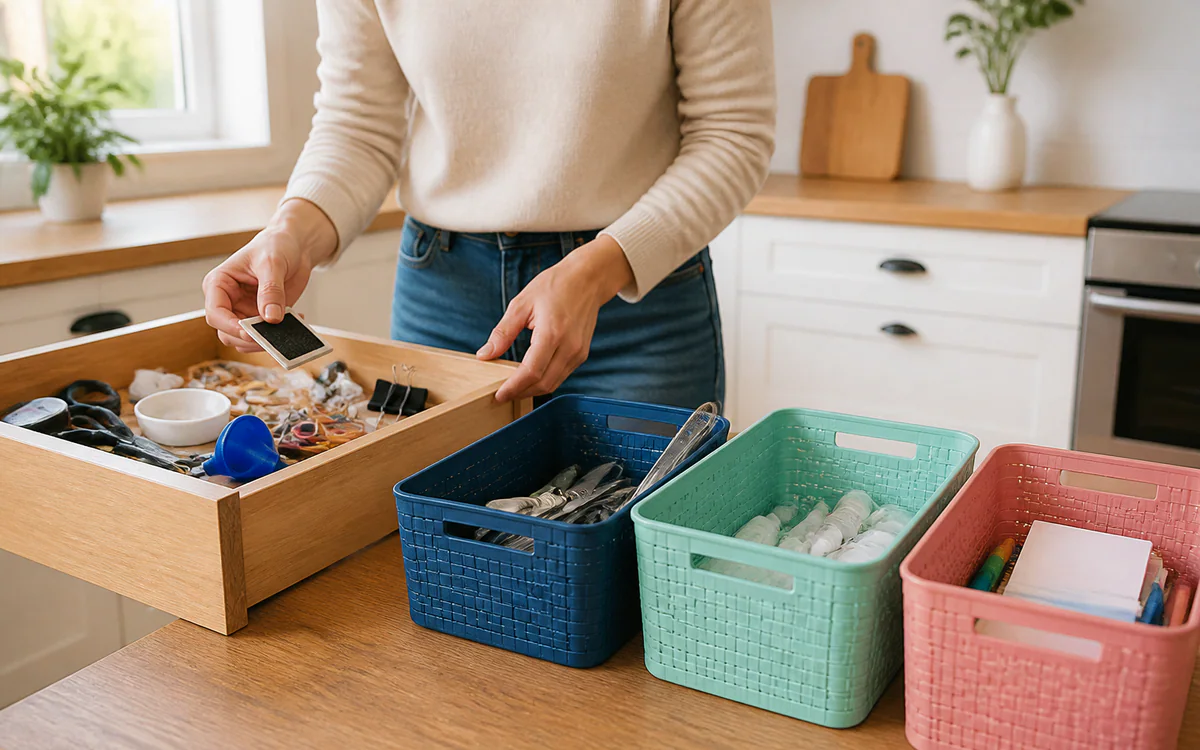
What to do first when beginning to declutter to sell a house?
Begin with a simple walkthrough of your home, room by room. Look at each space the way a buyer would see it. Note the spots that feel crowded, then set aside time to sort surfaces and closets before you declutter to sell a house. Small, steady progress beats one big push. For the related service scope and planning steps, review our home sale preparation support and pre-listing preparation checklist.
Start with a room-by-room walkthrough
Walk through each room with a notepad or your phone’s camera. Snap photos of any corner that feels cluttered. Photos often show what your eyes have learned to ignore. Kitchens, entryways, and bathrooms tend to collect the most clutter, so start there. Give each item a home, a donation bag, or a storage box. That turns one big project into a string of small, easy decisions.
A written decluttering planner can help you track which rooms are done and which still need work. A simple checklist beats trying to hold every detail in your head, especially on a project that touches the whole house.
Set a realistic timeline
Give yourself more time than feels necessary. A week per major room is a fair starting point for most households, though a smaller home might move faster. If the process feels rushed, boxes tend to pile up in a garage or spare room instead of leaving the house. That just moves the clutter instead of clearing it.
Consider these early priorities as you plan your first weekend:
- Clear kitchen counters and pantry shelves first
- Empty closets buyers will open during showings
- Sort the garage before it becomes overflow storage
- Tackle one bathroom to test your process
Households working through a home sale preparation plan with outside support often find that an extra set of hands keeps the early weeks from stalling out.
Keep momentum without burning out
Pick a finish line for each session instead of working until you’re worn out. Forty-five focused minutes in one closet, then a break, usually leads to better choices than an all-day push that leaves you too tired to think clearly. A few short sessions each week move a home toward listing-ready faster than one long, exhausting effort.
Celebrate small wins, like finishing a closet or clearing one countertop. It keeps the whole project feeling like progress instead of a chore. Share that progress with anyone else in the house, even casually. It helps the effort feel like a team job rather than something one person carries alone.
If you feel stuck on a decision, ask someone outside the household for a second opinion. A friend or neighbor often spots what you can’t, since they don’t carry the same memories attached to an item. That fresh perspective can speed up the hardest calls without adding stress to your week.
A decluttering project rarely goes in a straight line, and that’s normal. Some rooms take an afternoon, others take a full weekend, and that’s fine too. What matters most is steady forward motion, not a perfect pace.
Can I leave stuff behind when I sell my house?
In most sales, only the home itself and fixtures named in the purchase agreement stay behind. Furniture and personal items are generally the seller’s job to remove. The purchase agreement, not a general rule, decides what stays, so read it closely before you assume anything. Related South Carolina planning tools include our home sale preparation support and pre-listing preparation checklist.
What usually stays with the home
Built-in fixtures like light fittings, mounted shelving, and attached window treatments usually transfer with the property unless the agreement says otherwise. Hardwired or built-in appliances, such as a range hood or dishwasher, often stay too. If you plan to take something, like a chandelier or a mounted TV bracket, note it in writing early. That avoids confusion with the buyer at closing.
What to plan for the rest
Everything else, from furniture to seasonal decor to a garage full of gear, needs a plan before moving day. Sort these items early instead of waiting for the final week. That gives you time to donate, sell, or store what you’re not taking along. A home sale preparation plan can help a household sequence this work so nothing gets left behind by accident. The homeowner still makes the final call on what stays, what goes, and when the work happens.
Some households hold a donation day or a small sale partway through the process. That lightens the load before the final push. Others store items they’re unsure about until they have time to decide, which works fine when a listing timeline is tight.
Putting expectations in writing
A short note between buyer and seller, reviewed with a real estate agent, can prevent last-minute mix-ups over an item someone assumed would stay or go. It’s a small step, but it can save an awkward conversation during a final walkthrough when moving day is already underway.
If you’re not sure whether an item counts as a fixture, ask your real estate agent before the walkthrough. A quick question now is easier than an argument later, and it keeps the sale moving smoothly for both sides.
Take a walk through the home with your agent before the photos are scheduled. Pointing at specific items in person, rather than relying on a written list alone, often clears up questions faster for everyone involved.
How do I declutter my house before listing it for sale?
Work through your home by category instead of by room. Tackle clothing, paperwork, and kitchenware as whole groups. This makes it easier to see how much you actually own of each type. Set aside anything unused in the past year, then decide if it’s for donation, storage, or the trash. To turn this answer into a practical plan, compare home sale preparation support with the pre-listing preparation checklist.
Sort by category, not by room
Category-based sorting turns up duplicates and forgotten items that room-by-room sorting often misses. Gathering every coat, mug, or stack of paperwork in one spot shows the true size of a collection in a way a single closet never quite does. Once you see everything you own of a type, keep-or-go decisions get much easier and less emotional.
Handle sentimental items separately
Photos, family heirlooms, and keepsakes deserve their own slower pass, apart from the general sorting elsewhere. Rushing decisions on sentimental items tends to cause regret later. Setting them aside for a calmer, later review keeps the main project moving. Many households box sentimental items early and come back to them once the rest of the house is further along.
A storage unit or a spare room at a family member’s place can be a temporary landing spot for items you’re not ready to decide on. That buys time for harder choices without letting them stall the rest of the project.
Local donation centers and thrift organizations across South Carolina are a practical outlet for items in good shape that no longer fit your plans. Many take drop-offs during set hours, so check a location’s guidelines before you load up the car.
For structure, the decluttering planner offers one way to track category progress across a home over several weeks. According to the National Association of Realtors, organized, decluttered spaces help buyers picture themselves living in a home. That’s one reason a careful, category-by-category approach is worth the extra effort.
Keep a running list as you sort, noting which items went where and when. This simple habit makes it easy to answer questions later, and it gives you a clear record of your progress across the whole house.
Recycling programs in many South Carolina communities accept paper, electronics, and certain metals separately from regular trash pickup. Checking your local program’s rules ahead of time keeps large decluttering days from turning into a scramble to figure out where things go.
What is the hardest month to sell a house?
Real estate activity often slows during winter holidays and can dip during South Carolina’s hottest summer stretches, though demand still varies by neighborhood. A decluttered, well-prepared home tends to show well no matter the month. For additional planning context, see home sale preparation support and the pre-listing preparation checklist.
Why readiness matters more than timing
Market conditions shift with interest rates, available homes, and local demand. No single month guarantees a fast or slow sale everywhere in the state. A home that’s decluttered, clean, and photo-ready tends to draw stronger interest than an identical home with moving boxes still stacked in the hallway, whatever the season.
Coastal and inland markets in South Carolina don’t always move at the same pace, and a neighborhood’s usual buyer pool can matter more than a general seasonal trend. A real estate professional who knows your specific area is best placed to speak to timing questions like this.
Focus on what you can control
Instead of trying to time the market precisely, most households do better focusing on what they can actually manage: sorting belongings, organizing storage, and getting rooms ready for photos. The National Association of Realtors notes that staged, decluttered homes generally present better to buyers than homes still in everyday, lived-in condition, no matter when a listing goes live.
Ask a local agent about typical days-on-market for homes like yours in your specific neighborhood. That number tells you more about realistic timing than any general seasonal rule ever could.
When to start preparing to sell a house?
Most guidance suggests starting two to three months before you plan to list. Six months or more gives extra room for sorting, repairs, and delays. Starting early turns decluttering into manageable weekend projects instead of a stressful rush before your listing goes live. The next steps connect to our home sale preparation support and pre-listing preparation checklist.
A general planning window
The AARP one-year countdown checklist lays out a longer timeline for households who want to plan well ahead. It breaks tasks into stages across many months. Not every household needs a full year, but the idea behind it, starting earlier than feels urgent, tends to make the whole process calmer for everyone involved.
Build in room for the unexpected
Repairs, family schedules, and paperwork often take longer than planned. A buffer of a few extra weeks is worth building into any timeline you set. If you’re also managing a bigger transition, like helping an aging parent downsize or settling an estate, starting the decluttering conversation early gives everyone more time to make thoughtful, not rushed, decisions.
Break a broader timeline into monthly or biweekly milestones instead of one distant deadline. That makes progress easier to track and easier to adjust when life gets in the way. A calendar with a few clear checkpoints tends to keep a decluttering project moving steadily toward a listing date.
Mark a few checkpoints on a shared calendar so everyone in the household can see what’s next. Visible progress tends to keep momentum going, especially during the weeks that feel the busiest.
A household juggling work, kids, or a full-time job can still hit a listing date with the right pace. Small, consistent effort across several weeks adds up faster than most people expect, even when each session feels modest on its own.
Whatever timeline fits your household, the goal stays the same: a home that feels calm, organized, and ready to show, reached at a pace that respects everyone who lives there and everyone helping along the way. There’s no single right pace, only the one that lets your household finish the work with enough energy left for the move itself.